Table of Contents
- The Twilight of the Duce: A Final Day Approaches
- Italy in Flames: The Chaos of 1945
- Benito Mussolini: From Power to Peril
- The Fall of the Italian Fascist Regime
- The Partisans’ Rising: Italy’s Underground Resistance
- The Flight North: Mussolini’s Desperate Escape
- Giulino di Mezzegra: The Unexpected Stage
- An Arrest Caught in the Crossfire
- The Execution: A Last Act of Justice or Revenge?
- The Display in Piazzale Loreto: Symbolism and Shock
- The Immediate Aftermath: Italy’s Reckoning with Fascism
- International Responses: From Allies to Axis
- The Myth and Legend of Mussolini’s Death
- Eyewitness Accounts: Voices from That Day
- The Political Vacuum and Italy’s Future
- Memory and Commemoration: Mussolini’s Legacy in Modern Italy
- The Psychological Weight of a Dictator’s End
- Reassessing Justice: Trials, Tributes, and Truths
- The Influence on Post-War Europe’s Reconstruction
- Lessons Drawn: Democracy’s Fragility and Vigilance
- Conclusion: Beyond the Gunfire—The Enduring Echo of April 28, 1945
- FAQs
- External Resource
- Internal Link
The Twilight of the Duce: A Final Day Approaches
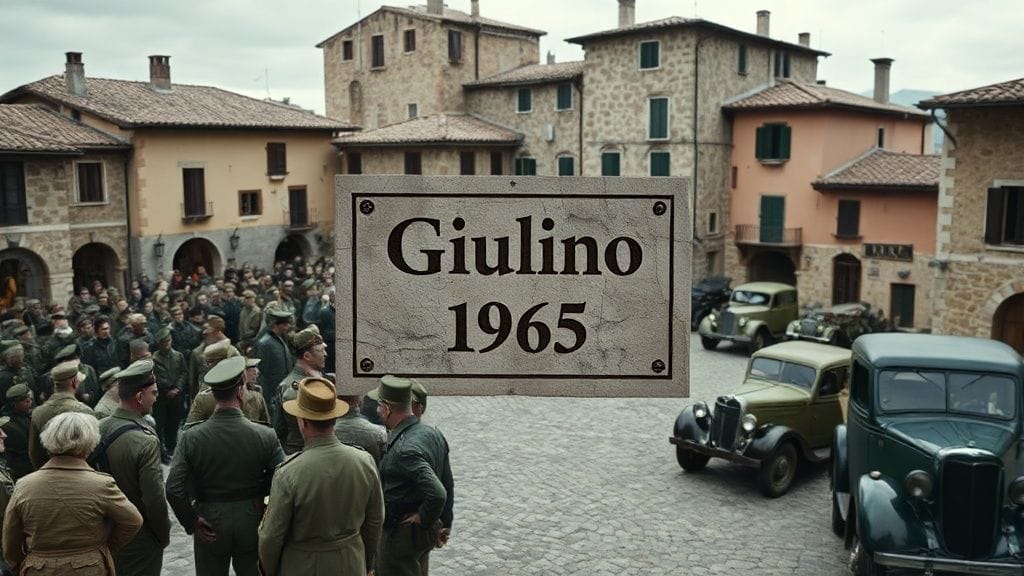
Italy, April 28th, 1945. A cold, restless air hangs over the small town of Giulino di Mezzegra, nestled among the Alpine foothills not far from Lake Como. The atmosphere is charged with tension—whispers of retribution, the last sighs of a war-ravaged country, and the specter of one man whose name had for over two decades commanded fear, awe, and hate. Benito Mussolini, the self-styled Duce, once the architect of Italy’s fascist empire, was about to face his final hours.
That day wasn’t just the close of a man’s life; it was the convulsive death throes of an ideology, an era, and a brutal chapter of Italian—and European—history. The story of Mussolini’s capture and execution in Giulino di Mezzegra is a gripping tale of desperation, vengeance, and the human cost of dictatorship.
Italy in Flames: The Chaos of 1945
By 1945, Italy had become a battleground not only for Allied and Axis forces but for a bitter civil war between fascist loyalists and partisan resistance fighters. The initial enthusiasm that had greeted Mussolini’s rise in the early 1920s had long been eroded by war fatigue, economic collapse, and mounting casualties. When Mussolini was deposed in 1943 and Italy switched sides to join the Allies, the German army occupied the north, propping up Mussolini’s puppet Italian Social Republic in a last-ditch effort to maintain control.
Violence was everywhere, and trust nowhere. Italy was a fractured society, with families torn apart by opposing loyalties. The Fascist regime was crumbling amid increasing partisan attacks and Allied advances. In this volatile atmosphere, Mussolini’s fortunes had reversed spectacularly.
Benito Mussolini: From Power to Peril
Benito Mussolini had seized power in 1922, promising national revival and order. For years, the Duce reigned supreme, molding Italy into a totalitarian state. Yet the tide began turning sharply after 1940, when Mussolini’s alliance with Nazi Germany dragged Italy into the devastating Second World War. The military disasters, the loss of millions of Italian lives, and the degradation of civil liberties sowed the seeds of downfall.
Mussolini, once the embodiment of strength, had become a hunted figure emblematic of Italy’s suffering and failures. His authority diminished to little more than symbolic gestures under German protection. Desperation grew as the Allies advanced from the south and Italian partisans closed in from within.
The Fall of the Italian Fascist Regime
The disintegration of the Fascist regime accelerated in early 1945. Partisan forces increased their operations, seizing towns and disrupting German supply lines. The Italian Social Republic, with Mussolini at its helm, was a puppet state, with dwindling legitimacy and desperate loyalties. The collapse was inevitable.
By April, the Allies had entered Northern Italy, and Mussolini’s options were rapidly narrowing. The Duce’s closest confidants abandoned hope, and many fled. It was clear that the end was near, but no one knew exactly how or when it would unfold.
The Partisans’ Rising: Italy’s Underground Resistance
The Italian resistance movement was a mosaic of ideologies—communists, socialists, monarchists, and anarchists united against Fascism. These brave men and women risked everything in sabotage, espionage, and direct combat. Their courage culminated in the spring offensive of 1945, which hastened the collapse of fascist control.
The partisans played a decisive role in Mussolini’s downfall and execution. They were determined not only to end the war but to purge Italy of its dark past. Their role was both military and symbolic—they were the hands of justice, but also of vengeance.
The Flight North: Mussolini’s Desperate Escape
Facing imminent capture, Mussolini fled Milan disguised as a German soldier. Accompanied by his mistress, Claretta Petacci, and a handful of loyalists, he hoped to escape to Switzerland or find refuge in Germany. But the web was closing in.
His convoy was intercepted near the town of Dongo, on the shores of Lake Como. Partisan forces arrested the group, uncertain at first of Mussolini’s identity. The magnanimity of fate turned to swift judgment as the reality dawned: the once unchallenged dictator was a prisoner.
Giulino di Mezzegra: The Unexpected Stage
On April 28th, 1945, Giulino di Mezzegra—a quiet village barely known outside its immediate region—was to become the stage for history’s verdict on Mussolini. It was here, near the Villa Belmonte, that the Duce was held overnight, guarded by partisan fighters.
The choice of this secluded spot illustrated the chaotic and improvised nature of Italy’s liberation. The partisans were not only fighting an enemy; they were managing an avalanche of emotions and political expectations all aimed at that small house where Mussolini lay captive.
An Arrest Caught in the Crossfire
The capture was fraught with tension. The partisans debated what to do—should Mussolini be handed over to the Allies? Tried under Italian law? Summarily executed?
The political landscape was fractious. Some saw Mussolini as a traitor to be tried openly; others believed swift execution was the only just recourse. The question loomed: could justice be served in such a turbulent moment, or would history be written in blood?
The Execution: A Last Act of Justice or Revenge?
On the morning of April 28th, 1945, Benito Mussolini and his mistress Claretta Petacci were executed by firing squad in the outskirts of Giulino di Mezzegra. The exact details remain clouded by conflicting testimonies and political mythologies, but it is certain that partisan leadership sanctioned the killing.
Witnesses reported a grim efficiency. Mussolini’s end was abrupt, stark, and cold. Some partisans later expressed unease, others vindication—the execution was both a personal and collective catharsis for a nation so long oppressed.
The Display in Piazzale Loreto: Symbolism and Shock
What followed shocked Italy and the world. Mussolini’s body, along with that of Claretta and other fascist loyalists, was transported to Milan and hung by the feet in Piazzale Loreto—a public square previously marked by a brutal fascist execution of partisans.
The display was a gruesome but powerful symbol of the fall of Fascism. It epitomized the brutal justice of the moment and Italy’s desire to exorcise a traumatic past. Photographs of the limp bodies became iconic images, forever linked to the reckoning day.
The Immediate Aftermath: Italy’s Reckoning with Fascism
The execution was both closure and a spark for Italy’s complicated post-war transformation. It marked the definitive end of Mussolini’s regime but also opened debates about justice, dictatorship, and national identity.
Calls for trials, purges, and political reform galvanized the nascent Italian Republic. The wounds were deep, but so were the hopes for democracy’s rebirth amid rubble and loss.
International Responses: From Allies to Axis
News of Mussolini’s execution sent ripples across the world. The Allies saw it largely as a symbolic victory, the demise of an evil ally to Hitler. Yet, some expressed regret that a formal trial had not taken place.
Germany’s defeat was hastened by the Duce’s fall, and the Axis powers crumbled in turn. The event marked a turning point not just for Italy but for the continent’s wider liberation and reconstruction.
The Myth and Legend of Mussolini’s Death
In the decades since, Mussolini’s death has been wrapped in myth and mythmaking. Conspiracy theories, alternative narratives, and political appropriation cloud the historical record. Was he betrayed? Did he escape? These questions haunt the popular imagination, demonstrating how history and memory entwine.
Yet the core truth remains: his execution symbolized the violent overthrow of a dictatorship that reshaped a nation.
Eyewitness Accounts: Voices from That Day
Testimonies from partisans, villagers, and surviving members of Mussolini's convoy paint a vivid picture fraught with emotion. Some recall a man defeated, others a feared tyrant to be stripped of all dignity.
Claretta Petacci’s voice emerges through letters revealing loyalty and tragedy. These human details bring to life the complex, painful reality behind the headlines.
The Political Vacuum and Italy’s Future
With Mussolini gone, Italy faced daunting challenges—political fragmentation, economic ruin, and social division. The task of rebuilding was monumental.
The Italian Republic was born amid these turbulent conditions, embarking on a long journey of reconciliation, reform, and growth that reshaped its role in Europe and the world.
Memory and Commemoration: Mussolini’s Legacy in Modern Italy
The memory of Mussolini’s regime and death continues to provoke debate. Memorials, museums, and anniversaries bring back difficult reflections on fascism’s enduring shadows and the responsibilities of remembrance.
Italy’s struggle to confront its past exemplifies broader questions about history’s lessons and the fragility of democracy.
The Psychological Weight of a Dictator’s End
The fall of Mussolini carried a profound psychological impact on Italy’s citizens. Relief mingled with trauma; victory mixed with guilt. The death of one man symbolized the collapse of many hopes and dreams, for better and worse.
Ordinary Italians grappled with feelings of justice, vengeance, and the search for closure after years of terror and war.
Reassessing Justice: Trials, Tributes, and Truths
Post-war Italy needed to find a new framework for justice. Mussolini’s execution bypassed legal procedures, raising ethical questions still debated today.
Trials of other fascists, purges, and political reforms shaped Italy’s jurisprudence and contributed to evolving ideas on law, punishment, and national accountability.
The Influence on Post-War Europe’s Reconstruction
Mussolini’s downfall was emblematic of a larger European reckoning with totalitarianism. The collapse of fascism precipitated an urgent drive toward democracy, integration, and peace.
Italy’s experience became a cautionary tale and a source of hope for rebuilding war-torn Europe under new norms of cooperation and respect for human rights.
Lessons Drawn: Democracy’s Fragility and Vigilance
The brutal end of Benito Mussolini serves as a stark reminder of democracy’s precarity. It illustrates how totalitarianism can fracture societies and how fragile freedoms can be in times of crisis.
The story inspires vigilance, commitment to human dignity, and the recognition that justice and reconciliation are essential to lasting peace.
Conclusion: Beyond the Gunfire—The Enduring Echo of April 28, 1945
The execution of Benito Mussolini on that cold April day was more than the extinguishing of a life; it was the symbolic shattering of an era saturated with fear, propaganda, war, and pain. As the bullets fell in Giulino di Mezzegra, a nation held its breath, teetering between vengeance and justice, collapse and rebirth.
Today, the echoes of that moment remind us of the power and peril of leadership, the resilience of resistance, and the costs of ideological fanaticism. Italy’s darkest days and their violent but necessary conclusion stand as a testament to the enduring human pursuit of freedom—in all its frail and fiery complexity.
FAQs
Q: What were the primary reasons for Mussolini’s capture and execution in 1945?
A: Mussolini’s capture was a result of the collapse of fascist power in Italy, increased partisan resistance, and the Allied advance. His execution was driven by partisans’ desire for swift justice and the symbolic need to end fascism decisively.
Q: Who were the key actors involved in Mussolini’s arrest?
A: Italian partisan groups operating near Lake Como played the leading role in Mussolini’s capture, particularly units led by figures such as Walter Audisio, believed to have ordered the execution.
Q: Why was Giulino di Mezzegra chosen as the place of execution?
A: Giulino di Mezzegra was a discreet, secluded location near where Mussolini was held after capture, chosen to avoid public unrest and maintain control in the chaotic final days of the war in Italy.
Q: How did the execution impact the Italian civil war and post-war politics?
A: Mussolini’s death effectively ended the Italian Civil War, symbolizing the total collapse of fascism and clearing the path for the establishment of the Italian Republic and crucial political reforms.
Q: What myths have emerged surrounding Mussolini’s death?
A: Various conspiracy theories suggest Mussolini may have escaped or been rescued, though historical evidence supports his execution. These myths reflect the ongoing controversies about fascism’s legacy.
Q: How is Mussolini’s execution commemorated or viewed in contemporary Italy?
A: Views are divided. Some see it as justified historical justice, others as a controversial end to due process. It remains a pivotal and sensitive topic in Italy’s collective memory.
Q: What lessons does Mussolini’s downfall offer for modern democracy?
A: It highlights the dangers of authoritarianism, the importance of vigilance against extremism, and the need for justice balanced with legal and ethical frameworks.