Table of Contents
- The Final Chapter of a Revolutionary: Ho Chi Minh’s Last Days
- Hanoi in 1969: A City Under Siege and Hope
- The Shadow of War: Vietnam Amidst Global Turmoil
- Ho Chi Minh’s Illness: The Slow Dim of a Burning Light
- Inside Ho Chi Minh’s Residence: Moments of Reflection and Resolve
- News of the Leader’s Worsening Condition Spreads
- September 2, 1969: A Nation Poised on the Edge
- The Passing of Uncle Ho: A Country’s Heart Stops Beating
- The Immediate Aftermath in Hanoi and the North Vietnamese Front
- International Reactions: Allies and Adversaries in Mourning and Calculation
- The Funeral Procession: A Spectacle of Grief and Political Symbolism
- Ho Chi Minh’s Legacy: The Man Behind the Myth
- Impact on the Vietnam War: Shifts in Strategy and Morale
- The Long Shadow of Ho Chi Minh in Postwar Vietnam
- Cultural Memory and the Preservation of His Image
- Ho Chi Minh City: A Living Monument
- The Evolution of Vietnamese Nationalism After 1969
- Western Perspectives: Media and Political Responses
- Ho Chi Minh in Global Revolutionary Thought
- Conclusion: The End of an Era, the Beginning of a Legend
- FAQs
- External Resource
- Internal Link
The Final Chapter of a Revolutionary: Ho Chi Minh’s Last Days
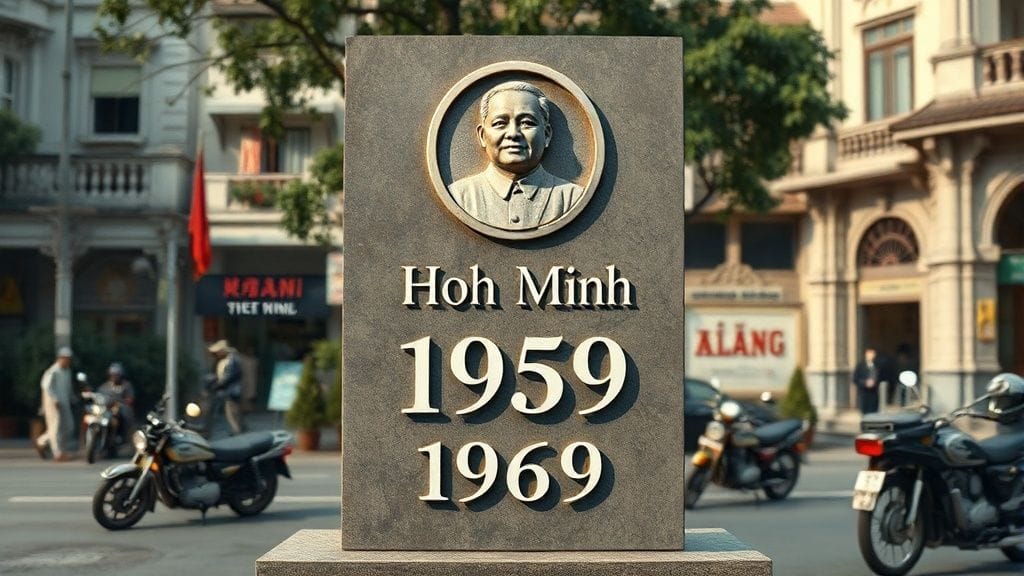
On the humid dawn of September 2, 1969, in the heart of a besieged Hanoi, the air was heavy not only with the relentless drone of distant American bombers but with a palpable sense of sorrow and solemn expectancy. People moved in hushed reverence, their eyes brimming with a mixture of fear and profound respect, aware that the towering figure who had led them through decades of colonial subjugation, war, and revolutionary struggle was slipping from their grasp. Ho Chi Minh, the enigmatic revolutionary leader and symbol of Vietnamese resistance, was breathing his last.
The distinct, frail breaths of a man who had once radiated unyielding vigor now mingled seamlessly with the chants from the streets below. That summer of 1969 was unrelenting in its intensity. Vietnam was not only fighting a brutal war but also grappling with the inevitable mortality of the man who had for so long embodied their hope for independence and freedom. This was not merely the death of a leader; it was the symbolic close of an epoch that had reshaped the destiny of a nation and reverberated throughout the Cold War world.
Hanoi in 1969: A City Under Siege and Hope
Hanoi, the capital of North Vietnam, was by 1969 a city caught between resilience and devastation. The relentless Operation Rolling Thunder had transformed large swaths of the city’s outskirts into grim rubble, yet the spirit of its people remained defiant—stoked by the presence of Ho Chi Minh, lovingly known as “Uncle Ho.” The urban landscape bore a dichotomy that mirrored the nation itself: broken buildings intertwined with revolutionary banners; war-torn streets pulsing with songs of liberation.
The city's residents understood on a visceral level that their destiny was bound to this man who had devoted his life to fighting French colonialism, Japanese occupation, and the divisions of Cold War politics. His intangible presence filled Hanoi like a ghostly yet comforting specter, giving strength to ordinary citizens who endured air raids, shortages, and the daily tragedies of war.
The Shadow of War: Vietnam Amidst Global Turmoil
By 1969, the Vietnam War had escalated into one of the most intense conflicts of the 20th century. The Cold War polarized global powers, and Vietnam had become the epicenter of ideological confrontation between communism and capitalism. The United States was deeply entrenched in a war that had fractured its own society and deeply affected Vietnamese civilians.
Ho Chi Minh’s leadership had been instrumental in galvanizing the Vietnamese people against foreign domination. His vision stretched back decades, rooted in Marxist-Leninist ideology but tempered by indigenous nationalism. Yet, as the bombs fell and diplomats negotiated, the man whose life had become synonymous with the Vietnamese struggle was in decline. The weight of history pressed down on him as much as it did on his battered nation.
Ho Chi Minh’s Illness: The Slow Dim of a Burning Light
The final chapter of Ho Chi Minh’s life was marked by protracted illness. Years of intense revolutionary work, interspersed with sporadic periods of fragile health, culminated in a decline that was palpable to those closest to him. By the summer of 1969, his strength was a shadow of its former self.
Inside his modest Hanoi residence—an unassuming wooden structure surrounded by lush foliage—doctors and aides moved cautiously, aware of the leader’s fragility. Despite medical efforts, the chronic conditions ravaging his body, amplified by the constant stress of leadership in wartime, advanced inexorably. The man who had defied French and American imperialisms now faced the invincible enemy of mortality.
Inside Ho Chi Minh’s Residence: Moments of Reflection and Resolve
Though physically weakened, Ho Chi Minh’s mind remained sharp in these last days. Eyewitnesses describe moments when the revolutionary leader would rally his aides, whispering strategic advice or reciting poems that had inspired his people for decades.
Symbolically, his humility was as striking in life as in death. Instead of grandeur, his daily routine reflected the austere lifestyle he championed. His residence, modest and unpretentious, stood in stark contrast to the grandiosity often associated with heads of state.
News of the Leader’s Worsening Condition Spreads
As Ho Chi Minh’s condition deteriorated, news filtered through subterranean networks to reach the populace, creating a wave of apprehension and sadness. Radio broadcasts became tinged with uncertainty; clandestine messages urged citizens to prepare for the inevitable.
International journalists and diplomats watching from afar sensed an approaching historic rupture. The question loomed: What would become of the Vietnamese revolution without the magnetic force of Ho Chi Minh?
September 2, 1969: A Nation Poised on the Edge
The day itself was cloaked in anxiety and solemnity. People filled the streets from dawn till dusk, waiting, hoping for some sign that their “Uncle Ho” might yet recover. Yet, as midday turned to afternoon, it became clear that the nation was at the brink of profound loss.
In homes, workplaces, and military barracks, citizens paused their routines. Children gathered around radios; workers took moments of silent tribute. The city’s pulse slowed, punctuated only by the distant warplanes and the muted sobs of those who had journeyed with Ho Chi Minh through the darkest chapters of their history.
The Passing of Uncle Ho: A Country’s Heart Stops Beating
At 9:47 a.m. on September 2, Ho Chi Minh passed away. The announcement rippled through Hanoi like a thunderclap. Government officials immediately called for a seven-day period of national mourning.
The phrase “Uncle Ho is no longer with us” echoed in the streets, in whispered conversations, and in official pronouncements. It was as though a collective heartbeat had faltered, leaving a vacuum that seemed impossible to fill.
The Immediate Aftermath in Hanoi and the North Vietnamese Front
Despite their grief, the Vietnamese people’s resolve remained unbroken. In the streets, crowds gathered to lay flowers; faces were streaked with tears; songs of resistance filled the air. The leadership scrambled to consolidate authority and reassure both the military and the population that the revolution would continue.
At the same time, the North Vietnamese command used the moment to emphasize Ho Chi Minh’s enduring vision—one that insisted the struggle for unification and independence was far from over.
International Reactions: Allies and Adversaries in Mourning and Calculation
Ho Chi Minh’s death penetrated global headlines instantly. Communist allies in Moscow and Beijing expressed profound grief, heralding him as a titan of the revolution. Meanwhile, Western capitals grappled with the implications of his absence. To some, it signaled a weakening of North Vietnamese cohesion; to others, the determination to forge ahead without him was a daunting prospect.
The complex geopolitical chessboard on which Vietnam was a key piece shifted subtly—but only subtly—in the wake of his death.
The Funeral Procession: A Spectacle of Grief and Political Symbolism
The official funeral, held in September 1969, was not merely a ceremony—it was a massive political act. Hundreds of thousands thronged Hanoi’s streets to pay homage, with soldiers, politicians, workers, and children united in collective mourning.
The procession traversed symbolic landmarks of the revolutionary struggle, reinforcing Ho Chi Minh’s mythic stature. Elaborate rituals borrowed from both Western and Vietnamese traditions reflected an attempt to weave a narrative connecting the leader’s life, the revolution’s sacrifices, and the hopeful future awaiting the nation.
Ho Chi Minh’s Legacy: The Man Behind the Myth
Ho Chi Minh was not just a leader; he was a symbol of indomitable will and unyielding hope. His blending of nationalist fervor and communist ideology created a unique revolutionary doctrine that inspired not only Vietnam but other colonized nations seeking liberation.
Histories recount a man of contradictions: charismatic yet austere, strategic yet humble, a poet and a guerrilla fighter. Understanding Ho Chi Minh means grasping the complexity of Vietnam’s twentieth-century history.
Impact on the Vietnam War: Shifts in Strategy and Morale
There is no question that Ho Chi Minh’s death altered the dynamic of the war. While his presence had unified disparate factions, his absence forced new leaders to step forward, not all with the same clout or vision.
Morale among the North Vietnamese and Viet Cong fighters was shaken but ultimately steeled by the commitment to honor Ho Chi Minh’s legacy. Conversely, U.S. strategists pondered whether the revolution had lost its vital nerve.
The Long Shadow of Ho Chi Minh in Postwar Vietnam
Following the end of the war in 1975, Ho Chi Minh’s memory became a cornerstone of the unified Socialist Republic of Vietnam. His image adorned public spaces, schools, and currency; his principles guided education and governance.
Even decades later, reverence for "Uncle Ho" remains embedded in the very fabric of Vietnamese identity, though history scholars continue to debate aspects of his rule and the revolution's human cost.
Cultural Memory and the Preservation of His Image
Vietnam’s state-sponsored narrative carefully cements Ho Chi Minh’s place as a father of the nation. Museums, statues, and annual commemorations preserve his legacy, ensuring each generation encounters the legend.
This preservation is a deliberate cultural act—a reminder that history is as much about the present as the past.
Ho Chi Minh City: A Living Monument
The renaming of Saigon to Ho Chi Minh City in 1976 is perhaps the most tangible symbol of how his legacy extends beyond memory into everyday life. The bustling metropolis stands as a testament to Vietnam’s transformation and enduring resilience, forever linked to the man who helped define its destiny.
The Evolution of Vietnamese Nationalism After 1969
The death of Ho Chi Minh ignited new forms of nationalism, blending tradition with the practical demands of governance and global diplomacy. The revolution matured from a guerrilla movement into a state-building endeavor, rooted in the leader’s vision yet adapting to new realities.
Western Perspectives: Media and Political Responses
Western media coverage at the time varied from respectful acknowledgment to skeptical analyses of the man and the state he created. Politicians in the US weighed the symbolic implications of losing an enemy who was also a human figure—a paradox that complicated the war.
Ho Chi Minh in Global Revolutionary Thought
Beyond Vietnam, Ho Chi Minh’s story became a beacon for liberation movements around the world. His synthesis of communist ideology and anti-colonial struggle influenced activists in Africa, Asia, and Latin America, becoming a template for resistance against imperialism.
Conclusion: The End of an Era, the Beginning of a Legend
Ho Chi Minh’s death marked the end of a remarkable personal odyssey and a defining chapter in Vietnam’s history. Yet it was also the birth of an enduring myth that transcended life and death, inspiring future generations to envision freedom, unity, and resilience. His struggle, sacrifices, and vision revealed a humanity that continues to resonate, reminding us how history lives in the hearts of people as much as in the pages of books.
Conclusion
The passing of Ho Chi Minh was more than the loss of a leader; it was the moment when a nation confronted both its vulnerabilities and its unyielding spirit. His death on September 2, 1969, was deeply mourned, but it also galvanized a people united by his overwhelmingly human dream of independence and dignity. Across battered streets and war-torn fields, across families and comrades, the heartbeat of Vietnam persisted, nourished by the memory of a man who had become their “Uncle Ho”—a guiding star in their darkest nights. His legacy endures not as a relic of the past, but as a living testament to the power of revolutionary conviction and the resilience of the human spirit.
FAQs
Q1: What were the main causes leading to Ho Chi Minh’s death?
Ho Chi Minh’s death was primarily due to complications from chronic illnesses exacerbated by age and the immense physical and psychological toll of decades of war. While specific medical details remain sparse, it’s clear that his health deteriorated gradually into the summer of 1969.
Q2: How did the people of Hanoi react to Ho Chi Minh’s death?
The people of Hanoi entered a period of profound mourning marked by public gatherings, memorials, and a national seven-day period of mourning declared by the government. The grief was intense but coupled with a resolve to continue the struggle he had led.
Q3: How did Ho Chi Minh’s death impact the course of the Vietnam War?
While it did cause a temporary morale shock, Ho Chi Minh’s death did not significantly derail the North Vietnamese war effort. His lieutenants rapidly assumed command, and the resolve to continue was reinforced by commemorations of his legacy.
Q4: What was the international reaction to Ho Chi Minh’s passing?
Communist allies such as the Soviet Union and China officially mourned Ho Chi Minh as a revolutionary hero. Western nations acknowledged the significance of his death with a mixture of respect and strategic reassessment.
Q5: How has Ho Chi Minh been remembered in Vietnam since his death?
Ho Chi Minh remains a central figure of national identity and pride. Monuments, museums, and even the renaming of Saigon to Ho Chi Minh City reflect his enduring symbolic importance.
Q6: What role did Ho Chi Minh's ideology play in shaping modern Vietnam?
His fusion of Marxist-Leninist principles with Vietnamese nationalism helped create a unique revolutionary path and laid the foundation for the Socialist Republic of Vietnam.
Q7: Are there controversies related to Ho Chi Minh’s leadership and legacy?
Yes, while widely revered, some historians critique aspects of his policies—particularly related to political repression and the human cost of revolutionary decisions—highlighting a complex legacy.
Q8: How does Vietnam commemorate Ho Chi Minh today?
Annual celebrations on September 2 mark his death anniversary, along with educational programs and public ceremonies that reinforce his vision and ideals across generations.