Table of Contents
- The Silent Passing of a Giant: November 9, 1970
- The Man Behind the Legend: Charles de Gaulle’s Formative Years
- France in Turmoil: Political and Social Context of 1970
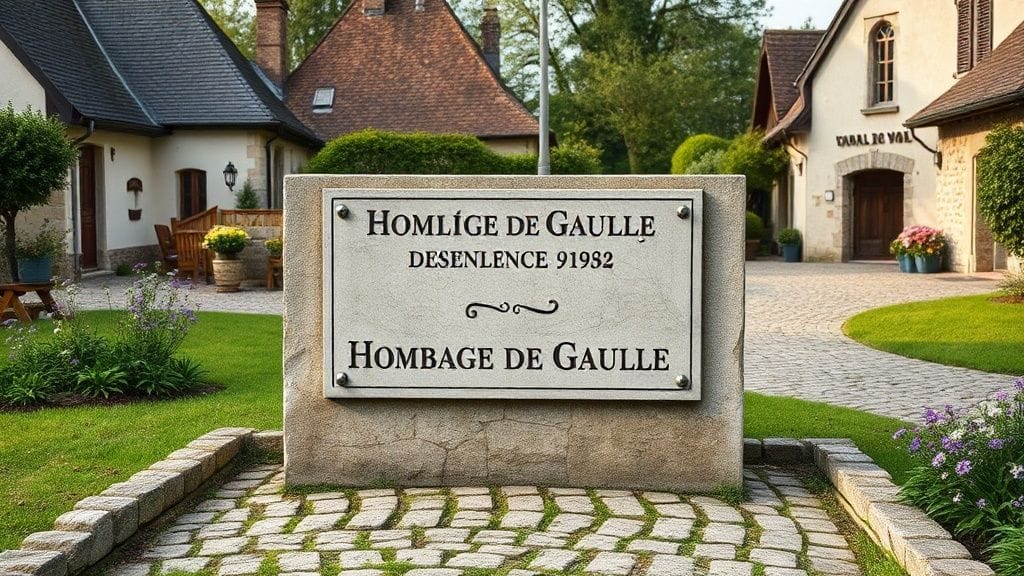
- Colombey-les-Deux-Églises: The Quiet Village That Bore a Titan
- The Last Day: A Chronicle of November 9, 1970
- The Nation Reacts: Shockwaves Through France and Beyond
- Mourning a Founder: State Funeral and National Remembrance
- The Weight of Legacy: De Gaulle’s Imprint on French Identity
- Political Reverberations: France’s Path After de Gaulle
- Personalities in the Shadows: The Family and Close Allies
- The Controversies Left Behind: A Divided Memory
- De Gaulle’s Ideals in a Changing World
- The Global Impact: De Gaulle on the Stage of Cold War Politics
- Colombey as a Pilgrimage Site: Memory and Mythmaking
- Reflections in French Culture: Literature, Film, and Public Discourse
- The Evolution of Gaullism After 1970
- Debates on Leadership: Comparing De Gaulle’s Era to Today
- The Human Side: Anecdotes Revealing the Man Behind the Mask
- Lessons from a Departure: What De Gaulle’s Death Taught France
- The Continuing Dialogue: How De Gaulle’s Memory Shapes Modern France
1. The Silent Passing of a Giant: November 9, 1970
It was a cold autumn day in Colombey-les-Deux-Églises, the humble village where Charles de Gaulle had sought refuge for decades. At precisely 11:30 a.m., the towering figure who had twice steered France through its darkest hours quietly exhaled his last breath. The death of Charles de Gaulle was not just the loss of a man; it was the sunset of an era, a moment suspended between sorrow and reflection—a moment when a nation came to terms with the impermanence of even its greatest heroes.
Just hours before, the village retained its serene calm, the silence broken only by the rustling leaves and the distant chime of church bells. For the people of Colombey, the death was both anticipated and shocking. Charles de Gaulle, the indomitable architect of French resistance and sovereignty, had always seemed almost beyond mortality, a symbol etched into the very identity of France.
But now, the figure that had seemed eternal was gone.
2. The Man Behind the Legend: Charles de Gaulle’s Formative Years
To understand the seismic shock of de Gaulle’s death, one must first delve into the life that shaped him—a life that was as much a reflection of France’s tumultuous 20th century as it was a forging force for the nation’s destiny.
Born in 1890 in Lille, into a family rooted in the traditions of northern French Catholicism and patriotism, young Charles displayed an early devotion to his country. His military education, beginning at Saint-Cyr and continuing through World War I, formed not only a soldier but a thinker haunted by the trauma of France's devastating defeat in 1940.
It was this haunting that propelled de Gaulle into unyielding resistance during France’s darkest hour—the Nazi occupation. Through his voice crackling over the London airwaves on June 18, 1940, he became the symbol of the Free French movement, a beacon of defiance against tyranny.
3. France in Turmoil: Political and Social Context of 1970
By 1970, France was a nation marked by the lingering echoes of the May 1968 protests. Students and workers had confronted established authority with a vigor that startled the world. De Gaulle, by then retired and living in self-imposed exile in Colombey, remained a looming presence in the national consciousness, symbolizing both order and patriarchy.
Politically, the Fifth Republic, crafted under de Gaulle’s hand in 1958, faced challenges from both left-wing radicalism and conservative factions wary of modernization. The Cold War underscored every decision, keeping France vigilant amid global uncertainty.
The country stood at a crossroads: reaffirm its Gaullist legacy or embrace radical change.
4. Colombey-les-Deux-Églises: The Quiet Village That Bore a Titan
Nestled in the rolling hills of the Haute-Marne, Colombey-les-Deux-Églises was more than a retreat; it was a sanctuary, a crucible where de Gaulle nurtured his vision away from the glare of Parisian politics.
The granite house dubbed “La Boisserie” bore witness to countless council meetings, private reflections, and moments of solitude. It was here he penned letters, reread his memoirs, and contemplated France’s turbulent destiny.
For locals, de Gaulle was both a neighbor and an enigma — approachable in manner yet wrapped in layers of grandeur. The village, with barely 700 inhabitants, became an unlikely symbol of French resilience itself.
5. The Last Day: A Chronicle of November 9, 1970
The day began as any other, calm and overcast. Charles de Gaulle, aged 79, spent his morning tending to routine correspondence and receiving visitors close to him. The afternoon drew long shadows as his health, already fragile, declined rapidly.
At 11:30 a.m., de Gaulle suffered a massive aneurysm. Efforts to revive him proved futile. His wife, Yvonne, remained steadfast, a quiet pillar witnessing the final moments.
The news, once disseminated, sent ripples of disbelief from the small village to the grand stages of global capitals.
6. The Nation Reacts: Shockwaves Through France and Beyond
The announcement of de Gaulle’s death caused an immediate and profound national mourning. Streets emptied, radios blared somber news bulletins, and in homes across France, citizens grappled with the void left by the passing of their “Le Grand Charles.”
President Georges Pompidou declared three days of national mourning. Flags flew at half-mast, and an unfettered outpouring of grief enveloped the nation. In global capitals—London, Washington, Moscow—leaders expressed respect for the man who had reshaped 20th-century geopolitics.
7. Mourning a Founder: State Funeral and National Remembrance
The funeral ceremony on November 12, 1970, was staged in Paris, before a sea of mourners braving biting cold. The solemn procession wound through the capital, passing sites synonymous with de Gaulle’s career—the Arc de Triomphe, the Élysée Palace.
Contemporaries, from politicians to soldiers, from intellectuals to ordinary citizens, gathered to pay their respects. Yet, even amid the ceremonious reverence, the mood bore the weight of complicated emotions—admiration tempered by the hardships endured under his rule.
8. The Weight of Legacy: De Gaulle’s Imprint on French Identity
To many, de Gaulle was more than a political leader: he was an idea incarnate. The very notion of “Gaullism” encompassed a proud French sovereignty, independence from foreign influence, and a belief in a strong state.
His policies, such as withdrawing France from NATO’s integrated military command and championing an independent nuclear force, were revolutionary assertions of autonomy.
Yet, his legacy went beyond politics; it touched language, culture, and national pride.
9. Political Reverberations: France’s Path After de Gaulle
With de Gaulle’s departure, France found itself at a political crossroads. Pompidou’s presidency aimed to maintain Gaullist principles while embracing modernization, but the fractures within French society only deepened.
The foundation de Gaulle laid was both a platform and a constraint—new leaders grappled with balancing tradition and progress, authority and democratization.
10. Personalities in the Shadows: The Family and Close Allies
Behind the public figure stood a complex private world. Yvonne de Gaulle, his steadfast companion, navigated grief with quiet strength. His children, particularly Philippe de Gaulle, preserved his memory and values.
Close allies—military generals, political confidants—carried the burden of sustaining his vision, often wrestling with their own interpretations of Gaullism.
11. The Controversies Left Behind: A Divided Memory
De Gaulle’s life was not without contention. Colonial wars, especially in Algeria, left scars on the national psyche. His sometimes authoritarian style polarized opinions.
For some, he remained a hero who saved France; for others, an emblem of conservatism that resisted social progress.
12. De Gaulle’s Ideals in a Changing World
As the 20th century progressed, the post-colonial world shifted dramatically. De Gaulle’s insistence on French grandeur seemed anachronistic to some, prophetic to others.
His doctrine of national independence, while sometimes isolating, underscored ongoing debates on sovereignty amid globalization.
13. The Global Impact: De Gaulle on the Stage of Cold War Politics
On the international stage, de Gaulle’s maneuvering was masterful and independent. He challenged both American and Soviet dominance, carving a unique place for France in Cold War geopolitics.
His vision inspired non-aligned movements and forced NATO and Warsaw Pact countries to recognize France as a distinct pole of power.
14. Colombey as a Pilgrimage Site: Memory and Mythmaking
After his death, Colombey-les-Deux-Églises became a symbolic pilgrimage for those who revered Gaullism. The humble grave beneath the crosses of Lorraine transformed into a site of national memory, mixing reverence and myth.
Annual commemorations honor both the man and the ideals he championed.
15. Reflections in French Culture: Literature, Film, and Public Discourse
French intellectuals, novelists, filmmakers, and journalists have long grappled with de Gaulle’s legacy. From hagiography to critique, cultural depictions capture the paradoxes of his life—magnanimous yet authoritarian, visionary yet rigid.
These portrayals continue to fuel debates about leadership and nationhood.
16. The Evolution of Gaullism After 1970
Gaullism as a political movement endured beyond de Gaulle’s lifespan, morphing to adapt to new challenges. Parties invoking his name sought to balance nationalism with European integration.
Yet, the unity that de Gaulle embodied was hard to replicate.
17. Debates on Leadership: Comparing De Gaulle’s Era to Today
Contemporary French leaders often evoke de Gaulle’s name to claim legitimacy. Comparisons abound—his decisive authority often contrasted with present-day political fragmentation.
Discussions probe whether France today demands a “new de Gaulle” or a different model altogether.
18. The Human Side: Anecdotes Revealing the Man Behind the Mask
Despite his towering stature, those close to de Gaulle remembered moments of tenderness—his love of gardening, his affection for his grandchildren, and his peculiar habits.
These humanizing glimpses soften the myth while enriching the legend.
19. Lessons from a Departure: What De Gaulle’s Death Taught France
The death of Charles de Gaulle forced France to confront mortality not only of individuals but of national myths. It provoked reflections on unity, leadership, and identity.
The nation learned, painfully, that even giants must pass, yet their visions can continue.
20. The Continuing Dialogue: How De Gaulle’s Memory Shapes Modern France
More than fifty years later, Charles de Gaulle remains a touchstone for debates on sovereignty, democracy, and France’s role in the world.
His death closed a chapter, but the narrative of de Gaulle as both man and myth endures—reinvigorated by each generation that seeks to understand its past and shape its future.
Conclusion
The death of Charles de Gaulle on November 9, 1970, was not merely the extinguishing of a life but the closing of a defining chapter in French and world history. In the quiet village of Colombey-les-Deux-Églises, beneath the watchful crosses of Lorraine, a titan of the 20th century found his final repose. Yet, his presence continues to echo throughout France’s streets, institutions, and collective memory.
De Gaulle’s life was a symphony of contradictions—unyielding and compassionate, visionary and flawed, solitary and profoundly patriotic. His passing compelled France to reckon with its evolving identity: the tension between preserving sovereignty and embracing a modern globalized reality.
In the wake of his death, France faced uncertain days but also the opportunity to forge a new path grounded in the lessons of a man who had once dared to dream a France liberated, proud, and sovereign.
For historians, citizens, and leaders alike, the legacy of Charles de Gaulle remains a beacon—a reminder that history is shaped not only by deeds but by the enduring power of ideas, courage, and the indomitable human spirit.
FAQs
Q1: What were the main causes of Charles de Gaulle’s death?
A1: Charles de Gaulle died from a ruptured aneurysm on November 9, 1970, in his home at Colombey-les-Deux-Églises. His health had been declining due to age and prior ailments.
Q2: How did France officially commemorate de Gaulle’s death?
A2: The country observed three days of national mourning. A large state funeral was held in Paris with unprecedented public and official attendance, reflecting his immense stature.
Q3: What was the immediate political impact of de Gaulle’s death?
A3: His death created a leadership vacuum in Gaullism, influencing the direction of French politics as President Pompidou sought to balance continuity with modernization.
Q4: Who were the closest family members present during his final hours?
A4: De Gaulle was accompanied by his wife Yvonne and close confidants. His family played a significant role in managing his memory after his passing.
Q5: Why is Colombey-les-Deux-Églises significant?
A5: It was de Gaulle’s longtime home and retreat, representing the private cornerstone of his public life. It remains a pilgrimage site and national symbol of resilience.
Q6: How did de Gaulle’s death influence French culture and identity?
A6: His passing cemented his mythic status, triggering cultural reflections through books, films, and scholarly works that continue to explore France’s complex identity.
Q7: Was there any international reaction to de Gaulle’s passing?
A7: Yes, world leaders expressed condolences, acknowledging de Gaulle's role in shaping global geopolitics during the Cold War.
Q8: How is de Gaulle remembered today in France?
A8: He is revered as a founding figure of modern France, symbolizing national pride and independence, with his memory celebrated annually and institutionalized in culture and politics.