Table of Contents
- A Final Breath in Kolkata: The Twilight of a Saint
- The Life Behind the Legend: Mother Teresa’s Journey
- Kolkata in the 1990s: A City of Contrasts and Challenges
- The Day the World Stood Still: September 5, 1997
- Inside Mother Teresa’s Last Hours: Witnesses and Memories
- A Global Shockwave: Reactions Across Continents
- The Funeral of a Saint: Emotions in the Streets of Kolkata
- The Legacy of Compassion: Missionaries of Charity After Her Passing
- Controversies and Critiques: The Complex Veil Over Her Sanctity
- Political Echoes: How India Mourned Its Smallest Citizen
- The End of an Era: Religious and Social Impacts
- Remembering Through Monuments and Museums
- Media Portrayal: The Making of a Modern Myth
- Global Humanitarian Movements Inspired by Her Life
- The Road to Canonization: From Beatification to Saint
- Reflections from Those Who Knew Her Closest
- The Changing Face of Kolkata’s Urban Landscape Since 1997
- Mother Teresa’s Death and the Indian Church’s Role
- The Economics of Charity: Funds and Faith Beyond 1997
- The Enduring Power of Simple Acts of Kindness
- How Future Generations Understand Mother Teresa’s Compassion
- Conclusion: A Legacy Carved in the Quiet Corners of Humanity
- FAQs: Unpacking the Myths and Realities of Mother Teresa’s Final Days
- External Resource
- Internal Link
1. A Final Breath in Kolkata: The Twilight of a Saint
On the morning of September 5, 1997, a subtle stillness settled over the bustling streets of Kolkata. The city, known for its chaotic vibrancy and deep contrasts between wealth and poverty, seemed to hold its breath. In a modest room of the Missionaries of Charity’s Mother House on A.J.C. Bose Road, a fragile figure lay surrounded by silent nuns who had spent decades by her side. Mother Teresa, the nun who had become a beacon of hope in the darkest corners of human suffering, was taking her last breaths. The world did not realize yet, but this small room harbored the passage of a woman whose life’s work had touched millions and whose death would rip through the fabric of global humanitarianism.
It was more than the passing of an individual—it was the fall of a monumental presence, a figure who had transcended borders, language, and religion alike. As the clock ticked closer to the moment of her death at the age of 87, Kolkata and the world awaited an end that signaled both grief and reflection on what it means to serve humanity unconditionally.
2. The Life Behind the Legend: Mother Teresa’s Journey
To grasp the weight of that September morning, one must embark on the journey that began long before, in 1910, when Agnes Gonxha Bojaxhiu was born in Skopje, then part of the Ottoman Empire. Raised in a devoutly Catholic Albanian family, she felt the divine call early and entered religious life at 18, embracing the name Teresa. Her voyage to India in 1929 marked the beginning of an extraordinary mission.
In the squalor of Kolkata’s slums, Teresa found the crucible that would define her existence. Rejecting the relative comfort of convent life, she founded the Missionaries of Charity in 1950, pledging her life to "the poorest of the poor." Her work—ministering to the sick, the dying, and the abandoned—quickly gained international recognition. Awards including the Nobel Peace Prize in 1979 only magnified her influence, yet she remained focused on the tangible suffering before her, not the accolades.
But who was the woman beneath the habit? Described as fiercely determined and humble, Mother Teresa lived an ascetic life devoted to prayer and sacrifice. Yet, in her final years, she suffered silently from heart problems and declining health, a testament to the relentless pace she had set for herself.
3. Kolkata in the 1990s: A City of Contrasts and Challenges
Kolkata, formerly Calcutta, was a city intertwined with Mother Teresa’s story. By the 1990s, it was a metropolis grappling with rapid urbanization, economic hardship, and political upheaval. Shantytowns sprawled alongside colonial grandeur; millions struggled beneath the surface of official statistics.
The city’s identity was inseparable from the image of its selfless nun, especially as India opened up economically but left many behind. Social services in the city were stretched thin; public health crises and poverty were persistent shadows. Mother Teresa’s Missionaries of Charity operated not just as a spiritual refuge but as a vital social institution in this vast, complicated urban landscape.
Her death in this gritty, resilient city was not only symbolic but also a stark reminder of the ongoing battle against human suffering.
4. The Day the World Stood Still: September 5, 1997
That day dawned quietly in Kolkata, but news traveled fast. By mid-morning, reporters, dignitaries, and followers alike gathered at the Mother House, anticipating the inevitable. Far beyond India's borders, in capitals from Washington to Vatican City, political leaders and millions of admirers awaited word.
As Mother Teresa’s heartbeat slowed and finally stopped, a silence rippled around the world, reverberating in unexpected places—hospices caring for the terminally ill, missions in war zones, and homes of those she had touched through stories. In India, the government declared a day of mourning.
The starkness of her departure contrasted sharply with the noise of the world outside. Inside those walls, the air was thick with prayer and tears. It was not just a death, but the closing of a chapter on a unique doctrine of charity and humility.
5. Inside Mother Teresa’s Last Hours: Witnesses and Memories
Within the quiet confines of her small, bare room, Mother Teresa’s final moments were attended by a handful of devoted sisters and physicians. Sister Prema, who would later become Superior General, described the atmosphere as one saturated with reverence and solemnity yet tinged with the profound sorrow of impending loss.
The frail woman, who had once cradled dying infants with immense tenderness, now faced her own mortality. "She was at peace," recalls one nurse. "Her gaze was calm, almost as if she was ready to embrace the next journey."
Despite her fragile state, she remained lucid until the end, a paradox considering the physical toll her body endured. Her death was not sudden but a gentle release, echoing the serenity many had witnessed in her lifetime.
6. A Global Shockwave: Reactions Across Continents
Across the globe, the news of Mother Teresa’s death triggered a wave of mourning. From the United Nations headquarters in New York to the Vatican, tributes poured in. World leaders hailed her as a "messenger of love" and "living embodiment of charity."
Pope John Paul II expressed his deep sorrow, noting her “extraordinary witness to the Gospel.” In New Delhi, Prime Minister Inder Kumar Gujral called her loss “immeasurable” and announced state honors in her memory. Media outlets worldwide shared retrospectives, showcasing stories of salvation, kindness, and hope linked to her work.
Even among critics, the degree of public grief underscored her unique ability to cross cultural and ideological divides. Her death momentarily unified a fractured world around the universal language of compassion.
7. The Funeral of a Saint: Emotions in the Streets of Kolkata
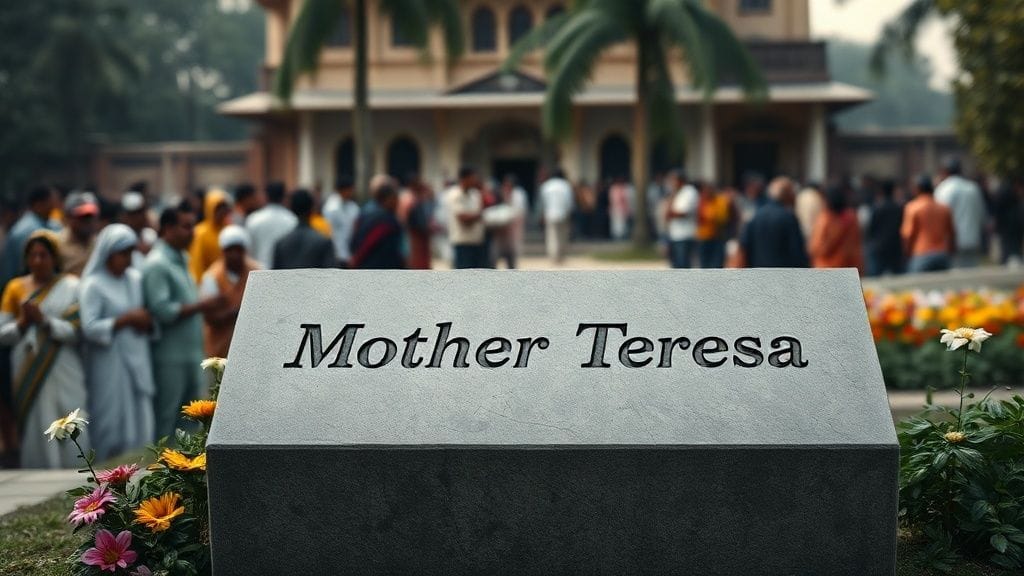
On September 13, 1997, Mother Teresa’s funeral was held at the Mother House with over 200,000 people attending in person. The streets of Kolkata overflowed with mourners—devout followers, casual admirers, the poor and privileged alike. Many wept openly, clutching rosaries, sharing stories of personal encounters with her.
Her white sari edged in blue fluttered on display as the casket was carried through a city that had known both her embrace and her stern admonitions. The ceremony blended Catholic rites with the chaotic humanity that had defined her mission’s very fabric.
For many, it was a cathartic moment, a chance to express collective grief and gratitude. The emotional weight was palpable—an entire city mourning the loss of its humblest hero.
8. The Legacy of Compassion: Missionaries of Charity After Her Passing
Mother Teresa’s death marked not an end but a transition for the Missionaries of Charity. The order continued to grow in India and abroad, expanding its services in orphanages, hospices, and communities plagued by poverty.
Leadership passed to Sister Nirmala, who had served alongside Teresa for decades. Under her guidance, the order embraced new challenges while preserving the foundational ethos laid by its founder: unconditional love and care for the destitute.
Yet, the legacy was complicated by questions about methods, funding, and modernity’s demands. Still, millions saw in their continued work the living breath of Mother Teresa’s spirit—perhaps the most powerful testament to her enduring impact.
9. Controversies and Critiques: The Complex Veil Over Her Sanctity
No historic figure escapes scrutiny, and Mother Teresa’s death reopened debates about her legacy. Critics such as Christopher Hitchens challenged aspects of her methods, funding transparency, and palliative care standards.
Supporters countered by emphasizing her holistic mission and the extraordinary political and social circumstances she confronted. These controversies, rather than diminishing her, painted a richer, more human portrait, reminding us that sainthood and imperfection often walk hand in hand.
This complexity is vital to remember as we reflect on her death and what she represents for the 21st century.
10. Political Echoes: How India Mourned Its Smallest Citizen
The Indian government’s response to Mother Teresa’s death highlighted her unique position as an international symbol of Indian philanthropy. Despite her Albanian origin, India claimed her as one of its own. Prime ministers, presidents, and local officials convened ceremonies to honor her memory, and her funeral was declared a state event.
Yet, this political embrace was also marked by the subtle intersection of faith and secular governance in India, a country where religious plurality is both a strength and a source of tension. Mother Teresa’s death thus echoed in political discourse on the role of religion in public service.
11. The End of an Era: Religious and Social Impacts
Mother Teresa’s death punctuated a closing chapter in postcolonial humanitarianism. Her model of direct, intimate care inspired countless others, especially women religious who saw in her a blueprint for service amidst chaos.
Religious orders worldwide cited her example as a call to reengage with urban poverty and marginalized populations. Her passing also led to renewed dialogue about modern approaches to charity—between institutional care, grassroots activism, and governmental responsibility.
She left behind a world asking difficult questions about faith, compassion, and duty—questions that remain as urgent now as in her lifetime.
12. Remembering Through Monuments and Museums
In the years following her death, Kolkata and other cities erected statues, plaques, and museums to commemorate Mother Teresa’s life. The Mother House in Kolkata became a pilgrimage site, attracting visitors seeking inspiration or solace.
These memorials served not only as tributes but also as places to engage with the broader questions she posed about poverty and human dignity. They are physical reminders of a presence that had become larger than life.
13. Media Portrayal: The Making of a Modern Myth
Mother Teresa’s death triggered a surge in media portrayals—from documentaries to fictionalized biographies. The narrative often walked the line between idolization and critical analysis, reflecting the complexities surrounding her persona.
Film and literature sought to capture her contradictions: saint and critic of modernity, mother and strict disciplinarian. The enduring fascination with her story underscores her place not just in history but in the collective imagination.
14. Global Humanitarian Movements Inspired by Her Life
Beyond Kolkata, her death reinvigorated global humanitarian efforts inspired by her approach. NGOs and faith-based organizations cited her as a model of dedicated service and humility.
Her life’s philosophy influenced policy discussions on care for the dying, support for street children, and poverty alleviation—issues at the heart of international development debates.
15. The Road to Canonization: From Beatification to Saint
The process of canonization accelerated after her death. In 2003, she was beatified by Pope John Paul II, and in 2016, Pope Francis declared her a saint.
Her death thus marked a transition from living legend to official sanctity within the Catholic Church—a journey that continued to ignite debate and devotion alike.
16. Reflections from Those Who Knew Her Closest
Former aides, fellow missionaries, and family members provided intimate glimpses into her final days. Many spoke of her unwavering faith and willingness to suffer for others.
These personal accounts humanize the icon, reminding us that behind the global figure was a woman grappling with frailty, doubt, and ultimate peace.
17. The Changing Face of Kolkata’s Urban Landscape Since 1997
Kolkata evolved dramatically after 1997—economic liberalization spurred new developments amid persistent poverty. Mother Teresa’s death remains a fixed point amid this transformation, a call back to the city’s moral center.
Her legacy continues to influence social policies and local initiatives addressing homelessness and healthcare.
18. Mother Teresa’s Death and the Indian Church’s Role
Her passing also challenged the Indian Catholic Church to assume a more active public role. Increased visibility and initiatives followed, aiming to extend social outreach beyond traditional boundaries.
Her death catalyzed conversations about interfaith dialogue and cooperation in India’s complex religious landscape.
19. The Economics of Charity: Funds and Faith Beyond 1997
The Missionaries of Charity faced the challenge of sustaining their mission amid growing expectations and scrutiny. The economics of charitable work became a topic of intense discussion, balancing faith-driven generosity with transparency and efficiency.
Her death marked the beginning of a new era of institutional reflection.
20. The Enduring Power of Simple Acts of Kindness
Perhaps the most profound legacy left by Mother Teresa’s death was the reminder of small kindnesses’ power. Her life and passing urged societies worldwide to value empathy as a force for change—a message as vital now as ever.
21. How Future Generations Understand Mother Teresa’s Compassion
Schools, universities, and humanitarian organizations continue to study her approach, inspiring new generations to grapple with the ethics of care and the politics of poverty.
Her death catalyzed academic and social interest that reframes charity for contemporary challenges.
22. Conclusion: A Legacy Carved in the Quiet Corners of Humanity
Mother Teresa’s death on September 5, 1997, was more than the end of a life; it was the closing of a chapter in humanity’s ongoing struggle with poverty, suffering, and compassion. She leaves behind a complex legacy filled with devotion, criticism, and profound lessons about humility and service.
She taught the world that even the smallest acts of love can ripple outward, changing lives and igniting hope. Her departure from this earth invites us to reflect—not merely on her saintliness—but on our own capacity for kindness in a world still rife with need.
FAQs
Q1: What were the main causes of Mother Teresa’s death?
Mother Teresa died at age 87 from heart failure, compounded by years of declining health including heart disease.
Q2: How did Kolkata respond to her death?
The city declared a day of mourning and held a massive public funeral attended by hundreds of thousands, reflecting her deep local impact.
Q3: What made Mother Teresa a global figure?
Her unwavering dedication to the poorest and dying, combined with international recognition like the Nobel Peace Prize, elevated her worldwide.
Q4: Were there any controversies surrounding her life and death?
Yes, debates about her medical methods, funding, and philosophies emerged, adding complexity to her legacy.
Q5: How long did the canonization process take after her death?
She was beatified in 2003 and canonized as a saint in 2016, roughly two decades after her passing.
Q6: What is the legacy of the Missionaries of Charity today?
They continue to serve millions worldwide, inspired by her mission of unconditional love and care.
Q7: How has her death influenced humanitarian work globally?
Her death rekindled interest and commitment to grassroots charity and care for marginalized populations.
Q8: Where can one visit to pay tribute to Mother Teresa?
Her Mother House in Kolkata remains a pilgrimage site, along with statues and museums dedicated to her memory.
External Resource
Internal Link
🏠 Visit History Sphere → https://historysphere.com/