Table of Contents
- The Twilight of a Legend: Buenos Aires, November 25, 2020
- A Life Etched in Glory and Turmoil
- The Early Days in Villa Fiorito: From Shadows to Stardom
- The Rise of the Boy Wonder: National and Global Fame
- Triumphs and Turmoil: The 1986 World Cup and Public Adoration
- The Human Fragility behind the Godlike Talent
- Diego Maradona in Tigre: The Final Chapter
- The Day the Heart Stopped: November 25, 2020
- The Shattered Nation: Argentina Mourns its Greatest Icon
- Political Reverberations and the National Mourning
- The World Reacts: A Global Outpouring of Grief and Respect
- Controversies Surrounding Maradona’s Death
- The Medical and Legal Inquiries: What Went Wrong?
- The Cultural Legacy Beyond Football: Art, Music, and Memory
- Maradona’s Indelible Impact on Argentine Identity
- Football’s Eternal Icon: Comparing Legends and the Mythos of Diego
- From Diego to the Future: Argentine Football in the Post-Maradona Era
- The Role of Media and the Social Networks in Shaping the Memory
- Reflections from Friends, Rivals, and Admirers
- Lessons from the Life and Death of a Phenomenon
- Conclusion: Remembering Maradona as More Than a Player
- FAQs: Unpacking the Legacy of Diego Maradona
- External Resource
- Internal Link
The Twilight of a Legend: Buenos Aires, November 25, 2020
In the blistering heat of an Argentine spring, on a day that began unremarkably in Tigre—a quiet suburb nestled among the tangled waterways and green expanses north of Buenos Aires—the nation’s heartbeat skipped. Diego Maradona, the quintessential symbol of Argentine identity, had passed away. At 60, in a modest house surrounded by the political and human intricacies that had marked his final months, the legendary footballer drew his last breath.
The news fell like a thunderclap, crashing through the streets of Buenos Aires and rippling out across the globe. For a country undulating with passions—political, cultural, and sport-related—Maradona’s death was not just a loss; it was a collective trauma, a moment when history seemed to stand still. This was a man who, more than any other, had carried the weight of Argentina's hopes and contradictions on his shoulders.
Yet, understanding the full magnitude of that day requires retracing the steps of a life both celestial and tragic—a life rooted deeply in Argentine soil, yet touched by the blaze of worldwide acclaim. To grasp the intensity of the moment in Tigre, one must journey through the kaleidoscope of Diego’s existence, illuminated by the glow of stadium floodlights and shadowed by relentless personal struggles.
A Life Etched in Glory and Turmoil
Diego Armando Maradona was not born a god; he became one. At the intersection of immense talent and fierce determination, he emerged from the dusty streets of Villa Fiorito, a slum in southern Buenos Aires, where poverty was as ubiquitous as hope was scarce. The almost mythic tale of the boy with the ball—his nimble feet weaving magic against all odds—symbolizes the quintessential Latin American dream.
But Maradona’s story was far more complex. Wrestling demons, battling addiction, confronting the glare of public scrutiny—his life was a mosaic of contradictions. To understand the end in 2020, one must comprehend the perpetual battle waged inside the man who the world saw as a footballing demigod.
The Early Days in Villa Fiorito: From Shadows to Stardom
It was here, among poorly lit streets and cramped homes, that Diego first kicked a ball with a fervent intensity that signaled something extraordinary. Born on October 30, 1960, into a family that counted on football not just for joy but for survival, Maradona’s early years were shaped by the rhythms of a working-class existence.
His raw talent attracted attention early. Coaches and scouts soon recognized a prodigy whose ball control and vision defied his age. By the time he burst into the professional scene with Argentinos Juniors at just 15, a new footballing star was born—not without his fair share of youthful excesses and defiant spirit.
The Rise of the Boy Wonder: National and Global Fame
The 1970s and early 1980s shaped Diego’s ascent from national sensation to global phenomenon. At Boca Juniors, the club that would forever become synonymous with his name, Maradona’s electrifying performances captivated millions. But it was on the international stage that his legend was sealed.
The 1982 World Cup in Spain was a baptism by fire. Though Argentina didn’t triumph, the world took notice of the man who combined guile, speed, and an uncanny ability to command the ball. European clubs soon came knocking—Napoli in Italy became both his professional and emotional home.
Triumphs and Turmoil: The 1986 World Cup and Public Adoration
The 1986 World Cup in Mexico threw Maradona into the stratosphere of the sport’s immortals. His dazzling dribbles, audacious plays, and the infamous “Hand of God” goal against England marked a tournament that embodied all of Diego’s complexities—brilliance intertwined with controversy.
For Argentina, emerging from years of political upheaval and the shadows of dictatorship, Maradona's victory was a unifying moment, a balm for a wounded nation. Yet, this triumph was only a chapter in a life that refused to be neatly categorized. His career would become a rollercoaster of highs and lows, from the adulation of millions to personal battles with substance abuse and health crises.
The Human Fragility behind the Godlike Talent
Despite the mythic stature, Diego Maradona was never invincible. His human fragility often played out in the public eye—with relationships strained, newspapers filled with scandal, and health worsening even as his legend grew.
The 1990s marked a difficult period. Suspensions for doping, confrontations with authorities, and the weight of a global spotlight took their toll. Yet, the world never ceased to admire the man who embodied raw passion and sheer talent.
Diego Maradona in Tigre: The Final Chapter
In his last years, Maradona chose the tranquil environs of Tigre, a place far removed from the roaring stadiums and the clamorous streets of Buenos Aires. Here, surrounded by friends and caretakers, he sought peace and recovery.
Yet, the demons were never far away, shadowed by health scares and public controversies. The choice of this quiet corner of Argentina for retirement was symbolic—a retreat, but also a place from which news of his worsening condition would shock a watching nation.
The Day the Heart Stopped: November 25, 2020
That Wednesday, Buenos Aires awoke to breaking news. Diego Maradona had suffered a cardiac arrest and died in his home. The timing was dramatic—just weeks after a successful brain surgery aimed at removing a blood clot.
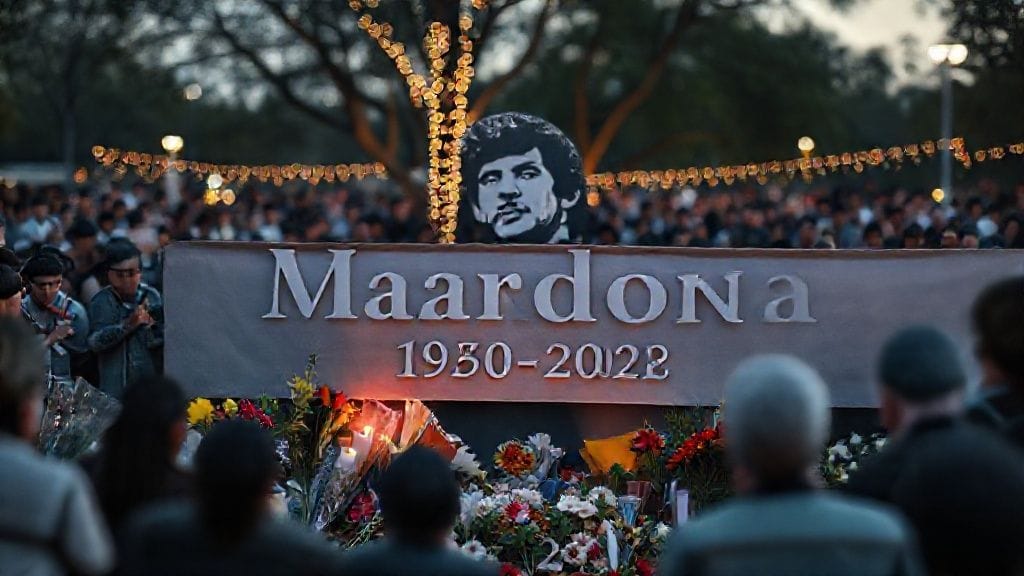
The country was stunned. Television broadcasts, radio shows, social media—all paused for the moment. People poured into streets, stadiums, and public squares, their grief immediate and visceral. The fragile balance between adulation and sorrow crumbled.
The Shattered Nation: Argentina Mourns its Greatest Icon
In Buenos Aires and across the nation, the atmosphere turned electric with collective mourning. Flags flew at half-mast; impromptu shrines blossomed in city corners; entire football clubs memorialized the legend.
For many Argentines, Maradona was far more than a football player—he was an emblem of national pride, resistance, and identity. His death reopened past wounds and reawakened collective memories that transcended sport.
Political Reverberations and the National Mourning
The government declared three days of national mourning, a rare gesture underscoring Maradona's symbolic stature. President Alberto Fernández, visibly emotional, hailed him as "the greatest footballer in the history of the sport."
Yet political voices also clashed, with debates about the management of his health and unprecedented media frenzy stirring controversy. Maradona’s death became a mirror reflecting the social and political fractures of contemporary Argentina.
The World Reacts: A Global Outpouring of Grief and Respect
From Messi’s heartfelt tribute to President Biden’s condolences, the world mourned Diego. Football clubs everywhere held moments of silence; fans lights candles from Naples to Dubai.
Maradona’s influence was global and transcendent. His style of play, charismatic defiance, and cultural imprint sparked reactions from diverse sectors, illustrating how deeply rooted his legacy was.
Controversies Surrounding Maradona’s Death
The immediate aftermath was marred by questions: Were the medical protocols satisfactory? Could his death have been prevented?
Reports of alleged negligence, health mismanagement, and family disputes dominated the headlines. Investigations were launched, stirring debate on how a living legend could slip away under such circumstances.
The Medical and Legal Inquiries: What Went Wrong?
A medico-legal inquiry examined the details: the quality of care, the role of his doctors, and the circumstances of his cardiac arrest. Public scrutiny was intense, fueled by the contradictory statements and the passion surrounding his life.
These inquiries painted a picture of a fragile man surrounded by imperfections, a final act tinged by human failure despite profound love and care.
The Cultural Legacy Beyond Football: Art, Music, and Memory
Maradona’s influence permeated Argentine culture in unexpected ways. Poets wrote about his divine touch, musicians composed ballads in his honor, street artists immortalized his image.
His life inspired books, films, and documentaries, weaving him permanently into the fabric of Argentine collective memory.
Maradona’s Indelible Impact on Argentine Identity
To many Argentines, Diego was the embodiment of their country's contradictions: raw talent and grit, beauty and chaos, joy and despair.
His story mirrored the Argentine spirit—a nation struggling yet resilient, passionate yet vulnerable. Maradona’s mythology serves as a cultural touchstone across generations.
Football’s Eternal Icon: Comparing Legends and the Mythos of Diego
While contemporaries like Pelé and Messi defined their eras, few players carried the dramatic aura Maradona did. His flair, his flaws, his fights on and off the pitch constructed a myth unlike any other.
Evaluating his impact is less a question of statistics and more a question of storytelling—a performance that echoed beyond measures and numbers.
From Diego to the Future: Argentine Football in the Post-Maradona Era
Maradona’s death marked the end of an era and forced reflection on the future. Young talents carry the torch, but the shadow of Diego looms large.
For Argentine football, it is a period of renewal and reckoning, where the legend teaches lessons about greatness and vulnerability.
The Role of Media and the Social Networks in Shaping the Memory
In the digital age, Maradona’s legacy was amplified by social media. Millions shared anecdotes, videos, and tributes, creating an evolving narrative that blended myth, memory, and reality.
The media’s dual role as celebrant and scrutinizer shaped the way the world remembered Diego—always larger than life, but painfully human.
Reflections from Friends, Rivals, and Admirers
From Pelé’s somber respect to rivals’ tributes, the flood of personal reflections illustrated the complexity of the man.
Friends recalled a loyal soul, rivals acknowledged his genius, and fans mourned a hero who transcended sport to become a symbol of hope and defiance.
Lessons from the Life and Death of a Phenomenon
Maradona’s story teaches about the costs of greatness and the price paid by those born to shine under unforgiving lights.
His life is a cautionary tale about the intersection of talent, celebrity, and human frailty, offering insights into the human condition as much as into football.
Conclusion: Remembering Maradona as More Than a Player
Diego Maradona’s death was a moment of collective heartbreak but also of profound reflection. More than the man who scored goals or lifted trophies, Maradona represented a country’s soul—a fierce, passionate, flawed, and irresistible spirit.
To remember Diego is to embrace the complexity of greatness: its light and shadows, its triumphs and tragedies. In the streets of Buenos Aires and the hearts of millions, his echo will resound forever.
FAQs
Q1: What were the main causes leading to Diego Maradona’s death?
A1: Diego Maradona died from a cardiac arrest, just weeks after undergoing brain surgery to remove a blood clot. His long-term health issues, including past drug addiction and cardiovascular problems, contributed to his fragile condition.
Q2: How did Argentina officially respond to Maradona’s death?
A2: The Argentine government declared three days of national mourning. Public ceremonies and vigils were held, and the president personally commemorated Maradona’s legacy, underscoring his symbolic importance to the nation.
Q3: Were there controversies regarding the medical care Maradona received before his death?
A3: Yes, investigations were launched into the medical and caretaking conditions leading up to his death, with allegations of negligence and mismanagement sparking public debate and legal inquiries.
Q4: How did the world outside Argentina react to the news?
A4: The global football community and political leaders worldwide expressed condolences. Football clubs around the world held moments of silence, and fans shared tributes across social media platforms.
Q5: What makes Maradona’s legacy unique compared to other football legends?
A5: Maradona’s blend of extraordinary talent, flamboyant personality, and human vulnerability created a complex and enduring mythology that transcended sport and connected deeply with cultural and political narratives.
Q6: How has Maradona influenced Argentine culture beyond football?
A6: Maradona inspired art, music, literature, and cinema, becoming a symbol of Argentine identity and resilience. His life story continues to be a subject of cultural expression and national reflection.
Q7: What impact did Maradona’s life have on future generations of footballers in Argentina?
A7: Maradona inspired countless young athletes to pursue football, setting a benchmark for creativity and passion. His legacy is both an inspiration and a caution about the pressures of fame.
Q8: How is Maradona remembered in Tigre, where he passed away?
A8: Tigre has become a place of pilgrimage and memorial. Communities and fans honor his memory, recognizing it as the quiet setting of his final days amid a tumultuous life.

