Table of Contents
- The Fiery Morning of April 7, 1906: Nature’s Sudden Fury
- A Sleeping Giant: Vesuvius Before the Eruption
- The People of Campania: Life in the Shadow of Vesuvius
- The World’s Eye on Naples: Cultural and Economic Vibrancy Before Disaster
- The Initial Signs: Whispers of Trouble Beneath the Earth
- From Warning to Calamity: The Timeline of the 1906 Eruption
- The Nature of the Blast: Pyroclastic Flows, Ash Clouds, and Lava Rivers
- Human Stories Amidst the Ash: Rescue, Panic, and Survival
- Damage and Devastation: Towns Buried and Lives Disrupted
- Scientific Observers and the Birth of Modern Volcanology
- The Impact on Naples and Surrounding Communities
- Government Response and International Aid Efforts
- Economic Ramifications: Agriculture, Trade, and Tourism Wrecked
- In the Shadow of Vesuvius: Cultural Memory and Collective Trauma
- Lessons Learned: How the 1906 Eruption Shaped Future Disaster Preparedness
- Vesuvius in Art and Literature: Creative Reflections on Tragedy
- Rediscovering the Past: Archaeological and Geological Insights Today
- Comparing the 1906 Eruption with 79 AD: Continuity and Change
- The Volcano’s Enduring Threat: Vesuvius in the 21st Century
- Conclusion: A Testament to Human Resilience and Natural Power
- FAQs: Understanding the 1906 Vesuvius Eruption
- External Resource
- Internal Link
The Fiery Morning of April 7, 1906: Nature’s Sudden Fury
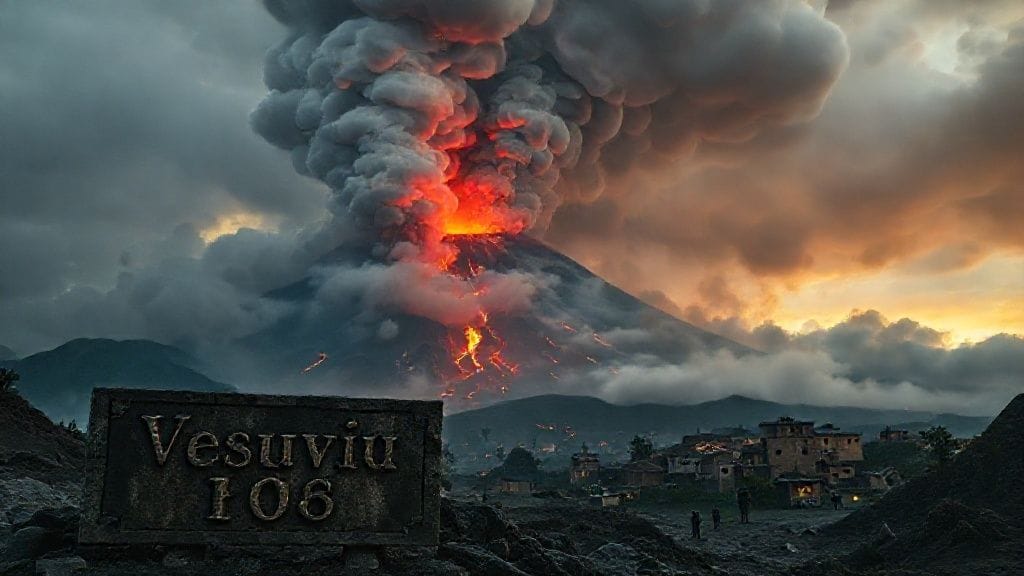
It began without warning, on a clear spring morning in the Campanian sky above Naples. The tranquility was shattered by an abrupt roar—a deep, relentless rumbling that rolled through the streets and fields, vibrating windows and souls alike. Above the peaceful city, a black column of ash and smoke thrust violently into the blue sky, blotting out the sun in a suffocating dusk. Vesuvius, long dormant but never forgotten, had awakened again, violently reclaiming its place as one of the most formidable natural forces in Europe.
This eruption of April 1906 was not only a geological event but a profound human experience etched into the collective memory of the region. Over the next days, the volcano unleashed torrents of molten rock, streams of searing ash, and clouds of poisonous gas that pushed entire communities to the brink of extinction. But these immediate horrors were but chapters in a story that stretches from the ancient world to today’s modern Italy, shining a stark light on the paradox of life living in the shadow of one of the world’s most famous volcanoes.
A Sleeping Giant: Vesuvius Before the Eruption
Vesuvius was a volcano with a storied past—a symbol both of destruction and mystery. For centuries, it had been regarded with a mixture of awe, fear, and superstitious reverence by the people living around its base. The infamous eruption of AD 79, which buried Pompeii and Herculaneum under volcanic ash and pumice, was a haunting legacy, a cautionary tale inevitably passed down through generations.
Yet, by the early 20th century, Vesuvius had been quiet for almost two and a half centuries. Its slopes had become fertile ground supporting vineyards, orchards, and homes. The volcano’s dormant calm lulled many into a false sense of security, though geologists and some local residents remained cautiously watchful. The volcanic cone, rich in its own scars from past eruptions, stood silently, its might masked by verdant fields and bustling villages.
The People of Campania: Life in the Shadow of Vesuvius
Life in Campania was a vibrant tapestry woven from centuries-old traditions, Mediterranean culture, and the dynamics of a growing urban center. Naples, perched defiantly near the volcano’s base, was the third-largest city in Italy by population. Its harbor bustled with trade, artisans honed their crafts, and families grew accustomed to the mountain that loomed over their everyday existence.
The residents’ relationship with Vesuvius was paradoxical: it was both a revered guardian and a lurking menace. To farmers, the volcanic soil was a blessing, offering extraordinary fertility for grapes and olives. Yet, beneath their routines, a quiet tension persisted—as if they shared their lives with a sleeping beast whose awakening could bring annihilation on an unimaginable scale.
The World’s Eye on Naples: Cultural and Economic Vibrancy Before Disaster
Naples at the dawn of the 20th century was a city steeped in history while rushing toward modernity. Its narrow streets echoed with laughter, commerce, and music. The arts thrived, and the port connected it to a network of global trade routes. The city was alive with energy and aspirations, its population a mosaic of immigrants, artisans, and merchants.
Yet, a lingering shadow rested at the city’s doorstep. Tales of previous eruptions filtered through the air alongside contemporary anxieties: could the volcano erupt again? Scientists were beginning to build their understanding of such phenomena, but for many laypeople, Vesuvius was a capricious force—unpredictable, ominous, but—until then—inert.
The Initial Signs: Whispers of Trouble Beneath the Earth
In the weeks before April 7, 1906, subtle but alarming signs began to emerge. Locals reported tremors—soft, almost imperceptible quakes shaking the ground. Strange smells, sulfurous and acrid, drifted from cracks in the earth, and sudden bursts of steam showed that something restless stirred deep below.
Veteran volcanologists of the era, though limited by the science of their day, took notice. Instruments registered heightened seismic activity, and the stationary calm of the mountain was fractured by intermittent emissions of smoke and ash. Still, these warning signs, while troubling, were not immediately understood as the ante of calamity.
From Warning to Calamity: The Timeline of the 1906 Eruption
On the morning of April 7, a powerful explosion shattered the atmosphere above Naples. Over succeeding hours, Vesuvius expelled torrents of incandescent lava that flowed down its slopes, devastating the villages of Ottaviano, Massa di Somma, and San Sebastiano al Vesuvio.
The eruption’s violent phases unfolded like the climax of a tragic drama. Clouds of ash darkened the daylight, disrupting visibility and raining down choking dust. Pyroclastic flows surged with terrifying speed, scouring everything in their path. Villagers and city dwellers alike scrambled to escape an invisible enemy whose reach was vast and deadly.
The Nature of the Blast: Pyroclastic Flows, Ash Clouds, and Lava Rivers
More than an eruption, what struck Campania was a complex, multi-faceted volcanic event. The pyroclastic flows—fast-moving, superheated currents of gas and volcanic matter—were especially lethal. These searing rivers of destruction flowed down the flanks, obliterating forests, homes, and farmland.
Simultaneously, massive ash clouds blotted out the sky, creating an eerie twilight across the region that reminded survivors of the fabled destruction of Pompeii. The fall of volcanic ash suffocated the air, clogged lungs, and contaminated water sources, adding a silent but insidious threat to the visible devastation.
Human Stories Amidst the Ash: Rescue, Panic, and Survival
Beyond geological phenomena, the eruption tells a deeply human story. The speed and ferocity of the disaster caught many off guard. Families fled their homes with little more than the clothes on their backs. Some found salvation in the chaotic evacuation to Naples or into the countryside.
Among the poignant tales was that of a local schoolteacher who, risking her life, guided children through ash-choked streets to safety. Another account describes fishermen who abandoned their boats to flee the smell of sulfur and the darkness falling over the sea.
It was a time of raw fear, hope threaded with despair, community resilience tested by unprecedented trauma.
Damage and Devastation: Towns Buried and Lives Disrupted
The destruction was profound. Several smaller towns around Vesuvius were buried entirely under layers of ash and debris. The fertile valleys, so essential to Campania’s agriculture, were rendered useless by the volcanic fallout. Hundreds of homes were destroyed or severely damaged, and thousands of people were displaced.
Though exact mortality figures were uncertain, official counts indicated scores dead and many more injured. The societal fabric—woven around farming, local trades, and family life—was rent apart as survivors struggled with loss and displacement.
Scientific Observers and the Birth of Modern Volcanology
The 1906 eruption did more than devastate—it galvanized the scientific community. European and Italian volcanologists rushed to the site, armed with early seismographs, barometers, and fresh scientific zeal. Their observations helped to clarify how explosive Vesuvius’s eruptions could be, and the complex dynamics of magma, ash, and gas emissions.
This eruption became a turning point in volcanic science, contributing observations that enriched the understanding of eruption precursors and ash dispersion, and highlighted the necessity of detailed hazard monitoring—a legacy that shapes modern volcanology.
The Impact on Naples and Surrounding Communities
Naples, though spared the full brunt of the eruption's anger, was engulfed in ash. Commerce slowed as the port grappled with visibility challenges and fears of ongoing danger. Markets closed, schools shuttered, and a shadow of despair and uncertainty blanketed daily life.
Surrounding villages faced worse fates, with thousands seeking refuge. Social networks strained under the weight of displacement and resource scarcity, yet aid efforts began to mobilize, spearheading a remarkable display of communal fortitude.
Government Response and International Aid Efforts
The Italian government responded with urgency, sending troops and resources to aid the affected regions. Emergency shelters were established, medical teams dispatched, and food supplies distributed. International offers of support poured in, with nearby nations expressing solidarity.
However, 1906 Italy was also a country confronting economic challenges, and the scale of destruction strained administrative capacities. The disaster highlighted weaknesses in emergency preparedness, but also seeded reforms aimed at enhancing response frameworks.
Economic Ramifications: Agriculture, Trade, and Tourism Wrecked
The eruption’s economic toll rippled across sectors vital to Campania’s identity. Vineyards and orchards, the pride of the region, suffered heavy damage from ash fall, ruining entire harvests and livelihoods dependent on their yields.
Trade slowed as confidence wavered, and the once-thriving tourism sector—drawn by Naples’ culture and views of Vesuvius—faltered for years under the shadow of destruction. The recovery was slow, underscored by shifts in economic priorities and the long task of land restoration.
In the Shadow of Vesuvius: Cultural Memory and Collective Trauma
The eruption became etched in local and national memory as a testament to both tragedy and endurance. Survivors and descendants recounted their stories in folklore and family histories. Artists, writers, and musicians drew inspiration from the raw emotional landscape forged in ash and fire.
Public commemorations and scholarly work kept the event alive in collective consciousness—sometimes as a reminder of nature’s ferocity, sometimes as a symbol of Campanian identity, forged in resilience and respect for a volatile home.
Lessons Learned: How the 1906 Eruption Shaped Future Disaster Preparedness
The catastrophe exposed the urgent need for structured monitoring and proactive evacuation plans near volcanic areas. Italian authorities began implementing systematic geological surveys, and local municipalities revamped building codes and emergency communication systems.
Today’s sophisticated volcano observatories and public safety campaigns in Campania owe much to the painful lessons born in 1906—highlighting how human societies strive not only to understand but also to live prudently with natural hazards.
Vesuvius in Art and Literature: Creative Reflections on Tragedy
From the haunting depictions of ash-filled skies to poems lamenting lost lives, the 1906 eruption inspired a wave of artistic expression. Painters captured the surreal twilight draped over Naples; novelists explored themes of destruction’s randomness and human fragility.
These works remind us that history is not only documented by facts and figures but also felt and processed through culture—turning trauma into shared human meaning.
Rediscovering the Past: Archaeological and Geological Insights Today
Modern volcanic research continues to unpack the layers of Vesuvius’s past eruptions, including the 1906 event. Archaeologists excavate buried homes and artifacts, piecing together the lived experience beneath the ash.
Geologists deploy cutting-edge technology to map lava flows and ash deposits, refining hazard models that benefit millions currently residing near the volcano. The 1906 eruption remains a primary case study illustrating volcanic complexity and human vulnerability.
Comparing the 1906 Eruption with 79 AD: Continuity and Change
For all their differences, the eruption of 1906 carries haunting echoes of the catastrophic AD 79 event. Both reshaped landscapes, took lives, and indelibly marked regional identity. Yet, advances in science, infrastructure, and policy between the two demonstrate the evolution of human capacity to respond.
The contrast also underscores a sobering truth: while technology has advanced, nature’s power remains humblingly persistent.
The Volcano’s Enduring Threat: Vesuvius in the 21st Century
More than a century later, Vesuvius remains active and closely watched. The densely populated Campanian region sits under constant threat, with millions living within eruption risk zones.
Preparedness measures now incorporate evacuation drills, sophisticated monitoring networks, and public education—yet the questions raised by 1906 endure: how to balance life and livelihood on the slopes of a living volcano?
Conclusion
The 1906 eruption of Mount Vesuvius was a moment of primal upheaval, a vivid reminder of our planet’s volatile heartbeat. It was a natural event charged with human stories of loss, courage, and recovery. While the ash settled and life slowly resumed, the eruption carved lessons deep into scientific understanding and cultural memory.
Today, looking back more than a century, that fiery spring morning in Campania alerts us to the delicate dance between human ambition and nature’s unpredictable might. It urges respect, preparedness, and compassion—an enduring testament that, no matter how advanced we become, the Earth’s ancient forces still shape our destinies.
FAQs
1. What caused the 1906 eruption of Vesuvius?
The eruption was caused by the movement of magma beneath Vesuvius’s volcano chamber, which increased pressure until gases and molten rock violently escaped through the mountain’s crater, triggering explosive lava flows, ash clouds, and pyroclastic currents.
2. How does the 1906 eruption compare to the famous AD 79 eruption?
While both were highly destructive, the AD 79 eruption buried entire cities like Pompeii instantaneously. The 1906 eruption was similarly explosive but occurred in a context with better scientific understanding and emergency response, resulting in more mitigated but still significant damage.
3. How many people were affected by the 1906 eruption?
Thousands were displaced, and dozens died. While exact casualty numbers are uncertain, the eruption destroyed many homes and devastated agricultural lands affecting local economies and communities extensively.
4. What scientific advances emerged from studying the 1906 eruption?
The eruption helped establish modern volcanology with improved knowledge of eruption precursors, ash flow dynamics, and the importance of seismic monitoring, shaping future disaster risk reduction.
5. How did the Italian government respond to the disaster?
The government mobilized military and medical aid, provided emergency relief, and began restructuring disaster preparedness policies, although the scale of the eruption exposed gaps in readiness.
6. Is Vesuvius still a threat today?
Yes. Vesuvius remains an active volcano closely monitored due to the large population living nearby. Ongoing efforts aim to prepare residents for potential future eruptions.
7. How has the 1906 eruption influenced local culture?
It is deeply embedded in local memory and culture, inspiring art, literature, and public commemorations that reflect on human resilience and the relationship with nature’s forces.
8. What measures exist now to protect people living near Vesuvius?
Modern evacuation plans, monitoring systems, and public education campaigns are in place to mitigate the impact of any future eruptions.

