Table of Contents
- The Birth of a Fiery Giant: The Campi Flegrei Region before 1538
- A Land of Myths and Molten Fury
- Signs in the Sky and Earth: Precursors to the 1538 Eruption
- The Calm Before the Storm: Campania on the Eve of Disaster
- August 1538: When Earth Roared Back
- Creation of Monte Nuovo: A New Volcano Arises
- Eyewitnesses of Fire: Human Stories Amidst the Chaos
- The Volcano's Chain Reaction: Ash, Gas, and Earthquakes
- How the Eruption Reshaped the Landscape Forever
- The Immediate Aftermath: Mortality, Displacement, and Despair
- Economic Devastation and Agricultural Ruin in Campania
- Societal and Political Ripples from Fiery Cataclysm
- From Fear to Fascination: The Eruption in Renaissance Thought
- Early Scientific Observations and Their Limitations
- The Legacy of Monte Nuovo in Volcanology
- Campi Flegrei Today: A Sleeping Giant Beneath Modern Italy
- Lessons from 1538: Human Resilience in the Face of Nature
- The Volcano’s Grip on Cultural Memory and Local Identity
- How the 1538 Eruption Changed European Perceptions of Volcanism
- Preparing for the Next Awakening: Modern Monitoring Efforts
- The Campi Flegrei Eruption in the Global Panorama of Volcanic Events
- Conclusion: Fiery Origins, Enduring Impacts
The Birth of a Fiery Giant: The Campi Flegrei Region before 1538
Nestled along the shimmering coast of southern Italy, the Campi Flegrei — the “Burning Fields” — have long captured the imagination of those who lived nearby. A sprawling volcanic caldera spanning over twelve kilometers in diameter, this restless underground cauldron had been simmering silently for millennia before 1538, giving rise to fertile lands, thermal springs, and an aura steeped in myth and mystery. Yet beneath its tranquil greenery, the earth remained a molten powder keg.
Before the dramatic events of 1538, this region was both a blessing and a curse. The fertility of the volcanic soils brought prosperity to farmers, while the fumeroles and hot springs were sources of healing and superstition alike. However, the ground had also been locally unsettled by smaller eruptions and seismic tremors centuries before, a whispered warning of what was to come.
A Land of Myths and Molten Fury
The fiery temperament of Campi Flegrei is forever etched in the folklore of its ancient inhabitants. Romans likened the area to the forge of Vulcan, the god of fire and metalworking, believing that the earth’s infernal breath was the forge’s smoke. Ovid described the region as “gefenus fumi,” the smoke rising from the underworld—a warning from a deep, volatile hell beneath their feet.
It was this realm of constant tension between creation and destruction that artists, poets, and chroniclers struggled to capture. Yet, even with legends swirling like hot ash, no one truly anticipated the colossal transformation that would soon scar the landscape and the collective memory of Campania.
Signs in the Sky and Earth: Precursors to the 1538 Eruption
In the months leading up to August 1538, Campania’s skies darkened unnaturally. Local peasants and shepherds reported tremors shaking their homes almost nightly, while strange clouds of sulfurous smoke rose from the earth. The region’s ancient springs churned with visible agitation, and animals fled the area in distress.
The most telling early sign was a series of earthquakes that unsettled both city-dwellers and rural populations alike. Even then, medieval scientific understanding was scarcely able to interpret these trembling warnings. Some feared divine wrath, while others whispered of a hidden fire rekindling beneath the soil.
The Calm Before the Storm: Campania on the Eve of Disaster
In the weeks before the eruption, life had a deceptive tranquility. Coastal towns such as Pozzuoli bustled with trade, and the vineyards and olive groves were heavy with promise. Yet beneath this normalcy, a menacing change loomed. Fishermen reported strange patterns in sea behavior — sudden boils and discoloration — while locals noticed the air growing thick with an acrid scent.
Authorities attempted to maintain order in the growing panic, but the tremors began to disrupt daily life, the anxiety manifesting in an undercurrent of dread across the population. This ominous calm was the last breath before the explosive birth of Monte Nuovo.
August 1538: When Earth Roared Back
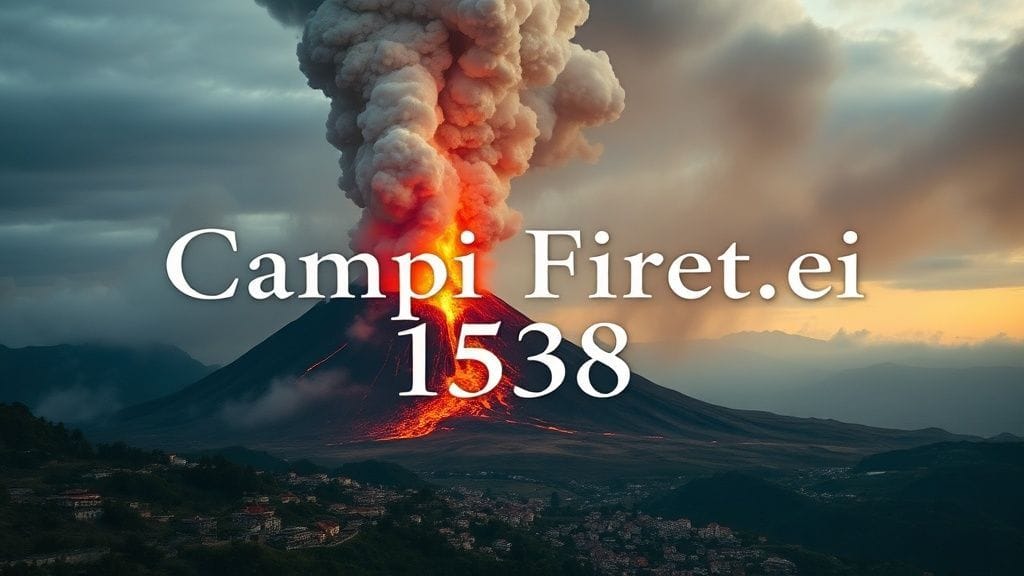
The eruption began in the early hours of August 29, 1538. First came a violent shaking of the earth, like the planet itself groaning under immense pressure. As dawn broke, columns of ash and smoke shot into the sky, blotting out the sun and turning day into a suffocating twilight.
A thunderous roar echoed from the fissures opening violently in the ground, and rivers of incandescent lava began carving new paths through the landscape. The eruption would last for about a week, an intense outpouring of molten rock and volcanic gases never before witnessed by local communities.
Creation of Monte Nuovo: A New Volcano Arises
Arguably the most extraordinary geological outcome of the eruption was the creation of Monte Nuovo—literally “New Mountain.” Rising suddenly from the earth, this cinder cone reached approximately 130 meters in height within just days, a spectacular but terrifying transformation of the local topography.
Monte Nuovo still stands today as a stark reminder of nature’s capacity for swift reinvention. It was a phenomenon that amazed renaissance scholars and peasants alike—an emergent mountain where none had stood, a scar born of fury and fire.
Eyewitnesses of Fire: Human Stories Amidst the Chaos
In the midst of the ash-darkened skies and shaking earth, personal stories from locals linguistically relayed the eruption’s terror and awe. The farmer who fled with his family, clutching only what they could carry, the merchant stranded on the ruined docks of Pozzuoli, watching goods turn to ash, and the priest who gathered his flock for prayers amid the chaos—all these voices echo through time.
One diarist described the sky as “a burning canopy, cracked and leaking fire,” while another noted how the ground heaved “as though the earth were breathing its last.” These accounts humanize the magmatic wrath, transforming it from abstract disaster to lived nightmare.
The Volcano’s Chain Reaction: Ash, Gas, and Earthquakes
The eruption’s violence triggered a cascade of geological effects: vast quantities of volcanic ash blanketed the land, choking crops and clogging wells. Poisonous gases such as sulfur dioxide filled the air, causing respiratory illnesses and sowing panic.
Additionally, seismic aftershocks continued for months, sometimes jolting already traumatized communities. Coastlines shifted, wells collapsed, and the land itself changed shape—small villages found themselves isolated or submerged as the terrain reconfigured itself.
How the Eruption Reshaped the Landscape Forever
The creation of Monte Nuovo was only part of the story. Surrounding plains subsided, lakes enlarged, and old burial grounds were swallowed or buried beneath fresh layers of volcanic debris. The once fertile fields bore blackened scars; river courses were diverted, and new fumaroles continued to vent noxious gases decades afterward.
This reshaping had long-term effects on settlement patterns, agriculture, and daily livelihoods. For centuries, the land would retain the memory of fire beneath its crust, a landscape both generative and destructive by turns.
The Immediate Aftermath: Mortality, Displacement, and Despair
Tragically, the eruption claimed lives. Estimates remain vague, but dozens if not hundreds succumbed directly to the eruption’s violence or the ensuing famine and disease. Many survivors fled, becoming early examples of environmental refugees forced to negotiate new homes and identities.
Families were separated, towns were abandoned, and the psychological toll was profound. Contemporary letters speak of “a land bereft of souls” and “homes swallowed by earth’s fury,” capturing a moment when humanity felt powerless and prey to capricious nature.
Economic Devastation and Agricultural Ruin in Campania
The destruction rippled through Campania’s economy. Fertile volcanic soils that once nourished vineyards and orchards were buried under meters of ash and pumice. Fishing suffered as coastal waters warmed and became toxic, disrupting aquatic ecosystems.
Trade routes were severed, markets diminished, and famine loomed as harvests failed for several years. Even wealthier urban centers felt the blow, caught between humanitarian aid demands and strained resources.
Societal and Political Ripples from Fiery Cataclysm
Beyond physical damage, the eruption brought social upheaval. Landowners lost estates; laborers faced starvation; local rulers wrestled with emergency governance amid widespread displacement. The disaster stirred political anxieties in larger states, including the Spanish Kingdom of Naples, which controlled the region.
Such crises exposed fragile infrastructures and disparities between classes, prompting early debates on disaster relief mechanisms and the limits of human control over nature.
From Fear to Fascination: The Eruption in Renaissance Thought
The 1538 eruption occurred during the Renaissance—a time when curiosity about the natural world was burgeoning. Initially, many interpreted the event through religious and moral frameworks, viewing it as divine punishment or portent.
However, natural philosophers began to observe and question, slowly shedding superstition. The eruption inspired early geological treatises, artistic depictions, and poetic reflections—mixing dread with awe at nature’s power.
Early Scientific Observations and Their Limitations
While lacking our modern scientific tools, observers nonetheless recorded valuable data: changes in topography, earthquake sequences, and the progression of volcanic activity. These early chronicles laid groundwork for volcanology centuries later.
Yet interpretations remained colored by prevailing humoral theories and religious explanations, hindering objective understanding. The distinction between myth and empirical science was only beginning to emerge.
The Legacy of Monte Nuovo in Volcanology
Monte Nuovo stands as a landmark both literally and figuratively in the history of volcanology. Its rapid formation provided one of the earliest well-documented examples of strombolian and phreatomagmatic eruptions in Europe.
Subsequent studies of Campi Flegrei benefited from these early observations, ultimately contributing to modern volcanic hazard assessment and monitoring techniques worldwide.
Campi Flegrei Today: A Sleeping Giant Beneath Modern Italy
Fast forward nearly five centuries, Campi Flegrei remains a potent hazard. The caldera is closely monitored, given its reputation for a super-eruption scale potential. Underground magma chambers continue to shift, and subtle uplift phenomena periodically hint at ongoing subterranean unrest.
Modern towns lie precariously nearby—Naples, Pozzuoli, and others—reminding us that the volcano’s story is far from over.
Lessons from 1538: Human Resilience in the Face of Nature
The 1538 eruption is as much a human saga as a geological event. Communities endured devastation yet rebuilt, adapting to altered environments. Their resilience teaches valuable lessons about risk, preparedness, and coexistence with natural forces.
It also reminds us of the fragility of civilization when faced with planetary power—a humbling insight for the present and future.
The Volcano’s Grip on Cultural Memory and Local Identity
Local culture remains intertwined with the memory of Monte Nuovo and the fiery birth of their landscape. Festivals, oral histories, and art keep the event alive, a testament to humanity’s need to narrate and make sense of catastrophe.
This cultural imprint shapes regional identity, fostering a unique blend of reverence, fear, and pride.
How the 1538 Eruption Changed European Perceptions of Volcanism
Before 1538, volcanic eruptions were primarily the stuff of distant myth or exotic tales. The emergence of Monte Nuovo from the European soil brought volcanism from the realm of legend into immediate reality for scholars and rulers alike.
It catalyzed broader interest in volcanic activity and inspired comparative studies across Europe, contributing to the gradual transformation of natural philosophy into modern geology.
Preparing for the Next Awakening: Modern Monitoring Efforts
Today, volcanologists employ advanced seismographs, satellite imagery, and gas sensors to watch Campi Flegrei’s subtle but ominous signals. Emergency plans, evacuation protocols, and public education campaigns aim to mitigate future disaster risks.
This vigilance embodies the irony that although humanity cannot yet control volcanic forces, it can increasingly forecast and prepare—a legacy growing from the ashes of 1538.
The Campi Flegrei Eruption in the Global Panorama of Volcanic Events
The eruption’s significance transcends its local impact. In the broader narrative of volcanic catastrophes, it represents a classic example of sudden monogenetic volcanism within a caldera system. Its destructive and creative duality echoes similar phenomena worldwide, from Iceland to Indonesia.
Studying this event enriches global understanding of volcanic mechanisms and disaster response.
Conclusion: Fiery Origins, Enduring Impacts
The 1538 eruption of Campi Flegrei was neither the beginning nor the end of the region’s fiery temperament, but it stands as one of the most dramatic chapters in its ongoing story. Born from subterranean unrest, Monte Nuovo arose in a week—simultaneously a monument to destruction and creation.
The event’s ripples reshaped landscapes, livelihoods, ideologies, and scientific thought, weaving a tale that resonates through centuries. It reminds us that the Earth’s core burns with ceaseless energy—capable of sudden fury, yet also essential to life itself. Our survival depends not on denying this power, but on understanding and respecting it, as the people of Campania have learned again and again.
FAQs
Q1: What geological features characterize the Campi Flegrei region before the 1538 eruption?
A1: Campi Flegrei is a large volcanic caldera with multiple fumaroles, hot springs, and smaller volcanic cones resulting from previous eruptions. It exhibits a complex system of magma chambers and hydrothermal activity underlying fertile soils.
Q2: How did people living near Campi Flegrei perceive volcanic activity before the eruption?
A2: Local populations often regarded volcanic phenomena through mythological and religious lenses, associating them with divine anger or the forge of gods. Some practiced rituals to appease these forces or used thermal waters for healing.
Q3: What were the immediate human impacts of the 1538 eruption?
A3: The eruption caused deaths from ash inhalation, lava flows, and earthquakes; displaced populations; destroyed homes and farmlands; and led to economic hardship through agricultural loss and trade disruption.
Q4: How did the eruption influence Renaissance scientific thought?
A4: It spurred greater observation and recording of volcanic phenomena, encouraging a shift from mystical interpretations toward empirical investigation, helping to lay early foundations for volcanology.
Q5: What lasting geological changes resulted from the eruption?
A5: The eruption created Monte Nuovo, altered local topography by depositing ash and pumice, redirected waterways, and intensified hydrothermal activity, permanently reshaping Campania’s landscape.
Q6: Is Campi Flegrei still active today?
A6: Yes, it remains an active volcanic area with ongoing underground magma movement, seismic activity, and ground deformation, monitored closely by scientists due to its potential hazard.
Q7: What lessons can modern society draw from the 1538 eruption?
A7: The event underscores the importance of monitoring volcanic activity, preparing communities for natural disasters, understanding risks, and fostering resilience in the face of environmental unpredictability.
Q8: How is the 1538 eruption remembered culturally in Campania?
A8: Through oral history, local traditions, art, and festivals that commemorate the event’s dramatic impact, blending respect for the volcano’s power with a regional identity closely tied to the land’s fiery nature.

