Table of Contents
- The Earth Trembles: The Opening Act of the 1888 Aeolian Volcano Eruption
- Aeolian Islands at the End of the 19th Century: A Fragile Peace
- Beneath the Surface: Geological Prelude to the Fury
- The First Flames: Initial Signs of Volcanic Unrest
- The Year of Fire: 1888’s Explosive Months
- Communities on Edge: Life in the Shadow of Vesuvius’ Lesser-Known Cousin
- Scientists and Curious Spectators: Recording a Rare Natural Drama
- The Persistent Roar: Eruption Intensity and Phases
- The Island of Vulcano: Transformation and Destruction
- A Maritime Hazard: How the Eruption Shaped Mediterranean Navigation
- The Human Cost: Lives Disrupted and the Struggle for Survival
- Cultural Imprints: Stories and Legacies in Aeolian Folklore
- The End of the Fury: Calming Earth and Cautious Optimism in 1890
- Scientific Advances: What the 1888-1890 Eruption Taught Volcanology
- Socioeconomic Aftershocks: Rebuilding the Aeolian Communities
- Environmental Consequences: New Landscapes and Ecological Renewal
- The Eruption in Global Perspective: Comparing 19th-Century Volcanic Disasters
- Modern Memories: How Today’s Aeolians Remember the Great Volcano
- Lessons for Contemporary Volcanic Risk Management
- Conclusion: The Volcano that Shaped Time and Tide in the Aeolian Islands
- FAQs: Unraveling the Mysteries of the 1888-1890 Aeolian Eruption
- External Resource
- Internal Link
It was a night painted with fire and shadow, when the heavens themselves seemed to crack open, pouring molten rage onto the tranquil waters of the Mediterranean. The Aeolian Islands, a jewel chain off the northern coast of Sicily, awoke in horror and awe as the volcanic giant Vulcano unleashed its fury between 1888 and 1890. This was no ordinary geological event—it was a raw recital of Earth's restless power, a narrative etched in flame, ash, and trembling earth.
For nearly two years, a fiery drama unfolded that would alter landscapes, lives, and scientific understanding. This eruption was not merely a natural disaster; it was a profound human experience, a collision between man and the untameable forces beneath his feet. To traverse its story is to journey into the heart of nature's unpredictability and human resilience.
1. The Earth Trembles: The Opening Act of the 1888 Aeolian Volcano Eruption
On a summer night in August 1888, the residents of Vulcano—the Aeolian Island that lent its name to the volcano itself—felt the first violent shakes. The earth groaned below their feet, trembling with an ominous rhythm that shattered windows and awakened wild terror. It was the opening act of a geological drama few had dared imagine: a volcanic eruption that would last more than a year, alternating between ferocious explosions and quieter, lava-flowing intermissions.
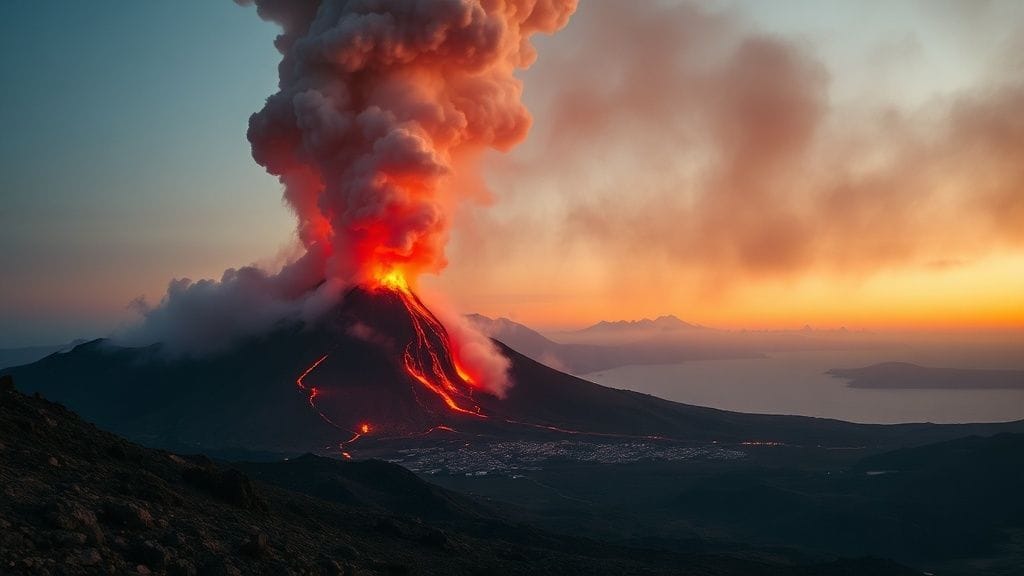
This initial rumbling was soon accompanied by towering plumes of sulphurous smoke and incandescent lava fountains shedding molten rock into the twilight sky. Locals were at once fascinated and panicked as landscapes they knew changed by the hour. The eruption provided a terrifying spectacle but also a compelling invitation to the scientific minds of the time, eager to study every speck of ash and tremor.
2. Aeolian Islands at the End of the 19th Century: A Fragile Peace
The Aeolian Islands, a cluster of volcanic isles off Sicily’s northern coast, were by the late 19th century a mosaic of small fishing villages and farming communities. Life revolved around the sea and the fertile volcanic soils. The islands’ cultivation of grapes, olives, and capers formed a fragile economic balance, punctuated by isolation and modest prosperity.
Though the region was no stranger to the occasional rumblings of its volcanic underpinning—Stromboli and Vulcano had long histories of intermittent activity—1888 came with an atmosphere thick with uncertainty. Earthquakes were not unfamiliar, but the signs mounting beneath Vulcano were unlike anything in recent memory. It was a reminder that beneath the beauty of the islands, ancient forces quietly plotted upheaval.
3. Beneath the Surface: Geological Prelude to the Fury
To understand the 1888 eruption, one must peer beneath the earth’s crust where tectonic plates grind and magma churns. The Aeolian Islands are situated along a complex subduction zone where the African plate dives beneath the Eurasian plate, creating a volcanic arc. This geological setting creates both beauty and danger, with magma reservoirs simmering under several islands.
For years before the eruption, subtle signs hinted at a build-up of pressure. Increased fumarolic activity—hot gas vents emitting volcanic gases—started to intensify on Vulcano. The ground showed restless deformation, and a series of small earthquakes agitated locals and scientists alike. It was as if the island was holding its breath before a storm.
4. The First Flames: Initial Signs of Volcanic Unrest
August 1888 was not just the beginning of Earth’s outcry but a moment of acute escalation. Reports tell of night skies glowing with an eerie red hue visible as far as Lipari, the archipelago’s largest island. From fumaroles grew violent gas explosions that ripped open the earth, casting fiery bombs and ash high into the night.
Residents scrambled to gather belongings but were simultaneously captivated. The volcano’s initial phase was marked by Strombolian eruptions—frequent bursts of incandescent rock hurled in rhythmic fashion—offering a haunting display of power and beauty. It was a time of awe mixed with primal fear.
5. The Year of Fire: 1888’s Explosive Months
The months following August 1888 saw an intensification of volcanic violence. Lava flows carved new paths, destroying olive groves and vineyards. The skies filled with choking ash clouds, darkening daylight and choking sea lanes. Fishermen could no longer ply their trade safely.
Eruptive activity was complex and variable: explosive eruptions detonated magma into ash plumes, while quieter effusive phases oozed rivers of molten rock. The relentless activity transformed Vulcano’s shape, creating new cones and reshaping the island’s rugged topography.
6. Communities on Edge: Life in the Shadow of Vesuvius’ Lesser-Known Cousin
The people of Vulcano and neighboring islands faced extraordinary challenges. Villagers organized evacuation plans; livestock were moved to safer zones. Churches accumulated prayers while governments dispatched timid relief efforts. The eruption upended daily life—the smell of sulfur became a constant, and nights were illuminated by an ominous, blood-red glow.
Yet amid destruction, community bonds strengthened. Oral histories passed down recount not just loss, but courage and humanity. Islanders shared food, aided the vulnerable, and clung to hope amid ash and flame.
7. Scientists and Curious Spectators: Recording a Rare Natural Drama
The eruption attracted considerable scientific attention. Volcanologists and geologists traveled from mainland Italy and beyond to witness and document. Among them was Giuseppe Mercalli, famed for developing a seismic scale, who offered detailed observations of the eruption’s phases.
Scientific reports cataloged temperature readings, gas compositions, and eruption frequencies. This eruption helped refine understanding of volcanic processes and hazards. At the same time, tourists and artists ventured to the islands, drawn by the sublime danger and spectacle, immortalizing the eruption in sketches, paintings, and early photographs.
8. The Persistent Roar: Eruption Intensity and Phases
What distinguished the 1888-1890 eruption was its duration and fluctuation in power. Periods of explosive activity alternated with quieter effusive flow, with some months marked by violent pyroclastic explosions, others by steady lava effusion. Seismicity fluctuated, threatening larger scale collapses within Vulcano’s crater.
Each phase altered the island’s morphology: new vents opened, old fumaroles intensified, and lava rapidly reshaped valleys. The eruption sometimes calmed, lulling inhabitants into a dangerous sense of normalcy before erupting violently anew.
9. The Island of Vulcano: Transformation and Destruction
Vulcano island itself was both victim and creator of geological triumph. Entire sectors of the caldera were reshaped. Fresh volcanic deposits expanded the island’s surface but rendered fertile lands barren. Thermal fields expanded, generating new fumarole fields with deadly gases that altered the island’s ecosystem.
Villages closest to eruption sites were severely damaged; some homes abandoned. Yet the island also gained in geological interest and tourism potential, becoming a natural laboratory and eventual site for geothermal exploitation.
10. A Maritime Hazard: How the Eruption Shaped Mediterranean Navigation
The eruption disrupted more than just land. The presence of volcanic ash clouds and floating pumice stones posed hazards to ships navigating these vital Mediterranean lanes. Fog-like sulfur fumes corroded metal and obscured visibility.
Several vessels encountered difficulties, and maritime insurance records from the period detail claims resulting from ash damage. Coastal economies reliant on trade suffered interruptions, demonstrating how volcanic activity reached beyond immediate geography to reshape regional commerce and communication.
11. The Human Cost: Lives Disrupted and the Struggle for Survival
Though deaths directly attributed to the eruption were limited—largely because of early evacuation and the sporadic nature of the events—the eruption displaced hundreds. Agricultural devastation caused famine threats, and long-term respiratory illnesses from sulfur exposure were noted.
The psychological toll was significant. Witnesses described “volcano madness,” a state of fear and anxiety permeating daily existence. Families were fractured by migration, and the survivors would bear the scars of volcanic trauma for generations.
12. Cultural Imprints: Stories and Legacies in Aeolian Folklore
Volcanoes were no strangers to Aeolian myths, but the 1888 eruption enriched local folklore with new legends. Tales of fire spirits, protective saints, and warnings whispered through generations emerged. Poets and writers used the eruption as metaphor for upheaval and rebirth.
Songs commemorated heroes of evacuation and survival; even culinary traditions reflected adaptations to changing soils and climates. The eruption carved itself not only into stone but into the collective memory of the islands’ inhabitants.
13. The End of the Fury: Calming Earth and Cautious Optimism in 1890
By mid-1890, volcanic activity began to wane. Eruptive fountains grew less frequent, lava flows slowed, and the earth’s tremors softened. Residents dared return to damaged lands, even while remaining wary of potential renewed activity.
Scientists declared the eruption’s end, though they cautioned about the permanent presence of subterranean magma. The event closed a dramatic chapter but left an enduring lesson on volcanic unpredictability.
14. Scientific Advances: What the 1888-1890 Eruption Taught Volcanology
This eruption catalyzed advances in volcanic science. For the first time, systematic chemical analyses of volcanic gases were performed, enhancing understanding of eruption precursors. The event also demonstrated the value of continuous seismic monitoring.
Giuseppe Mercalli’s detailed study contributed to refinement of eruption classification scales, influencing global volcanic hazard assessment. The Aeolian eruption remains a classic case study in alternating eruptive phases and volcanic risk theory.
15. Socioeconomic Aftershocks: Rebuilding the Aeolian Communities
Reconstruction was slow and fraught. Agricultural losses meant years of economic hardship. Many islanders emigrated, swelling Sicilian and American migrant populations. Reconstruction efforts included road rebuilding and improved communication links.
State aid was minimal but symbolically important, reflecting an emerging recognition of natural disaster impacts. The eruption’s legacy became as much social as geological, defining economic trajectories for decades.
16. Environmental Consequences: New Landscapes and Ecological Renewal
Volcanic ash, though initially destructive, enriched soils with minerals promoting future fertility. Over years, vegetation slowly reclaimed new lava fields, creating novel habitats. New fumarole fields seeded unique microbial communities.
The eruption demonstrated nature’s dual capacity for destruction and renewal—a poignant reminder of geological time’s vast scales compared to human experience.
17. The Eruption in Global Perspective: Comparing 19th-Century Volcanic Disasters
Though overshadowed by events like Krakatoa (1883) or Vesuvius’ 1872 eruption, Vulcano’s 1888-1890 event remains significant. Its length and complexity offered a contrasting eruption style to these dramatic explosions—the Aeolian event was a marathon of volcanic expression, not a short-lived cataclysm.
It enriched international volcanic knowledge during a golden age of geology and natural science, contributing to evolving disaster preparedness approaches.
18. Modern Memories: How Today’s Aeolians Remember the Great Volcano
In the 21st century, Vulcano’s legacy endures—both as a tourist attraction and a symbol of island identity. Local museums, guided hikes, and educational programs keep stories alive. Elders recount family tales, and oral history projects preserve memories of struggle and triumph.
Volcano-related festivals evoke the power and mystery of Vulcano, forging a connection between past and present that strengthens cultural resilience.
19. Lessons for Contemporary Volcanic Risk Management
The 1888-1890 Vulcano eruption underscored the importance of early warning, community preparedness, and scientific observation. Modern risk management in volcanic regions builds on lessons from this event—combining geological monitoring with social education to reduce vulnerability.
It remains a case study in balancing respect for nature’s unpredictable rhythms with human needs for safety and development.
20. Conclusion: The Volcano that Shaped Time and Tide in the Aeolian Islands
The Vulcano eruption of 1888-1890 was more than a moment of fiery upheaval; it was a reminder of Earth’s persistent dialogue with humanity. Landscapes were reshaped, lives rerouted, and knowledge expanded. The Aeolian Islands, caught between fire and sea, emerged from the catastrophe forever changed—but enduring.
This eruption embodies the profound tension between creation and destruction, fear and fascination—a timeless testament to nature’s power and mankind’s resilience in the face of elemental forces. The story of Vulcano’s fiery saga continues to ignite the imagination, reminding us that beneath stillness lies endless possibility.
Conclusion
The 1888–1890 eruption of Vulcano was a testament not only to the earth’s volatile energies but to human courage and adaptability. Enveloped in ash and fire, the Aeolian Islands faced destruction that redefined their geography and livelihoods. Yet, from this crucible, new scientific knowledge emerged alongside a strengthened sense of community and identity that endures today.
Volcanoes like Vulcano remind us that the world is never static, that beneath familiar ground lie restless forces waiting to remind us of their power. The eruption carved its story into stone and memory, an eternal interplay of fear and fascination—a chapter in human history written in fire.
FAQs
Q1: What caused the 1888-1890 Vulcano eruption?
A: The eruption was caused by the subduction of the African tectonic plate beneath the Eurasian plate, creating magma pressures beneath the Aeolian Islands that eventually breached the surface with explosive activity.
Q2: How did local communities survive the eruption?
A: Residents relied on early evacuation, community support, and adaptation strategies such as moving livestock and stockpiling food, though many faced hardship from agricultural loss and displacement.
Q3: Who were the key scientists studying the eruption?
A: Giuseppe Mercalli was among the most notable, contributing to volcanic observation and later developing the Mercalli Intensity Scale for earthquakes.
Q4: What were the main types of volcanic activity during this eruption?
A: The eruption alternated between explosive (Strombolian) bursts that threw volcanic bombs and ash clouds, and effusive phases where lava flows slowly reshaped the island’s surface.
Q5: How did the eruption affect maritime navigation?
A: Ash clouds and floating pumice created hazards for ships, while sulfur fumes reduced visibility and corroded materials, impacting trade and travel through the Mediterranean.
Q6: What cultural impacts did the eruption have on the Aeolian Islands?
A: The eruption enriched local folklore and traditions, inspiring stories, songs, and community rituals that commemorate the event as both tragedy and triumph.
Q7: How is the volcano today viewed in scientific and public contexts?
A: Vulcano is closely monitored as an active volcano and remains a focus of geological research while also serving as a tourist destination symbolizing nature’s dynamic power.
Q8: What lessons does the 1888-1890 eruption offer for modern volcanic risk management?
A: It highlights the importance of continuous monitoring, effective communication with communities, evacuation preparedness, and interdisciplinary scientific study to mitigate hazards.

