Table of Contents
- A Fiery Awakening: The Dawn of Hekla’s 1766 Fury
- Iceland’s Land of Fire and Ice: Setting the Stage
- The Myth and Mystery Surrounding Hekla Before 1766
- Voices from the Past: Eyewitness Accounts of the Eruption’s Birth
- The First Roar: Early Signs and Tremors Beneath the Earth
- From Darkness to Daylight: The Sky Turns Hostile
- Rivers of Fire: The First Lava Flows and Their Relentless March
- The Human Toll: Communities Under Siege by Fire and Ash
- The Ash Cloud Travels: From Iceland to Europe’s Skies
- Scientists and Sages: Understanding Volcanoes in the 18th Century
- Hekla’s Impact on Icelandic Society and Economy
- A Landscape Reforged: Geological Transformations After the Eruption
- Folklore and Fear: How Hekla 1766 Shaped Icelandic Culture
- Comparative Eruptions: What Made 1766 Distinct?
- Echoes Through Time: The Legacy of the 1766 Hekla Eruption
- Lessons from Fire: Volcanic Preparedness and Modern Perspectives
- The Scientific Journey: From Awe to Understanding
- Remembering the 1766 Eruption in Contemporary Iceland
- The Interplay of Nature and Humans: An Enduring Tale
- Conclusion: Fire and Resilience, The Spirit of Iceland
- FAQs About the Hekla 1766 Eruption
- External Resource
- Internal Link
A Fiery Awakening: The Dawn of Hekla’s 1766 Fury
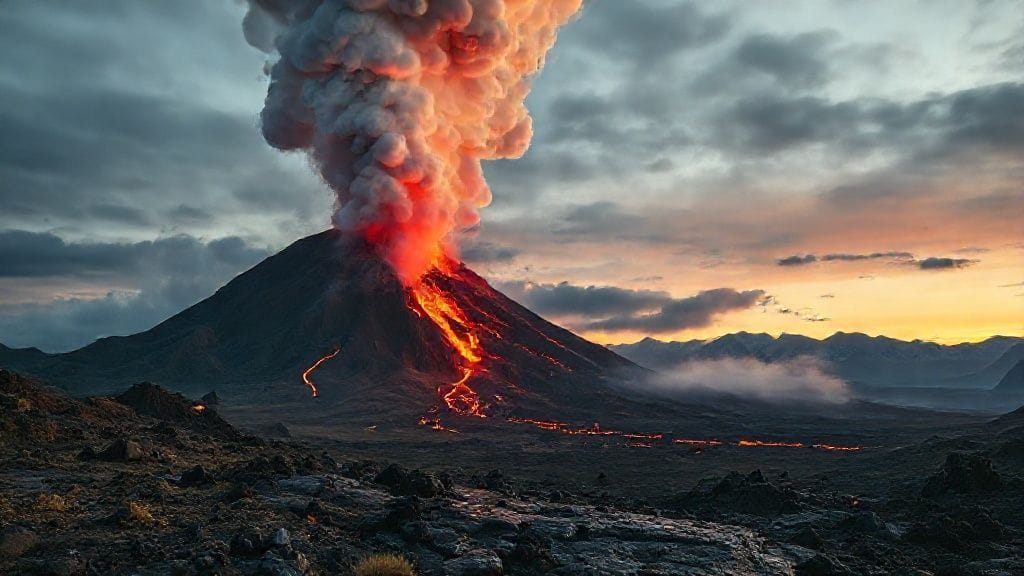
It began as a murmur beneath the earth — a restless sigh from one of Iceland’s most infamous giants. In the predawn chill of a May morning in 1766, the sky above the mountain Hekla darkened with ominous smoke that spiraled like a living shadow across the Icelandic horizon. For the people who dwelled in its long shadow, this was no ordinary spectacle; it was a summoning, a fiery herald of chaos and renewal. The ground trembled beneath their feet, the air grew thick with an acrid bitterness, and a glowing river of molten rock began its hellish descent into the valleys below. This was the beginning of one of the most formidable volcanic events in Iceland’s storied history—the eruption of Hekla in 1766.
The eruption would unleash not only physical devastation but also weave itself into the fabric of Iceland’s cultural identity, reshaping landscapes and lives alike. It was an event that would inspire awe, fear, and scientific curiosity for generations to come.
Iceland’s Land of Fire and Ice: Setting the Stage
Iceland’s very soul is forged in fire and sculpted by ice. Situated astride the Mid-Atlantic Ridge where the Eurasian and North American tectonic plates slowly drift apart, this island is one of the most volcanically active places on Earth. Its dramatic landscapes—frozen glaciers juxtaposed with smoldering lava fields—are a testament to millennia of geological upheavals.
Among Iceland’s numerous volcanoes, Hekla holds a place both feared and revered. Towering at nearly 1,491 meters, it stands sentinel in the south near the fertile farmlands and ancient settlements. Long known as the “Gateway to Hell,” Hekla’s eruptions were regarded as manifestations of supernatural forces, with medieval Icelanders weaving tales of the mountain as a realm inhabited by demons and the damned.
By 1766, Iceland had endured centuries of volcanic activity. Still, the eruption from Hekla was anticipated with dread and hesitant hope by farmers who depended on the land’s precarious bounty. The delicate balance between survival and disaster often hinged on the temper of this fiery peak.
The Myth and Mystery Surrounding Hekla Before 1766
Long before scientific understanding enveloped volcanic phenomena, Icelanders perceived Hekla through the lens of myth and folklore. Medieval sagas spoke of Hekla as a gateway to the infernal realms—an abyss from which evil spirits emerged during eruptions to plague mankind.
Priests and poets alike condemned the mountain’s fury as divine punishment. The eruption of 1104 was described in vivid allegorical terms, and the 1300s saw many attributing fires to the wrath of gods or the devil himself. These stories colored the collective imagination, contributing to generations of fearful respect.
This cultural mystique heightened the weight of the 1766 eruption. It was no mere geological event; it was an upheaval that pierced the very cosmology of Icelandic society.
Voices from the Past: Eyewitness Accounts of the Eruption’s Birth
We owe much of our understanding of the 1766 eruption to contemporaneous journals, letters, and sermons that capture the eruption’s progression in striking detail. Jón Steingrímsson, a priest from the village of Hólar, recorded his observations which remain invaluable.
He described how, on the morning of May 1st, the ground shook violently as smoke and ash billowed into a dark pillar above Hekla’s summit. Villagers could see glowing lava spilling down its flanks. Jón interwove descriptions of natural phenomena with religious reflections, beseeching his congregation to pray for deliverance.
Another letter from a farmer painted a haunting picture of skies raining ash and fields blanketed in black dust, suffocating crops and livestock. These first-hand narratives give life and texture to the eruption’s onset, bridging centuries with raw human emotion.
The First Roar: Early Signs and Tremors Beneath the Earth
Prior to May 1766, subtle tremors and rumblings had stirred unease among locals. But the exact timing of Hekla’s awakening was sudden and terrifying.
On the night of April 29th, an intense earthquake rattled the southern region, sending shockwaves through the countryside. For days, ash plumes had been noticed, signaling magma’s slow ascent toward the surface. The phenomenon was no secret, yet the scale of devastation to come caught many by surprise.
Scientists today understand these signs as classic precursors to volcanic eruptions—shifting faults, ground deformation, gaseous emissions—but to the Icelanders of the 18th century, these omens fuelled anxiety and superstition.
From Darkness to Daylight: The Sky Turns Hostile
In a matter of hours, the sky darkened, the sun obscured by thick, choking plumes of ash and smoke. Daylight was diminished to a perpetual twilight smeared with hues of orange and gray.
Amid this surreal canopy, lightning — a spectacle called “volcanic lightning” — crackled within the ash clouds, setting an eerie symphony that amplified terror. The sight was unlike anything the rural population had witnessed.
This densely packed cloud traveled with the wind, casting its shadow far beyond Iceland’s borders. Ash began to settle on rooftops and farmland, contaminating water supplies and suffocating vegetation—a grim reminder that the eruption’s reach extended well beyond the volcano’s immediate vicinity.
Rivers of Fire: The First Lava Flows and Their Relentless March
As the ash rained down, Hekla’s molten heart burst forth. Lava fountains spewed streams of glowing magma, snaking swiftly down slopes. These incandescent rivers transformed the landscape with terrifying speed, consuming pastures and disrupting travel.
The fissures cracked open, releasing not only lava but also clouds of poisonous gases, endangering those who lingered. The heat was palpable even miles away, a searing presence that demanded respect.
For the farmers whose livelihoods depended on the soil, the lava’s advance was akin to a siege, an unstoppable force that would require generations to overcome.
The Human Toll: Communities Under Siege by Fire and Ash
The eruption wrought devastating consequences for those living in Hekla’s shadow. Losses were not merely material; the eruption threatened life itself.
Numerous families were displaced as their homes were buried beneath ash and rock. Livestock perished from contaminated grazing lands and suffocation. Food supplies dwindled, and the harsh Icelandic climate amplified hardships.
Historians estimate that the 1766 eruption contributed to crop failures and famine in the years following the disaster. As Jón Steingrímsson’s sermons suggested, faith was both a refuge and a source of resilience for a beleaguered people.
The Ash Cloud Travels: From Iceland to Europe’s Skies
Remarkably, the eruption’s ash cloud did not confine itself to Iceland’s skies. Prevailing winds carried fine particles toward continental Europe, where they were reported in scientific observations and diaries.
Twilight fell early in places as far as Scotland and France, and unusual atmospheric phenomena were linked to volcanic aerosols. This eruption contributed valuable data to early understandings of volcanic influence on climate and weather patterns.
Though the climatic effect was modest compared to later “mega-eruptions,” it provided a stark lesson on the far-reaching power of Earth’s subterranean fires.
Scientists and Sages: Understanding Volcanoes in the 18th Century
The 1760s belonged to an era before volcanology became a formal discipline. Yet curiosity and observation began to stir.
Natural philosophers and early geologists debated the nature of volcanic activity. What caused mountains to spew fire and ash? Was it the wrath of gods, or natural processes beneath the Earth?
Iceland’s remote position and the vivid ink of Jón Steingrímsson’s detailed writings soon attracted attention from scholars across Europe, laying groundwork for future scientific inquiry. Slowly, the mythos around volcanoes gave way to emerging empirical approaches.
Hekla’s Impact on Icelandic Society and Economy
The eruption’s destruction extended beyond immediate loss. It slowed economic recovery in rural Iceland, where agriculture was the backbone of sustenance.
Ash-covered fields were unusable for years, and displaced populations strained community resources. Trade was disrupted, and famine threatened.
Despite this, Icelanders embarked on rebuilding, guided by resilience and adaptation. The eruption became a test of social strength as much as natural force.
A Landscape Reforged: Geological Transformations After the Eruption
Hekla’s violent outpouring profoundly altered the physical terrain. New lava fields, scorched plateaus, and reshaped valleys stand as monuments to that turbulent spring.
These geological footprints offer invaluable records for modern volcanologists to understand eruption dynamics. The 1766 eruption expanded Hekla’s volcanic structure, creating features that remain visible today.
The interplay of destruction and creation in this process reflects the dual nature of volcanic activity as both destroyer and originator.
Folklore and Fear: How Hekla 1766 Shaped Icelandic Culture
The eruption entered Icelandic collective memory, echoing through legends and proverbs.
Hekla’s fiery breath reaffirmed its infernal reputation, inspiring cautionary tales and superstitions for generations.
Yet it also became a symbol of Icelanders’ enduring relationship with their planet—a reminder of vulnerability and fortitude alike.
The event’s narrative was passed down orally and in literature, entwining historical fact with cultural identity.
Comparative Eruptions: What Made 1766 Distinct?
Though Hekla erupted multiple times throughout history, the 1766 event stands out for its intensity and the vividness of recorded accounts.
Compared to earlier eruptions, it featured pronounced lava flows, sustained explosive activity, and widespread ash dispersal.
This eruption also coincided with a period of increased scientific interest, distinguishing it from more obscure ancient events.
Its documentation allows us to appreciate both its scale and the human dimension entwined within volcanic fury.
Echoes Through Time: The Legacy of the 1766 Hekla Eruption
The story of the 1766 eruption reverberates in Iceland’s modern identity. It reminds us of nature’s unstoppable forces and human resilience.
By becoming a case study for volcanological research, it contributed to larger efforts to demystify Earth’s geological processes.
For Icelanders today, Hekla is more than a volcano; it is a living symbol of the dialogue between humans and the unpredictable planet they inhabit.
Lessons from Fire: Volcanic Preparedness and Modern Perspectives
The 1766 eruption offers compelling lessons for how societies confront natural disasters.
Advances in monitoring, communication, and emergency response have transformed Iceland into a globally recognized leader in volcanic risk management.
Understanding historical eruptions like 1766 informs how communities prepare for future activity, blending ancient wisdom with cutting-edge science.
Such knowledge remains critical as climate change and human expansion increase vulnerability worldwide.
The Scientific Journey: From Awe to Understanding
From superstition and fear to curiosity and analysis, the perception of Hekla’s eruptions reflects wider shifts in scientific thought.
The accounts of 1766 influenced the fledgling field of volcanology, encouraging detailed observation over divine speculation.
Today, our ability to measure seismic tremors, gas emissions, and ground deformation builds directly on foundations laid during this era.
This journey encapsulates humanity’s ongoing quest to comprehend Earth's dynamic core.
Remembering the 1766 Eruption in Contemporary Iceland
Centuries later, the 1766 eruption is commemorated in Icelandic history and culture.
Museums, geological sites, and educational programs celebrate this pivotal moment, connecting past and present.
It remains a source of pride, reflection, and respect—a fiery chapter continually written and rewritten in the nation’s story.
The Interplay of Nature and Humans: An Enduring Tale
The eruption of Hekla in 1766 is a profound example of nature’s dual role as nurturer and destroyer.
It challenged human communities, but also inspired resilience and scientific advancement.
This dynamic relationship between Earth and its inhabitants continues to evolve, reminding us both of our fragility and agency.
Conclusion: Fire and Resilience, The Spirit of Iceland
The 1766 eruption of Hekla was more than an eruption—it was a crucible in which the spirit of Iceland was both tested and forged. Against the backdrop of a turbulent sky and a trembling earth, people faced chaos with courage and faith. Farms burned; skies darkened; yet, life persisted. This fiery event ignited not only molten rock but a lasting legacy of human adaptability woven into the rugged Icelandic landscape.
Today, Hekla’s smoke is a reminder that beneath the surface of our world, powerful forces continue their timeless dance, shaping destinies and inspiring awe. The 1766 eruption remains a testament to nature’s might and humanity’s enduring spirit—a story of fire and survival etched in stone and memory alike.
FAQs About the Hekla 1766 Eruption
Q1: What caused the eruption of Hekla in 1766?
It was triggered by tectonic activity along the Mid-Atlantic Ridge, where magma ascended through fissures due to plate movements beneath Iceland, culminating in a violent volcanic eruption.
Q2: How did Icelanders react to the eruption at the time?
Many viewed the eruption with fear and religious awe, interpreting it as divine punishment, but also as a call to prayer and resilience, as recorded notably by priest Jón Steingrímsson.
Q3: What were the main impacts of the eruption on Iceland’s population?
The eruption caused destruction of farmland, displacement of communities, loss of livestock, and contributed to famine and economic hardship in the years following.
Q4: Was the eruption of 1766 unique compared to other eruptions of Hekla?
Yes, it was particularly intense with extensive lava flows and ash dispersal, and stands out because of detailed contemporary documentation.
Q5: Did the eruption affect areas beyond Iceland?
Yes, volcanic ash and gases spread in the atmosphere affecting parts of northern Europe, causing climatic and atmospheric disturbances noted by observers at the time.
Q6: How has the 1766 eruption influenced modern volcanology?
It provided crucial early observational data that helped shift understanding from superstition toward scientific study of volcanic phenomena.
Q7: Is Hekla still an active volcano today?
Yes, Hekla remains amongst Iceland’s most active volcanoes, with eruptions continuing into recent decades.
Q8: How is the eruption remembered and commemorated in Iceland today?
Through museums, educational efforts, cultural narratives, and geological sites that preserve the memory and lessons of the 1766 eruption.

