Table of Contents
- The Roar Beneath the Ice: Prelude to Grímsvötn’s Fury
- Iceland’s Volcanic Pulse: A Land Born of Fire and Ice
- Meteorological and Geological Conditions Preceding the Eruption
- The Month of May 2011: Tensions Rise in the Shadow of Grímsvötn
- The Eruption Begins: A Spectacle of Ash and Steam
- Eyewitness to Chaos: Scientists and Citizens in the Eye of the Storm
- Aviation Halted: The Immediate Impact on European Airspace
- Aerial Darkness: Ash Clouds and Their Deadly Drift
- Icelandic Emergency Response: Challenges and Resilience
- The Wider European Disruption: Economic and Social Ripples
- Grímsvötn Compared: Lessons from Eyjafjallajökull’s 2010 Eruption
- Atmospheric Effects: Ash Fallout and Climate Implications
- Human Stories Amidst Volcanic Fury: Survival and Solidarity
- Scientific Advances: Monitoring and Predicting Volcanic Threats
- Aftermath: Assessing Damage and Recovery in Iceland
- Grímsvötn's Place in Volcanic History: The Legacy of the 2011 Eruption
- The Resilience of a Nation Forged in Fire and Ice
- Conclusion: When the Earth Speaks, Humanity Listens
- FAQs: Understanding Grímsvötn and Its Impact
- External Resource
- Internal Link
The Roar Beneath the Ice: Prelude to Grímsvötn’s Fury
On a cool morning in May 2011, deep beneath the ancient ice cap of Vatnajökull in Iceland, the earth groaned, and a tumultuous upheaval began to unfold. The silence of the Icelandic wilderness shattered as Grímsvötn, a towering volcanic giant hidden beneath the ice, erupted with ferocious intensity. Clouds of dark ash billowed skyward, painting the sky with ominous strokes as if the very heavens themselves were torn apart. For days, the land rattled and rumbled, shocking a nation accustomed to living in the shadow of fire and ice. This eruption was not merely a geological event—it was a dramatic expression of the planet’s raw power, a reminder of nature’s unpredictability, and a catalyst that reverberated far beyond Iceland’s jagged coastlines.
Iceland’s Volcanic Pulse: A Land Born of Fire and Ice
Iceland is a land carved and scrawled by the caprices of volcanic fury and glacial persistence. Straddling the Mid-Atlantic Ridge, where the North American and Eurasian tectonic plates diverge, the island is one of the world’s most geologically active places. Volcanic eruptions have punctuated Icelandic history for centuries, shaping both its landscape and its folklore.
Grímsvötn, sitting beneath the Vatnajökull ice cap, is one of Iceland’s most active volcanoes. Powered by a complex magma chamber beneath kilometers of ice, it is a continuous reminder of tension between ice and fire. Every eruption releases the pressure pent inside the earth’s crust, but also poses grave danger—flashing floods, ash clouds, and disruptions to life.
To understand the 2011 eruption, we need to delve into this singular relationship between Iceland’s tectonic underbelly and its citizens’ ancient, ongoing dance with nature.
Meteorological and Geological Conditions Preceding the Eruption
Spring 2011 brought subtle whispers that Grímsvötn was preparing for a dramatic episode. Ice tremors and minor seismic activity had increased beneath Vatnajökull. The region’s geothermal systems awoke, heating the overlying ice. Scientists tracked increasing ground deformation—a clear sign magma was moving—and seismic tremors that tickled the earth’s strained nerves.
By April, tremors multiplied in frequency and strength. Iceland’s Meteorological Office issued warnings, and airports braced for disruption. It was a scientific arms race: trying to read the slow, ominous messages from deep beneath but never quite certain when the volcano would roar. The world watched, breath held.
The Month of May 2011: Tensions Rise in the Shadow of Grímsvötn
May arrived with an air of expectancy. Farmers in the nearby lowlands noted the sky growing strangely opaque, the wind carrying the faint smell of sulfur. Locals prepared for the worst; evacuation plans were reviewed, airports implemented contingency strategies. The restless earth was nearly ready to break.
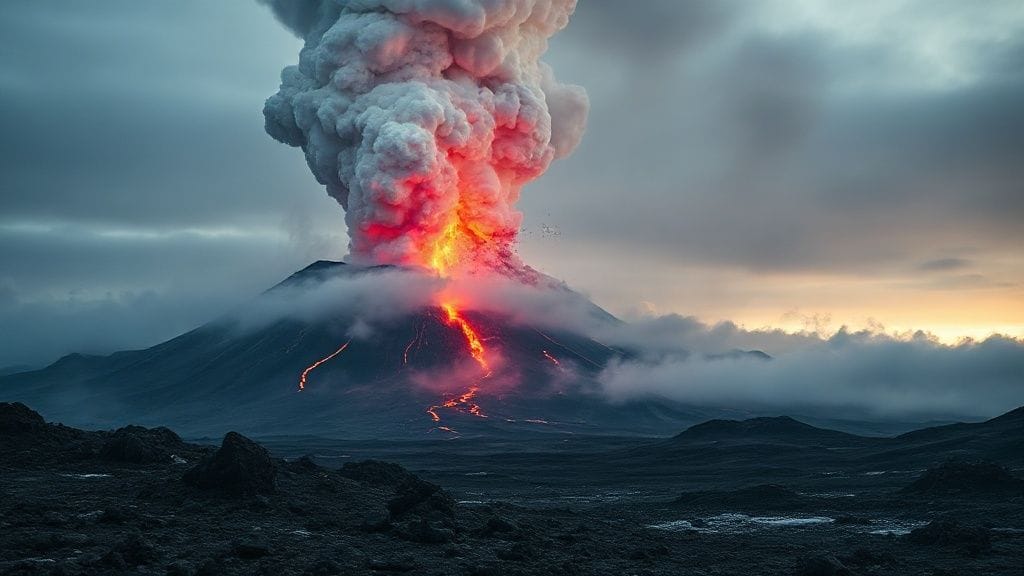
The uneasy peace was shattered on May 21, at around 22:00 local time. A thunderous explosion ripped through the night as Grímsvötn’s caldera burst, sending torrents of ash, steam, and volcanic gases high into the troposphere. The eruption was swift, violent, and pronounced.
The Eruption Begins: A Spectacle of Ash and Steam
Grímsvötn’s might was both terrifying and mesmerizing. The eruption column shot upwards to an estimated height of 20 kilometers, plumes of ash darkening skies and coating the surrounding icefields. Fountains of molten rock gleamed red-orange in the darkness, spewing fire into the night.
For several days, the eruption unleashed a volcanic display of immense power. Subglacial flooding ensued, as heated water began melting the ice cap, raising fears of glacial outburst floods known as jökulhlaups—catastrophic floods that have in the past swept away roads and farmland.
Meteorologists and volcanologists monitored the plume, tracking ash dispersal patterns that in mere hours carried the cloud's shadow over the far reaches of northern Europe.
Eyewitness to Chaos: Scientists and Citizens in the Eye of the Storm
Scientists stationed near Vatnajökull captured the eruption in real-time, their instruments vibrating from the tremors. Volcanologist Magnús Tumi Guðmundsson later described the event:
"It was like witnessing nature’s heart beating raw — unpredictable yet profoundly beautiful, terrifying but awe-inspiring."
Meanwhile, residents of the sparsely populated nearby regions were evacuated or sheltered in place, faces masked and eyes wary. The eruption was both a cosmic event and local disaster. For Icelanders, it was yet another chapter in their intertwined story with volcanic fury.
Aviation Halted: The Immediate Impact on European Airspace
One of the most urgent consequences was the ash cloud, which posed an immediate and grave hazard to aviation. Airborne volcanic ash can clog jet engines, ablate turbine blades, and cause engine failure.
European air traffic controllers, recalling the chaos of the Eyjafjallajökull eruption in 2010, acted swiftly. On May 22, airspace in southern and central Europe came to a near-complete halt. Thousands of flights were canceled, airports shut down, and travelers were stranded in a gripping demonstration of how volcanic activity in a remote subarctic island can paralyze the continent.
This seismic pause in air travel cost the airline industry upwards of hundreds of millions of euros in lost revenue, not counting the broader economic disruptions.
Aerial Darkness: Ash Clouds and Their Deadly Drift
The plume drifted southeast on prevailing winds, a thick veil blotting out sunlight. Satellite images showed the stark contrast: Iceland’s incandescent eruption contrasted against a spreading smog of ash and dust swirling over the North Atlantic and reaching as far as Germany and the UK.
Air quality deteriorated in certain areas, prompting health advisories. Airports scrambled to test ash density for engine safety. Some industries, including agriculture, braced for the effects of ash fallout on soil and crops. Yet, unlike Eyjafjallajökull, the duration of airspace closure was shorter, lasting about six days.
Icelandic Emergency Response: Challenges and Resilience
The Icelandic government’s emergency mechanisms kicked into gear as the eruption unfolded. Roads near Vatnajökull were closed to protect civilians from jökulhlaup floods. Emergency shelters opened, and communication channels buzzed with updates and warnings.
The volcanic eruption’s timing, under the Vatnajökull ice cap, meant that flooding was a major concern, not only ash. Fortunately, advanced monitoring systems allowed rapid detection and response to potential floods.
The government’s handling of the crisis was widely praised for its efficiency and communication, illustrating Iceland’s hard-earned resilience living on the planet’s volcanic frontier.
The Wider European Disruption: Economic and Social Ripples
The suspension of European air traffic had an outsize impact on the economy, especially in sectors relying on timely cargo, tourism, and business travel. Many cities felt the sting of isolation and delay.
Yet the eruption also reignited conversations about volcanic preparedness, aviation safety, and disaster coordination across borders. Airlines accelerated investments in ash-detecting equipment; governments revisited crisis protocols.
Social stories emerged too: reunited families stranded, canceled weddings, and the frustration of missed opportunities. The invisible threads of global connectivity were made starkly visible by nature’s interruption.
Grímsvötn Compared: Lessons from Eyjafjallajökull’s 2010 Eruption
Eyjafjallajökull’s dramatic 2010 eruption, just a year prior, had shocked Europe with months of airspace closures. Grímsvötn’s eruption was a test — forcing improvements in volcanic ash analysis and air traffic management.
Unlike Eyjafjallajökull, Grímsvötn’s ash plume was drier but more compact, leading to a shorter disruptions. Scientists learned that not all volcanic ash clouds pose equal risk, underscoring the importance of case-by-case response.
This comparison emphasized how volcanic eruptions, although terrifying, drive innovation and adaptation in a world increasingly vulnerable to natural disruption.
Atmospheric Effects: Ash Fallout and Climate Implications
Aside from immediate disruptions, the eruption injected volcanic aerosols and ash into the stratosphere, contributing to atmospheric changes.
While the 2011 Grímsvötn eruption was not massive enough to cause significant global cooling—the likes of Pinatubo in 1991 or Krakatoa in 1883—it nevertheless influenced local weather patterns and nighttime temperatures.
Volcanic ash particles and sulfur dioxide react in the upper atmosphere to form sulfate aerosols, which reflect sunlight. These effects can linger months, subtly influencing climate and cloud formation.
Researchers continue to study Grímsvötn's eruption to better understand these complex atmospheric interactions.
Human Stories Amidst Volcanic Fury: Survival and Solidarity
Beyond the ash and airline chaos, this eruption was also about people. Rural communities, scientists, rescue teams, and tourists all knit a human mosaic of reactions—from fear and anxiety to stoicism and solidarity.
One farmer recounted, “We’ve lived with volcanoes all our lives. When Grímsvötn woke, we knew it meant hard days ahead, but also that life must go on. The earth is angry, yes, but she is also our home.”
For Icelanders, the eruption reaffirmed their identity — a people forged by ice, fire, and indomitable spirit.
Scientific Advances: Monitoring and Predicting Volcanic Threats
As the 2011 eruption unfolded, it became a proving ground for advances in volcanic monitoring. Seismographs, GPS stations, satellite remote sensing, and gas sensors all played pivotal roles in providing real-time data.
The eruption spurred developments in ash cloud modeling, enabling more precise forecasts that future eruptions would benefit from. Iceland's unique position on the tectonic boundary ensures it remains a global laboratory for geophysics.
The event demonstrated how cutting-edge technology combined with human expertise can mitigate disaster risks.
Aftermath: Assessing Damage and Recovery in Iceland
In the months following the eruption, ash layers were mapped, roads repaired, and farmland decontaminated. The financial cost was significant but mitigated by prompt action.
Glacial floods damaged infrastructure in some areas, but no lives were lost—a testament to effective preparedness.
Tourism, a key economic driver, soon rebounded, with many visitors drawn to witness Iceland’s raw geology firsthand.
Recovery was emblematic of Iceland’s fortitude: to face nature’s fury, endure, and find renewal.
Grímsvötn's Place in Volcanic History: The Legacy of the 2011 Eruption
Compared to the titanic events of history, the 2011 Grímsvötn eruption might seem a brief chapter. Yet its importance in the saga of volcanic eruptions is significant.
It highlighted the ever-present threat and dynamic nature of Iceland’s geology, provided invaluable data to volcanology, and stressed the critical intersections between nature, technology, and society.
In a world where natural disasters are increasingly intertwined with human lifelines, Grímsvötn’s roar was a clarion call.
The Resilience of a Nation Forged in Fire and Ice
Iceland’s endurance is a narrative threaded through ice-covered volcanoes and roaring geothermal rivers. The 2011 eruption reaffirmed a truth: that the people of Iceland do not merely survive their environment; they embrace it.
Grímsvötn became once again a symbol of the wild, untameable forces that shape the earth—and inspire humankind to listen, learn, and adapt.
Conclusion: When the Earth Speaks, Humanity Listens
The Grímsvötn eruption of May 2011 was more than an explosion of magma and steam. It was a vivid communications from the planet’s deep interior, a reminder of the dynamic forces beneath our feet. The eruption tested Iceland’s readiness, disrupted a continent’s skies, and unified communities in awe and adversity.
But above all, it rekindled a bond that predates modern borders: the link between humans and the earth that nurtures and challenges them. As ash settled and normality returned, Grímsvötn’s lesson remained clear—nature’s power, while often destructive, is also a vital source of life, renewal, and inspiration.
This eruption was a story of destruction, resilience, and hope—a story we would do well to remember as we face our planet’s unpredictable future.
FAQs
1. What caused the Grímsvötn eruption in May 2011?
The eruption was triggered by rising magma beneath the Grímsvötn volcanic system beneath Iceland’s Vatnajökull glacier. Increasing seismic activity and ground deformation indicated magma intrusion, which eventually breached the surface, resulting in the explosive eruption.
2. How long did the eruption last?
The most intense phase of the eruption lasted approximately one week, starting on May 21, 2011. Ash emissions and volcanic activity decreased significantly after this period.
3. How did the 2011 eruption impact European air travel?
The ash cloud led to the closure of large portions of European airspace for about six days, disrupting thousands of flights and leaving millions of passengers stranded. The ash posed hazards to aircraft engines, prompting precautionary shutdowns.
4. Were there any casualties caused by the eruption?
No fatalities were reported due to the Grímsvötn eruption. Effective monitoring, early warnings, and evacuations helped mitigate risks, especially regarding flooding from glacier melt.
5. How did the 2011 eruption compare to the 2010 Eyjafjallajökull eruption?
Grímsvötn’s eruption was shorter and produced a drier ash plume, leading to a briefer air traffic disruption. Eyjafjallajökull’s eruption was more prolonged and dispersed ash over a broader area, causing more extensive closures.
6. What scientific advancements resulted from monitoring the eruption?
The eruption enhanced real-time ash cloud tracking, seismic monitoring, and eruption prediction techniques. This improved aviation safety protocols and volcanic hazard preparedness.
7. What are jökulhlaups and did they occur during this eruption?
Jökulhlaups are glacial outburst floods caused by sudden melting of ice over a volcanic eruption. The 2011 eruption triggered subglacial flooding, but extensive early warnings and road closures prevented casualties.
8. How do Icelanders generally perceive volcanic eruptions?
Many Icelanders view eruptions as both a threat and a natural part of their environment. These events are woven into national identity, reflecting resilience and a deep connection to the island’s dramatic landscapes.

