Table of Contents
- The Awakening of a Sleeping Giant: Fagradalsfjall Eruption Ignites in Reykjanes
- Ancient Fire Beneath New Grounds: Iceland’s Volcanic Legacy
- Geology of the Reykjanes Peninsula: The Rift Where Earth Splits
- Early Signs and Silent Warnings: Precursors to the 2021 Eruption
- March 2021: When Earth’s Fury Broke Through the Crust
- The First Eruption Phase: Awe and Anxiety in a Land of Fire
- Local Communities on Edge: Eyewitness Accounts and Emotional Responses
- Science in Motion: Monitoring the Volcano’s Breath and Roar
- The Eruption’s Evolution: New Fissures, Changing Lava Flows
- Capturing the Dance of Fire: The Global Sensation of Fagradalsfjall
- Environmental Impact: Altered Landscapes and Emerging Ecosystems
- Tourism and Volcano Worship: Visitors Drawn to Fiery Wonder
- The Science Behind the Spectacle: Magma, Mantle Plumes, and Tectonic Stress
- Challenges and Risks: Air Quality, Lava Threats, and Precautions
- The Unexpected End of an Era: The Eruption Dies Down in 2023
- Broad Implications: What Fagradalsfjall Tells Us About Iceland’s Future
- Cultural Resonance: Fire and Ice in Icelandic Identity
- Lessons Learned: Advances in Volcanology and Crisis Management
- Global Geological Significance: Reykjanes and the Mid-Atlantic Ridge
- The Human Story of Fagradalsfjall: Courage, Curiosity, and Connection
- Echoes in Time: Remembering Fagradalsfjall for Generations to Come
The Awakening of a Sleeping Giant: Fagradalsfjall Eruption Ignites in Reykjanes
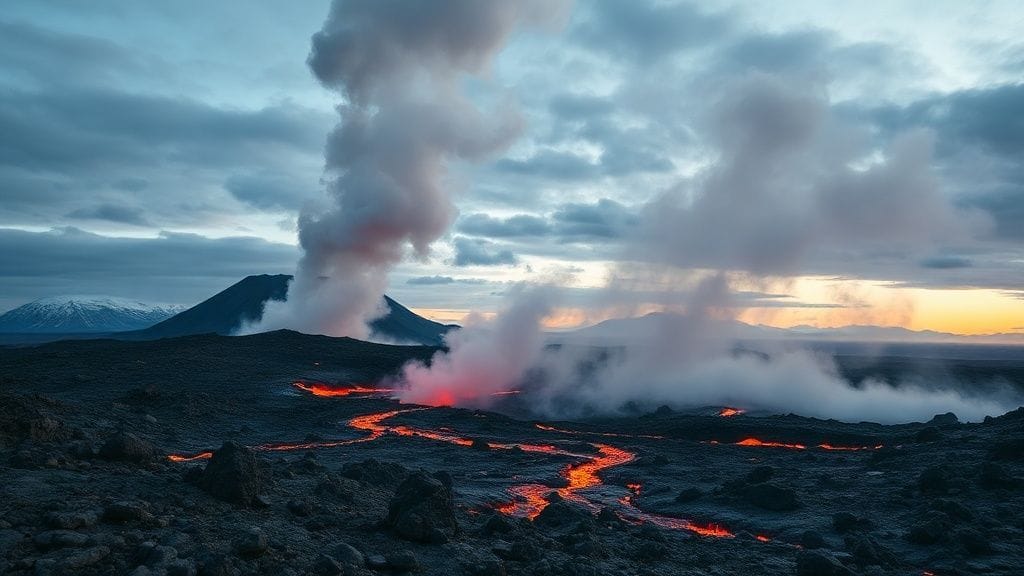
On a chilly evening of March 19, 2021, the tranquil dunes and moss-clad lava fields of the Reykjanes Peninsula suddenly shimmered with a hellish glow. A fissure ripped open in the ground near Mount Fagradalsfjall, ushering a river of incandescent lava into the night. For six centuries, this region had slept in silence, undisturbed since its last eruption in the 13th century. Yet now, the earth convulsed, sending molten rock spilling over blackened earth, painting a terrifying, mesmerizing portrait of creation and destruction intertwined.
The spectacle was not just a natural phenomenon. It was an emotional crescendo felt deeply by the Icelandic people—a potent reminder of their island’s fiery and volatile origins. Scientists and spectators alike were captivated by the eruption’s raw power and relative accessibility. This was no distant, satellite-monitored eruption: it unfolded within walking distance of residents and visitors who gathered at safe vantage points, their faces glowing in the firelight, recording one of Iceland’s most mesmerizing geological events of the modern age.
But this eruption was more than a moment of spectacle. It was the culmination of millennia of tectonic tension—a fiery chapter in the ongoing story of Earth’s restless crust. What followed in the months and years to come would redefine Iceland’s volcanic geography, inspire scientific discovery, and offer profound insights into our planet’s inner workings.
Ancient Fire Beneath New Grounds: Iceland’s Volcanic Legacy
Iceland is a land notoriously forged by fire and ice, where volcanic activity is as fundamental as the glaciers that blanket its landscape. Situated atop the Mid-Atlantic Ridge, where the Eurasian and North American tectonic plates diverge, Iceland is one of the few places on Earth where the process of continental rifting is visible above sea level. Volcanism here owes its existence not just to plate divergence but to a mantle plume—a hot upwelling from deep within the Earth—that fuels ongoing magma generation.
The Reykjanes Peninsula, the southwestern tip of Iceland, is particularly unique. This narrow strip of land is a frontline battlefield where the plates pull apart at an average rate of about 2.5 centimeters per year. It is riddled with fissures, faults, and volcanic systems. Yet, despite constant seismic activity and underground magma movement, the region had been dormant many centuries.
For the Icelanders, volcanoes are both peril and prosperity. Their eruptions can devastate farmlands, disrupt lives, and blanket skies with ash, but they also shape fertile soils, geothermal energy sources, and a cultural identity intertwined with the land’s mercurial temperament. The eruption at Fagradalsfjall in 2021 would rekindle age-old conversations about adaptation, resilience, and coexistence with nature’s deepest forces.
Geology of the Reykjanes Peninsula: The Rift Where Earth Splits
To understand the extraordinary 2021 eruption, one must first grasp the geologic theatre in which it played out. Reykjanes is a rugged peninsula defined by its fault systems and a sequence of volcanic fissures aligned roughly northeast to southwest, tracing the path of the plate boundary.
Beneath the peninsula, the North American and Eurasian plates slowly diverge, creating tension and fractures in the crust. This process forms magma chambers that occasionally feed eruptions. However, the seismicity prior to 2021 was marked by swarms of tremors that were a rediscovery of how active the region remained beneath its placid surface.
The Fagradalsfjall volcanic system includes a mountain and surrounding fissures. Before 2021, the last eruption there was dated back to 1240 AD, leaving the volcano long dormant — almost forgotten in the shadow of Iceland’s more notorious volcanoes like Eyjafjallajökull or Katla.
Early Signs and Silent Warnings: Precursors to the 2021 Eruption
In the months preceding the eruption, Iceland’s geophysical monitoring stations quietly observed a series of unusual seismic activities. Beginning in late 2019 and intensifying throughout 2020, a notable swarm of earthquakes rattled the peninsula—small yet persistent, increasing in frequency and magnitude.
Scientific instruments captured up to several thousand earthquakes per month in the Reykjanes region, often registering magnitudes between 3 and 5. The pattern indicated magma was moving underground, fracturing rock as it pushed its way closer to the surface. Yet the public remained largely unaware or only casually informed as authorities balanced transparency with uncertainty.
The exact date was impossible to forecast. But seismologists spoke cautiously of an impending eruption, one that could happen anywhere along the Reykjanes fissures. The prolonged swarm was both a warning and a puzzle: would it culminate in a major event or disperse quietly? Then, suddenly, the earth cracked open in March 2021.
March 2021: When Earth’s Fury Broke Through the Crust
The eruption began in the early hours of March 19, 2021. Witnesses reported an intense glow on the horizon long before dawn; then, jets of lava exploded from a fissure erupting over a length of roughly 500 meters. The lava initially spewed up to 20 meters high, flowing swiftly down the slopes and merging into larger streams.
The lava was primarily basaltic—the hallmark of Icelandic eruptions—viscous yet fluid enough to expand over tens of hectares in weeks. Although the eruption was effusive rather than explosive, safety concerns were paramount. Local authorities quickly cordoned off dangerous zones, but the event attracted hordes of geologists, journalists, and tourists eager to observe.
The First Eruption Phase: Awe and Anxiety in a Land of Fire
The first months carried an almost hypnotic rhythm. Night after night, the lava fountain continued, illuminating the shadowed ridges and valleys. For many, it was a source of beauty and wonder—a reminder of Earth’s primal energy. Majestic plumes of volcanic gas billowed into the cold air, mingling with occasional snowfalls, crafting a surreal contrast of elements.
Yet alongside admiration came anxiety. Would the lava flows expand uncontrollably? Could ash clouds disrupt air traffic? Although far from population centers, the eruption’s proximity to Keflavík International Airport raised concerns about aviation safety.
Emergency response teams monitored air quality, safeguarded residents, and prepared for potential evacuation scenarios. Meanwhile, local businesses experienced mixed effects: some feared disruption, while others anticipated a boom in tourism.
Local Communities on Edge: Eyewitness Accounts and Emotional Responses
For the residents of nearby towns—Grindavík, Njarðvík, and others—the eruption was a profound upheaval. Jón Sigurðsson, a farmer in Grindavík, described the eruption as “a living, breathing force that both frightens and fascinates.” His family watched the glowing river of lava from a distance, grateful for the safety yet mindful of their fragile place on the volcanic frontier.
Children were told stories by elders of ancestral eruptions, blending education with cultural tradition. The eruption rekindled a community spirit, uniting people in shared wonder and vigilance. At the same time, faint tremors reminded them that the earth beneath was still unsettled.
Science in Motion: Monitoring the Volcano’s Breath and Roar
Exceptional attention was paid to monitoring the evolving eruption. Iceland’s Institute of Earth Sciences deployed arrays of seismographs, GPS stations, drones, and gas sensors. Satellite imagery combined with on-the-ground measurements offered researchers a real-time view of the changing lava flows and ground deformations.
Volcanologists tracked eruptive rates, lava viscosity, and gas emissions—key indicators of the volcano’s heartbeat. Their work revealed the complex interplay between magma supply, crustal stress, and surface activity. As the eruption progressed, new fissures opened further along the rift, shifting the dynamics of lava distribution.
The Eruption’s Evolution: New Fissures, Changing Lava Flows
As weeks multiplied, the initial fissure gave way to additional cracks, spreading the eruption over a wider area. Lava channels intertwined, some solidifying quickly while others carved new paths. This fluidity of geological process transformed the landscape, filling valleys, reshaping hills, and creating dramatic lava plateaus.
Scientists noted that the eruption’s longevity—continuing intermittently for nearly two years—was unusual for this region. Periods of heightened activity alternated with quieter phases, leaving locals and scientists holding their breath for what the volcano would do next.
Capturing the Dance of Fire: The Global Sensation of Fagradalsfjall
The eruption quickly became a viral phenomenon. Images and videos flooded social media—timelapses of glowing lava fountains, panoramas of blackened peaks contrasted by orange rivers, and the rare intimacy of humans observing an elemental force in person.
Documentarians and journalists from around the world descended on Iceland, framing the event as a symbol of Earth’s relentless creativity. It was a spectacle both terrifying and beautiful, strange yet primal, reminding humanity of its roots on a volatile planet.
Environmental Impact: Altered Landscapes and Emerging Ecosystems
The environmental aftermath was striking. The new lava fields stretched over dozens of square kilometers, burying ancient moss, lichen, and small flora. However, volcanic rock, once cooled, provides fertile soil—a promise for a new ecological chapter.
Scientists keenly observed how pioneer species—lichens, mosses, and insects—began recolonizing the fresh basalt. The eruption also altered local air quality and temporarily affected bird migration patterns. Understanding these impacts helps frame volcanoes not only as destructive but also as vital agents of renewal.
Tourism and Volcano Worship: Visitors Drawn to Fiery Wonder
The eruption’s accessibility turned Fagradalsfjall into one of Iceland’s most popular natural attractions. Tourists hiked rugged paths to witness the molten spectacle, creating a complex web of economic opportunity and environmental stewardship.
Local officials grappled with balancing public access and safety, implementing infrastructure like designated trails and informative signage. The eruption spurred a surge in scientific tourism, bringing awareness and funding that benefited regional communities.
The Science Behind the Spectacle: Magma, Mantle Plumes, and Tectonic Stress
Behind the mesmerizing lava fountains lay a finely tuned geological mechanism. The Mid-Atlantic Ridge beneath Reykjanes constantly generates new crust, driven by mantle convection—where hot rock rises, melts, and pushes plates apart.
The Fagradalsfjall eruption was fed by basaltic magma ascending through fractured crust. Magma chemistry studies revealed insights into mantle composition and melting processes, contributing to the global understanding of rift volcanism. The event underscored Iceland’s unique position as a natural laboratory for Earth sciences.
Challenges and Risks: Air Quality, Lava Threats, and Precautions
While primarily effusive and less explosive, the eruption posed risks. Volcanic gases like sulfur dioxide affected air quality, triggering headaches and respiratory issues in vulnerable populations. Authorities issued warnings and distributed guidelines.
Lava flows threatened infrastructure and disrupted travel routes, though no major destruction occurred. Emergency response refined strategies for volcanic hazard management, emphasizing communication, rapid data analysis, and community engagement.
The Unexpected End of an Era: The Eruption Dies Down in 2023
After nearly two years of intermittent activity, the volcano’s fiery outbursts gradually ceased in mid-2023. The fissures solidified, lava fountains dwindled, and seismicity returned to background levels. The eruption’s natural conclusion marked both a sigh of relief and a moment of reflection.
Scientists compiled data, comparing the event with prior eruptions to forecast future activity. For locals and visitors, the end of the eruption meant a return to everyday life—but with an indelible memory of fire’s artistic and ferocious hand.
Broad Implications: What Fagradalsfjall Tells Us About Iceland’s Future
The 2021–2023 eruption illuminated the continuous geological evolution of the Reykjanes Peninsula. It demonstrated that dormant volcanic systems could awaken unexpectedly, challenging assumptions and preparedness.
Moreover, the event highlighted the positive synergy of science, government, and community, forging pathways for improved disaster resilience and environmental stewardship. It reinforced Iceland’s role at the forefront of volcanic research and sustainable cohabitation.
Cultural Resonance: Fire and Ice in Icelandic Identity
Icelanders have long embraced their island as a land forged by extremes. Volcanoes like Fagradalsfjall carry symbolic weight: they destroy, reveal, and rebirth. Poets, artists, and storytellers found inspiration in the molten flows, connecting ancient mythologies with contemporary experience.
The eruption reaffirmed a collective respect and humility toward nature, shaping national narratives deeply embedded in Iceland’s cultural psyche.
Lessons Learned: Advances in Volcanology and Crisis Management
The eruption offered valuable lessons in volcanic monitoring, eruption forecasting, and cross-disciplinary crisis management. The integration of cutting-edge technology with traditional geological methods advanced the precision of eruption predictions.
Emergency planning improvements and public communications set new standards for transparent, effective risk mitigation in volcanic environments worldwide.
Global Geological Significance: Reykjanes and the Mid-Atlantic Ridge
Fagradalsfjall’s eruption was not merely a local or national event. It provided rare insights into the geological processes shaping the Mid-Atlantic Ridge and contributed to broader understanding of plate tectonics, mantle dynamics, and surface geology.
Its long duration and eruption characteristics became key data points in models of rift and hotspot volcanism, helping scientists decipher Earth’s internal pulse.
The Human Story of Fagradalsfjall: Courage, Curiosity, and Connection
Amidst the magma and ash, the eruption was also about people: scientists eagerly exploring, locals adjusting to change, tourists humbled by raw nature. It was a story of courage—facing the unknown and embracing wonder.
The event bridged disciplines and communities, reminding us that natural disasters can inspire unity as much as they cause devastation.
Echoes in Time: Remembering Fagradalsfjall for Generations to Come
Long after the lava cooled and the smoke cleared, Fagradalsfjall’s eruption endures in memory and landscape. Schools teach about it; geologists continue analysis; artists recreate its beauty.
It joins the narrative tapestry of Iceland’s volcanic saga—a vivid chapter where the earth spoke loudly, and people listened.
Conclusion
The Fagradalsfjall eruption of 2021–2023 was a defining moment for Iceland and the global scientific community. It cast a fiery spotlight on the restless forces beneath our feet, reminding humanity of its delicate place within an ever-changing planet. This eruption was more than molten rock flowing through ancient fissures: it was a living narrative of Earth’s creation, a magnificent and haunting testament to geological power.
Through fire and ash, communities faced uncertainty and awe, science leapt forward with unprecedented observation, and cultures found renewed meaning in the dance of destruction and renewal. The event’s legacy is thus not only geological but deeply human—a story of resilience, wonder, and respect for the planet’s profound dynamism.
As new eruptions inevitably ignite in the future, the tale of Fagradalsfjall stands as both a warning and a celebration—a chapter that teaches us to live with Earth's unpredictable heartbeat, to watch, to listen, and to marvel.
FAQs
Q1: What caused the Fagradalsfjall eruption in 2021?
A1: The eruption was triggered by magma ascending through fractures in the Reykjanes Peninsula, where the North American and Eurasian tectonic plates diverge. Increased tectonic stress and mantle plume activity facilitated magma movement breaking the surface.
Q2: How long did the eruption last?
A2: The eruption began in March 2021 and continued intermittently until mid-2023, making it one of the longest-lasting eruptions in the region in recent centuries.
Q3: Were there any casualties or major damages from the eruption?
A3: Fortunately, no casualties were reported. While lava flows altered landscapes and threatened infrastructure, safety measures and the eruption’s location minimized human harm.
Q4: How did the eruption impact local communities?
A4: The eruption brought a mixture of awe and concern. Residents faced disruptions but also new economic opportunities through tourism. The event revitalized community spirit and cultural connection to the land.
Q5: What scientific advancements came from studying this eruption?
A5: Researchers gained extraordinary real-time data on magma dynamics, eruption precursors, and lava flow behavior. Technologies such as drones and satellite imaging were deployed at unmatched scales, advancing volcanology.
Q6: Why is the Reykjanes Peninsula geologically significant?
A6: It is a key section of the Mid-Atlantic Ridge exposed on land, where tectonic plates diverge and produce frequent seismic activity and volcanism, making it a natural laboratory for studying rift processes.
Q7: How has the eruption influenced Icelandic culture and identity?
A7: The eruption reaffirmed Icelanders’ deep relationship with their volcanic environment, inspiring art, folklore, and a sense of resilience aligned with their volcanic heritage.
Q8: What can the world learn from the Fagradalsfjall eruption?
A8: It exemplifies the importance of combining scientific monitoring, emergency preparedness, and public engagement in volcanic regions globally. It also highlights Earth’s dynamic nature and the need to respect and understand geological hazards.

