Table of Contents
- The Fiery Awakening of Krafla: Iceland’s Volcanic Reckoning
- The Land of Fire and Ice: Iceland’s Geological Theatre
- Origins of the Krafla Eruption: Deep Earth Forces Unleashed
- Active Faultlines: The Tectonic Setting Beneath Krafla
- The First Pyroclast: Initial Surges of the 1975 Crisis
- Lava and Ash: The Early Explosive Episodes
- The Role of Magma Chambers: Feeding the Fiery Beast
- Communities on the Edge: Life Before and During the Eruption
- Iceland’s Response: Scientists, Authorities, and Local Populations
- The Human Drama Amidst Lava Fields and Sulphur Clouds
- Marathon of Fire: The Prolonged Nature of the 1975–1984 Eruption
- Lava Flows and New Landscapes: How Krafla Reshaped Its Region
- Economic Impacts: From Damage to Geothermal Opportunity
- The 1980 Eruption: A Climax of Volcanic Fury
- Monitoring Innovations Born From Krafla’s Roar
- Myths, Media, and Public Perception: Volcano as Spectacle and Threat
- The End of the Eruption: Signs of Quiet and New Beginnings
- Krafla’s Legacy in Icelandic Geology and Culture
- The Global Scientific Community’s Insights and Lessons
- Environmental Effects: Ecosystems Transformed
- Krafla Today: Tourist Attraction and Research Hub
- Conclusion: Fire, Ice, and the Eternal Dance of Nature
- FAQs
- External Resource
- Internal Link
The Fiery Awakening of Krafla: Iceland’s Volcanic Reckoning
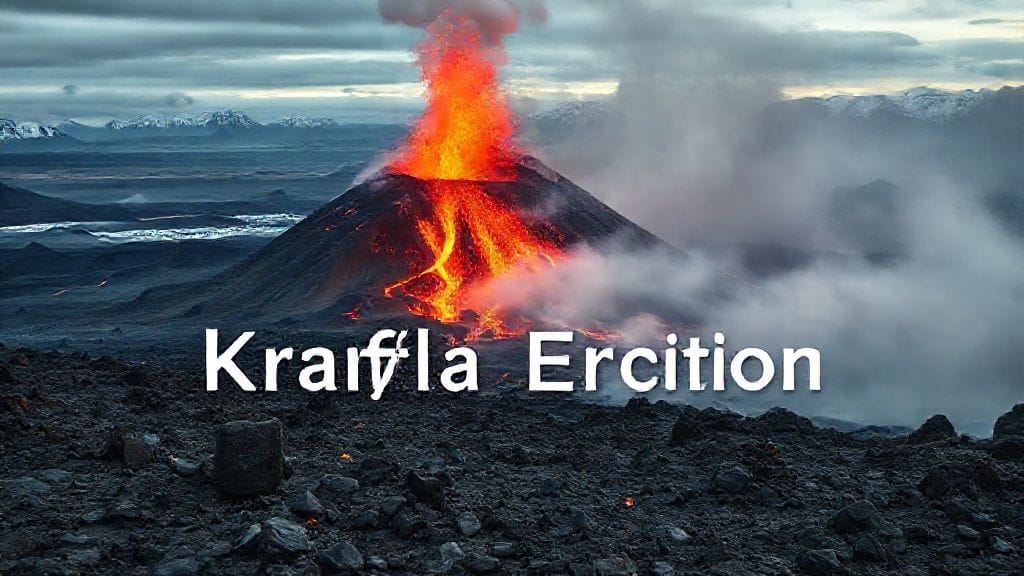
On a chilly November night in 1975, the earth beneath the barren lava fields of northern Iceland convulsed violently. The ground cracked open, glowing rivers of molten rock began their slow, inevitable journey across the desolate landscape. A deep rumble echoed under a sky broken by flickering flames and ash. Icelanders watched in awe and trepidation as Krafla—one of the largest volcanic systems of the island—erupted after centuries of silence. But this was not a brief outburst of fire; it was the opening salvo of a volcanic symphony that would swell and recede over nearly a decade, reshaping not only the land but the spirit, science, and economy of a nation accustomed to living on the edge of elemental fury.
The land of fire and ice is no stranger to such drama—Stark glaciers and steaming fissures coexist here, a place where tectonic plates diverge and molten rock crafts new earth beneath the restless Arctic sky. The Krafla eruption of 1975 to 1984 wasn’t just another geological event; it became a testament to the power of nature’s slow, quaking persistence and humanity’s resolve to understand and coexist with it.
The Land of Fire and Ice: Iceland’s Geological Theatre
Iceland sits astride the Mid-Atlantic Ridge, where the North American and Eurasian tectonic plates slowly drift apart. This unique location makes the island a living laboratory of geology: volcanoes, geysers, hot springs, and enormous glaciers shape its geography. Over millennia, volcanic activity has not only built the island but also forged its identity. Among its fiery rings, the Krafla volcanic system in the northeast stands as a dominant force.
Before the tumult of the late 20th century, Krafla had been quiet for centuries, its slopes covered with old lava fields and a sprawling caldera. But geological records and oral histories hinted at an active heart beneath. Here, magma chambers – reservoirs of molten rock – simmered in anticipation beneath the thin crust. Iceland’s geological forces were wielding nature’s most unpredictable brush.
Origins of the Krafla Eruption: Deep Earth Forces Unleashed
Beneath Krafla, the earth’s mantle churns with heat and pressure. The forces at play are immense but slow-moving, hidden from human sight and yet capable of transformation on a scale that dwarfs lifetimes. The eruption that began in 1975 was triggered by a process called “dyke injection,” where molten rock forces its way through fractures, pushing the earth’s crust apart.
Over the years leading to the eruption, subtle signs emerged: swarms of earthquakes shook the region, ground deformation — the gradual swelling of land — betrayed the rising magma below, and hot springs grew restless. The tension built to a crescendo in November 1975, when continuous seismic tremors culminated in a powerful venting of molten rock from the earth’s core.
Active Faultlines: The Tectonic Setting Beneath Krafla
Krafla owes much of its volatility to its position—nestled directly over the divergent boundary where the Eurasian and North American tectonic plates peel apart at about two centimeters per year. This rifting mechanism creates a geological environment rife with fractures and faults, prime conduits for magma ascendance.
The Krafla fissure swarm, spanning some 90 kilometers, includes many individual vents which have erupted sporadically over centuries. The latest episode in the 1970s and 80s was part of this natural cycle but remarkable for its duration and intensity. The interactions between rifting movement and the pressurized magma chambers underpinned the eruption’s lengthy and episodic nature.
The First Pyroclast: Initial Surges of the 1975 Crisis
The eruption began suddenly on November 20, 1975, when a series of fissures ripped open kilometers of earth. Columns of ash and incandescent rock fragments shot into the sky, lighting the dark volcanic desert like an eerie beacon. Lava fountains erupted, their glowing tongues licking and swallowing old lava fields, moving slowly but inexorably.
Initial eruptions were dramatic but localized — volcanic ash darkened skies, and toxic gases spread through valleys, forcing local populations to evacuate temporarily. It was clear this was no ordinary eruption; Krafla was reawakening, and its fiery breath would not soon be stilled.
Lava and Ash: The Early Explosive Episodes
In the weeks that followed, multiple fissures opened and closed in a series of explosive bursts, sending plumes of ash thousands of meters into the atmosphere. The region’s delicate ecosystem was blanketed in volcanic dust, and picturesque views were replaced by fields of new black lava rock.
Scientists deployed on-site to monitor and document this activity marveled at the variety of volcanic behavior — from effusive lava flows calmly spreading over terrain to sudden, powerful explosive bursts that hurled pumice and ash over wide areas. The eruption became a live spectacle of volcanic dynamics, revealing the interplay between earth’s molten heart and brittle crust.
The Role of Magma Chambers: Feeding the Fiery Beast
The prolonged eruption was sustained by one or more substantial magma chambers deep beneath Krafla’s summit caldera. These reservoirs collected molten rock rising from the mantle, building pressure until fractures formed, providing escape routes.
One of the fascinating aspects of this eruption was the episodic nature of magma movement. Multiple intrusive events — including dykes injecting magma sideways — loosened the ground and caused deformation observable even from space. Understanding this dynamic was critical in advancing volcanology, as Krafla became a natural experiment that revealed how magma chambers inflate and deflate over years.
Communities on the Edge: Life Before and During the Eruption
The area surrounding Krafla was sparsely populated but resonant with human lives connected deeply to the land. Farmers, fishermen, and geothermally powered communities lived in proximity to volcanic hazards, well aware of the risks.
When the eruption unleashed its fury, residents saw their routines upturned. Evacuations became frequent, air quality deteriorated, and roads were cut off by flowing lava. “We could see the earth bleeding fire,” recalled local farmer Guðmundur Jónsson, whose family had lived here for generations. Yet, resilience was the order of the day — Icelanders adapted with stoic perseverance, bringing the eruption’s urgency into everyday life.
Iceland’s Response: Scientists, Authorities, and Local Populations
For Iceland, a nation forged in volcanic fire, the eruption demanded a coordinated response from government, scientists, and civil defense. Early warning systems were quickly improved, and monitoring stations deployed around Krafla gathered vital seismic, geodetic, and gas emission data.
The eruption inspired close cooperation between volcanologists and emergency planners, as the lessons learned here would inform safety protocols elsewhere. At the same time, local communities, while enduring hardship, became sources of firsthand observation that enriched scientific understanding.
The Human Drama Amidst Lava Fields and Sulphur Clouds
Beyond the raw geology, the Krafla eruption was a human story of confrontation with a force that dwarfed ordinary life. Stories emerged of farmers watching their fields burn, children witnessing skies darkened with ash, and air so thick with sulphuric fumes that breathing became perilous.
Yet, amid the destruction, small acts of humanity stood out: neighbors helping neighbors evacuate livestock, scientists sharing meals under tents near boiling vents, and reporters chronicling history as it unfolded. The eruption, while frightening, became a shared narrative woven into Iceland’s national consciousness.
Marathon of Fire: The Prolonged Nature of the 1975–1984 Eruption
What made Krafla’s eruption extraordinary was its persistence. Rather than a single cataclysmic event, multiple eruption episodes occurred intermittently across nearly a decade. Each time the fires subsided, only a temporary calm followed before new fissures opened or lava flows renewed.
This drawn-out volcanic pulse is rare and provided unique opportunities for sustained observation. It also prolonged uncertainty for local populations and complicated emergency response, turning the eruption into a marathon event, testing both natural forces and human endurance.
Lava Flows and New Landscapes: How Krafla Reshaped Its Region
Thousands of hectares of land were transformed as thick lava flows spread and solidified into fresh volcanic rock. Old hiking paths were covered, new ridges formed, and the topography reshaped radically.
While initially a source of destruction, over time these new landscapes became part of Iceland’s rugged beauty. Scientists studied how life recolonized the barren lava plains, observing early plant succession and the resilience of ecosystems in this extreme environment.
Economic Impacts: From Damage to Geothermal Opportunity
The eruption caused damage to roads, farms, and infrastructure, disrupting local economies dependent on agriculture and tourism. However, Iceland’s geological bounty includes significant geothermal energy potential, and the Krafla area became a prime site for tapping this resource.
In the years following the eruption, geothermal power plants were established, turning volcanic heat into clean energy and providing economic benefits. The eruption inadvertently accelerated Iceland’s commitment to renewable energy, a legacy that endures to this day.
The 1980 Eruption: A Climax of Volcanic Fury
Among the multiple eruption phases, the events of September 1980 stand out for their intensity. New fissures erupted with spectacular lava fountains, and large lava flows threatened infrastructure more directly than before.
Scientists compared this phase to earlier activity, noting an escalation in magma volume and eruption dynamics. This climax marked the peak of the eruption’s power before gradual waning in subsequent years.
Monitoring Innovations Born From Krafla’s Roar
The ongoing crisis spurred advancements in volcanic monitoring. Icelandic scientists developed enhanced seismic networks, ground deformation measurement techniques using precise leveling and later satellites, and gas emission analyses that allowed better forecasting.
Krafla became a model for multidisciplinary volcanic study, influencing global volcanology. Instruments and methods pioneered here are now standard tools in tracking restless volcanoes worldwide.
Myths, Media, and Public Perception: Volcano as Spectacle and Threat
The Krafla eruption captivated the Icelandic public and the world media. Icelanders drew upon folklore—the mythic interactions of fire giants and subterranean creatures—to interpret the eruption’s meaning and to communicate its formidable presence.
Internationally, media coverage framed Krafla as both a natural wonder and a looming threat, feeding imaginations and scientific curiosity alike. The volcano became an emblem of Iceland’s raw natural power and resilience.
The End of the Eruption: Signs of Quiet and New Beginnings
By 1984, volcanic activity dwindled, seismic tremors eased, and the fissures stopped spewing lava. Scientists cautiously declared the eruption over. This cessation marked the start of a new chapter — one of study, recovery, and harvesting of geothermal energy.
Yet, Krafla remained a living volcano, reminders of its power etched in the landscape and in the island’s ongoing relationship with fire beneath ice.
Krafla’s Legacy in Icelandic Geology and Culture
The eruption left an indelible mark on both earth and mind. Geologically, it provided a detailed case study of rift volcano behavior and magma dynamics. Culturally, it enriched Icelandic narratives of endurance and adaptation.
The lessons of Krafla continue to inform hazard management and inspire art, literature, and public engagement with nature’s tremendous forces.
The Global Scientific Community’s Insights and Lessons
Krafla’s prolonged, complex eruption challenged existing volcanic models and offered data crucial to refining understanding of magmatic plumbing systems and rifting processes.
Researchers worldwide have referenced Krafla in comparative studies, making it a cornerstone of plate tectonics and volcanology knowledge. It showed how monitoring and multidisciplinary approaches can yield not only scientific progress but also safer societies.
Environmental Effects: Ecosystems Transformed
Volcanic ash and lava altered soil composition and local climate conditions. Yet resilient Icelandic flora breathed life back into the landscape, starting with mosses and lichens, slowly paving the way for greater biodiversity.
Wildlife adapted too, and long-term studies continue to observe ecological succession on these “new lands.” Krafla thus serves as a natural laboratory of environmental regeneration.
Krafla Today: Tourist Attraction and Research Hub
Now dormant, Krafla attracts tourists yearning to witness the scars and splendor of recent volcanic activity. Hiking trails, boiling mud pools, and steaming fumaroles draw thousands each year.
Simultaneously, the area hosts scientific installations exploring geothermal energy and ongoing earth processes. The volcano’s story infuses both tourism and technology sectors, echoing through Iceland’s modern narrative.
Conclusion: Fire, Ice, and the Eternal Dance of Nature
The eruption of Krafla from 1975 to 1984 shattered the stillness of Iceland’s northern wilderness with episodes of fire and fury that tested human patience and knowledge. It revealed nature’s patient persistence—slow, sometimes subtle, ultimately overwhelming.
Yet it also illuminated humanity’s ability to observe, learn, and adapt in the face of profound natural power. From fiery first crack to spread of new lava plains, Krafla’s saga remains a stirring testament to the intimate dance between earth’s hidden forces and the communities who live upon them.
In this crucible of heat and ice, science, culture, and resilience fused, weaving a heritage as enduring as the harsh Icelandic landscapes themselves. The story of Krafla is a vivid reminder that beneath every quiet hill may pulse the restless heart of fire, waiting to reshape our world again.
FAQs
Q1: What caused the Krafla eruption in 1975?
A1: The eruption was triggered by magma rising through fractures in the earth’s crust, facilitated by the tectonic rifting at the Mid-Atlantic Ridge beneath Iceland. The injection of magma into crustal fissures caused cracks and volcanic activity.
Q2: How long did the Krafla eruption last?
A2: The eruption lasted intermittently from 1975 until 1984, making it a prolonged volcanic event with multiple eruption episodes.
Q3: How did local communities cope with the eruption?
A3: Residents faced evacuations, air quality issues, and disruptions but showed resilience. They adapted through evacuation, protection of livestock, and cooperation with authorities.
Q4: What scientific advances resulted from observing the Krafla eruption?
A4: Krafla led to improvements in seismic monitoring, magma chamber modeling, and early warning systems; it became a model for studying rift-zone volcanoes.
Q5: How did the eruption affect Iceland’s economy?
A5: While causing immediate damage, the eruption’s geothermal activity spurred investments in geothermal power plants, boosting renewable energy development.
Q6: What is the current status of Krafla volcano?
A6: Krafla is currently dormant but remains closely monitored due to its volcanic history and geothermal potential.
Q7: How did the environment recover from the eruption?
A7: Vegetation slowly recolonized the new lava fields, starting with hardy mosses and lichens, gradually restoring ecosystems over decades.
Q8: Why is Krafla significant to volcanology worldwide?
A8: Its long duration, complex magma movement, and rift setting provided unique insights into volcanic processes relevant to many tectonic environments.

