Table of Contents
- The Calm Before the Storm: Luzon on the Eve of Disaster
- Mount Pinatubo: A Sleeping Giant in the Heart of the Philippines
- Indigenous Voices and Forgotten Warnings
- The Geological Prelude: Seismic Whispers and Sulfurous Hints
- June 15, 1991: The Day the Sky Burned
- The Cataclysm Unleashed: Ash, Pyroclastic Flows, and the Roar of the Volcano
- The Human Face of Eruption: Evacuations and Survival Stories
- The Role of Scientists: Prediction, Preparation, and Communication
- The Philippine Government and International Aid: A Race Against Time
- Ashes on Manila: The Far-Reaching Impact on Daily Life
- The Climatic Ripple: Global Cooling and Atmospheric Changes
- Ecological Aftermath: Landscapes Scarred and New Ecosystems Born
- Economic Tremors: The Cost of the Eruption on the Philippines’ Economy
- Communities Rebuilt: Resilience in the Shadow of Pinatubo
- Memory and Myth: Pinatubo in Filipino Culture and History
- Lessons Learned: Modern Volcanology and Disaster Preparedness
- The Legacy of Pinatubo: A Testament to Nature’s Dual Power
- Conclusion
- FAQs
- External Resource
- Internal Link
The sun rose over Luzon on June 15, 1991, casting an ordinary light on a landscape oblivious to the ordinary day about to turn into an epic story of destruction and survival. The gentle hum of daily life—farmers tending their fields, children playing under clear blue skies, the distant murmur of bustling barangays—belied the monstrous awakening lying beneath the earth. Mount Pinatubo, dormant for over 500 years, was ready to unleash one of the largest volcanic eruptions of the 20th century.
1. The Calm Before the Storm: Luzon on the Eve of Disaster
The morning of June 15 was, in many ways, unremarkable. The residents of Central Luzon had long lived with the quiet presence of Mount Pinatubo, a tall volcanic peak hidden among emerald forests and rugged hills. It was an imposing but distant neighbor, its last known eruption traced back to the early 15th century—well before recorded history in the area. To many, it was a myth in their collective memory, a dormant force forgotten beneath generations of peaceful skies.
Yet beneath the surface, the earth spoke—a quiet but insistent warning. Weeks of small tremors rattled the soil. Strange smells of sulfur seeped through the air, unsettling the most attuned villagers and conquering scientists alike. But most people went about their lives, anchored in their communities, unaware that this day would etch itself profoundly into the history of the Philippines and beyond.
2. Mount Pinatubo: A Sleeping Giant in the Heart of the Philippines
Mount Pinatubo, rising to 1,485 meters (4,869 feet), is part of the Luzon volcanic arc, a line of volcanoes formed by the complex convergence of the Eurasian and Philippine Sea tectonic plates. Though it had lain quiet for centuries, the volcano’s past told a tale of powerful eruptions that reshaped the surrounding landscape—cauldrons of molten lava, vast ash clouds, and fertile soil enriched by volcanic minerals.
Its cone and surrounding terrain were a patchwork of dense forest and tribal lands, home to indigenous groups such as the Aeta people, who had developed a symbiotic relationship with the mountain over centuries. These communities preserved ancient knowledge passed down through oral traditions—knowledge that would soon prove critical, though tragically underappreciated at first, in the events to come.
3. Indigenous Voices and Forgotten Warnings
The Aeta, an indigenous hill tribe, had long told stories about the mountain’s power. They spoke of fiery skies, earth that shakes, and waters that boil—signs that had guided their ancestors through eruptions past. As seismic activity grew heavier in the months before June, some Aeta communities began leaving their homes, heeding the ancestral warnings encoded in their lore.
Despite these traditional signals, their voices were often overshadowed by modern science and the official stance of local authorities. The tension between indigenous wisdom and scientific data highlighted the limits of understanding and communication when nature defies predictability.
4. The Geological Prelude: Seismic Whispers and Sulfurous Hints
Volcanologists monitoring the region detected increasing seismicity beneath Pinatubo from April 1991 onward. A swarm of earthquakes surged, many shallow and strong—a clear herald that magma was moving upward. Sulfur dioxide gas measurements spiked, an unmistakable sign that fresh magma was nearing the surface, releasing volatile gases trapped deep below.
The Philippine Institute of Volcanology and Seismology (PHIVOLCS), alongside U.S. scientists from the United States Geological Survey (USGS), established an observation post. They began emergency drills and evacuation planning, but the volatile character of the volcano made predictions uncertain. Would the mountain roar within weeks or months? What scale of disaster would await?
5. June 15, 1991: The Day the Sky Burned
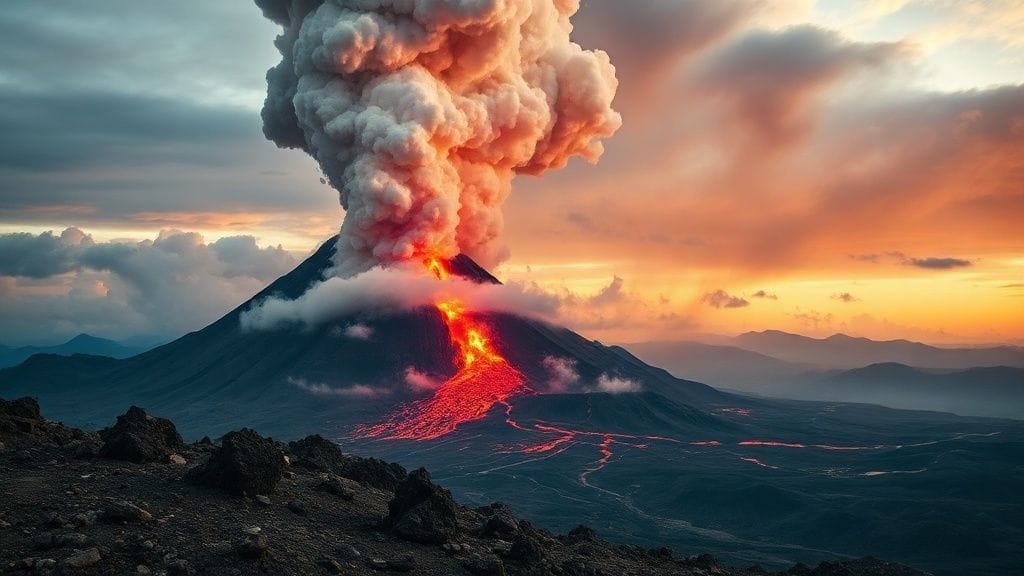
At 2:41 PM local time, the mountain erupted. What followed can only be described as an apocalyptic spectacle—Pinatubo hurled an enormous plume of ash, gas, and volcanic debris nearly 40 kilometers (25 miles) into the stratosphere. The sky turned dark as jet engines routinely groaned and trembled under the weight of volcanic ash.
Pyroclastic flows—hot avalanches of gas and rock—roared down the slopes, swallowing forests and villages in their deadly embrace. Lahars, mudflows triggered by torrential rains mixing with ash deposits, rushed through river valleys, devastating everything in their path for months to come.
6. The Cataclysm Unleashed: Ash, Pyroclastic Flows, and the Roar of the Volcano
The eruption produced roughly 10 cubic kilometers (2.4 cubic miles) of volcanic material—ash, pumice, and rock—a quantity rarely seen in the previous century. The force was so immense that barometric records registered it as one of the largest eruptions since Krakatoa in 1883.
The rain of ash blanketed Central Luzon in darkness for days. Breathing became difficult; roofs collapsed under the weight of accumulated ash. The landscape was transformed into a lunar wasteland—blackened, scarred, and eerily silent after the initial fury.
Yet underneath this devastation lay a paradox: volcanic soil, though initially barren, promised unparalleled fertility in the decades ahead, offering a bittersweet hope for recovery.
7. The Human Face of Eruption: Evacuations and Survival Stories
More than 200,000 people were evacuated just before and during the eruption—a feat of coordination given the mountainous terrain, poorer infrastructure, and high population density. Stories emerged of families uprooted overnight, temples destroyed, and villages lost beneath ash and mud.
One particularly poignant narrative comes from the Aeta people, whose ancestral homes were among the first destroyed. Despite this, their resilience shone through as they navigated survival with little governmental aid, relying on community strength, traditional knowledge, and adaptability.
8. The Role of Scientists: Prediction, Preparation, and Communication
The Pinatubo eruption marked a watershed moment in volcanology. The collaboration between PHIVOLCS and the USGS allowed for a relatively accurate prediction, enabling large-scale evacuations that undoubtedly saved thousands of lives.
Dr. Robert Christopher Newhall, an American volcanologist leading USGS teams, later reflected, “Without concerted international cooperation and the dedication of local communities, the scale of this disaster could have been immeasurably worse.”
Still, challenges of misinformation, fear, and communication gaps persisted—teaching valuable lessons in public engagement during natural disasters.
9. The Philippine Government and International Aid: A Race Against Time
The Philippine government faced immense challenges. Infrastructure was damaged, displaced communities required shelter, and economic activity plunged. International aid poured in—from medical teams to relief supplies—underscoring the global response to disaster.
President Corazon Aquino declared a state of calamity, and agencies began planning long-term rehabilitation. The eruption was a test not only of nature’s force but also of governance, solidarity, and the will to rebuild.
10. Ashes on Manila: The Far-Reaching Impact on Daily Life
Manila, nearly 90 kilometers (56 miles) away from Pinatubo, experienced a heavy ash fall that disrupted life for over a week. Airports closed, power outages occurred, and residents donned masks to breathe.
Local businesses halted, schools closed, and the bustling metropolis faced one of its most significant environmental challenges since the city’s founding. Newspapers reported the early morning sky “ashen gray,” and streets brushed with fine volcanic dust—photos remain haunting testimonies of the eruption’s vast reach.
11. The Climatic Ripple: Global Cooling and Atmospheric Changes
The 1991 Pinatubo eruption injected an estimated 20 million tons of sulfur dioxide into the stratosphere, forming a sulfate aerosol veil that reflected sunlight away from the Earth.
The result was a temporary global cooling effect of approximately 0.5 degrees Celsius (0.9 degrees Fahrenheit) over the next two years. This spectacular, albeit short-lived, climatic impact influenced weather patterns worldwide, altered monsoon behaviors, and for a brief time even affected the ozone layer.
12. Ecological Aftermath: Landscapes Scarred and New Ecosystems Born
The immediate aftermath was destructive—vegetation was incinerated or buried, wildlife displaced. Yet nature’s resilience began to manifest as new ecosystems slowly colonized the barren volcanic fields.
Scientists studied this natural laboratory, observing succession and adaptation as grasses, shrubs, and eventually forests reemerged, altering our understanding of ecological recovery and the dynamic balance between destruction and rebirth.
13. Economic Tremors: The Cost of the Eruption on the Philippines’ Economy
The eruption inflicted an economic toll estimated at $700 million—roughly $1.5 billion in today’s dollars—straining an already fragile economy. Agriculture suffered devastating losses; infrastructure required major repairs, and tourism declined sharply.
Yet, the disaster also catalyzed reforms in disaster management, urban planning, and resource allocation, setting the stage for future resilience despite short-term hardship.
14. Communities Rebuilt: Resilience in the Shadow of Pinatubo
In the years following the eruption, communities banded together to rebuild homes, revive schools, and restore livelihoods. New settlements arose, often with improved designs considering lahar risks.
Non-governmental organizations played a key role in addressing social and economic needs, while the government invested in scientific research and hazard mitigation, honoring the memory of those lost and preparing for the future.
15. Memory and Myth: Pinatubo in Filipino Culture and History
Pinatubo remains an indelible part of the Filipino collective memory. It features in songs, literature, and art—often symbolic of both nature’s fury and the nation’s resilience.
Annual commemorations, museums, and oral histories keep alive the stories of survival, loss, and hope. For many, the eruption is more than history—it is a living narrative of identity.
16. Lessons Learned: Modern Volcanology and Disaster Preparedness
The Pinatubo eruption revolutionized volcanic monitoring techniques and disaster preparedness protocols worldwide. It highlighted the necessity of integrating scientific forecasting with community engagement, interdisciplinary cooperation, and timely government action.
Today’s emergency response models owe much to the unyielding dedication displayed during those tense months in 1991.
17. The Legacy of Pinatubo: A Testament to Nature’s Dual Power
Mount Pinatubo’s eruption was a terrifying force of destruction but also a powerful reminder of nature’s cycles—death and rebirth, chaos and harmony. It tested humanity’s limits and capacity to adapt, compelling us to listen more deeply—to the earth’s subtle warnings, to each other’s stories, and to the fragile balance we inhabit.
Conclusion
Reflecting on the 1991 eruption of Mount Pinatubo, we witness a profound narrative of nature’s unpredictable power entwined with human courage and resilience. The sky’s sudden darkness was matched only by the courage of those who faced loss and uncertainty with unwavering spirit. Scientific vigilance saved countless lives, indigenous wisdom offered invaluable foresight, and communities rose together from ash and mud to rebuild.
Pinatubo teaches us that disasters, however devastating, can awaken solidarity, innovation, and hope. It remains a solemn reminder that in facing nature’s greatest trials, our greatest strength lies not only in technology or knowledge but in humanity itself.
FAQs
Q1: What caused the 1991 Pinatubo eruption?
The eruption was caused by rising magma beneath the volcano, triggered by tectonic processes along the Philippine fault line, leading to a massive release of gas and volcanic material.
Q2: How many people were affected by the eruption?
Over 800,000 people were affected, with about 200,000 evacuated before and during the eruption. Approximately 350 people died, and thousands were displaced.
Q3: What was the global impact of the eruption?
The eruption injected millions of tons of sulfur dioxide into the atmosphere, causing global cooling and affecting weather patterns worldwide for up to two years.
Q4: How did scientists predict the eruption?
Through increased seismic activity monitoring, gas emissions measurements, and ground deformation studies, volcanologists identified mounting signs of an impending eruption.
Q5: What role did indigenous knowledge play?
The Aeta people’s oral traditions contained valuable eruption indicators, prompting early evacuations and influencing disaster response strategies.
Q6: How did the eruption impact the Philippines’ economy?
It caused widespread agricultural loss, infrastructure damage, and economic setbacks totaling approximately $700 million, prompting national reforms in disaster management.
Q7: How has Mount Pinatubo changed since 1991?
The volcano remains dormant but monitored; ecosystems have regenerated, and technological advances in monitoring ensure early warnings for any future activity.
Q8: What lessons has the world learned from Pinatubo?
Pinatubo highlighted the importance of international scientific cooperation, integrating local knowledge, and proactive disaster preparedness policies.

