Table of Contents
- In the Shadow of an Ancient Giant: Opening Scenes of the Taal Eruption
- The Restless Heart of Luzon: Understanding the Taal Volcano Complex
- The People of Batangas: Life on the Edge of Fire
- Early Signs and Omens: Tremors and Whispers Before the Explosion
- January 1911: The Awakening of Taal—Day by Day
- The Sky Turns Ominous: Ash Clouds and Lightning Storms
- The Fury Unleashed: Lava, Pyroclastic Flows, and the Scorching Ground
- The Human Tragedy: Lives Lost and Communities Shattered
- Heroism and Survival: Stories of Courage Amidst Chaos
- Responses Across the Archipelago: Government and Local Aid Efforts
- Scientific Curiosity Meets Disaster: Early Volcanology and the Philippine Observatory
- The Aftermath: Landscape Transformed and Ecosystems Wounded
- Reconstruction and Resilience: How Batangas Rebuilt from Ashes
- Cultural Memory: Folklore, Art, and Oral Histories of the 1911 Eruption
- Lessons from the Past: Taal’s Role in Modern Disaster Preparedness
- The Global Context: Volcanic Eruptions in the Early 20th Century
- Taal Volcano Today: A Sleeping Giant in a Volcanically Active Nation
- Conclusion: The Indelible Mark of Fire on Human History
- FAQs: Unraveling Mysteries and Myths of the 1911 Taal Eruption
- External Resource
- Internal Link
In the Shadow of an Ancient Giant: Opening Scenes of the Taal Eruption
It began quietly—too quietly, perhaps—on a clear dawn in early January 1911. The idyllic island of Luzon, beneath a brilliant sky of Philippine blue, harbored a sleeping giant. Residents near Lake Taal, a serene crater lake nestled within one of the world’s most complex volcanic systems, had lived for generations with the mountain’s dormant presence—sometimes a faint rumble, sometimes a gentle smoke. Yet that morning, a strange unease gripped the air, as the first tremors rumbled beneath their feet, whispering a terrifying promise of upheaval.
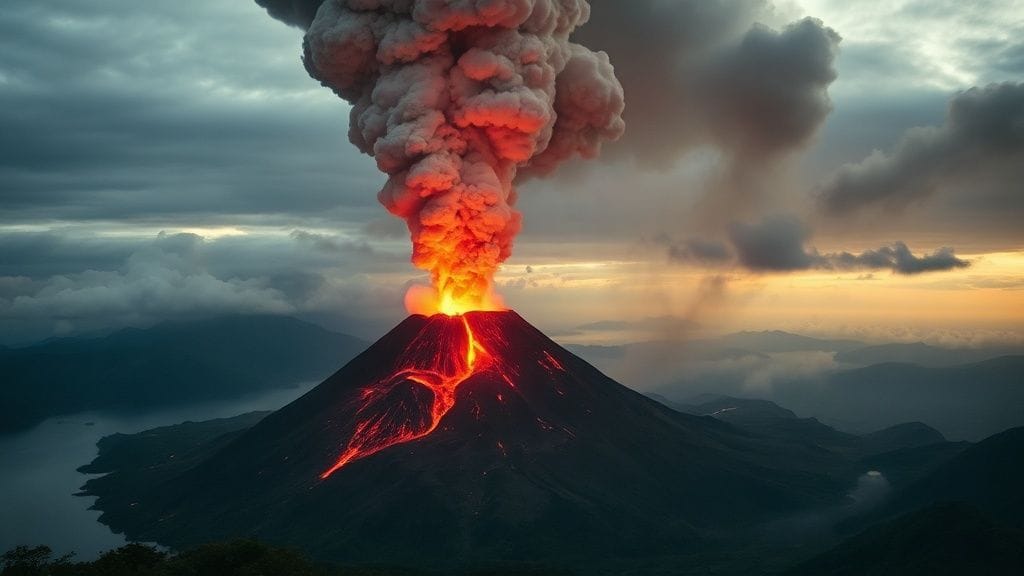
Suddenly, the mountain roared to life. What followed was one of the most violent and transformative eruptions in Philippine history, a cataclysm that would shatter lives and landscapes and reshape the cultural memory of an entire region. The sky turned dark with ash, lightning cracked through the sulfurous clouds, and the earth itself seemed to convulse in a primal fury.
This was no mere geological event; it was a profound human catastrophe and a testament to the powerful tension between nature and civilization. The Taal eruption of 1911 marked an epoch in Luzon’s history—a reminder that the seemingly tranquil paradise conceals unimaginable forces, poised to remind us of our fragility in the face of Earth's blazing heart.
The Restless Heart of Luzon: Understanding the Taal Volcano Complex
Taal Volcano occupies a unique and enigmatic place among the Pacific’s fiery belts. Nestled on the southwestern edge of Luzon island, it comprises a series of overlapping craters and lakes within a larger caldera, often described as a "volcano within a volcano." The lake that crowns this caldera, Lake Taal, is itself the second largest lake in the Philippines and conceals a watery abyss over the old volcanic heart.
Geologically, Taal lies within the Pacific Ring of Fire, a region notorious for intense seismic and volcanic activity stretching along the edges of the Pacific Ocean. Taal’s proximity to populated areas, including the rapidly growing city of Manila just 65 kilometers away, has always been a cause for deep concern among scientists and residents alike.
Prior to 1911, historical records of Taal’s eruptions were limited but meaningful: notable events in 1754 and 1879 had demonstrated the volcano’s destructive potential. However, the volcano’s extended periods of quiet had bred a dangerous complacency. Locals revered and respected Taal, weaving it into their folklore and daily lives, but many underestimated the latent fury residing beneath its placid surface.
The People of Batangas: Life on the Edge of Fire
To understand the impact of the 1911 eruption, one must first step into the communities surrounding Taal. The province of Batangas, spreading around the crater lake, was predominantly rural and agricultural. Small towns, fishing villages, and farms thrived around the fertile volcanic soil nourished by centuries of mineral-rich ash. The inhabitants—Tagalog-speaking Filipinos—had a deep connection to their land, sustained by rice paddies, coconut groves, and vibrant trade networks.
Life here was a delicate balance, living “on the edge”—not only of the volcano but of colonial change. The Philippines in 1911 was under American sovereignty after decades of Spanish rule, making the region a focal point of cultural convergence and political transformation. For the Batangueños, the mountain was both a sacred presence and a constant geographic reality; they navigated daily hazards and hopes with a stoic acceptance born of familiarity.
Early Signs and Omens: Tremors and Whispers Before the Explosion
In the months leading up to January 1911, subtle changes began to whisper through the environment. Minor earthquakes trembled through Luzon’s crust. Villagers reported unusual animal behavior—dogs howled incessantly, birds fled the region abruptly, and fish disappeared from the lake’s surface. A faint sulfuric smell drifted on the winds, warning of the change beneath the earth.
These signs went largely unheeded by authorities more focused on consolidating political gains than on deciphering volcanic warnings. Scientific monitoring was rudimentary; distant colonial administrators relied on scant and often anecdotal reports. Local communities, though wary, had neither the means nor the infrastructure to mitigate impending disaster.
Yet, the mountain’s message was unmistakable—a deep, resonant growl vibrating through the hills, escalating gradually into alarming seismic activity. It was nature’s quiet declaration that something ancient and uncontrollable was awakening.
January 1911: The Awakening of Taal—Day by Day
The eruption began in earnest in the early days of January. In the first week, a violent venting of steam and ash marked the onset, darkening the skies and chilling the air. Residents watched in alarm as smoke columns grew into monstrous plumes, towering miles above the lake and spreading vast swaths of ash across the surrounding lands.
January 27th became the most fateful day. At dawn, a series of catastrophic explosions shattered the region. The ground shook violently, and torrents of superheated gas and volcanic debris cascaded down the mountain slopes. Lahars—deadly mudflows—rushed into the lake and rivers, drowning farmlands and villages in thick, suffocating sludge.
It was a day etched into the memories of survivors: skies black as night, hearts pounding with terror, and the bitter taste of ash covering mouths and landscapes. The eruption continued intermittently for weeks, each phase marked by fresh explosions, ashfall, and seismic unrest that held communities hostage in a world turned upside down.
The Sky Turns Ominous: Ash Clouds and Lightning Storms
One of the most haunting features of the 1911 eruption was the haunted sky above Taal. As volcanic ash columns rose, they generated powerful static charges, igniting fierce lightning storms within the smoke plumes. These atmospheric phenomena, terrifying in their spectacle, illuminated the menacing clouds with jagged flashes, painting an apocalyptic scene.
This electrified ash cloud was not just a dramatic backdrop; it posed severe dangers to anyone caught in the open. Lightning struck trees and homes, igniting fires that compounded the volcano’s destruction. The relentless ashfall darkened daylight into twilight, creating despair for those struggling to escape or find shelter.
The Fury Unleashed: Lava, Pyroclastic Flows, and the Scorching Ground
Beneath the violent surface devastation, Taal's subterranean fury manifested in rivers of molten lava and fast-moving pyroclastic flows—searing avalanches of gas, ash, and rock that obliterated everything in their path. These lethal flows raced at terrifying speeds, engulfing forests, farmland, and settlements alike.
The intensity of the eruption's thermal blasts was such that entire zones around the lake were reduced to barren wasteland. The volcanic heat ignited new fires and altered the hydrology of the region. The lake itself swelled and boiled as toxic gases mixed with its waters, making it a dangerous, unstable body unlike any other.
The Human Tragedy: Lives Lost and Communities Shattered
The 1911 eruption’s toll was catastrophic. Conservative estimates place the death toll at over 1,300 people, though exact numbers are difficult to verify given the scale and rapidity of events. Entire villages were buried under ash and mud, their inhabitants suffocated or crushed by falling debris.
Families were separated, homes lost, and lifelines severed. Survivors recounted harrowing escapes, often at the mercy of nature’s randomness. Food shortages, disease, and exposure compounded the initial trauma, turning what might have been a brief calamity into a prolonged human crisis.
Moreover, the eruption displaced thousands, forcing migrations and the difficult rebuilding of lives from ruins. The psychological scars endured in communities, shaping identity and collective memory for generations.
Heroism and Survival: Stories of Courage Amidst Chaos
Amid the devastation, stories of bravery and communal solidarity emerged. Local leaders and volunteers organized relief efforts even as ash and debris threatened their own safety. Fishermen and farmers risked treacherous waters and lands to rescue neighbors stranded by mudflows and floods.
One tale tells of a young mother who, carrying her infant, climbed a steep ridge as lava edged behind them, finding refuge among scattered trees. Another recounts the daring actions of a village elder who warned residents of imminent pyroclastic flows, saving scores from certain death.
These acts of courage highlight the resilience of human spirit when confronted by nature’s fury—a testament not just to survival, but to profound communal bonds.
Responses Across the Archipelago: Government and Local Aid Efforts
The eruption resonated beyond Batangas. In Manila, officials hastened to organize aid, but logistical challenges hampered swift response. The colonial American government, still solidifying its governance infrastructure, struggled to mobilize resources across difficult terrain and widespread communication breakdowns.
Nevertheless, military units, medical personnel, and relief supplies were dispatched to the hardest-hit zones. Temporary shelters sprang up along safe routes, though overcrowding and disease risks lingered. Charitable organizations and religious missions played pivotal roles, administering food, medicine, and psychological support.
Despite these efforts, the crisis revealed limitations in colonial administration and reinforced the vital importance of local knowledge and preparedness.
Scientific Curiosity Meets Disaster: Early Volcanology and the Philippine Observatory
The 1911 eruption also captured the attention of the nascent field of volcanology in the Philippines. Led by pioneers at the Manila Observatory, scientists scrambled to document the eruption’s phases, measure ash deposits, and analyze seismic patterns.
Though technology was rudimentary by modern standards, these early observations contributed significantly to understanding Taal’s behavior and volcanic mechanisms. Detailed field reports, ash samples, and eyewitness testimonies formed the basis for future studies that would improve hazard prediction.
This eruption marked a turning point, pushing science to the frontline of disaster response and linking empirical knowledge with societal safety.
The Aftermath: Landscape Transformed and Ecosystems Wounded
Taal’s eruption did not simply claim human lives; it reshaped entire landscapes and ecosystems. The fertile valleys were covered in meters of ash, altering soil properties and water quality. Forests near the volcano fell silent, stripped of leaves and branches, leaving ghostly stands of charred timber.
Aquatic life in Lake Taal suffered from acidification and sedimentation. Fish kills reported in the lake signaled disruption of delicate ecological balances. Recovery would be slow, complicated by ongoing hydrothermal activity beneath the surface that continued to shape topography.
This environmental devastation served as a grim reminder of volcanic power, reverberating through the natural world as deeply as through human society.
Reconstruction and Resilience: How Batangas Rebuilt from Ashes
The post-eruption years witnessed extraordinary resilience. Communities returned cautiously to the ruined lands, rebuilding their homes amidst the blackened fields. Farming practices adapted to new soil conditions; fishing resumed with care, sometimes relocating to safer shores.
Infrastructure—roads, bridges, and public buildings—required reconstruction, often with improved designs to withstand future tremors. Education campaigns and early warning systems slowly took root, as the 1911 eruption galvanized a collective commitment to learn from tragedy.
Cultural revival played its part too, with festivals and storytelling reflecting themes of survival and renewal. The scars of destruction became foundations for pride and perseverance, demonstrating the indomitable spirit of Batangas’ people.
Cultural Memory: Folklore, Art, and Oral Histories of the 1911 Eruption
In the decades following the eruption, the event seeped into the cultural fabric of the region. Folklore recounted the mountain’s wrath and mercy, often personifying Taal as a living entity with moods and desires. Songs, poems, and paintings captured the ash-darkened skies and human struggle, preserving memory in creative forms.
Oral histories—passed from elders to youth—ensured the transmission of lessons and warnings. Rituals honoring protection from volcanic spirits remained vital, drawing upon pre-colonial and syncretic religious beliefs.
This intertwining of history, myth, and art highlights how societies process trauma through narrative, transforming catastrophe into a shared identity.
Lessons from the Past: Taal’s Role in Modern Disaster Preparedness
The 1911 eruption’s legacy guides modern efforts in disaster management in the Philippines. Authorities now maintain monitoring systems around Taal with seismographs, gas analyzers, and surveillance of lake activity. Early warning protocols and evacuation plans have been developed, informed by past experiences.
Educational programs teach residents and officials about volcanic hazards, fostering a culture of preparedness that could save lives in future eruptions. The event underscores the critical need for scientific vigilance coupled with community engagement.
For a country sitting atop multiple active volcanoes, Taal stands as a constant reminder: the earth’s power is unyielding but not unpredictable if respected and understood.
The Global Context: Volcanic Eruptions in the Early 20th Century
Globally, the early 20th century witnessed several major volcanic eruptions—from Mount Pelée in Martinique in 1902 to the lesser-known but impactful eruptions across the Pacific Rim. These events shaped emerging scientific debates on eruption mechanisms and hazards.
The 1911 Taal eruption contributed to this corpus, highlighting unique phenomena such as island caldera eruptions, electrified ash clouds, and lake-volcano interactions. It revealed challenges faced by developing nations under colonial rule in managing natural disasters.
Seen in this broader frame, Taal’s eruption forms a chapter in humanity’s ongoing dialogue with the restless forces that shape our planet.
Taal Volcano Today: A Sleeping Giant in a Volcanically Active Nation
Today, Taal rests in a state of uneasy dormancy, its caldera lake a shimmering, deceptive calm. Yet beneath that serene surface, fumaroles and sulfur vents remind us that the giant slumbers, its next breath unpredictable in time and magnitude.
Modern Filipino society, much more urbanized and populous, remains vigilant. The lessons hard earned in 1911 fuel contemporary science and policy as Taal continues to captivate and caution millions living in its shadow.
It is a dynamic symbol of nature’s beauty and peril, forever etched into the consciousness of the Philippines.
Conclusion
The Taal eruption of 1911 was not merely a geological event but a profound human experience—a moment when the eternal rhythms of earth’s fury intersected with the vulnerability and resilience of society. From the ash-covered fields of Batangas rose stories of loss and survival, science and myth, tragedy and hope.
This eruption compels us to remember that beneath beauty can lie danger, that beneath repose can lurk immense power. It teaches humility before nature and the imperative of knowledge and preparedness.
Most of all, it speaks to the enduring spirit of those who rebuild from ruin, shaping history not only through calamity but through courage and regeneration. The story of Taal is ours as much as it is the earth’s—an indelible mark of fire on the human narrative.
FAQs
Q1: What caused the Taal eruption in 1911?
The eruption was caused by the reactivation of magma chambers beneath the volcano, leading to explosive volcanic activity triggered by rising pressure and interaction with Lake Taal’s waters. Preceded by seismic tremors and gas emissions, these processes culminated in the violent January explosion.
Q2: How many people were affected by the eruption?
Estimates suggest at least 1,300 deaths, with thousands more displaced and injured. Many villages near the crater were destroyed, leading to widespread social and economic disruption.
Q3: Who were the key responders during the disaster?
Local community leaders, American colonial officials, missionaries, and volunteers played vital roles in rescue and relief, despite limited resources and logistical challenges.
Q4: How did the 1911 eruption influence volcanic science?
It provided valuable observational data for the nascent Philippine volcanology field, helping develop early warning concepts and deepening understanding of caldera eruptions and volcanic lake dynamics.
Q5: What is the cultural significance of Taal in the Philippines?
Taal is a central figure in Filipino folklore and identity, representing both the power of nature and the resilience of people. The 1911 eruption added a layer of collective memory that continues to influence rituals, art, and storytelling.
Q6: What measures exist today to monitor Taal Volcano?
Advanced monitoring includes seismographs, ground deformation sensors, gas emission detectors, and satellite imagery, all coordinated by the Philippine Institute of Volcanology and Seismology (PHIVOLCS) to provide timely eruption warnings.
Q7: Is Taal still an active threat?
Yes, Taal remains one of the most active and dangerous volcanoes in the Philippines, with eruptions recorded as recently as the 21st century, necessitating ongoing vigilance.
Q8: How did the eruption impact local ecology?
The eruption devastated forests, aquatic ecosystems, and farmland but also initiated long-term ecological succession and soil renewal, demonstrating both destruction and regeneration.

