Table of Contents
- The World Awaits a New Dawn: April 1815, Sumbawa Island
- Mount Tambora’s Calm Before the Catastrophe
- Geological Wrath: Understanding the Eruption’s Power
- The Day the Earth Shattered: April 10, 1815
- Voices Lost in Ash: Immediate Human Toll on Sumbawa
- A Darkened Sky Around the Globe: The Spread of Ash and Aerosols
- “The Year Without a Summer”: Climate Chaos and Global Cooling
- Harvests Shattered and Societies Strained: The Agricultural Crisis
- Europe in Peril: Famine, Weather Anomalies, and Social Unrest
- America and Asia Confront the Unseen Disaster
- Scientists of the Time Grapple with the Unknown
- The Tambora Eruption in Cultural Memory and Myth
- Geology and Volcanology Transformed: Lessons from 1815
- Long-Term Environmental and Ecological Aftershocks
- Human Resilience and Recovery in the Aftermath
- Modern Reflections: What Tambora Teaches Us Today
The World Awaits a New Dawn: April 1815, Sumbawa Island
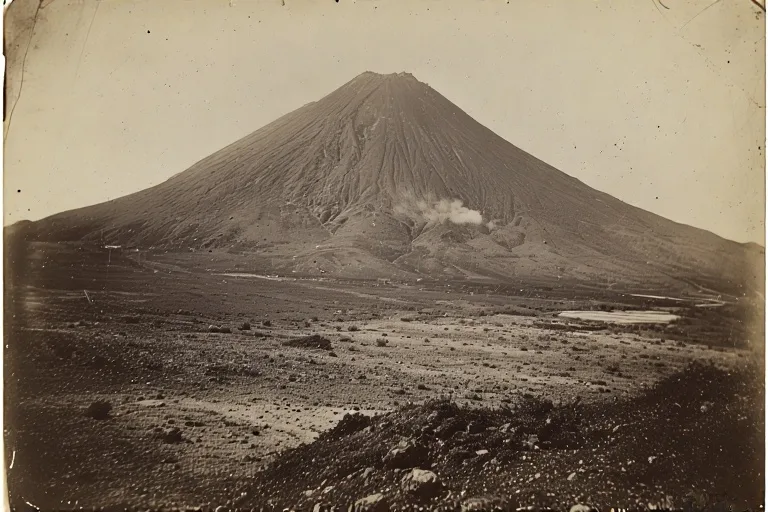
April 1815 on Sumbawa, an Indonesian island tucked between Lombok and Flores, was like any other tropical morning. The sea gently lapped the shores, and villagers went about their daily routines beneath clear blue skies. Yet, beneath the serene landscape, a slumbering giant stirred—Mount Tambora, a stratovolcano largely dormant for centuries, was about to awaken in a cataclysm like the world had never seen before.
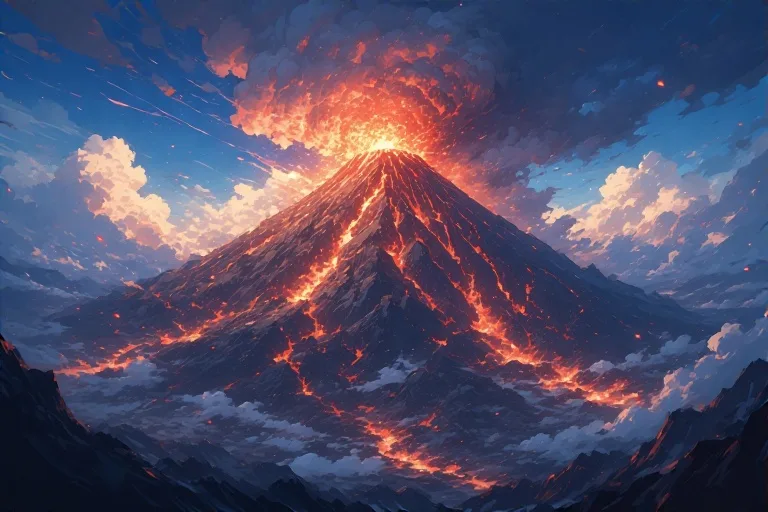
For the local inhabitants, the mountain was sacred but feared—a silent presence towering over their villages with a knowing stillness that belied its true power. Then, without much forewarning, the earth began to tremble. A low rumble became an ear-splitting roar that shattered the tranquility. Mighty plumes of ash shot high into the sky, blotting out the sun, and the ground heaved and cracked. The air turned acrid and heavy. It was the beginning of one of history’s most violent volcanic eruptions—a nightmare that would ripple across the planet, casting a shadow far beyond the Indonesian archipelago.
Mount Tambora’s Calm Before the Catastrophe
For decades, Tambora’s silence gave no hint of violence ahead. The volcano had erupted before, centuries earlier, with notable but less dramatic effect. In the early 19th century, it seemed to be resting—lulling villagers and travelers into complacency. But geological unrest had been quietly building. Magma swelled beneath the surface, and minute earthquakes wracked the island, unnoticed by most.
The region was no stranger to natural upheavals, surrounded by the volatile "Ring of Fire," where tectonic plates collide and birth fire and fury regularly. Yet, Tambora’s coming explosion would surpass the bounds of this familiar danger. It was fed by the dynamics of the Indo-Australian and Eurasian plates, creating a complex magma chamber that would violently unravel.
Geological Wrath: Understanding the Eruption’s Power
On the volcanic explosivity scale (VEI), Tambora’s 1815 eruption is classified at VEI 7—one of only a handful of eruptions recorded at such an immense level of force. The scale, logarithmic in nature, places Tambora behind only the colossal 181 BCE eruption of Mount Vesuvius and the prehistoric Yellowstone super-eruptions.
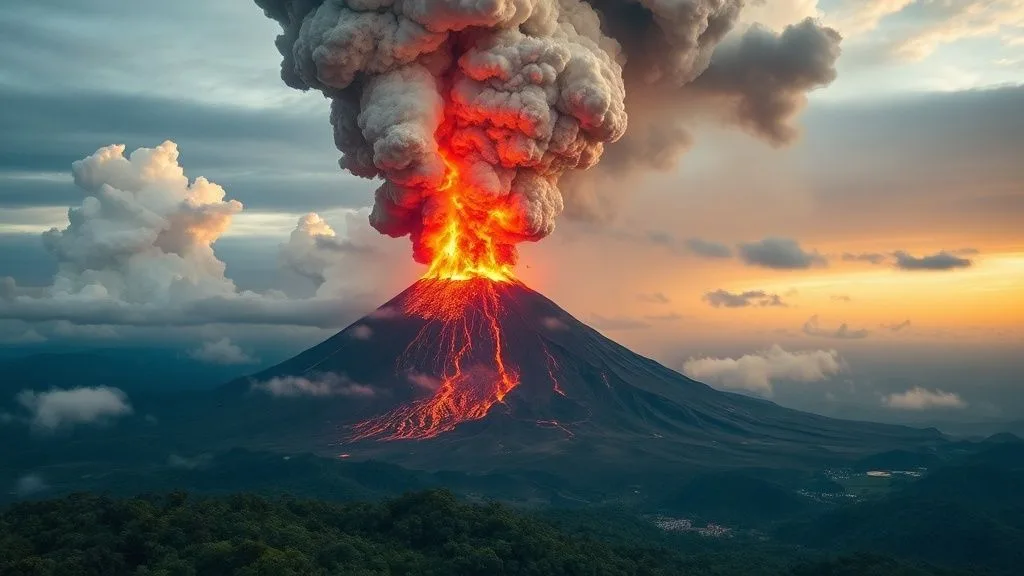
Tens of cubic kilometers of magma, rock, ash, and gas were expelled into the atmosphere. The molten fury tore through the mountain’s peak, which collapsed into a massive caldera formation. The blast was heard thousands of kilometers away; seismic shockwaves traveled the globe.
Sulfur dioxide and ash ejected into the stratosphere formed a dense veil, swallowing sunlight and cooling the planet.
The Day the Earth Shattered: April 10, 1815
April 10, 1815, remains etched in infernal memory. Around dawn, the initial explosion shattered the stillness, releasing a pillar of smoke and pyroclastic flow that tore down the mountain slopes. The synchronous detonations flattened forests and villages alike.
Local accounts describe the sky turning a sinister shade of orange, then black from the choking ash clouds. Volcanic bombs and scalding gases rained down in a fiery tempest. Accompanying this horror were deafening detonations and ground shudders so intense homes collapsed, and the earth cracked open.
For residents of Sumbawa and adjacent islands, the day was apocalypse realized.
Voices Lost in Ash: Immediate Human Toll on Sumbawa
Before the eruption, around 10,000 people called the slopes of Tambora home. When darkness fell after the blast, less than 1,000 survived. The pyroclastic flows, avalanches of hot ash and gas, moved faster than humans could flee.
Beyond the initial explosion deaths, many succumbed to starvation and disease in the following months, as ash blanketed farmland and water sources. Entire villages vanished beneath volcanic deposits.
The human tragedy of Tambora stands as one of history’s deadliest natural disasters, yet it was just the beginning of far-reaching calamities.
A Darkened Sky Around the Globe: The Spread of Ash and Aerosols
Within days, volcanic ash circled the Earth. Winds carried light particles of sulfur aerosols high into the stratosphere, where they remained for years, diffusing sunlight. The resulting veil dimmed solar radiation on a global scale.
Historical weather observations and diaries from Europe, North America, and Asia describe hazy skies, spectacular sunsets, and chilling fogs. The "dry fog" and reddish twilight became a worldwide signature of Tambora’s outburst.
Scientists today confirm that Tambora’s aerosols reduced average global temperatures by 0.4 to 0.7 °C—significant enough to disrupt climates and agriculture worldwide.
“The Year Without a Summer”: Climate Chaos and Global Cooling
1816, the year following Tambora’s eruption, became infamous as the "Year Without a Summer." Snow fell in June and July in New England. Crops wilted under cold rains and unseasonable frosts.
Europe and North America struggled through short, cold growing seasons. Harvests failed. Food shortages loomed. The atmospheric veil seeded meteorological nightmares, triggering one of the deadliest famines of the 19th century.
A chilling irony: beneath the warming news of a new century, the planet was plunged into a harsh, volcanic winter.
Harvests Shattered and Societies Strained: The Agricultural Crisis
Global harvests, from grains to potatoes and rice, suffered mass failures. In Europe, prices skyrocketed. The poor and rural populations bore the brunt. Riots erupted in multiple regions, from France to Ireland, as food and fuel grew scarce.
In China and India, where populations were enormous and already vulnerable, the climatic disruptions exacerbated social tensions and hardship.
Farmers watched in despair as their fields froze or flooded. Livestock perished. The ensuing famine caused millions of deaths worldwide, a shadow legacy of Tambora’s eruption.
Europe in Peril: Famine, Weather Anomalies, and Social Unrest
Europe’s population was rising after decades of war and revolution, but Tambora’s eruption shattered fragile recovery. In England and France, prolonged rainstorms and failing crops fueled unrest.
Contemporary reports speak of thick mists over London’s streets, orange sunsets, and bitter cold that hollowed stomachs. Peasant uprisings emerged in Italy and Switzerland.
Economic impact rippled through growing industrial centers, as workers faced hunger alongside mechanization. It was a harsh lesson in nature’s power over human ambitions.
America and Asia Confront the Unseen Disaster
In the United States, the "Year Without a Summer" struck farm communities hard, particularly in New England and the Northwest. Food shortages drove migrations westward in search of better lands and more reliable climates.
In Asia, scarce written observations complicate exact accounts, but historical climate models indicate droughts and crop failures in parts of the Indian subcontinent, Japan, and China. These disruptions fed existing social fragilities, setting the stage for future unrest.
Scientists of the Time Grapple with the Unknown
At the dawn of modern science, the cause of the strange weather was mysterious. Lacking global communication and the knowledge we have today about atmospheric science, contemporaries blamed "miasma," sunspots, or divine punishment.
George Cuvier and other early scientists began studying volcanic eruption deposits and soil layers, laying groundwork for volcanology. Yet the scale and global reach of Tambora’s influence was unprecedented.
Natural philosophers debated eruptions’ impact on climate — inquiries that would mature slowly into modern climatology and volcanic science.
The Tambora Eruption in Cultural Memory and Myth
Locally, Tambora’s eruption entered oral histories and mythologies. The mountain was feared as a god’s wrath. Entire cultural landscapes disappeared.
In Europe and America, the eerie skies inspired literature and art. Mary Shelley’s "Frankenstein," conceived during the cold, dark summer of 1816, symbolized human struggle amid unnatural gloom.
The event remains a symbol of nature’s sudden and merciless power to disrupt civilization.
Geology and Volcanology Transformed: Lessons from 1815
Tambora’s eruption compelled the scientific community to contemplate volcanic forces’ real dangers on global climate. Its massive silica-rich magma, explosive power, and atmospheric consequences became a textbook example.
Today, understanding such mega-eruptions informs volcanic risk management and climate prediction. Tambora stands as a stark reminder of geophysical processes below us and their potential worldwide reach.
Long-Term Environmental and Ecological Aftershocks
Beyond immediate devastation, Tambora reshaped the ecology of Sumbawa and surrounding islands. Volcanic soils eventually enriched biodiversity, but recovery took decades.
Ash and gas emissions affected ocean circulation and ecosystem health, subtly influencing marine and terrestrial environments.
Globally, the eruption is recognized among the most influential natural events affecting early 19th-century ecosystems.
Human Resilience and Recovery in the Aftermath
Despite staggering losses, human societies proved resilient. Survivors rebuilt shattered villages in Indonesia. Farmers adapted to new soils. Governments developed early disaster responses.
The famine’s social lessons spurred changes in food storage, agricultural practices, and scientific observation—incremental steps toward modern disaster preparedness.
Tambora’s saga is one of tragic loss but also human endurance.
Modern Reflections: What Tambora Teaches Us Today
In an age of climate change and rapid environmental shifts, Tambora’s eruption offers both warning and wisdom. It reveals the fragile web linking geology, atmosphere, agriculture, and society.
Geophysical monitoring has vastly improved, yet volcanic eruptions of similar scale remain threats. Preparing for such disasters means heeding history’s lessons.
Tambora’s roar across two centuries reminds us that beneath our feet, the Earth’s power still commands respect—a powerful guardian of humility against human hubris.
Conclusion
The eruption of Mount Tambora in April 1815 was a cataclysmic event that reshaped not only the Indonesian island of Sumbawa but also cast a long, chilling shadow across the planet. From destroyed communities to global climatic turmoil that cloaked the world in cold and darkness, Tambora stands as a potent testament to the intertwining of nature’s fury and human vulnerability.
Yet, amidst the ashes and despair, the story is also one of resilience, scientific awakening, and cultural reflection. The “Year Without a Summer” inspired art, upheaval, and progress, teaching humanity to better understand our planet’s volatile heartbeat. As we face contemporary environmental challenges, the echoes of Tambora remind us that our fate remains intimately connected to the restless forces of Earth.
FAQs
Q1: What caused the Mount Tambora eruption in 1815?
A: The eruption was caused by the build-up of magma in the volcano’s magma chamber, fueled by subduction of the Indo-Australian plate beneath the Eurasian plate. Pressure built until a massive explosive eruption released pent-up energy.
Q2: How many people died as a result of the Tambora eruption?
A: Approximately 71,000 people died directly and indirectly due to the eruption, including those killed by pyroclastic flows and later starvation and disease.
Q3: Why is 1816 called the "Year Without a Summer"?
A: The massive amount of volcanic ash and sulfur dioxide ejected into the atmosphere reduced solar radiation globally, lowering temperatures and causing widespread crop failures and unusual cold weather.
Q4: How did Tambora affect places far from Indonesia?
A: Ash and aerosols spread worldwide, altering climate patterns causing colder temperatures, unusual weather, and agricultural crises in Europe, North America, and Asia.
Q5: What scientific advancements followed the Tambora eruption?
A: The eruption spurred early geological and climatological studies, helping scientists understand the link between volcanic activity and global climate, and laying the foundations of modern volcanology.
Q6: Are there any lasting effects from Tambora’s eruption today?
A: Beyond geological remnants, Tambora’s eruption is a key case study in natural hazards and climate impacts and continues to inform disaster preparedness and environmental science.
Q7: How did local populations on Sumbawa cope after the eruption?
A: Survivors faced famine and rebuilding challenges but gradually adapted, reconstructing communities and agricultural systems over the following decades.
Q8: Can an eruption like Tambora happen again?
A: While rare, VEI 7 eruptions remain possible. Modern monitoring aims to detect warning signs to mitigate future impacts, but the risk persists as part of Earth’s geologic dynamics.