Table of Contents
- The Awakening of Sinabung: A Mountain Returns to Life
- Historical Silence Before the Storm: Sinabung’s Dormancy Period
- Geological Roots: Understanding Sinabung’s Volcanic Nature
- Early Tremors: The Initial Signs of Unrest in 2013
- The First Explosive Eruption: A New Chapter Begins
- Evacuations and Panic: The Human Toll Emerges
- The Role of Authorities: Crisis Management under Pressure
- Life on the Edge: Residents’ Stories from the Danger Zone
- Ash Clouds and Rain: Environmental Impact and Climatic Effects
- The Science of Sinabung: Monitoring Volcano Behavior
- The Eruption’s Fierce Dance: Phases of Activity Through 2014
- International Response and Aid Efforts
- Economic Ripples: Agriculture, Trade, and Livelihoods Strained
- Myth and Memory: Local Cultural Interpretations of the Eruption
- Survival and Resilience: How Communities Adapt and Rebuild
- The Changing Landscape: Topographical Transformations
- Media Portrayal and Global Attention
- Lessons Learned: Volcanic Disaster Preparedness
- Sinabung Today: Monitoring, Risks, and Future Prospects
- Conclusion: The Enduring Voice of Fire and Earth
- FAQs: Unraveling the Mysteries of Sinabung’s Fury
- External Resource: Detailed Reference on Wikipedia
- Internal Link: More Stories on History Sphere
From the moment the earth rumbled beneath the vast skies of North Sumatra in late 2013, the sleeping giant of Mount Sinabung stirred with a force long forgotten. A towering, ancient volcano shrouded in legend and silence erupted violently, hurling plumes of ash and clouds of poisonous gas into the air, darkening the daylight and reshaping the lives of those living in its shadow. The air felt heavy with anxiety and awe, as the ground trembled like a beast awakening after a century-long slumber.
It was an eruption not merely of geological significance, but one charged with human drama—a vivid chronicle of nature’s unpredictable fury and humanity’s tenacity. This is the story of the Sinabung eruption from 2013 to 2014, a tale of devastation, resilience, and the fragile bond between people and the volatile earth they inhabit.
The story of Sinabung is as much about fire and ash as it is about hope and survival.
The Awakening of Sinabung: A Mountain Returns to Life
In September 2013, after being dormant for approximately 400 years, Mount Sinabung roared back to life. The initial signs were ominous but deceptive—a soft shuddering beneath feet in nearby villages that seemed almost benign. Yet beneath the mountain, molten magma was ascending, ready to rewrite the region’s history. Local communities, many oblivious to the mountain’s ancient threats, suddenly faced an opponent as old as time.
The eruption did not come as an instant cataclysm but as a crescendo of geological unrest. By late September, ash began spewing skywards in towering columns. Villagers watched in disbelief as the sky darkened, their fields blanketed with fine, choking ash. What had been a quiet agricultural landscape was now a battleground between humanity and fire.
Historical Silence Before the Storm: Sinabung’s Dormancy Period
To understand the shock, we must look back centuries. Historical records and geological layers reveal Sinabung last erupted violently in the early 17th century, around 1600. Since then, the volcano had faded into an imposing but silent figure, cloaked in dense forests. For generations without recorded activity, local populations developed livelihoods right on its slopes, their memories of ash and lava long erased.
The Indonesian archipelago, known for its position on the Pacific “Ring of Fire,” is marked by many fiery giants, but Sinabung’s long dormancy fostered a dangerous complacency. The mountain’s silent watch was both a blessing and a hidden curse.
Geological Roots: Understanding Sinabung’s Volcanic Nature
Sinabung is a stratovolcano, shaped by layers of hardened lava and volcanic ash. This type produces explosive eruptions, driven by pressure buildup from magma gases trapped beneath the earth’s surface. Unlike more predictable volcanoes, Sinabung’s eruptions are prone to sudden, violent explosions, with pyroclastic flows that surge down its slopes at terrifying speeds.
Scientific monitoring before 2013 was minimal, partly due to the volcano’s long dormancy. The geological complexity combined with Sumatra’s tectonic setting—the meeting point of several continental plates—made an eruption inevitable, but unpredictable in timing.
Early Tremors: The Initial Signs of Unrest in 2013
The year 2013 began quietly, but by mid-year, villagers noticed a series of small earthquakes and increased gas emissions from the mountain’s summit. Volcanologists stationed nearby issued alerts as sulfur dioxide readings spiked. Yet the eruption’s scale and timing caught many by surprise—while experts monitored with growing concern, everyday life fluttered on the volcano’s fringes.
September 2013 marked the start of a gradual intensification in activity. Steam clouds turned to darker ash plumes, and glowing lava became visible at night, signaling magma’s rise and an impending threat.
The First Explosive Eruption: A New Chapter Begins
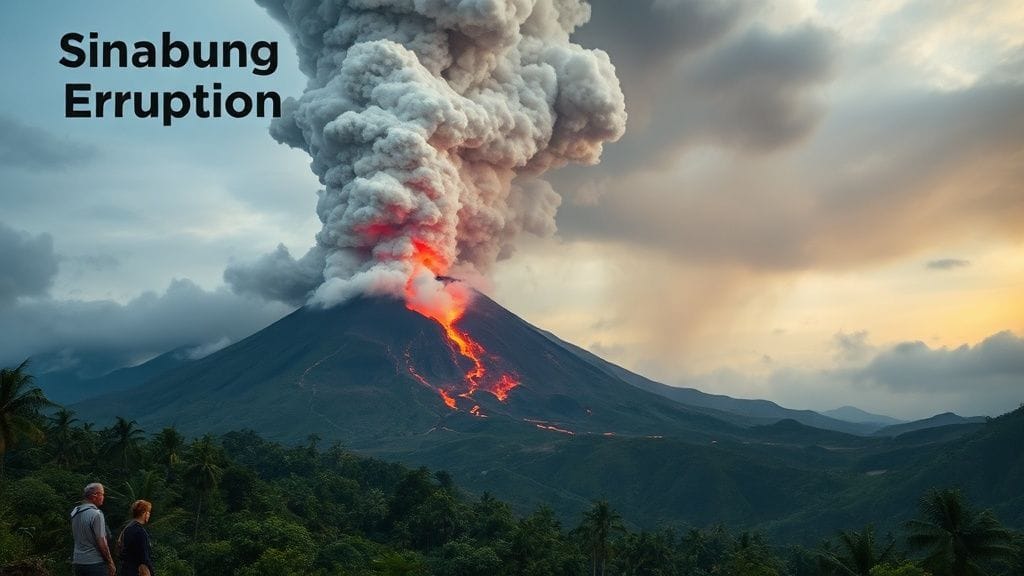
October 2013 witnessed the volcano’s first major explosive event in centuries. Ash columns soared over 5 kilometers into the sky, blotting out the sun and blanketing villages. The ash rained down, coating roofs, crops, and eyes—an apocalyptic dust that brought transportation to a halt and left residents coughing in the choking air. The mountain’s voice was unmistakable, warning those below of a new volatile era.
Local authorities scrambled to establish exclusion zones, but the scope of the eruption’s danger was only beginning to reveal itself.
Evacuations and Panic: The Human Toll Emerges
More than a hundred thousand people were forced from their homes as successive eruptions made nearby villages uninhabitable. Families packed what they could carry, leaving behind fields, homes, and memories buried under ash and rock. Temporary shelters swelled with displaced communities, facing not only the trauma of loss but the struggle for food, water, and safety.
Stories of panic and bravery emerged—elders passing down survival wisdom, children yearning for normalcy, and neighbors banding together to face an uncertain future.
The Role of Authorities: Crisis Management under Pressure
Indonesia’s government, caught between urgency and resource limitations, faced immense challenges in coordinating evacuations and aid. The National Disaster Management Agency (BNPB) ramped up monitoring networks and established alert levels, but communication gaps and limited infrastructure complicated efforts.
Meanwhile, military units were deployed to aid evacuations and maintain order. International agencies offered expertise, but the region’s remote geography tested all relief efforts.
Life on the Edge: Residents’ Stories from the Danger Zone
Despite danger, many residents grappled with an agonizing question—when and how to return? The land was not only their livelihood but their identity. Stories surfaced of families returning briefly to salvage belongings, risking ash and volcanic gases to retrieve heirlooms or tend livestock.
One elderly farmer recalled, “The mountain is part of us. We fear it, yes, but we also love it. It provides for us, and one day, we hope to live alongside it safely again.”
These human dimensions remind us that volcanic eruptions are never just natural events—they are deeply intertwined with culture, memory, and identity.
Ash Clouds and Rain: Environmental Impact and Climatic Effects
The eruption’s immediate environmental impacts were stark. Ashfall destroyed crops and contaminated water sources. The blackened landscape reflected an ecological upheaval, threatening the rich biodiversity of the region. Rivers choked with debris raised concerns about flooding from dammed waterways.
Beyond local effects, the ash plume briefly altered atmospheric conditions. Scientists noted a thin veil of particulate matter which, while not on the scale of larger historic eruptions, still affected sunlight and temperature regionally.
The Science of Sinabung: Monitoring Volcano Behavior
In response to Sinabung’s unexpected activity, volcanologists intensified monitoring efforts. Seismographs, gas sensors, and satellite imagery became essential tools to track magma movement and forecast eruptions.
This eruption offered a crucial case study on how dormant volcanoes can suddenly become active in heavily populated areas, sharpening global understanding of volcanic risk prediction.
The Eruption’s Fierce Dance: Phases of Activity Through 2014
Sinabung’s activity in 2014 unfolded in violent phases—periods of explosive ash clouds interspersed with quieter episodes marked by lava dome growth. Pyroclastic flows surged repeatedly, devastating more territory and pushing evacuation zones wider.
As months passed, the mountain seemed to breathe—expelling fire and ash in fits and starts—keeping experts and communities in volatile suspense.
International Response and Aid Efforts
Indonesia’s disaster prompted global attention. NGOs and aid organizations mobilized to support displaced populations, offering food aid, medical supplies, and shelter. The eruption also inspired international collaborations among volcanologists aimed at improving early warning systems worldwide.
Yet aid faced obstacles—the rugged terrain, poor roads, and ongoing volcanic hazards slowed distribution and complicated logistics.
Economic Ripples: Agriculture, Trade, and Livelihoods Strained
The fertile farmland surrounding Sinabung is central to local economies, with rice, vegetables, and livestock farming predominating. The eruption’s devastation wreaked havoc on harvests and market access; ash-covered soils were temporarily barren, and livestock suffered from poor grazing conditions.
Markets fluctuated as supply chains were disrupted, while families reliant on farming faced deep financial uncertainty. Recovery demanded not only rebuilding homes but reviving livelihoods that had been decimated.
Myth and Memory: Local Cultural Interpretations of the Eruption
In the shadow of the eruption’s destruction, ancient myths and religious beliefs intertwined with modern experience. Some villagers viewed Sinabung as a spiritual presence, a guardian or avenger awakened. Rituals and prayers were renewed, seeking to appease the mountain’s fiery spirit.
These cultural layers added complexity to evacuation resistance and influenced communal resilience in face of disaster.
Survival and Resilience: How Communities Adapt and Rebuild
Remarkably, amid devastation, communities showed incredible resilience. Villagers organized cooperative farming on safe lands, rebuilt simple dwellings, and sought new ways to coexist with the persistent threat of eruption.
Schools reopened in camps; markets resumed under makeshift tents. The eruption forged stronger social ties born of shared hardship, a testament to human endurance.
The Changing Landscape: Topographical Transformations
Sinabung’s eruptions reshaped the mountain itself. New lava domes altered the peak’s silhouette, while pyroclastic deposits extended its slopes. Rivers shifted course as debris dams formed and broke.
These changes not only impacted immediate geography but also altered future hazard zones and agricultural viability.
Media Portrayal and Global Attention
Coverage of Sinabung’s eruption captivated international media—not just for the dramatic visuals of ash clouds and lava flows, but for the human stories beneath. The mountain became a symbol of the dangers facing volcanic regions worldwide.
Social media amplified eyewitness accounts, connecting global audiences with the unfolding drama in North Sumatra.
Lessons Learned: Volcanic Disaster Preparedness
Sinabung’s eruption underscored the crucial importance of preparedness, especially in regions with dormant volcanoes. Authorities strengthened public awareness campaigns, built evacuation infrastructure, and improved scientific collaboration.
This event remains a case study in balancing scientific uncertainty with community safety.
Sinabung Today: Monitoring, Risks, and Future Prospects
Though the major eruptive phases ended in 2014, Sinabung never returned to complete silence. Occasional tremors and gas emissions continue to remind residents of latent dangers. Scientists maintain vigilant monitoring, aware that the mountain may awaken again.
For locals, living near Sinabung remains a daily negotiation between respect for nature’s power and the demand for normal life.
Conclusion: The Enduring Voice of Fire and Earth
The Sinabung eruption of 2013–2014 was more than a geological event—it was an elemental drama blending nature’s fury and human response. It shattered lives and landscapes but also revealed a tale of courage, adaptation, and the indomitable spirit of communities living under the shadow of fire.
As ash settled and years passed, the mountain’s story serves as a reminder that beneath the earth’s surface, history sleeps and breathes—waiting for the moment to remind humanity of its fragile place amidst the eternal forces shaping our world.
FAQs: Unraveling the Mysteries of Sinabung’s Fury
1. Why did the Sinabung volcano erupt in 2013 after centuries of dormancy?
Sinabung’s eruption was the result of magma slowly accumulating beneath the mountain over decades. The tectonic pressures and geological changes eventually triggered the explosive release after a long dormant period.
2. How did the eruptions impact the local population?
Hundreds of thousands were evacuated, losing homes, agricultural lands, and livestock. Many faced prolonged displacement, economic hardship, and health issues related to ash inhalation.
3. What were the main challenges for authorities managing the eruption?
Limited infrastructure, communication difficulties, and unpredictable volcanic behavior complicated evacuation efforts and aid distribution.
4. How do scientists monitor an active volcano like Sinabung?
They use seismographs, gas analyzers, satellite imagery, and GPS to detect earth tremors, gas emissions, and ground deformation signaling volcanic activity.
5. How did the eruption affect the environment locally and globally?
Locally, ecosystems were devastated, agricultural productivity declined, and water sources were contaminated. Globally, the eruption contributed minor atmospheric particles affecting regional climate temporarily.
6. Are there cultural or spiritual beliefs related to Sinabung’s eruption?
Yes, many local communities interpret the eruption through spiritual beliefs, seeing the volcano as a living, powerful entity requiring respect and rituals.
7. What precautions have been taken since the eruption?
Improved disaster preparedness, alert systems, community education, and expanded monitoring efforts aim to reduce future risks.
8. Could Sinabung erupt again soon?
While major eruptions paused, Sinabung remains active with ongoing seismic and gas activity, so future eruptions are possible.

