Table of Contents
- The Roar Before Dawn: Soputan’s Awakening
- The Geographic and Geological Portrait of North Sulawesi
- Soputan Volcano: A Sleeping Giant in the Indonesian Archipelago
- Historical Eruptions: Patterns of Fire and Fury
- The Calm That Preceded: Environmental and Social Context in 2008
- The First Tremors: Early Signs of an Imminent Eruption
- October 2008: The First Explosive Blast
- Ash Clouds and Lightning: The Spectacle of Nature’s Wrath
- Local Communities on the Edge: Fear, Response, and Resilience
- Government and Scientific Agency Interventions: Monitoring the Inferno
- The Human Toll: Displacement and Daily Life Amidst Uncertainty
- Evacuations and Safety Measures: A Race Against the Volcano
- International Awareness: Media Coverage and Global Reactions
- The Volcano’s Aftershocks: Smaller Eruptions and Persistent Activity
- Environmental Consequences: Ash, Air, and Land Transformed
- Economic Impact on North Sulawesi: Agriculture, Trade, and Tourism
- Traditional Beliefs and Mythologies in the Shadow of Soputan
- Lessons Learned: Scientific Advancements and Preparedness Improvements
- The 2008-10 Eruption in Context: Comparing Soputan with Other Indonesian Volcanoes
- The Long-Term Legacy on North Sulawesi’s Communities and Landscapes
The night was pierced by an unearthly shriek—a force that displaced the tranquility of North Sulawesi’s lush rainforests and small fishing villages. On the edge of the island’s craggy terrain, Soputan volcano, long dormant but notoriously alive, awoke with an eruption so fierce that it sent plumes of ash billowing high into the saturated skies. October 2008 marked the beginning of one of the most intense volcanic episodes in recent Indonesian history—a spectacle of nature’s might that reshaped the lives of thousands and the land they called home.
The Roar Before Dawn: Soputan’s Awakening
The rumbling began subtly at first, a low growl beneath the earth that many locals dismissed as distant thunder or minor tremors. Yet, deep within the heart of North Sulawesi, the earth’s crust was shifting with a fury that no one could fully grasp. By mid-October, smoke had curled steadily from Soputan’s summit, a hint of the chaos soon to unfold.
Indonesia, straddling the volatile Pacific Ring of Fire, boasts over 120 active volcanoes. Among them, Soputan had earned a reputation for sudden, violent eruptions—eruptions that had historically been unpredictable but devastating. As the mountain reawakened, communities that had lived in its shadow for generations found themselves staring down the barrel of destruction.
The Geographic and Geological Portrait of North Sulawesi
North Sulawesi is a peninsula of dramatic landscapes: volcanic peaks, deep valleys dense with tropical forests, and an extensive coastline kissed by the Celebes Sea. Soputan, rising to an imposing 1,785 meters, dominates this geography. Its conical shape, typical of stratovolcanoes, conceals a complex internal architecture shaped by repeated eruptions over millennia.
Geologically, Soputan sits on a tectonic convergence zone, where the Philippine Sea Plate subducts beneath the Eurasian Plate. This plate interaction generates the magma that fuels not only Soputan but also other volcanoes dotting Sulawesi. The area’s rich biodiversity reflects the fertility of volcanic soils, but this natural bounty comes at the price of constant volcanic threat.
Soputan Volcano: A Sleeping Giant in the Indonesian Archipelago
Soputan is an active volcano with a history punctuated by sudden eruptions, often phreatic—or steam-driven explosions—that send ash and gas skyward with little warning. Its eruptions tend to be explosive rather than effusive, characterized by pyroclastic flows, ash columns, and lava explosions. Locals had long regarded Soputan both with respect and fear, understanding that beneath its slopes lay a power far beyond human control.
Historical Eruptions: Patterns of Fire and Fury
While Soputan's eruptions were relatively frequent over the past century, the 2008-10 cycle was notable for both its intensity and duration. Previous significant activity in 1906, 1936, and 1982 laid bare the volcano’s volatile character. Yet each cycle seemed to take the communities by surprise, underscoring the challenges faced by Indonesia’s disaster preparedness agencies in remote regions.
The Calm That Preceded: Environmental and Social Context in 2008
Before the eruption, the land seemed peaceful, almost serene—a deceptive stillness. Farmers tended their rice paddies, fishermen cast nets into glittering waters, and villagers went about their daily lives unaware of the impending upheaval. However, beneath the surface, subtle clues—such as increased seismic tremors recorded by Indonesian volcanologists—suggested the mountain was stirring.
At the same time, infrastructure in the region was limited, and many residents lived in precarious conditions with few contingency plans for natural disasters. This vulnerability set the stage for an intense human drama when Soputan finally erupted.
The First Tremors: Early Signs of an Imminent Eruption
In the days preceding the main event, monitoring stations detected sharp increases in small eruptions and fumarolic activity. Residents reported faint tremors, unusual animal behavior, and distant sounds reminiscent of explosions. These were warnings that the earth’s pressure was reaching a critical point.
Scientists scrambled to issue alerts, but communication with isolated villages proved difficult. This gap between scientific prediction and public awareness highlighted the difficulties of managing volcanic risks in remote areas.
October 2008: The First Explosive Blast
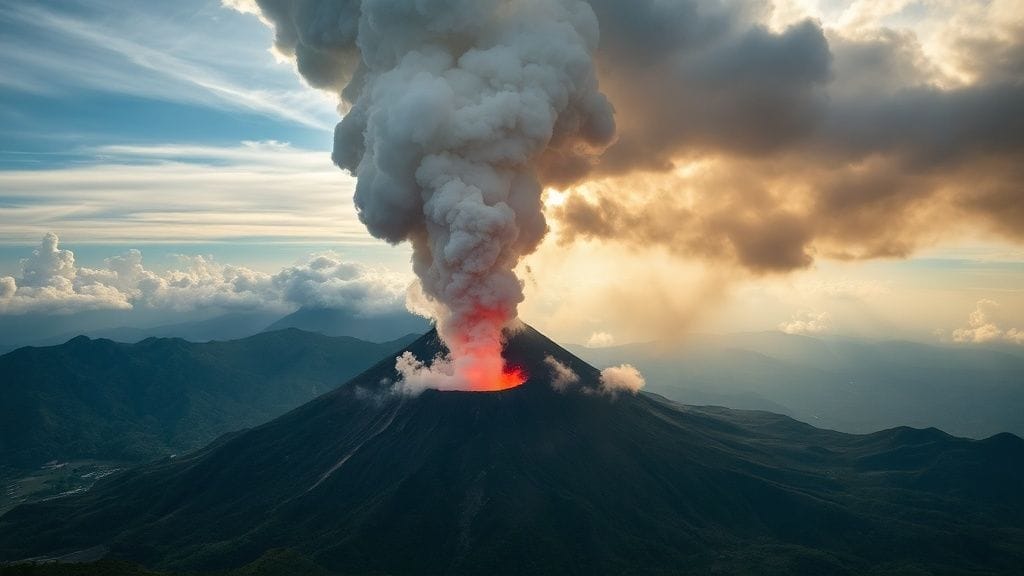
On October 4, 2008, the mountain's rest was brutally broken. At dawn, a towering column of ash and volcanic gases exploded from Soputan’s crater, rising kilometers into the sky. The plume was visible for dozens of miles, blanketing nearby villages and darkening the skies in a suffocating gray.
The eruption was accompanied by violent lightning within the ash cloud—a spectacular and ominous phenomenon caused by static electrical discharges. Ash began to settle on roofs, and the acrid smell of sulfur crept into homes. This was no longer a distant hazard but a present calamity.
Ash Clouds and Lightning: The Spectacle of Nature’s Wrath
Volcanic lightning—one of nature’s most mesmerizing yet terrifying displays—illuminated night skies. Flashes of blue and white electricity danced atop the dense ash plumes, feeding the primal fear embedded in human consciousness whenever the earth bursts to life.
The ash cloud itself carried profound implications. It disrupted air travel over the region, covered farmland, contaminated water sources, and posed respiratory risks. Villagers endured a grey rain; trees, fields, rooftops became layered with a gritty volcanic dust that suffocated life inch by inch.
Local Communities on the Edge: Fear, Response, and Resilience
For the local populace, the eruption was a moment of intense anxiety and action. Many were forced to flee ancestral lands, carrying only essentials as ash fell relentlessly. Evacuations were tough; some resisted leaving their homes, held back by attachment and fatalism.
Residents undertook shelter in temporary camps, where community bonds proved crucial. Tales from this period speak of neighbors sharing food and water despite scarce supplies, and volunteers helping the elderly and children. The eruption tested not only the physical endurance but the very fabric of social solidarity.
Government and Scientific Agency Interventions: Monitoring the Inferno
Indonesia’s Center for Volcanology and Geological Hazard Mitigation (CVGHM) played a critical role, increasing its seismic surveillance and issuing hazard maps. Using satellite imagery and ground sensors, scientists tracked the eruption's evolution, advising authorities on evacuation zones.
Yet, despite these efforts, logistical challenges hindered rapid evacuation and relief delivery. Roads were often blocked by ash and debris, medical supplies ran low, and coordination between levels of government was sometimes fragmented. The event exposed the gaps in disaster preparedness, prompting calls for reforms.
The Human Toll: Displacement and Daily Life Amidst Uncertainty
Thousands of people were displaced during the months-long eruption period, some for weeks, others months. For many, the uncertainty of return weighed heavily: Would the land be livable again? Could crops be replanted, homes rebuilt?
Children missed school, trades stopped, and psychological trauma permeated the camps. Health issues, including respiratory problems and skin irritation, became widespread. Despite hardships, many found moments of joy—a shared meal, a laugh among displaced families—that underlined human resilience even in extremity.
Evacuations and Safety Measures: A Race Against the Volcano
Local authorities, aided by the military and aid organizations, undertook large-scale evacuations. Information campaigns using radio broadcasts and village messengers urged compliance with safety orders.
Temporary shelters sprouted across safer zones, equipped with basic amenities. Yet the task was arduous—north Sulawesi’s rugged terrain complicated transport, and resource allocation was uneven. Communities organized their own support networks, demonstrating local initiative that complemented official efforts.
International Awareness: Media Coverage and Global Reactions
Although volcanic eruptions are common in Indonesia, Soputan’s 2008-10 activity caught international attention due to its intensity and prolonged nature. Regional news outlets covered the ash impacts on aviation and environmental health; scientific journals published preliminary findings on the eruption's unique features.
Humanitarian agencies expressed concern, mobilizing aid. The world watched as North Sulawesi grappled with a natural cataclysm that was, in many ways, both a local disaster and a global story about living with the power of the Earth.
The Volcano’s Aftershocks: Smaller Eruptions and Persistent Activity
Following the initial October blast, Soputan did not return to quietude quickly. Smaller eruptions, ash venting, and seismic activity continued sporadically into 2009 and 2010. This extended period of restlessness tested monitoring systems and kept local populations on edge.
The lingering activity underscored the volcano’s unpredictable temperament. Even as residents returned to rebuild, the threat remained palpable, a reminder of nature’s duality: creation and destruction forever intertwined.
Environmental Consequences: Ash, Air, and Land Transformed
The dispersal of volcanic ash had significant environmental consequences. Ash layers altered soil chemistry—both destructive to crops and, in the long term, contributors to soil fertility. Forest ecosystems suffered damage as leaves and branches were coated in abrasive ash.
Air quality deterioration caused health challenges and reduced visibility, affecting daily activities. Additionally, volcanic gases contributed short-term climatic effects, including localized cooling. These impacts further complicated recovery efforts.
Economic Impact on North Sulawesi: Agriculture, Trade, and Tourism
The eruption struck at the heart of North Sulawesi’s economy. Agriculture, especially rice and coffee cultivation, saw production plummet due to ash fall and evacuated fields. Local markets were disrupted; fishing communities faced ash contamination of waters.
Tourism, a growing industry in the region due to the unique landscape and cultural heritage, faltered. Visitors avoided the area amidst safety fears and infrastructure damage. The economic ripple effect reminded all that volcanic disasters are not merely geological events, but deep social-economic shocks.
Traditional Beliefs and Mythologies in the Shadow of Soputan
Volcanoes in Indonesia are often interwoven with rich mythologies and spiritual beliefs. Soputan was no exception; local communities held stories that painted it as a sacred mountain, a home to powerful spirits.
During the eruption, some looked to rituals, prayers, and ceremonies, seeking protection and divine intervention. These cultural dimensions lent a profound human depth to the disaster, underscoring how natural phenomena are interpreted through the lens of identity and faith.
Lessons Learned: Scientific Advancements and Preparedness Improvements
The 2008-10 Soputan eruption spurred renewed efforts in volcano monitoring and disaster risk reduction. Scientists refined seismic networks, installed new remote-sensing equipment, and improved eruption forecasting models.
At the governmental level, protocols were updated to better integrate local knowledge and ensure quicker communication. Lessons from the event informed national strategies, including community education programs aimed at fostering resilience before the next eruption.
The 2008-10 Eruption in Context: Comparing Soputan with Other Indonesian Volcanoes
Indonesia's record of volcanic activity is legendary, with vanguards like Mt. Merapi and Mt. Krakatoa etched deeply into global memory. Soputan’s eruption, while perhaps less globally known, was no less significant in its regional impact and scientific interest.
Its eruption patterns highlighted the diversity of Indonesian volcanism—how some volcanoes erupt in slow effusive flows, others in sudden explosions. Understanding Soputan’s behavior enriched broader volcanic science, contributing to a more nuanced grasp of the Ring of Fire’s restless energy.
The Long-Term Legacy on North Sulawesi’s Communities and Landscapes
A decade and more after the smoke cleared, the traces of Soputan’s eruption still resonate. Villages rebuilt with tentative hope; fields rejuvenated over time with richer soils; children grew up with stories that blended awe and caution.
The eruption changed the contours of the land, creating new formations and altering waterways. It linked generations in a shared experience of survival—a powerful reminder of humanity’s delicate dance with the forces beneath our feet.
Conclusion
The eruption of Soputan in 2008 was more than a geological event—it was a human saga writ large across the rugged landscapes of North Sulawesi. It illuminated the fragile boundary between life and nature’s overwhelming power, drawing attention to the resilience of communities who face the unpredictable wrath of Earth’s fiery heart.
From the first shudder beneath the soil to the lingering ash settling like a grey blanket, this eruption wove stories of fear, loss, hope, and renewal. It challenged science, governance, and tradition alike, compelling humanity to listen intently to the rhythms of the planet.
Though the smoke has long since lifted, Soputan’s call remains—an eternal reminder that beneath these serene tropical horizons pulse forces of cosmic intensity, demanding respect and humility. And in that awareness lies the seed of survival, the promise that even the fiercest eruption can give birth to new life, new stories, and new beginnings.
FAQs
Q1: What caused the 2008 eruption of Soputan volcano?
The eruption was caused by the movement of magma beneath the volcano, triggered by tectonic activity at the convergence of the Philippine Sea and Eurasian plates. Pressure buildup led to the explosive release of volcanic gases and ash.
Q2: How were local communities affected by the eruption?
Thousands were displaced, with homes and farmland covered in ash. Health problems, economic disruption, and psychological stress marked daily life during and after the eruption.
Q3: What measures were taken to monitor and mitigate the eruption’s impact?
Indonesia’s CVGHM increased seismic monitoring and issued alerts. Evacuation orders were implemented, and emergency shelters organized to protect affected populations.
Q4: How long did the volcanic activity last?
The main eruption began in October 2008 and persisted with intermittent activity through 2010, with smaller eruptions and ash emissions continuing after the initial blast.
Q5: How does Soputan compare with other Indonesian volcanoes?
Soputan is known for sudden, explosive eruptions unlike some other Indonesian volcanoes that have slower lava flows. Its eruptions are significant locally but less globally famous compared to giants like Merapi or Krakatoa.
Q6: What environmental changes resulted from the eruption?
Ash fall affected soil chemistry, forest health, air quality, and water contamination, with both immediate negative effects and longer-term soil fertility benefits.
Q7: Did traditional beliefs affect how people responded to Soputan’s eruption?
Yes; many locals employed rituals and prayers, seeking protection through cultural and spiritual practices, reflecting the deep intertwining of nature and belief.
Q8: What lessons were learned for future volcanic disasters?
Improvements in monitoring, communication, community preparedness, and integrating local knowledge were key takeaways to reduce future risks.

