Table of Contents
- The Roar Before the Storm: Ternate’s Quiet Days Before 1983
- The Anatomy of Gamalama: Geography and Volcanic History
- Tensions Beneath the Earth: Geological Precursors to the Eruption
- August 1983: When Gamalama Awoke with Fury
- The First Explosions: A City Caught Off Guard
- The Ash That Darkened Skies and Lives
- Lava Flows and Lahar Floods: Ternate’s Battle with Nature
- Personal Stories from the Eruption: Voices from the Ash
- The Response: Local, National, and International Efforts to Aid Survivors
- Scientific Observations and Breakthroughs During the Crisis
- Economic Tremors: How Gamalama’s Eruption Reshaped Ternate’s Livelihood
- Cultural Upheaval: Faith, Myths, and Community Resilience
- The Aftermath: Reconstruction and Recovery in the Shadow of the Volcano
- Lessons Learned: Disaster Preparedness in Indonesia Post-1983
- Gamalama’s Place in the Global Volcanic Catalogue and Modern Monitoring
- The Environmental Impact: Flora, Fauna, and Soil Regeneration
- The Psychological Toll: Coping with Trauma and Loss
- Ternate Transformed: How the Eruption Altered Urban and Social Landscapes
- The Role of Media: Documenting Disaster in Real Time
- Remembering 1983: Memorials and Annual Commemorations
- Conclusion: The Indomitable Spirit of Ternate and the Lessons of Gamalama
- FAQs: Understanding the Gamalama Eruption
- External Resource
- Internal Link
From the moment the ground trembled beneath their feet and the skies above Ternate darkened with swirling clouds of ash, the people of this small Indonesian island were thrust into the heart of a cataclysm few could have anticipated. The eruption of Mount Gamalama in 1983 was not just a geological event; it was a lived experience of survival, loss, and resilience. The roar of the volcano seemed to echo the very pulse of Ternate’s history—an island scarred by time, nature, and human tenacity. But the story of Gamalama in 1983 is far more than a tale of destruction. It is a story that intertwines science, community, faith, and the unbreakable bond between people and their land.
1. The Roar Before the Storm: Ternate’s Quiet Days Before 1983
In the weeks leading up to the eruption, the air around Mount Gamalama was heavy but unsuspecting. Ternate, a volcanic island nestled in the Maluku archipelago, had long lived in the shadow of its towering peak. Gamalama was no stranger to the rhythms of nature’s fury — eruptions punctuated centuries of history — but in early 1983, daily life flowed uninterrupted. Markets bustled, fishermen sailed out into the Banda Sea, and families prepared for the harvest.
Yet subtle signs whispered secrets beneath the surface. Unexplained tremors, fleeting plumes of smoke veiling the summit, a growing unease among locals who remembered the stories of past devastation. These were the prologue to a story that would soon command every heart and hand on the island.
2. The Anatomy of Gamalama: Geography and Volcanic History
Mount Gamalama, rising 1,715 meters above sea level, is the northern sentinel of Ternate Island. It is a stratovolcano—a layered giant built over millennia by repeated eruptions of lava, ash, and volcanic debris. Its summit crater overlooks the bustling capital city, a juxtaposition of human ambition and natural power.
This volcano’s history is recorded not only in scientific texts but also in oral tradition. Gamalama’s eruptions have been both scourge and guardian, shaping Ternate’s fertile soils and influencing settlement patterns. Historical records, including Dutch colonial observations from the 17th century, document a series of significant eruptions, with the 1983 event standing among the most severe in the last century.
3. Tensions Beneath the Earth: Geological Precursors to the Eruption
Beneath Gamalama’s serene facade, tectonic forces were at work. The convergence of the Eurasian and Indo-Australian plates made the region a hotbed of seismic and volcanic activity. In early 1983, volcanologists noted increased seismicity—small but frequent earthquakes signaling magma’s upward push.
Local fishermen reported an unusual change in water temperature near the island’s shores. Airborne gases increased, and fumaroles at the summit intensified their release, spelling clear warning signs. But the full scale of what was brewing resisted easy prediction. The mountain held its breath, and so did its people.
4. August 1983: When Gamalama Awoke with Fury
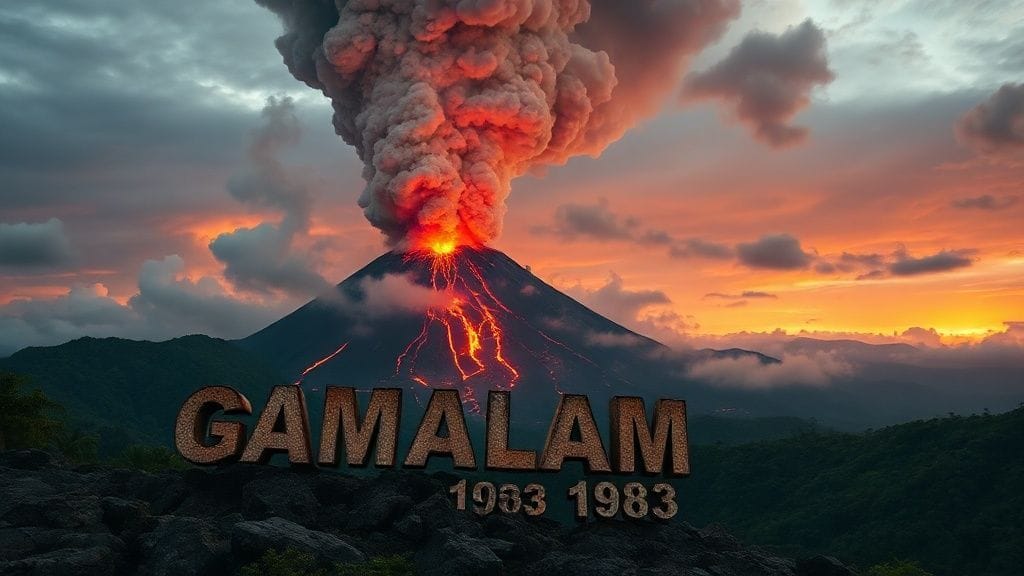
The eruption began subtly on August 6th with minor ash emissions, but it quickly escalated to a violent explosion by August 11th. Residents described the earth’s vibrations turning into deafening rumbles. A towering column of ash and smoke blasted upwards, blotting out the blue sky and casting an ominous shadow.
The eruption was explosive and pyroclastic flows—fast-moving currents of hot gas and volcanic matter—began racing down Gamalama’s slopes. Lava streams advanced slowly but inexorably, threatening homes, plantations, and the very survival of Ternate’s inhabitants.
5. The First Explosions: A City Caught Off Guard
Ternate's proximity to the volcano proved a cruel fate. The city, tightly woven into the foot of Gamalama, found itself under siege. Ashfall coated roofs, streets, and fields; darkness fell in broad daylight. Panic gripped the population as the first explosions shattered normalcy.
Emergency sirens wailed, but communication was unreliable. The eruption occurred faster than evacuation plans could be fully mobilized. People fled towards the sea, some children clutching parents with wide-eyed terror, elders moving with heavy steps, all haunted by the roaring mountain behind them.
6. The Ash That Darkened Skies and Lives
Ash was Gamalama’s persistent venom. Fine particles penetrated lungs, poisoned water sources, and rendered the land barren. Visibility dropped to mere meters in some combined storm-cloud moments. Aircraft flights were canceled, severing lifelines; agriculture, the backbone of the island’s economy, faced ruin.
Health clinics overflowed with cases of respiratory distress, eye irritation, and skin ailments. In the chaos, the true scale of the disaster began to emerge—not only physical devastation but the profound human cost.
7. Lava Flows and Lahar Floods: Ternate’s Battle with Nature
As ash rained down, molten lava carved new scars across the landscape. Though slow-moving, the lava flows obliterated traditional farming terraces, burial grounds, and neighborhoods. But nature’s wrath did not stop there. Torrential rains mixed with loose volcanic deposits unleashed lahars—mudflows that surged through river valleys.
These deadly floods tore through the island’s infrastructure. Roads, bridges, and homes were swept away, cutting off vital access routes. Entire families were displaced, stranded in tents and makeshift shelters amid the smoldering remnants of their lives.
8. Personal Stories from the Eruption: Voices from the Ash
Among the many who experienced the eruption firsthand, voices of survival offer vivid human textures to the catastrophe’s cold statistics. Maria, a 12-year-old girl at the time, later recounted hiding under a collapsed rice barn as ash settled like snow. Her father’s steady hands and whispered prayers became their lifeline.
Elder Jacob, a fisherman, survived only by rowing his boat away from the ash-choked shore, watching helplessly as his village burned. These stories of courage and loss became the collective memory of Ternate.
9. The Response: Local, National, and International Efforts to Aid Survivors
Indonesia’s government, still grappling with infrastructural challenges, mobilized military and civil defense units. Relief efforts focused on food distribution, medical aid, and emergency housing. Yet the scale of the disaster overwhelmed initial responses.
International organizations stepped in. The Red Cross, UN agencies, and neighboring countries sent assistance, equipment, and expertise. This event marked a turning point in how volcanic crises were managed in Southeast Asia, fostering newer networks of cooperation and communication.
10. Scientific Observations and Breakthroughs During the Crisis
Volcanologists and geologists from the Indonesian Volcanological Survey and foreign universities closely monitored Gamalama’s activity during and after the eruption. Data collected provided unprecedented insights into eruption forecasting and lava flow modeling.
Seismic networks were expanded, and remote sensing technologies began to gain prominence following 1983. The lessons from Gamalama helped refine understanding of stratovolcano behaviors, influencing monitoring protocols globally.
11. Economic Tremors: How Gamalama’s Eruption Reshaped Ternate’s Livelihood
Prior to 1983, Ternate’s economy thrived on cloves, nutmeg, fishing, and tourism. The eruption’s aftermath upended these foundations. Farmlands lay buried under ash, fish stocks were temporarily diminished by pollution, and tourists vanished amidst travel warnings.
Recovery took years and demanded significant governmental investment. Yet the eruption also propelled diversification efforts, prompting communities to seek alternative livelihoods and building a more resilient economic fabric.
12. Cultural Upheaval: Faith, Myths, and Community Resilience
For centuries, Mount Gamalama was entwined with spiritual significance for Ternate’s people. The 1983 eruption stirred a reawakening of traditional beliefs intertwined with Islamic faith. Rituals seeking protection and appeasement flourished alongside modern emergency practices.
Myths transformed—once cautionary tales, now living history. This symbiosis of past and present helped communities make sense of catastrophe, healing psychic wounds and reinforcing social cohesion.
13. The Aftermath: Reconstruction and Recovery in the Shadow of the Volcano
In the months and years following the eruption, Ternate faced the arduous task of rebuilding. Infrastructure projects restored roads, schools, and health centers. Urban planners factored volcanic risk into redevelopment, steering settlements slightly away from the most dangerous zones.
International aid helped rebuild homes and irrigation systems. Schools reopened, bringing a semblance of normalcy amid scars still visible on the landscape. Yet for many, the trauma lingered.
14. Lessons Learned: Disaster Preparedness in Indonesia Post-1983
The Gamalama eruption became a case study in improving disaster readiness across the Indonesian archipelago. Authorities increased investment in volcanic monitoring stations, early warning systems, and community education.
Emergency drills were institutionalized, and evacuation routes mapped with local participation. The event underscored a critical truth: living with volcanoes requires constant vigilance and community empowerment.
15. Gamalama’s Place in the Global Volcanic Catalogue and Modern Monitoring
Mount Gamalama’s 1983 eruption ranks among significant 20th-century volcanic events. It drew international attention to Indonesia’s seismic vulnerabilities—the “Ring of Fire”’s restless heart.
Today, modern monitoring technologies like satellite imagery and seismic arrays provide continuous surveillance. Gamalama remains active, a sentinel constantly watched, yet also a symbol of collaboration between science and society to mitigate volcanic threats.
16. The Environmental Impact: Flora, Fauna, and Soil Regeneration
Nature’s fury did not simply destroy; it reset ecosystems. While many plant and animal species suffered immediate losses, the volcanic ash enriched soils with minerals, enabling eventual regrowth.
Biologists noted increased biodiversity over decades as pioneer species adapted. The eruption thus became a textbook example of ecological succession, showcasing resilience beyond human experience.
17. The Psychological Toll: Coping with Trauma and Loss
Survivors faced invisible scars. Beyond physical destruction, psychological wounds—grief, anxiety, post-traumatic stress—permeated the community. Aid agencies began incorporating mental health support, a relatively novel approach at the time.
Narratives of shared adversity, however, sparked solidarity. Community gatherings, storytelling, and commemorative rituals played vital roles in healing.
18. Ternate Transformed: How the Eruption Altered Urban and Social Landscapes
The eruption reshaped not only the physical but also the social fabric of Ternate. Displaced populations formed new neighborhoods, sometimes blending previously separate communities.
Urban expansion changed, with land use regulations reflective of volcanic hazard zoning. Social networks proved adaptive, yet the event laid bare inequalities in vulnerability and access to aid.
19. The Role of Media: Documenting Disaster in Real Time
In 1983, media coverage of volcanic disasters in Indonesia was still nascent but rapidly evolving. Radio broadcasts proved invaluable for emergency communication; newspaper journalists captured harrowing scenes and human stories.
Photographs and film documented the unfolding catastrophe, later archived as powerful reminders that “nature speaks loudest when it roars.”
20. Remembering 1983: Memorials and Annual Commemorations
Every year on August 11th, Ternate holds ceremonies remembering those affected by Gamalama’s eruption. Memorials embedded in public spaces invite reflection on loss and regeneration.
Schools integrate the event’s history into curricula, ensuring memory persists alongside scientific knowledge. These commemorations strengthen identity, resilience, and respect for natural forces.
Conclusion
The 1983 eruption of Mount Gamalama was a moment when nature’s primal power intersected profoundly with human lives. It was a trial of body and spirit for Ternate, demanding courage amid chaos and hope amid destruction. Though the ash may have darkened skies, it could not eclipse the indomitable will of a community bound by land, history, and kinship.
Gamalama’s eruption reminds us that beneath every terrible moment lies a thread of renewal—the delicate balance between hazard and heritage. In studying this event, we not only honor those who lived through it but also gain wisdom to face the unpredictable heartbeat of our planet with awareness and compassion.
FAQs
Q1: What triggered the 1983 eruption of Mount Gamalama?
A1: The eruption was triggered by increased magma movement beneath the volcano, caused by tectonic shifts at the convergence of the Eurasian and Indo-Australian plates, as evidenced by seismic activity and gas emissions months prior.
Q2: How did the eruption impact the population of Ternate?
A2: Thousands were displaced, with many losing homes and livelihoods. Respiratory illnesses increased due to ash, and the psychological trauma had long-term effects on the community.
Q3: What were the main challenges in the disaster response?
A3: Rapid escalation of the eruption outpaced evacuation plans. Limited infrastructure and communication issues hampered aid delivery, necessitating international assistance.
Q4: How did the 1983 eruption influence volcanic monitoring in Indonesia?
A4: It spurred improvements in seismic monitoring, early warning systems, and community disaster preparedness programs across the archipelago.
Q5: What cultural significance did the eruption have for Ternate’s people?
A5: It reinforced spiritual ties to the volcano, reviving traditional rituals and oral histories that helped communities process trauma and foster resilience.
Q6: How long did it take for Ternate to recover economically?
A6: Recovery stretched over several years, requiring government investment and economic diversification, particularly in agriculture and fisheries.
Q7: Is Mount Gamalama still active today?
A7: Yes, Gamalama remains an active volcano continuously monitored to this day, posing ongoing but manageable risks.
Q8: How is the 1983 eruption remembered today?
A8: Through annual commemorations, educational programs, and memorials, ensuring the event’s legacy remains a source of learning and community identity.

