Table of Contents
- The Sudden Roar of Kadovar: An Island Awakens
- Papua New Guinea’s Volcanic Landscape: Setting the Scene
- The Dormant Guardian: Kadovar Before 2018
- Early Signs: Tremors Beneath the Sea
- The Eruption Breaks: January 2018’s Fiery Awakening
- Eyewitness Accounts: Islanders and Scientists in the Eye of the Storm
- A Race Against Time: Evacuation and Survival
- The Flight from Kadovar: Displacement and Refuge
- Environmental Impact: Ash, Lava, and the Churning Sea
- Global Volcanic Significance: Kadovar in the Context of Pacific Fire
- Scientific Scrutiny: Monitoring and Understanding the Eruption
- Cultural Reverberations: The Human Face of Natural Disaster
- Rebuilding Lives: Responses from Papua New Guinea and the World
- Kadovar’s Landscape Transformed: Before and After
- Disaster and Opportunity: Lessons Learned and Resilience Built
- Voices from the Volcano: Anecdotes and Memoirs
- Long-Term Consequences: Ecology and Economy
- Volcanic Warnings and Global Preparedness
- Kadovar Today: The Island’s Quiet After the Storm
- The Legacy of Kadovar: Nature’s Fury and Human Spirit
On a steamy, humid morning in January 2018, something extraordinary shattered the quiet solitude of Kadovar Island in Papua New Guinea’s East Sepik province. A deep, guttural rumble erupted beneath its volcanic heart, swelling rapidly into a terrifying roar. Molten lava burst forth, painting the sky with angry reds and ominous smoke columns that stretched miles upward. This was the abrupt awakening of a slumbering giant — a volcanic eruption that would forever change the island, the lives of its inhabitants, and capture the attention of a world far beyond the remote South Pacific. It was a spectacle of earth’s raw power, but also a poignant story of survival, resilience, and the delicate dance between human civilization and geological forces.
Kadovar’s eruption in January 2018 was not just a geological event; it was the intersection of nature’s primal voice with human vulnerability. This article travels through the whispers of tectonic unrest that led to the eruption, the frantic days of evacuation, and the broader implications for volcanic activity monitoring, cultural memory, and disaster readiness across volcanic hotspots globally. As smoke continues to drift from this small volcanic island, the event prompts reflection — how do communities facing the unpredictable wrath of volcanoes withstand, adapt, and ultimately prevail?
Papua New Guinea’s Volcanic Landscape: Setting the Scene
Papua New Guinea (PNG) is located along the tumultuous Pacific “Ring of Fire,” home to some of the most active and volatile volcanoes on Earth. This island nation is a tapestry of cultures intertwined with rugged mountains, dense rainforests, and a restless geology. Volcanoes have shaped its landscapes, environments, and even spiritual beliefs for millennia. In East Sepik Province, the Bismarck Archipelago features an array of volcanic islands, both active and dormant, including Kadovar — a small island of barely one square kilometer in area, cloaked in lush greenery over a fire-breathing heart.
Despite the region’s explosive potential, few dared to believe Kadovar would awaken after centuries of silence. Local knowledge categorized it as quiet, a geological relic at best. Yet, beneath these assumptions lay the hidden tectonic tensions of converging plates, simmering magma, and subterranean forces positioning Kadovar at the edge of upheaval — the stage was quietly set for January 2018.
The Dormant Guardian: Kadovar Before 2018
Kadovar had long been a symbol of isolation and tranquility. Its small population, estimated at just a few dozen residents residing primarily along the shore, lived lives deeply connected to the sea and land but largely untouched by modern intrusion. Oral traditions passed down stories of ancestral eruptions — rumblings and ash clouds faintly visible on the horizon centuries ago — but modern memory had dimmed to silence.
Geologists had limited data on Kadovar’s historic activity due to its remoteness. The last documented eruptions before 2018 were centuries old, causing many to plaster the island with the label “inactive.” This label, however, could not account for the restless pulses beneath the surface, where molten rock pressed upward against fragile crust.
Early Signs: Tremors Beneath the Sea
The months leading up to the eruption displayed subtle yet telling signs. Seismic stations registered increasing tremors around the island — low-frequency quakes hinting at rising magma. Fishermen noticed changes in water temperature around Kadovar’s coast and slight discoloration. These observations, though faint, were warnings in the natural world’s language.
Scientists monitoring the Pacific and PNG’s volcanology network pieced together growing concern. Kadovar was demonstrating classic signs of reawakening: ground deformation, gas emissions, and underwater bubbling. The slow drag of geological time had escalated into minutes, hours, and finally days before fiery release.
The Eruption Breaks: January 2018’s Fiery Awakening
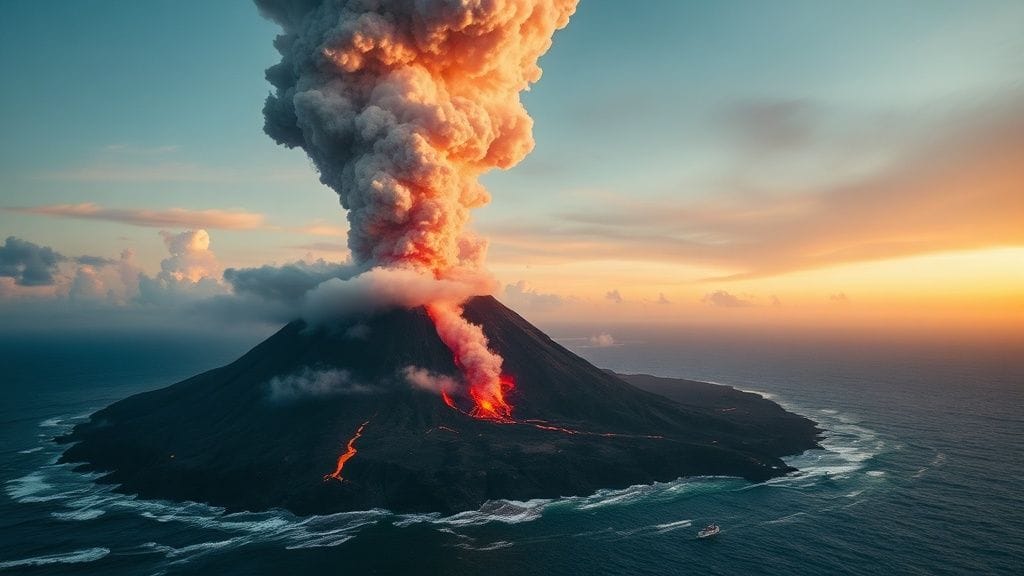
Then came the eruption itself. On the morning of January 5, 2018, the quiet island was host to sudden explosions. Thick plumes of ash shot kilometers into the sky, obscuring the sun and plunging the island into an eerie twilight. Lava fountains erupted violently, covering previously untouched slopes and spilling into the sea. The air filled with sulfurous smoke, acrid enough to sting eyes and lungs.
Satellite imagery captured vivid thermal spots, while nearby residents looked on in disbelief and fear. The eruption was immediate, unforgiving, and no one had time to prepare for the upheaval.
Eyewitness Accounts: Islanders and Scientists in the Eye of the Storm
Storytelling from those present paints a picture of raw human emotion amid natural chaos. Islander John Buari described it as “like the mountain itself was angry… the sky burnt red, and water boiled by the shore.” Scientists sent to study the event were equally struck by the immediacy of the eruption, the sheer spectacle juxtaposed with the fragile nature of life on small volcanic islands.
Despite danger, many locals tried to retrieve possessions — fishing nets, food supplies, family heirlooms — in a desperate attempt to hold onto pieces of their past as their homeland was consumed by fire and ash.
A Race Against Time: Evacuation and Survival
The eruption brought an urgent need for evacuation. Papua New Guinea’s government, assisted by international agencies, orchestrated a rapid response to evacuate Kadovar’s inhabitants. Small boats ferried residents to neighboring islands. Military aircraft helped transport evacuees to safer areas on the mainland.
Logistical challenges were immense — the island’s remoteness, abruptness of the eruption, and adverse weather complicated rescue efforts. Still, through grit and coordination, hundreds were saved from immediate danger.
The Flight from Kadovar: Displacement and Refuge
For the evacuees, displacement carried both relief and deep loss. Families faced an uncertain future, the emotional toll of abandoning ancestral lands weighing heavily. Makeshift shelters on nearby islands or the mainland became new homes. Aid organizations provided food, medical care, and psychological support, but the trauma was tangible and enduring.
The diaspora of Kadovar’s community underscored a harsh truth of volcanic disasters — survival often demands leaving home.
Environmental Impact: Ash, Lava, and the Churning Sea
Nature didn't spare the surrounding ecosystem. Ashfall contaminated local water sources, affecting marine and terrestrial life. Lava flows altered the island’s contours, destroying vegetation but also creating new geological formations. Toxic gases affected air quality, impacting both wildlife and human health in adjacent areas.
Moreover, the eruption disturbed marine biodiversity. The interaction of hot lava and ocean water caused explosions and chemical shifts, threatening fisheries that were vital to local economies.
Global Volcanic Significance: Kadovar in the Context of Pacific Fire
Kadovar's eruption joined a long lineage of Pacific volcanic events that remind us of the region’s restless geology. Each eruption adds to the understanding of how volcanic chains behave, influencing disaster readiness not only in PNG but across island nations like Indonesia, the Solomon Islands, and Vanuatu.
Kadovar's event provided scientists with crucial real-time data on eruptive processes, gas emissions, and eruption column dynamics.
Scientific Scrutiny: Monitoring and Understanding the Eruption
Post-eruption, volcanologists grilled Kadovar’s fury for insights. Using satellite data, drone reconnaissance, gas sampling, and seismographs, they sought to decode the eruption’s timeline, cause, and likely future activity.
The event stressed the importance of expanding monitoring on lesser-known volcanoes. Silent giants like Kadovar may quickly transform from dormant to dangerous, underlining the fragility of current warning systems.
Cultural Reverberations: The Human Face of Natural Disaster
Beyond geology, Kadovar’s eruption stirred profound cultural ripples. Traditional knowledge intertwined with modern science as local communities sought meaning and healing. Ceremonies and oral histories were invoked to process loss and hope for regeneration.
This disaster, like many volcanic events globally, revealed that coping is as much social and spiritual as it is physical.
Rebuilding Lives: Responses from Papua New Guinea and the World
International aid, PNG governmental programs, and local efforts combined to offer relief and reconstruction. Housing projects, livelihood restoration, and education on disaster preparedness became priorities.
The eruption catalyzed stronger community engagement and resilience-building projects, aiming to reduce future vulnerabilities.
Kadovar’s Landscape Transformed: Before and After
Satellite imagery and on-the-ground surveys reveal a dramatic transformation. Once stable forested slopes became barren volcanic rock and ash layers. New lava domes and fissures have reshaped the island’s silhouette, a vivid reminder of nature’s uneasy balance between creation and destruction.
This transformation challenges residents and scientists alike to reconsider the island’s identity and future viability.
Disaster and Opportunity: Lessons Learned and Resilience Built
Every catastrophe carries lessons woven from tragedy. Kadovar’s eruption highlighted gaps in monitoring, emergency response, and community education but also showcased human bravery and innovation.
It reinforced global calls for increased investment in volcanic risk reduction, particularly in remote, resource-poor areas vulnerable to natural disasters.
Voices from the Volcano: Anecdotes and Memoirs
Personal stories enrich the narrative — a fisherman who lost his nets but gained renewed purpose in aid work, a teacher who became a community leader, children learning resilience from elders’ tales. These voices embody the complex human tapestry behind the headlines.
Long-Term Consequences: Ecology and Economy
The eruption's aftershock extended beyond immediate destruction. Fisheries waned, tourism prospects dimmed. Yet slowly, ecological succession began: pioneering plants, birds returning, marine life recolonizing reinvigorated waters.
Economic strategies had to pivot, reflecting a dynamic environment’s demands.
Volcanic Warnings and Global Preparedness
Kadovar reminds the world that volcanoes are not relics of the past but active agents shaping present and future. Its eruption fed into global dialogues on early warning systems, international cooperation, and community-based disaster readiness.
Kadovar Today: The Island’s Quiet After the Storm
Years after the eruption, Kadovar lies quiet but watchful. Occasional fumaroles steam gently, while scientists maintain vigilant observation. The island stands as a testament to both destruction and hope — a place where nature’s rage coexists with human courage.
The Legacy of Kadovar: Nature’s Fury and Human Spirit
Kadovar’s 2018 eruption is more than a chapter in volcanic chronicles; it is a portrait of nature’s immense power meeting human vulnerability and spirit. It echoes a universal narrative — that in the heart of disaster lies the pulse of renewal, and in the shadows of ash, we find stories of courage, loss, and ultimately, hope.
Conclusion
The eruption of Kadovar volcano in January 2018 stands as a compelling testament to the unpredictable, often harsh relationship between humankind and the natural world. It began with ominous tremors and culminated in a dramatic, fiery display that forced an entire community to flee their ancestral home. Yet beyond the devastation lies a story of hope, resilience, and rebirth.
Kadovar’s story reminds us that beneath the earth’s surface, immense forces are always at play—forces indifferent to human plans but capable of forging new landscapes and opportunities. The island’s evacuation and the subsequent rebuilding efforts illustrate the strength of human solidarity in crisis, while scientific study of the eruption offers critical insights for future disaster prevention.
In a world increasingly vulnerable to natural hazards, Kadovar imparts a profound lesson: respect for nature’s might, preparedness, and the enduring spirit of those who live in its shadow form the foundation for survival and renewal. This volcanic awakening was not simply a geological event but a vivid narrative of life’s fragility and persistence—an unwritten epic etched in fire and ash on the canvas of the Pacific.
FAQs
Q1: What caused the 2018 eruption of Kadovar Volcano?
A1: The eruption was caused by the movement of magma rising through the earth’s crust beneath Kadovar, likely triggered by tectonic shifts along the Pacific Ring of Fire, combined with increased pressure and gas buildup inside the volcano.
Q2: How many people were affected by the eruption?
A2: Approximately 600 residents of Kadovar Island and surrounding areas were directly impacted, with the entire population evacuated for their safety.
Q3: What were the main challenges in evacuating Kadovar Island?
A3: The island’s remoteness, sudden eruption, limited transportation infrastructure, and adverse weather conditions complicated evacuation efforts, requiring coordination between local authorities, the military, and international aid.
Q4: Has Kadovar remained active since the 2018 eruption?
A4: While the major eruption was in early 2018, fumarolic activity and minor tremors have persisted, with ongoing monitoring suggesting the volcano remains active but currently quiescent.
Q5: How did the eruption impact local ecosystems?
A5: The eruption caused habitat destruction, ash contamination of soil and water, disturbances to marine life due to lava entering the ocean, but over time some ecological recovery has occurred, including return of pioneer species.
Q6: What lessons have scientists learned from the Kadovar eruption?
A6: The event underscored the importance of comprehensive monitoring even for little-studied volcanoes, the need for rapid early warning systems, and the value of integrating local knowledge with scientific research.
Q7: In what ways has Kadovar’s eruption influenced disaster preparedness in Papua New Guinea?
A7: It prompted improvements in emergency response protocols, investment in volcanic monitoring infrastructure, and community education initiatives on disaster risk management.
Q8: How is the memory of the eruption preserved culturally by the Kadovar community?
A8: Through oral histories, community ceremonies, and storytelling traditions that honor lost livelihoods and celebrate survival, ensuring the eruption remains part of the collective cultural identity.

