Table of Contents
- The Midnight Awakening: When Bagana Roared in 2014
- The Volcano’s Long Shadow: A History of Bagana
- Papua New Guinea’s Volcanic Heartbeat
- The People Beneath the Ash: Bougainville’s Fragile Communities
- The Calm Before the Storm: Signs and Precursors of the 2014 Eruption
- The Night of Fire and Smoke: The Eruption Unfolds
- Ash and Flames: The Immediate Impact on the Landscape
- Flight and Fear: How Villagers Reacted to the Eruption
- Environmental Transformations: Forests and Rivers Under Siege
- The Struggle for Survival: Humanitarian Response and Challenges
- Scientific Eyes on Bagana: Monitoring a Restless Giant
- The Political Context: Bougainville Amidst Autonomy and Uncertainty
- Cultural Resonance: Myths and Memories of Volcanic Fury
- The 2014 Eruption in Regional Perspective
- Lessons from Bagana: Disaster Preparedness in Remote Areas
- Renewed Growth: Ecological and Social Recovery
- The Volcanic Legacy: How Bagana Shapes Bougainville’s Identity
- Global Awareness: What Bagana Teaches about Volcanic Hazards
- The Future of Bagana: Watching the Silent Giant
- Conclusion: Endurance Amidst the Ashes
- FAQs
- External Resource
- Internal Link
The Midnight Awakening: When Bagana Roared in 2014
It was a night soaked in darkness, punctuated by an eerie glow that slipped through the thick canopy of the island. Somewhere in the remote heart of Bougainville — an autonomous region within Papua New Guinea — the world’s most active and volatile volcano, Bagana, was furious once again. The year was 2014, but for the villagers living in the mountain’s ominous shadow, time seemed to blur into a singular, terrifying moment as incandescent lava streams began to carve out fresh scars on the mountainside. The ominous rumble, distant yet profoundly alarming, suddenly grew into a roar that chased away every whisper of sleep.
The air thickened with sulfurous smoke, ash rained down like a macabre snowfall, and the ground vibrated with the heartbeat of the restless Earth beneath their feet. Families grabbed their precious belongings, eyes wide with a mix of fear and disbelief. This eruption was not just a natural disaster; it was a visceral reminder of nature’s indomitable power — an ancient drama, unfolding anew on one of the most isolated volcanic stages on the planet.
Yet the night of Bagana’s 2014 eruption was more than a fleeting moment of chaos. It was the continuation of a geological saga, intertwined with human resilience and the island’s complex history. To understand that night’s fiery spectacle — its textures, tensions, and aftermath — we must journey back through time to uncover the roots of Bagana’s volatile existence and the lives entwined with its looming presence.
The Volcano’s Long Shadow: A History of Bagana
Nestled at the heart of Bougainville Island, Bagana is a massive stratovolcano — a mountain built layer upon layer from successive eruptions of lava, ash, and volcanic debris. What sets Bagana apart, however, is not just its size — soaring roughly 1,817 meters above sea level — but its ceaseless activity. Since its first recorded eruption in 1886, Bagana has rarely taken a deep breath. It is considered one of the most persistently active volcanoes in the world, practically never showing signs of full dormancy.
Historically, Bagana’s eruptions have largely been characterized by steady lava flows rather than catastrophic explosions. This relatively low explosive activity has resulted in a nearly continuous outpouring of viscous lava that slowly creeps down the slopes, reshaping the landscape in a predictable yet unstoppable procession. However, intermittent ash plumes and pyroclastic flows remind all who watch it that its temperament is unpredictable and can swiftly turn deadly.
Its activity reverberates not only with geologists but with the peoples of Bougainville, who have lived with the mountain’s towering presence for millennia. Generations have forged their identities in its shadow, making Bagana both a physical and cultural pillar of their world.
Papua New Guinea’s Volcanic Heartbeat
Papua New Guinea, an archipelago perched on the tumultuous boundary between the Pacific and Indo-Australian tectonic plates, is a land marked and molded by immense geological upheaval. Its mountainous spine and scattered islands are punctuated by dozens of active volcanoes, each with a unique story of fire and earth.
Bagana, however, stands out not only for its frequency but for the extent of its impact on human settlements. While other volcanoes in the region erupt with dramatic blasts, Bagana’s near-constant lava flows pose a unique challenge: a slow but relentless reshaping of the environment, an ever-present threat baked into daily life.
This volcanic restlessness continues to remind the world of the fragility and dynamism of island life, where geological forces shape the destiny of communities, sometimes without warning.
The People Beneath the Ash: Bougainville’s Fragile Communities
Bougainville’s population has lived in intimate connection with their surrounding environment for centuries. Their villages dot the mountain’s foothills, their livelihoods tied to the fertile volcanic soil, their cultures interwoven with oral histories about the mountain’s moods.
Yet the very land that sustains them also harbors danger. Farming terraces, garden plots, and pathways wind precariously in a landscape that a lava flow can obliterate overnight. The 2014 eruption was a stark reminder for these communities — where safety was a constant negotiation, and survival required a delicate balance of respect, knowledge, and adaptation.
The eruption illuminated the resilience of Bougainville’s people, whose stories of displacement, return, and rebuilding add a deeply human layer to the geological narrative.
The Calm Before the Storm: Signs and Precursors of the 2014 Eruption
Several months before the violent 2014 episode, signs of Bagana’s awakening had begun to accumulate. Seismic activity subtly intensified, with tremors that were felt and recorded more frequently than usual. Local observers noted increased fumarolic activity — wisps of steam and gas that hinted at shifting subterranean pressures.
For volcanologists monitoring Bagana remotely, the patterns were consistent with the volcano's usual pre-eruption behavior. Yet predicting the precise timing of the eruption remained elusive, complicated by the mountain’s persistent but variable restlessness.
The storm did not arrive unannounced, but like many natural disasters, it tested the limits of early warning systems and preparedness in one of the world’s most remote and geologically active regions.
The Night of Fire and Smoke: The Eruption Unfolds
As the evening of that fateful eruption descended, the skies above Bagana darkened not from night, but from the thick plumes of ash and gas billowing aggressively into the air. Villagers who had grown accustomed to distant rumbles now faced an encroaching inferno.
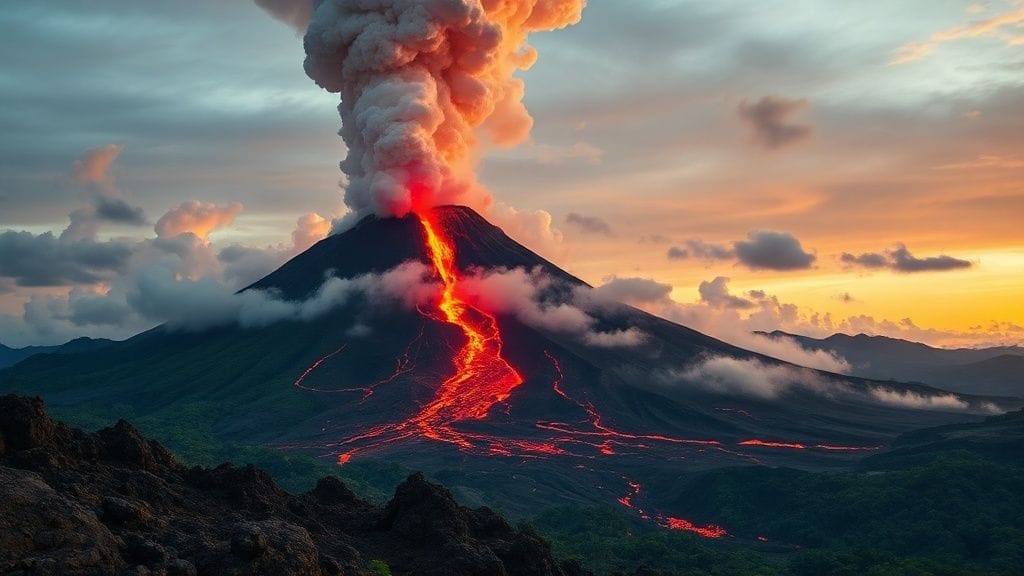
Lava rivers surged downward with incandescent fury, a molten reminder of earth’s volatile heart. The glowing tongues of magmatic rock illuminated the dark horizon, painting a surreal portrait of destruction and beauty intertwined.
Ashfall began to blanket villages, covering roofs and fields in choking gray dust. The cacophony of the eruption — roaring, crackling, shaking earth — left little room for doubt: Bagana was alive and insisting on attention.
Ash and Flames: The Immediate Impact on the Landscape
By dawn, the aftermath was clear. The island’s topography had been transformed — forests blackened, streams redirected, and fertile soil coated in tephra. The incessant lava flows created new rock formations, thick and unforgiving.
While the volcanic debris paved a bleak tableau, it also signaled inevitable renewal. Volcanic soil, rich in minerals, would eventually offer fertile ground, but not before a period of barrenness and hazard.
Ecologists and local inhabitants alike faced a daunting reality — balancing the devastating loss of arable land against the promise of future growth.
Flight and Fear: How Villagers Reacted to the Eruption
For the people living in Bagana’s shadow, the eruption was not merely a scientific event but a deeply personal ordeal. Evacuation was fraught with difficulty — the rugged terrain, limited infrastructure, and lack of immediate communication compounded the chaos.
Stories emerged of families dividing — some fleeing toward the coast, others seeking refuge in the island’s interior highlands. The ashfall choked people’s lungs and made travel perilous; the constant threat of lava flows hovered like a specter.
Communities were tested in resilience and solidarity; improvised shelters became sanctuaries amid uncertainty. Yet the eruption also kindled profound anxieties about the future — about homes lost, lands rendered infertile, and disruptions yet to come.
Environmental Transformations: Forests and Rivers Under Siege
Ecologically, the eruption imposed a brutal reset. Ash and lava obliterated forest patches, killing habitat for countless endemic species. Rivers, lifelines for villages and ecosystems, were clogged or chemically altered by volcanic runoff.
The delicate balance of Bougainville’s environment was jeopardized. Endangered flora and fauna faced new survival challenges. Aquatic life struggled under the weight of ash-laden waterways.
Yet nature’s resilience showed itself in hidden ways — early colonizers of volcanic soil, pioneer plants, and the slow return of wildlife hinted at the long arc of recovery to come.
The Struggle for Survival: Humanitarian Response and Challenges
In the wake of Bagana’s eruption, the humanitarian response was hampered by Bougainville's geographic isolation and limited government infrastructure. Aid agencies faced logistical hurdles in delivering food, medical supplies, and shelter materials to displaced populations.
Health risks rose as respiratory illnesses surged amid dense ash exposure. Water sources were contaminated, raising fears of waterborne diseases. Psychological trauma rippled through affected populations, many of whom had already endured decades of political turmoil.
The eruption revealed systemic vulnerabilities — in disaster preparedness, infrastructure, and governance — that demanded urgent attention.
Scientific Eyes on Bagana: Monitoring a Restless Giant
Volcanologists viewed the 2014 eruption as both a challenge and an opportunity. Bagana’s persistent activity offers invaluable insights into effusive volcanic behavior, lava dome growth, and hazard assessment.
Satellite imagery, seismic monitoring stations, and aerial surveys combined to paint a clearer yet still incomplete picture of Bagana’s inner workings. The eruption underscored the critical need for continuous observation and improved early warning capabilities.
International collaboration, including efforts from Papua New Guinea’s University of Technology and global volcano observatories, sought to deepen understanding and enhance community safety.
The Political Context: Bougainville Amidst Autonomy and Uncertainty
The 2014 eruption unfolded against a backdrop of political flux. Bougainville, having endured a brutal civil conflict in the 1990s, was engaged in a delicate process of autonomy and self-determination.
Natural disasters compounded the region’s challenges, threatening to destabilize fragile governance and reconstruction efforts. The eruption underscored the interconnectedness of environmental hazards and political resilience.
For Bougainville’s leaders and citizens, disaster response was entangled with aspirations for recognition, development, and a peaceful future.
Cultural Resonance: Myths and Memories of Volcanic Fury
Volcanoes like Bagana hold profound cultural significance for Bougainville’s indigenous communities. Oral traditions and mythologies often personify the mountain — as a stern guardian, a punishing spirit, or a source of both life and death.
The 2014 eruption rekindled these stories, providing a contemporary chapter in a long narrative of respect, fear, and coexistence. Rituals, songs, and storytelling became acts of remembrance and healing, linking present suffering with ancestral resilience.
In this way, volcanoes transcend geology to become living symbols woven into the fabric of community identity.
The 2014 Eruption in Regional Perspective
While Bagana’s eruption was localized, its significance rippled across the Pacific volcanic belt. It reminded regional authorities and scientists that persistent, less explosive volcanoes could be as disruptive as their more violent counterparts.
Comparing Bagana’s activity with other Pacific eruptions, such as those in the Solomon Islands and Vanuatu, broadened understanding of volcanic risk in island settings.
Furthermore, the event helped highlight the shared vulnerabilities of remote communities across Oceania, fostering dialogue on collaborative disaster mitigation strategies.
Lessons from Bagana: Disaster Preparedness in Remote Areas
The eruption starkly revealed the need for enhanced disaster preparedness tailored to remote, infrastructure-poor regions. Communication networks, evacuation routes, and local capacity-building emerged as critical priorities.
Acheiving effective preparedness means respecting local knowledge and integrating it with scientific data. Bagana's ongoing activity serves as a potent case study in balancing tradition, technology, and governance amidst natural hazards.
For policymakers and humanitarian organizations, Bougainville’s experience offers sobering and instructive lessons.
Renewed Growth: Ecological and Social Recovery
Slowly, life began to reassert itself on the charred slopes. Pioneer plants like ferns and grasses colonized cooled lava, stabilizing soils and inviting wildlife back. Local farmers experimented with new crops and modified land use in response to altered conditions.
Socially, communities rebuilt homes, re-established schools, and renewed livelihoods with remarkable fortitude. Networks of support — from within Bougainville and beyond — fostered recovery efforts that were as much about rebuilding spirit as structures.
The eruption’s scars remain visible, but so does an enduring hope embodied in renewal.
The Volcanic Legacy: How Bagana Shapes Bougainville’s Identity
Bagana’s presence permeates Bougainville’s collective consciousness. It is at once a source of awe, fear, and profound respect. The volcano shapes agricultural cycles, migration patterns, and cultural traditions, influencing daily life in subtle and profound ways.
The 2014 eruption reaffirmed this relationship — a reminder that human and natural histories are intertwined in complex, enduring ways.
In embracing this legacy, Bougainville confronts the challenge of coexistence with an elemental force as old as the island itself.
Global Awareness: What Bagana Teaches about Volcanic Hazards
On the world stage, Bagana’s 2014 eruption is a striking example of the risks posed by persistent volcanoes that do not always announce their danger with cataclysmic explosions. It highlights the need for diversified monitoring strategies that encompass lava flow hazards, ashfall health risks, and long-term environmental impacts.
As climate change influences precipitation and erosion patterns, interactions with volcanic landscapes may shift, adding complexity to hazard management.
Bagana invites scientists, policymakers, and communities worldwide to reconsider assumptions about volcanic risk and resilience.
The Future of Bagana: Watching the Silent Giant
Though quieter now, Bagana remains a vigilant presence, its magma chamber simmering beneath the surface. Scientists continue to monitor seismic tremors and gas emissions, tracking the subtle rhythms of a volcano that refuses to disappear.
For the people of Bougainville, the mountain is a reminder that the earth beneath their feet is a source of both sustenance and peril. Preparing for future eruptions remains a priority — a delicate dance between respect, science, and survival.
Bagana, the silent giant, waits — its story far from over.
Conclusion
The 2014 eruption of Bagana volcano was a vivid chapter in a long-lasting relationship between human communities and the restless Earth. It was a night of fire and ash that unsettled lives but also defined resilience — an elemental encounter that revealed the strength and vulnerability of Bougainville’s people.
This story is more than a geological event. It is a testament to the indomitable spirit of those who live amid ceaseless change, whose survival depends on reading nature’s signs and forging solidarity in the face of uncertainty. Bagana’s persistent activity challenges us to rethink what it means to coexist with danger, to harness knowledge alongside tradition, and to embrace the complex legacy of living on a planet alive with fire.
In the ash-laced dawns that followed, a community stood firm, rebuilding not just homes but hope — an enduring reminder that even amid volcanic fury, life perseveres.
FAQs
1. What caused the 2014 Bagana eruption?
The eruption was caused by the movement of magma beneath the volcano’s surface, increasing pressure that resulted in lava flows and ash emissions. Bagana’s persistent activity makes such eruptions relatively common, though their exact timing is difficult to predict.
2. How did the eruption affect the local population?
Thousands were displaced temporarily due to ashfall and lava flows. Many villagers lost homes and agricultural land but showed resilience by rebuilding and adapting to the changed environment.
3. What scientific monitoring exists for Bagana?
Monitoring includes seismic stations, satellite imagery, gas emission analysis, and aerial surveys. Efforts are ongoing to improve early warning systems despite logistical challenges of the remote location.
4. How does the eruption impact the environment?
The eruption destroyed forest areas, altered waterways, and deposited volcanic ash, which initially harmed ecosystems but eventually contributes to soil fertility and ecological renewal.
5. What is Bagana’s significance to Bougainville culture?
Bagana features in local myths and traditions as a powerful spiritual entity. Its eruptions are woven into communal memory, symbolizing both danger and the natural cycle of life and death.
6. How does the 2014 eruption compare to previous eruptions?
It was consistent with Bagana’s typical eruptive style—effusive lava flows rather than massive explosions—though it caused significant local disruption due to its scale and intensity.
7. What lessons does the Bagana eruption teach about disaster preparedness?
It highlights the importance of integrating local knowledge with scientific monitoring and improving infrastructure and communication for remote communities vulnerable to natural hazards.
8. Has Bagana erupted since 2014?
Bagana continues to be active with varying intensity, exhibiting ongoing lava flows and gas emissions, but no eruption matching the scale of 2014 has been recorded since.

