Table of Contents
- The Roar Before Dawn: Tofua Awakens
- A Volcanic Giant in the South Pacific
- The Setting: Tonga’s Volcanic Archipelago
- Early Tremors and Rising Anxiety
- The Eruption Unleashed: A Day of Fire and Smoke
- Witnesses to Fury: Local Eyewitness Accounts
- The Science Behind the Explosion: Magma, Pressure, and Fire
- Immediate Impacts: Environment and Communities in Shock
- Response and Rescue: The Role of Authorities and Scientists
- Geological Insights: What Tofua’s Eruption Revealed
- Tonga’s Volcanic History: Contextualizing the 2015 Event
- Cultural Echoes: Volcanoes in Tongan Legend and Life
- The Aftermath: Studying Recovery and Resilience
- Global Implications: Understanding Volcanism on the World Stage
- The 2015 Tofua Eruption in the Lens of Modern Volcanology
- New Technologies and Insights Inspired by the Event
- Lessons for Small Island Nations Facing Volcanic Threats
- Volcano Tourism and Scientific Exploration Since 2015
- The Human Story: Families, Fear, and Community Strength
- Environmental Regrowth and the Secrets of Renewal
- Reflections: The Volcano as a Force of Creation and Destruction
- Preparing for the Future: Disaster Management in Tonga
- The Tofua Volcano Today: Calm Between the Storms
The Roar Before Dawn: Tofua Awakens
The stillness shattered in the quiet prelude of 2015, as if the Earth itself had held its breath, preparing to exhale a surge of primal energy. Deep beneath the blue expanse of the South Pacific, Tofua, a volcanic island steeped in myth and mystery, stirred from its long slumber. For months, subtle tremors whispered warnings to the inhabitants of Tonga, but nothing could have prepared them for what was about to unfold. In an explosive crescendo, Tofua roared back to life, sending plumes of ash skyward, painting the horizon with its fiery breath. It was not just a natural disaster—it was a theatrical and violent awakening of one of nature's most terrifying and awe-inspiring forces.
A Volcanic Giant in the South Pacific
Tofua is no ordinary island; it is the visible summit of a vast underwater volcano, part of the Ring of Fire that encircles the Pacific Ocean. Rising like a dark sentinel from the ocean's depths, it represents the raw power of tectonic forces at work—a power both creative and destructive. The 2015 eruption served as a stark reminder of this volatile reality. This volcanic giant, long dormant, suddenly announced its presence with a spectacular eruption that commanded the world’s attention.
The Setting: Tonga’s Volcanic Archipelago
The Kingdom of Tonga, a scattered constellation of islands in the South Pacific, owes much of its geography and culture to the ceaseless activity of volcanoes like Tofua. Nestled in a tectonically active zone where the Pacific Plate plunges beneath the Indo-Australian Plate, the archipelago is shaped in fire and ash. For centuries, the people of Tonga have adapted to this volatile environment, developing unique cultural narratives that intertwine with the fiery temper of their land, viewing volcanoes both as harbingers of creation and as terrible agents of destruction.
Early Tremors and Rising Anxiety
In the months leading to the eruption, local seismographs recorded an increase in volcanic activity. Small tremors jolted the island, spreading unease among the inhabitants who lived within sight of the volcano’s smoking crater. Scientists watched closely, interpreting signs with a mix of caution and urgency. The tension was palpable, yet many islanders carried on with their daily lives, accustomed to the rumblings beneath their feet but unaware of the scale of the impending eruption.
The Eruption Unleashed: A Day of Fire and Smoke
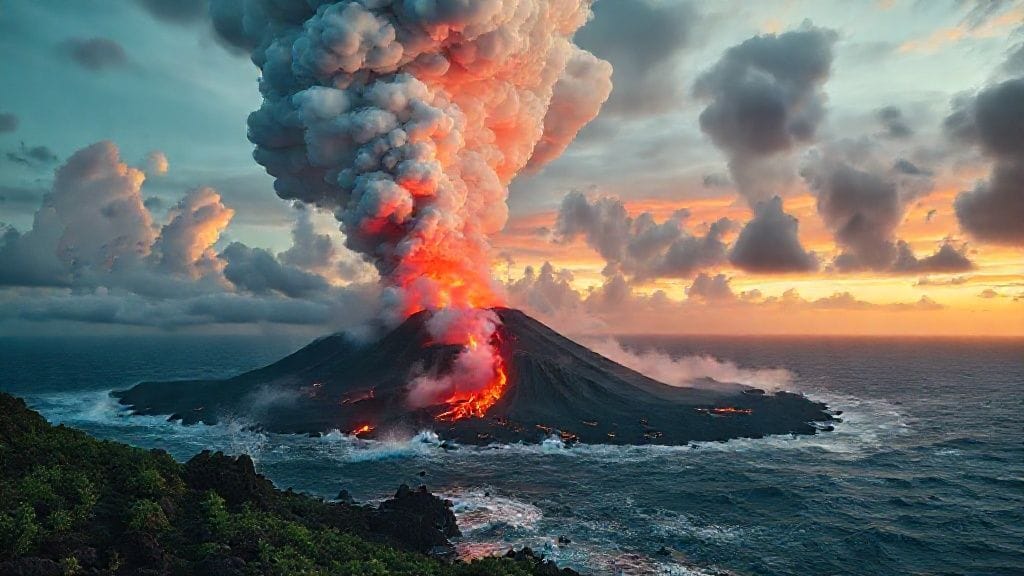
Then came the day when the earth convulsed with a violence that words struggle to capture. Columns of ash and volcanic gases surged kilometers into the atmosphere. Rivers of molten lava carved glowing paths down the mountain’s sides, gobbling everything in their reach. The sky darkened as ash clouds blotted out the sunlight, and the once serene island transformed into a fiery tableau of destruction. This was no slow drift of lava; it was an instant, catastrophic release of subterranean power.
Witnesses to Fury: Local Eyewitness Accounts
Stories from residents paint a compelling picture of the human experience amid geological chaos. One elder recalled, “The mountain spoke in fire and thunder. We felt the ground trembling like the beating heart of the gods.” Children watched in wide-eyed awe and fear as ash rained like dark snow on their homes. These vivid memories, alive with emotion and detail, humanize what might otherwise be seen only in scientific reports or satellite images.
The Science Behind the Explosion: Magma, Pressure, and Fire
Beneath the surface, the eruption was the culmination of a complex process. Magma had pooled and pressurized over years, trapped beneath solid rock until it found a weak point. When that pressure surpassed the threshold, it blasted through like a colossal release valve. This phenomenon, called a Plinian eruption, is characterized by its explosive nature and towering ash columns—a hallmark of volcanic giants like Tofua.
Immediate Impacts: Environment and Communities in Shock
The eruption’s immediate toll was catastrophic: villages blanketed in ash, crops destroyed, air thick with toxic gases, and fresh water sources contaminated. Wildlife fled or perished in the fiery fury. From shoreline to summit, the island bore scars that felt at once physical and spiritual. For the people of Tonga, the eruption disrupted not just their surroundings but their very relationship with the land, which had been their lifeblood for generations.
Response and Rescue: The Role of Authorities and Scientists
In the hours and days following the eruption, the response was swift and coordinated. Local authorities, supported by international aid agencies, mobilized evacuation plans to protect vulnerable communities. Scientists rushed to analyze the unfolding event, deploying seismographs, gas sensors, and aerial drones to assess volcanic behavior. This phase highlighted the precarious balance between respecting traditional knowledge and employing modern technology in disaster response.
Geological Insights: What Tofua’s Eruption Revealed
For volcanologists, the 2015 eruption was a trove of new information. The data gathered shed light on magma dynamics beneath island arc volcanoes—a critical piece of the global puzzle about how Earth's interior energy shapes its surface. It challenged existing models and refined predictions for future eruptions not only in Tonga but across the Pacific and beyond.
Tonga’s Volcanic History: Contextualizing the 2015 Event
To fully grasp the 2015 eruption’s significance, one must look back at Tonga’s volcanic past—marked by cycles of dormancy and fury. Previous eruptions had altered the physical map and the course of local history, forging a living legend of resilience. Understanding these patterns offered clues to the rhythms of Tofua and its restless core.
Cultural Echoes: Volcanoes in Tongan Legend and Life
Volcanoes in Tonga carry deep spiritual resonance. They are often personified in myth as temperamental deities, capable of wrath and redemption. The 2015 eruption reignited these ancestral stories, reminding islanders of their enduring connection to the earth and the powerful forces that lie hidden beneath the tranquil seas. Rituals, songs, and art all reflect this ongoing dialogue between people and volcano.
The Aftermath: Studying Recovery and Resilience
The physical damage was immense, but the true measure of tragedy lay in the displacement of families and disruption of livelihoods. Yet, the response of Tonga’s communities also demonstrated remarkable resilience. Recovery efforts emphasized sustainable adaptation, reshaping agricultural practices, and reinforcing buildings against future eruptions. This was a story not only of destruction but of rebirth.
Global Implications: Understanding Volcanism on the World Stage
Though distant, Tofua’s eruption resonated worldwide, reminding us of our planet’s volatile underbelly. It reinforced the need for international cooperation in monitoring volcanic threats and for sharing knowledge across borders. Small island nations like Tonga are often first to face these formidable forces, becoming critical case studies in global disaster preparedness.
The 2015 Tofua Eruption in the Lens of Modern Volcanology
Emerging technologies—satellite remote sensing, real-time monitoring networks, and computational modeling—transformed the study of Tofua’s eruption. Scientists chronicle how these tools provided unprecedented insights, enhancing predictive capabilities. The event became a landmark case, bridging traditional geology with 21st-century innovation.
New Technologies and Insights Inspired by the Event
The lessons learned inspired new research initiatives and the development of more sophisticated early warning systems. For example, drone surveillance combined with gas spectroscopy allowed for safer, more detailed observation of active volcanoes. The eruption demonstrated the vital importance of investing in science to mitigate natural hazards in vulnerable regions.
Lessons for Small Island Nations Facing Volcanic Threats
Tofua’s eruption underscored how small island communities confront unique challenges: isolation, limited resources, and fragile ecosystems. It highlighted the necessity of robust local knowledge, community engagement, and international support to build resilience and reduce vulnerability. These lessons are now echoed throughout island nations facing similar perils.
Volcano Tourism and Scientific Exploration Since 2015
Since the eruption, Tofua and its volcanic siblings in Tonga have attracted both tourists and scientists alike—drawn by the island’s raw beauty and geological importance. Managed responsibly, volcano tourism offers economic benefits while fostering greater awareness of natural hazards and the environment’s power.
The Human Story: Families, Fear, and Community Strength
Beyond geological data and disaster response lies the deeply human tale of endurance. Families displaced, traditions paused, and the collective anxiety of a population living in the shadow of an unpredictable giant. Yet, in this fear, bonds were strengthened—neighbors helped neighbors, stories of survival were passed down, and hope rooted itself in the fertile volcanic soil.
Environmental Regrowth and the Secrets of Renewal
Volcanic landscapes, though initially devastated, become crucibles of renewal. The ash and lava from the eruption enriched the soil, setting the stage for new growth. Botanists and ecologists have since documented the astonishing pace of recovery, revealing nature’s remarkable ability to bounce back after catastrophe.
Reflections: The Volcano as a Force of Creation and Destruction
Tofua encapsulates the paradox of volcanoes: destroyers and creators, threats and nurturers. The 2015 eruption was an elemental drama—a reminder that beneath the seeming tranquility of the ocean and skies lies an ancient, fiery heart that continues to shape the fate of islands and their people.
Preparing for the Future: Disaster Management in Tonga
In the years following the eruption, Tonga intensified its disaster preparedness efforts. Investment in early warning systems, public education campaigns, and robust evacuation strategies now form the backbone of national resilience. The scars left by Tofua remind everyone that vigilance must never fade.
The Tofua Volcano Today: Calm Between the Storms
Today, Tofua rests once more—but the earth beneath is restless. Scientists continue to monitor its activity, knowing that the silence could be the prelude to another awakening. The 2015 eruption remains etched into collective memory as a testament to the mountain’s power, and to human courage in facing nature’s most formidable forces.
Conclusion
The story of the Tofua eruption in 2015 is far more than a geological event; it is a testament to the intertwined destinies of earth and human life. It revealed the raw, unpredictable forces lying beneath the calm seas of Tonga, confronting its people with both destruction and renewal. But beyond ash and lava, the eruption summoned resilience, community spirit, and a profound reverence for the ancient rhythms of the planet. It is a reminder that even in the face of nature’s fiery fury, humanity endures—ever adapting, ever hopeful. The mountain’s roar was not just an ending, but the beginning of a new chapter woven into the fabric of Tonga’s history.
FAQs
1. What caused the Tofua eruption in 2015?
The eruption was triggered by the accumulation of magma beneath the volcano, which increased pressure until it violently escaped through the surface. This explosive Plinian eruption was typical of the magma dynamics in the region.
2. How did the eruption impact the local communities on Tonga?
Villages near Tofua experienced ash fallout, destruction of crops, and contamination of water, forcing evacuations and disrupting daily life. Despite this, communities showed remarkable resilience in recovery efforts.
3. What role did scientists play during and after the eruption?
Scientists monitored seismic activity before the eruption, helped predict its occurrence, and deployed equipment like drones and gas sensors afterward to study the event and inform safety protocols.
4. How does Tofua compare to other volcanoes in the Pacific ‘Ring of Fire’?
Tofua is part of the volcanic island arc typical of the Ring of Fire, sharing similar magma composition and eruption types. Its 2015 eruption added valuable data unique to island arc volcanoes.
5. In what ways did the eruption influence disaster preparedness in Tonga?
The event spurred improvements in early warning systems, public education about volcanic risks, and the development of evacuation and disaster management plans tailored to island communities.
6. Are volcanoes important to Tongan culture?
Absolutely. Volcanoes are deeply embedded in Tongan mythology, symbolizing both creative and destructive divine forces, influencing local traditions, stories, and cultural identity.
7. What environmental processes followed the eruption?
Following initial devastation, the volcanic ash enriched soils, promoting regrowth of native plants and ecological restoration, showcasing nature’s resilience.
8. Has the Tofua volcano erupted since 2015?
As of current observations, Tofua remains quiet, but continuous monitoring is necessary as volcanic activity in such regions is inherently unpredictable.

