Table of Contents
- The Morning the Sky Turned Ominous: A Prelude to Disaster
- The Remote Wilderness of Kamchatka: Setting the Stage
- Early Signs: Murmurs Beneath the Earth
- The Unleashing of Ksudach: The Eruption Begins
- Pyroclastic Fury and Ash Clouds: The Volcano Speaks
- The Sky’s Dark Veil: Ash Fallout across Kamchatka
- The Human Dimension: Impact on Local Communities
- The Scientific Awakenings: Measuring an Enigma
- Tsarist Russia and the Eruption: Political Backdrop
- From Local Catastrophe to Global Curiosity
- The Shadow over Fishing and Trade in the Pacific
- Geological Legacy: Shaping the Landscape Forever
- Volcanic Winter and Climatic Ripples Worldwide
- Eyewitness Chronicles: Voices from the Edge
- Recovery Stories: Resilience amid the Ruins
- Modern Scientific Perspectives on Ksudach
- Ksudach in Culture: Myth, Memory, and Media
- Comparative Analysis: Ksudach Among Great Eruptions
- Lessons Learned: Volcanology and Disaster Preparedness
- Conclusion: The Lasting Echo of Ksudach’s Fury
- FAQs: Understanding Ksudach’s 1907 Eruption
- External Resource
- Internal Link
1. The Morning the Sky Turned Ominous: A Prelude to Disaster
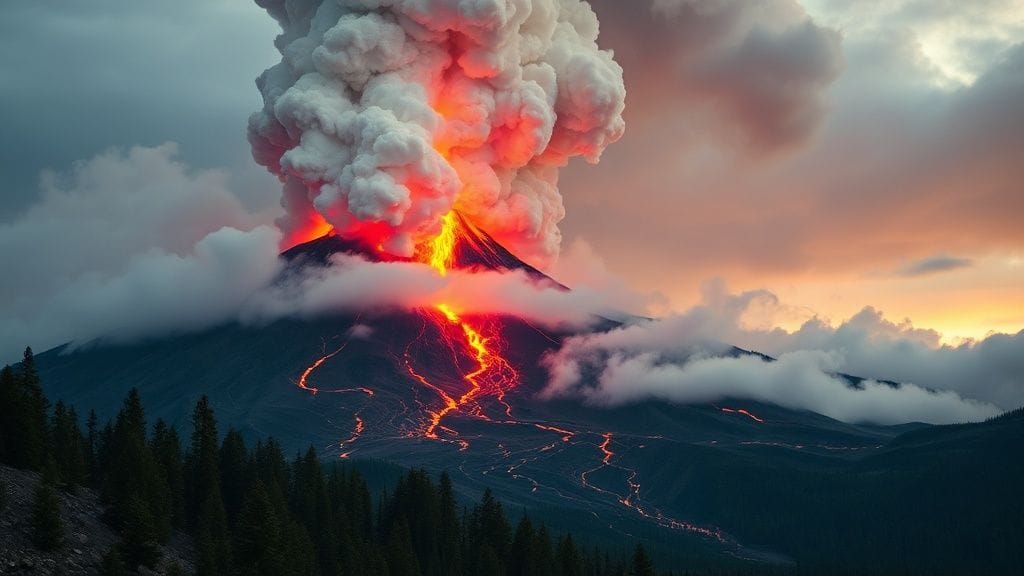
April 27, 1907, dawned like any other crisp spring morning on the Kamchatka Peninsula—a remote wilderness that seemed timeless and untouchable. But above the tranquil forests and jagged mountain ridges, the air grew heavy with an inscrutable tension. Villagers noticed a faint rumble, a peculiar ash tint that darkened the horizon. To the people living by the fringes of Ksudach volcano, a sleeping giant for centuries, these were unsettling signs. By midday, the mountain groaned violently, and then, with the fury of nature's rawest forces, Ksudach screamed to life.
The sky blackened as ash spiraled miles high, molten rock exploded, and a vast plume cloaked the land in a suffocating blanket of despair. This was not just an eruption; it was a cataclysm, a moment that would carve the course of geological and human history on this distant flank of the Earth. The 1907 Ksudach eruption was a dramatic testament to the planet’s volatility, and the consequential ripples were felt far beyond the Siberian expanse.
2. The Remote Wilderness of Kamchatka: Setting the Stage
To understand Ksudach’s eruption is also to peer into the formidable isolation of Kamchatka—a peninsula jutting into the North Pacific, veined with volcanoes, glaciers, and dense taiga forests. Known as one of the most volcanically active regions on the planet, Kamchatka shelters over 300 volcanoes, 29 of which are active. Ksudach, perched in the southern part, remained one of the less documented giants by the early 20th century, its influence known only through oral histories and sporadic geological observations.
This region was a confluence of extremes: harsh climate, sparse population, and a tapestry of indigenous peoples including the Koryaks and Itelmens—communities whose survival was intimately linked to their understanding of nature’s rhythms. Indeed, their folklore spoke often of mountain spirits and warning signs, an ancient dialogue with a land that nurtured but could just as swiftly destroy.
3. Early Signs: Murmurs Beneath the Earth
Months before the dramatic event, subtle indications indicated the volcano’s awakening. Local hunters and trappers reported minor earthquakes and ground tremors—a telltale murmur of magmatic restlessness. Scientists stationed at the Russian Geographical Society’s outposts, though limited by the remoteness of Kamchatka, noted increased fumarole activity near Ksudach. The mountain’s dormant lakes showed warming trends, hinting at subterranean upheaval.
Yet in 1907, volcanology was still an emerging science. Instruments lacked precision, and many natural signs were dismissed or misunderstood by officials far away in St. Petersburg. The gap between indigenous knowledge and scientific comprehension revealed a tension: those closest to the event could feel the pulse of the earth, but global understanding remained frustratingly incomplete.
4. The Unleashing of Ksudach: The Eruption Begins
On late April 27th, a colossal explosion shattered the quiet of Kamchatka’s wilderness. Ksudach’s summit caldera, a vast crater from previous eruptions, served as the arena for an apocalyptic display of power. The eruption began with a series of violent phreatomagmatic blasts—a deadly combination of water and magma interaction that fractured the mountain’s core. These explosions were followed by a sustained eruption column that climbed tens of kilometers into the atmosphere, rivaling some of the most prodigious volcanic events recorded in history.
The eruption was not a simple outpouring of lava but a complex sequence of cataclysmic events that transformed Ksudach and the surrounding landscape. Pyroclastic flows—fast-moving currents of scorching gas and volcanic debris—raced down the slopes with lethal speed, flattening everything in their path. The sound was deafening, described by some witnesses as thunderous artillery booming across the wilderness. It was, in the starkest terms, a manifestation of Earth’s raw power unleashed without mercy.
5. Pyroclastic Fury and Ash Clouds: The Volcano Speaks
The eruption column created a stratified veil of ash and pumice that veiled Kamchatka’s skies in a ghostly twilight. Prevailing winds caught the plume and carried it eastward across the Pacific, cloaking vast areas in volcanic dust. Ash fallout soon blanketed forests, rivers, and settlements—threatening not only visibility but also the delicate ecosystems that thrived here.
Scientists later estimated that the volume of ejected material reached several cubic kilometers, transforming the terrain and injecting tonnes of ash high into the stratosphere. This caused dramatic climatic effects; the sun was obscured for days, photosynthesis was hampered, and temperatures locally dipped—a volcanic winter scenario in miniature.
The eruption’s intensity matched only a handful of other events prior to the 20th century, solidifying Ksudach’s place in the geologic record as a monumental natural event.
6. The Sky’s Dark Veil: Ash Fallout across Kamchatka
For days, Kamchatka’s sky remained a hazy dome of gray and orange. Ash rained down continuously, leaving layers thick enough to bury homes, crops, and riverbanks. The air became toxic—coughing, burns, and respiratory ailments afflicted the human and animal populations.
Travel became nearly impossible, as the world was reduced to a muted sepia landscape where the boundaries between earth and sky blurred. The rivers, vital for fishing and transport, turned acid-hued and clogged by sediment. These conditions forced migrations and gave rise to stories of isolation and survival.
Importantly, this prolonged ashfall also disrupted the delicate life balance of this subarctic zone—affecting not just humans but reindeer herds and the predator-prey dynamics of the taiga.
7. The Human Dimension: Impact on Local Communities
Though sparsely populated, Kamchatka’s indigenous peoples were not spared from Ksudach’s wrath. Villages were buried under ash, food stores ruined, forcing people into desperate survival modes. The oral histories recount harrowing tales: children coughing through the dust, elders losing their traditional lands, and forced displacements into unfamiliar territories.
Russian settlers and fur traders, arriving increasingly as imperial expansion reached Kamchatka, faced similar adversity. Communication with the outside world was delayed; no immediate relief arrived. Starvation and disease loomed as real threats.
Yet amidst this devastation, stories of resilience emerged. Community gatherings, shared rituals, and natural adaptations underscored a tenacious human spirit confronting overwhelming crisis.
8. The Scientific Awakenings: Measuring an Enigma
The Ksudach eruption stimulated a surge in scientific interest in volcanology within Russia and internationally. Despite difficult access, expeditions were launched to chart the new caldera landscape, analyze deposits, and understand eruption dynamics.
Researchers began to parse the eruption’s phreatomagmatic characteristics, ash dispersal patterns, and ecological impact. New techniques in seismology and chemical analysis emerged partly inspired by Ksudach’s complexity.
At the same time, the event underscored the need for coordinated monitoring of remote volcanoes—a prescient idea as the 20th century would see unprecedented growth in volcanic hazard science.
9. Tsarist Russia and the Eruption: Political Backdrop
The eruption occurred under the rule of Tsar Nicholas II, a time when Russia was grappling with social and political turmoil. News of the disaster reached the capital in a muted fashion, overshadowed by rising revolutionary tension and economic struggles.
However, Kamchatka’s catastrophe symbolized the empire’s vast geographical challenges—a land with immense resources but difficult governance. Relief efforts were limited, highlighting the gaps between the periphery and the imperial center.
Moreover, some intellectuals saw in Ksudach a metaphor for the brooding instability of the empire itself, reflecting nature’s unpredictability mirroring social upheaval.
10. From Local Catastrophe to Global Curiosity
Though remote, Ksudach’s ash plume was detected by weather observers and meteorologists globally, sparking curiosity and concern. Reports filtered through scientific networks in Europe and America, linking the eruption with similar phenomena observed in the Pacific.
The event contributed to expanding awareness of volcanism’s global consequences. It also marked one of the earliest occasions volcanic eruptions were connected to changes in weather patterns across continents—foreshadowing modern climatology’s interest in atmospheric aerosols.
11. The Shadow over Fishing and Trade in the Pacific
Kamchatka’s coastal communities relied heavily on fishing, a lifeline that was imperiled by the eruption. Networks of trade crisscrossed the North Pacific—providing furs, fish, and goods that sustained local economies. Volcanic ash polluted estuaries and marine habitats, leading to initial declines in fish populations and disrupting migratory patterns of salmon.
Consequently, trade slowed and regional markets felt subtle but important tremors. For traders and indigenous fishermen alike, the eruption was a harsh reminder of nature’s power to stall human enterprise.
12. Geological Legacy: Shaping the Landscape Forever
Ksudach’s eruption redefined the geography of southern Kamchatka. The explosion enlarged the caldera, created new lava domes, and altered river courses. Layers of pumice and ash became ground markers of the event’s scale.
Geologists today study Ksudach’s terrain to unravel its eruptive history and volcanic hazards. It remains a living laboratory illustrating how volcanic landscapes evolve—reminding us that Earth’s surface is never static but continuously shaped by fire and fury.
13. Volcanic Winter and Climatic Ripples Worldwide
Ksudach’s aerosol injection into the stratosphere contributed to a measurable, if temporary, cooling effect in parts of the Northern Hemisphere. Contemporary records show slight temperature drops and unusual weather patterns in Europe and Asia during the following months.
While not on the scale of Krakatoa (1883) or Tambora (1815), Ksudach still exemplified how even remote eruptions have planetary footprints. This understanding deepened the link between volcanism and climate science.
14. Eyewitness Chronicles: Voices from the Edge
Personal accounts from indigenous elders and Russian settlers paint a vivid portrait of the eruption’s human impact. Letters, diaries, and folklore describe fear, awe, and a profound respect for the mountain’s destructive power.
One Koryak hunter recounted: “The earth roared like a beast, and the sky burned with ash. We hid in caves, praying to the spirits. When the light returned, the world was strange—like the days had been stolen.” Such testimonies preserve emotional truths beyond geological data.
15. Recovery Stories: Resilience amid the Ruins
In the years following, Kamchatka’s communities gradually rebuilt, learning to adapt to the altered landscape. Reforestation efforts began, new fishing patterns emerged, and traditional knowledge blended with modern techniques.
Recovery was neither swift nor easy but underscored resilience—a theme echoed through countless natural disasters. This perseverance laid foundations for further scientific exploration and inspired future disaster preparedness models in volcanic zones.
16. Modern Scientific Perspectives on Ksudach
Today, Ksudach is monitored with advanced satellite imagery, seismographs, and gas sensors, reflecting a century of progress since 1907. Modern volcanologists classify Ksudach’s 1907 event as a landmark eruption with complex phreatomagmatic phases.
Insights gained inform hazard assessments not only in Kamchatka but worldwide. The site remains under continuous observation—a reminder that the giant can awaken again.
17. Ksudach in Culture: Myth, Memory, and Media
Ksudach’s eruption carved an indelible place in regional identity. Folktales surrounding the volcano grew, blending natural phenomena with spiritual meanings. In literature and documentary films, Ksudach symbolizes nature’s sublime and terrifying grandeur.
Commemorations and local museums preserve artifacts while education programs keep the memory alive—bridging past and present for new generations.
18. Comparative Analysis: Ksudach Among Great Eruptions
While not as famous as Krakatoa or Vesuvius, Ksudach’s 1907 eruption ranks among significant volcanic events by intensity and impact. Its phreatomagmatic character sets it apart, offering a case study in explosive volcanic dynamics.
Comparisons highlight lessons about eruption forecasting and global climate effects, situating Ksudach within the broader narrative of Earth’s restless interior.
19. Lessons Learned: Volcanology and Disaster Preparedness
The eruption catalyzed advances in early warning and response systems. It illustrated the importance of integrating indigenous knowledge with scientific methods. More broadly, Ksudach shaped policies for monitoring remote volcanoes and informed international programs anticipating volcanic disasters.
Today, it stands as a cautionary tale and an inspiration in disaster risk reduction.
20. Conclusion: The Lasting Echo of Ksudach’s Fury
Ksudach’s 1907 eruption was more than a geological event—it was a profound encounter between humanity and the volatile natural world. In the silent ash, in the reshaped mountains, and in the shaking hearts of those who lived through it, Ksudach’s fury left lessons carved in stone and memory.
This dramatic chapter, though remote in place and time, resonates universally: a powerful reminder of our planet’s forces and the resilience woven into human spirit. As we study another eruption today, we look back to Ksudach to understand not just volcanism, but life’s fragile persistence amid inevitable change.
FAQs: Understanding Ksudach’s 1907 Eruption
Q1: Why did the Ksudach eruption occur in 1907 after centuries of dormancy?
A: The eruption followed a build-up of magma beneath the volcano and interactions between groundwater and magma, creating powerful phreatomagmatic explosions. Geological stresses accumulated silently before erupting violently.
Q2: What were the main human consequences of the eruption?
A: Local indigenous populations and Russian settlers faced displacement, health crises due to ash inhalation, destruction of food sources, and disrupted livelihoods, particularly fishing and hunting.
Q3: How did the eruption affect global climate?
A: The vast ash and aerosol plume reduced sunlight, causing a temporary cooling effect in parts of the Northern Hemisphere, an early example of volcanic impact on climate systems.
Q4: How was the eruption documented scientifically at the time?
A: Despite limited technology and logistical challenges, Russian and international researchers collected ash samples, mapped new landscapes, and recorded eyewitness reports, setting early volcanological benchmarks.
Q5: What role did indigenous knowledge play in the understanding of Ksudach?
A: Indigenous peoples possessed rich oral traditions describing volcanic activity and warning signs, providing crucial depth to scientific observations and emphasizing local environmental attunement.
Q6: Has Ksudach erupted since 1907?
A: Yes, Ksudach remains active with smaller eruptions documented, and is now closely monitored by volcanologists to mitigate risks and understand volcanic behavior.
Q7: How did the Kamchatka eruption impact trade in the Pacific?
A: Ash fallout affected fisheries and maritime navigation, causing economic disruptions in regional trade networks reliant on marine resources.
Q8: What lessons from the Ksudach eruption contributed to modern volcanology?
A: The eruption highlighted the importance of monitoring remote volcanoes, understanding phreatomagmatic processes, integrating indigenous knowledge, and preparing for complex eruption scenarios.

