Table of Contents
- The Awakening of a Sleeping Giant: November 2022
- Mauna Loa: The World’s Largest Volcano and Its Historic Legacy
- Geological Origins: The Birth of Mauna Loa and the Hawaiian Islands
- A History Written in Lava: Previous Eruptions Before 2022
- Early Warning Signs: The Months Leading Up to the 2022 Eruption
- November 2022: The First Explosive Roars
- The Flow of Fire: Lava Rivers Reshaping the Land
- Human Stories in the Shadow of Lava: Communities on the Edge
- Scientists on the Frontline: Monitoring and Predicting the Unpredictable
- The Role of Technology: From Seismic Sensors to Satellite Eyes
- Government and Emergency Response: Coordinating a Fragile Safety
- Environmental Impact: New Landscapes and Devastated Ecosystems
- Cultural Resonance: Mauna Loa in Hawaiian Mythology and Identity
- The End of the Eruption: Signs of Quiet Returning to the Mountain
- Lessons from the Fire: What 2022 Taught Us about Volcanoes and Resilience
- The Global Significance: Why Mauna Loa’s Activity Matters Beyond Hawaiʻi
- Reflections on Risk and Coexistence: Living with Volcanic Giants
- The Future of Mauna Loa: Will It Sleep Again, or Roar Once More?
- Conclusion: A Monument of Power and Persistence
- Frequently Asked Questions (FAQs)
- External Resource
- Internal Link
The Awakening of a Sleeping Giant: November 2022
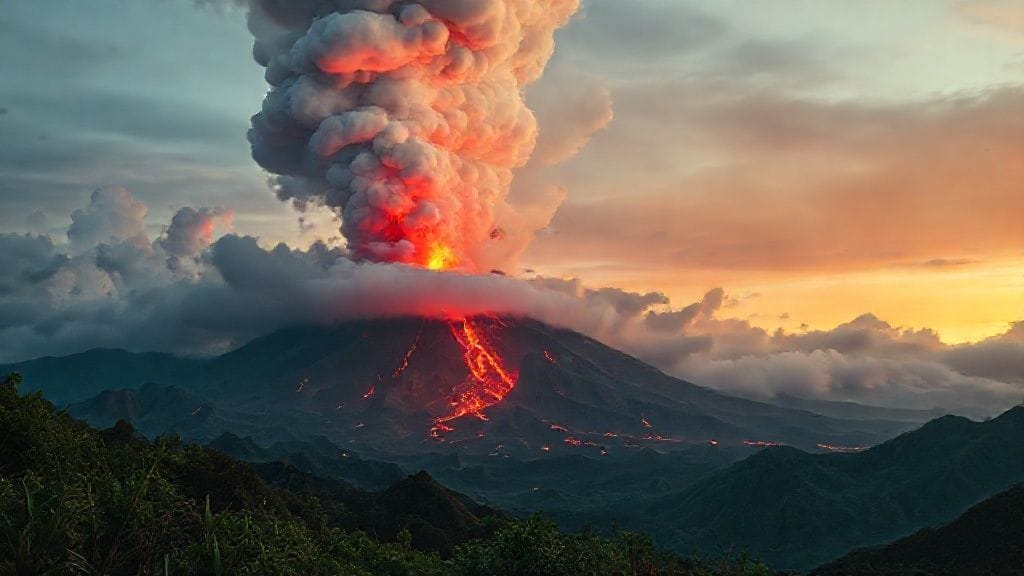
The night sky above Hawaiʻi’s Big Island was punctuated by an eerie, molten glow—intense cracks of fiery orange bleeding through the darkness. It was November 2022, and Mauna Loa, the colossal volcano that had slumbered in relative quiet for nearly four decades, began to stir, roaring back to life with a primal force that reverberated through the island’s very soul. The ground trembled as fissures opened and rivers of lava began their inexorable flow, illuminating the night with a dangerous beauty. For those living beneath the shadow of this titan, it was a moment equal parts awe-inspiring and terrifying—a raw reminder of the power hidden beneath the earth's crust.
The eruption was not only a geological spectacle but a profound human event, intertwining nature’s caprice with cultural memory, scientific curiosity, and the resilience of the island’s inhabitants. Mauna Loa’s awakening would become a story told across the world, illustrating the enduring dance between humans and their volatile environment.
Mauna Loa: The World’s Largest Volcano and Its Historic Legacy
Rising approximately 13,681 feet above sea level, Mauna Loa holds the title of the largest volcano on Earth in terms of volume. Its massive shield shape dominates Hawaiʻi’s landscape, a silent giant formed by the slow piling of countless lava flows over hundreds of thousands of years. But this giant is far from dormant. Its past is marked by cycles of eruptions that have shaped not only the island's geography but the very lives of those who have lived in its shadow.
The volcano is more than a geographical feature; it is a central character in the story of Hawaiʻi’s formation and its people’s connection to the land. For Native Hawaiians, Mauna Loa—literally “Long Mountain”—holds sacred status, woven into legends that embody the island’s fiery origins and ongoing creation. Understanding Mauna Loa means appreciating both its immense physical presence and its immeasurable cultural significance.
Geological Origins: The Birth of Mauna Loa and the Hawaiian Islands
The story of Mauna Loa begins deep beneath the Pacific Ocean, where a volcanic hotspot—the Hawaiian hotspot—ignited the molten mantle rock. As the Pacific tectonic plate slowly drifts northwest across this stationary plume of heat, the surface cracks and magma surges upward, piercing through oceanic crust to form islands. The oldest islands in the chain lie northwest, while Hawaiʻi Island is the youngest and home to Mauna Loa.
Formed roughly 700,000 years ago, Mauna Loa grew layer after layer, its broad, gently sloping flanks created by fluid lava flows that travel long distances before solidifying. This type of volcano, known as a shield volcano, contrasts with the steep, explosive peaks of stratovolcanoes found elsewhere in the world. Yet Mauna Loa’s size, power, and eruptive frequency have carved it into one of Earth’s most remarkable geological giants.
A History Written in Lava: Previous Eruptions Before 2022
Mauna Loa’s previous eruptions have punctuated Hawaiʻi’s history with moments of profound change. Since records began, over 30 eruptions have been documented, ranging from relatively small outpourings to vast flows threatening settlements.
The eruption of 1950 was particularly significant, when lava flowed rapidly, overrunning villages like Hoʻōpūloa, reshaping the island, and reminding Hawaiians and scientists alike of Mauna Loa’s formidable power. After erupting sporadically for centuries, the volcano entered a period of quiescence in 1984, leaving residents and geologists watching vigilantly.
Each eruption adds a new chapter to Mauna Loa’s saga, shaping the island’s evolving geography while influencing patterns of settlement, agriculture, and culture. Yet the calm that followed the 1984 eruption would not last forever.
Early Warning Signs: The Months Leading Up to the 2022 Eruption
By mid-2022, subtle signals whispered beneath Mauna Loa’s surface. Seismic activity increased, fissures of tremors rippled through the earth, and the mountain’s flanks began to swell as magma accumulated beneath. Scientists from the US Geological Survey’s Hawaiian Volcano Observatory tracked these signs meticulously, aware that the mountain’s clock was ticking.
Local residents, too, sensed a shift. The air sometimes carried a faint smell of sulfur; awakening amid tiny tremors and remote rumblings. For some, it was a reminder of nature’s constant vigilance—a warning that the earth’s fiery core remained restive.
Experts issued advisories and emergency preparedness plans were revisited, yet the volcano had not yet spoken its full truth.
November 2022: The First Explosive Roars
On November 27, 2022, Mauna Loa broke its silence with a thunderous eruption. Early that morning, ground monitors detected seismic swarms—precursors to the mountain’s imminent outpouring. Just before dawn, lava violently burst through fissures on the upper northeast flank.
The sky exploded with incandescent fountains feeding flowing rivers of molten rock, coursing quickly, unstoppable. The eruption was vigorous, sending plumes of ash, gas, and rock fragments skywards, lighting the horizon in a terrifying spectacle.
Communities nearby were swiftly alerted; evacuation orders were issued, and roads began to empty—a sobering testament to humanity’s fragile coexistence with an ancient force.
The Flow of Fire: Lava Rivers Reshaping the Land
As days unfolded, rivers of lava snaked down Mauna Loa’s slopes, obliterating everything in their path—forests, roads, and agricultural lands. The flows moved with a mesmerising yet devastating grace, their heat radiating an elemental power no human could tame.
This molten wave reshaped the ground, filling valleys, forming new land, and destroying fragile ecosystems along the way. It was a transformation both destructive and creative: lavas that would one day form fresh soil, nurturing future life.
Watching this geological artwork felt like witnessing the world reborn in flames and rock.
Human Stories in the Shadow of Lava: Communities on the Edge
For the people of Hawaiʻi Island, living beneath Mauna Loa's looming wall of fire is a daily negotiation between tradition, survival, and hope. Families evacuated their homes, some with memories spanning generations in the same valleys now under threat.
Mary Kawena Pukui, a local elder once described the volcano as a ‘fire deity’—both protector and destroyer. In 2022, these age-old notions felt tangible again. Stories circulated of neighbors opening their doors to evacuees, of emergency workers braving ash and smoke, and of children learning from this natural classroom about resilience and respect for the environment.
Behind every statistic, numbers, and flow lines, there were human hearts beating fast, waiting, praying, and adapting.
Scientists on the Frontline: Monitoring and Predicting the Unpredictable
The 2022 eruption showcased the critical role of scientists on the volcano’s frontlines. Seismologists, geologists, and volcanologists scrambled to interpret data streaming from hundreds of monitoring stations. GPS measurements registered swelling; gas emissions hinted at changing magma composition.
Their task was Herculean: predict the volcano’s movements and guide public safety without underestimating or overhyping the threat. As Mauna Loa’s behavior evolved over weeks, interdisciplinary teams communicated closely with officials and communities.
Thanks to their vigilance, no lives were lost—a testament to the melding of human knowledge and nature’s caprice.
The Role of Technology: From Seismic Sensors to Satellite Eyes
Modern technology played a decisive role in capturing Mauna Loa’s fiery spectacle. Thousands of seismic sensors embedded in the island’s crust recorded every tremor, while satellite imagery provided real-time visuals of lava flows contrasting against lush terrain.
Thermal cameras captured heat signatures invisible to the naked eye, and drones flew into hazardous zones delivering unprecedented views. Together, these tools gave scientists and authorities a powerful arsenal to understand and anticipate volcanic threats.
Technology revealed the volcano’s hidden, pulsing rhythms—turning an ancient force into a monitored phenomenon.
Government and Emergency Response: Coordinating a Fragile Safety
Emergency responders and government agencies faced enormous challenges coordinating safe evacuations and infrastructure protection. Hawaii County Civil Defense, state agencies, and federal partners collaborated to issue hazard zones, organize relief shelters, and communicate with residents.
Road closures, airspace restrictions, and communities’ relocation were managed with urgency and care. The eruption tested readiness plans forged after past eruptions, and though the danger was real, levels of preparedness reflected lessons hard learned.
This operation underlined society’s ongoing efforts to balance human presence with nature’s might.
Environmental Impact: New Landscapes and Devastated Ecosystems
Beyond immediate human concerns, the eruption dramatically remade Hawaiʻi’s environment. Ancient forests and unique ecosystems were buried beneath thick layers of basaltic lava, disrupting habitats of endemic species. Wildlife was forced to flee or perish; native plants disappeared temporarily, replaced by barren new rock.
However, as geologists remind, volcanic devastation is also the crucible for renewal. Over decades, new soil formed from cooled lava will foster fresh plant life, a rebirth symbolizing nature’s enduring cycles.
Cultural Resonance: Mauna Loa in Hawaiian Mythology and Identity
Mauna Loa’s eruption reawakened ancestral connections between Hawaiians and the volcano. In Hawaiian cosmology, the mountain is a living ancestor, often associated with deities like Pele, the goddess of fire, lightning, wind, and volcanoes.
Stories recount Pele’s fiery travels and her role as both creator and destroyer, embodying the volcanic forces. The 2022 eruption was seen through this spiritual lens—an event that reinforced identity, reverence, and the relationship between people and the ‘āina (land).
Cultural practices, ceremonies, and language gave deeper meaning to nature’s upheavals.
The End of the Eruption: Signs of Quiet Returning to the Mountain
By early December, Mauna Loa’s fury began to wane. Lava fountains diminished; flows slowed and cooled. Seismic activity declined, and the ominous rumblings faded into silence. Authorities cautiously began lifting some restrictions, though the mountain’s rest was still fragile.
Scientists emphasized that such pauses might not be permanent. Though the eruption officially ended, Mauna Loa’s sleeping giant was still awake in dormant potential.
Lessons from the Fire: What 2022 Taught Us about Volcanoes and Resilience
The 2022 eruption reinforced vital lessons on human adaptation amidst natural hazards. Communities showed courage and flexibility, while science and technology proved indispensable in safeguarding lives.
It also reminded us that volcanic landscapes are dynamic, their transformations eternal and humbling. Harmony with such forces requires respect, vigilance, and preparedness.
The event’s imprint extends beyond immediate damage, inspiring deeper understanding of Earth’s restless nature.
The Global Significance: Why Mauna Loa’s Activity Matters Beyond Hawaiʻi
Mauna Loa’s eruptions are not isolated local phenomena; they resonate worldwide. The volcano serves as a natural laboratory for volcanology, shaping our comprehension of mantle plumes, magma dynamics, and eruption forecasting.
Furthermore, events like the 2022 eruption emphasize climate interactions, air quality issues, and planetary geology. Islands born of fire tell stories about our planet’s inner workings and remind global audiences of nature’s power and fragility.
Reflections on Risk and Coexistence: Living with Volcanic Giants
Humankind’s presence on volcanic land reflects an intricate balance of risk and reward. Fertile soils, natural beauty, and cultural richness draw populations despite dangers.
Mauna Loa is a potent symbol of this paradox: a source of life born of death, destruction with creation. The 2022 eruption underscored the ongoing challenge of coexistence—how to live alongside forces far larger and older than ourselves.
The Future of Mauna Loa: Will It Sleep Again, or Roar Once More?
Mauna Loa’s story is far from over. Its reawakening in 2022 was a reminder of inevitable return; geologic time marches according to rhythms beyond human control.
Science continues to watch, predict, and learn, but the mountain keeps its deepest secrets. One certainty remains: the land forged by fire will continue to evolve, surprise, and inspire future generations.
Conclusion
Mauna Loa’s November 2022 eruption was much more than molten rock spilling from an ancient vent; it was a vivid confrontation between human existence and the planet’s profound power. That incandescent river of lava illuminated not only the darkness of the Hawaiian night but the enduring relationship between people and earth—frail yet resilient, terrified yet reverent.
Time and again, Mauna Loa has shaped Hawaiʻi’s destiny, carving new earth while reminding us of impermanence. Its fire burns with stories of creation and destruction, science and myth, community courage and nature’s might. The 2022 eruption added a powerful, living chapter to this epic, inviting reflection on our place in a world forever in flux.
As the mountain rests once more, one truth endures: to live near Mauna Loa is to share an ancient bond with fire, to witness Earth’s dynamic heart, and to accept that life here is both fleeting and fiercely beautiful.
Frequently Asked Questions (FAQs)
Q1: What caused the Mauna Loa eruption in November 2022?
The eruption resulted from magma accumulation beneath the volcano that increased pressure until fracturing the crust allowed lava to escape. This is a natural process linked to the hotspot beneath Hawaiʻi.
Q2: How long had Mauna Loa been dormant before the 2022 eruption?
Before 2022, Mauna Loa had been relatively quiet since its last eruption in 1984, approximately 38 years of dormancy.
Q3: Were there any fatalities or injuries during the 2022 eruption?
Thanks to effective monitoring and evacuation, there were no reported fatalities. Some injuries may have occurred, but emergency preparedness minimized risk.
Q4: How did local communities respond to the eruption?
Residents participated in evacuation plans, assisted neighbors, and adapted to temporary displacement. The eruption strengthened community solidarity and cultural reflection.
Q5: What kind of scientific methods were used to predict and monitor the eruption?
Scientists used seismic sensors, ground deformation measurements via GPS, gas emission analysis, satellite thermal imagery, and drone reconnaissance.
Q6: How did the eruption affect the environment?
The eruption destroyed some habitats but also created new land. Over time, ecosystems will regenerate on the newly formed lava fields.
Q7: What is the cultural importance of Mauna Loa to Native Hawaiians?
Mauna Loa is regarded as sacred ground, connected to gods like Pele. It embodies spiritual and physical creation, destruction, and renewal.
Q8: Can Mauna Loa erupt again soon?
While eruption timing is unpredictable, Mauna Loa is active and expected to erupt again eventually. Continuous monitoring is essential for future safety.

