Table of Contents
- The Moment the Earth Roared: Introduction to Taupō’s Cataclysm
- Setting the Stage: The Geography and History of New Zealand’s North Island
- The Fiery Heart Beneath: Understanding Taupō Volcano
- A Volcano’s Fury Unleashed: The Prelude to the Hatepe Eruption
- The Day the Sky Darkened: The Initial Blast and Ashfall
- Fury in Flames: Pyroclastic Flows Devastate the Landscape
- The Roar Heard Across the World: Atmospheric and Global Impact
- Human Witnesses and Legends: Maori Oral Traditions and the Eruption
- Environmental Chaos: The Immediate Aftermath on Land and Water
- The Climatic Consequences: From Local Winter to Global Cooling
- Geological Significance: Understanding Supervolcano Behavior
- The Death and Renewal Cycle: Ecological Recovery after Mass Devastation
- The Scientific Journey: Modern Studies of the Hatepe Eruption
- Volcanoes and Human Civilization: Lessons from Taupō’s Fury
- Remembering the Past, Preparing for the Future: Risk and Resilience in New Zealand
- Conclusion: The Living Legacy of Taupō’s Fury
- FAQs about the Taupō (Hatepe) Eruption
- External Resource
- Internal Link
1. The Moment the Earth Roared: Introduction to Taupō’s Cataclysm
The New Zealand sky was once engulfed by a shroud of darkness so thick and persistent it could have been mistaken for an eternal night. The earth trembled violently. Rivers boiled, and mountains groaned as if the land itself were in pain. Then came a sound—deep, thunderous, and ominous—a cataclysmic roar that echoed across the burgeoning forests, hills, and distant coastlines. This was the Hatepe eruption of Lake Taupō, an event so violent that it left an indelible mark on the planet nearly 1,800 years ago, around 232 AD.
To stand at the precipice of such a power, to feel the ground shake and cloud of ash blot out the sun for days, is to witness nature at its most unforgiving and profound. The Taupō event was no mere volcanic outburst; it was an apocalyptic eruption that reshaped landscapes, influenced global climates, and energized the earth sciences with new questions and revelations. It is a tale of destruction and endurance, hidden beneath millennia of soil but alive in the stories of the land and its people.
2. Setting the Stage: The Geography and History of New Zealand’s North Island
New Zealand, a remote archipelago in the South Pacific, is a land born of fire and water. Its North Island, dominated by a tectonically active zone, boasts a volcanic landscape marked by calderas, hot springs, and rugged mountains. At its center lies Lake Taupō, New Zealand’s largest lake and the surface expression of one of the world’s most powerful volcanic calderas.
Long before Europeans set foot on these islands, the Māori people had woven themselves into this volatile land, cultivating rich traditions and spiritual relationships with the earth’s fiery temperament. The land was not just geography; it was sacred narrative and living ecosystem, a world where natural phenomena were deeply entwined with identity, survival, and myth.
3. The Fiery Heart Beneath: Understanding Taupō Volcano
Lake Taupō is the summit of a collapsed volcano, a caldera formed by earlier massive eruptions. Beneath its serene waters lies a molten heart—a magma chamber capable of unleashing unimaginable force. Scientists categorize Taupō as a supervolcano, capable of generating what are called "ultra-Plinian" eruptions: extremely violent blasts that shoot ash and gases into the stratosphere, causing significant environmental chaos.
The volcano’s activity is driven by the Pacific and Indo-Australian tectonic plates interacting along the Pacific Ring of Fire. This boundary breeds immense pressure underground, which accumulates over centuries until released in catastrophic outpourings. The Hatepe eruption is considered the most energetic and volume-rich eruption the world has seen in the past 5,000 years.
4. A Volcano’s Fury Unleashed: The Prelude to the Hatepe Eruption
For years, if not decades prior, the earth whispered threats beneath Taupō. Minor earthquakes and geothermal activity intensified, hinting at the brewing storm. But no written records exist from this era, only hints buried in sediment and ash layers, and whispered in the oral traditions of the Māori who would arrive centuries later.
Then, in the early third century AD, the volcano’s suppressed rage broke free. The Hatepe eruption began with a violent explosive event, discharging millions of tons of volcanic material into the atmosphere in a matter of hours. This eruption would last days, reshaping communities and ecosystems in dramatic ways.
5. The Day the Sky Darkened: The Initial Blast and Ashfall
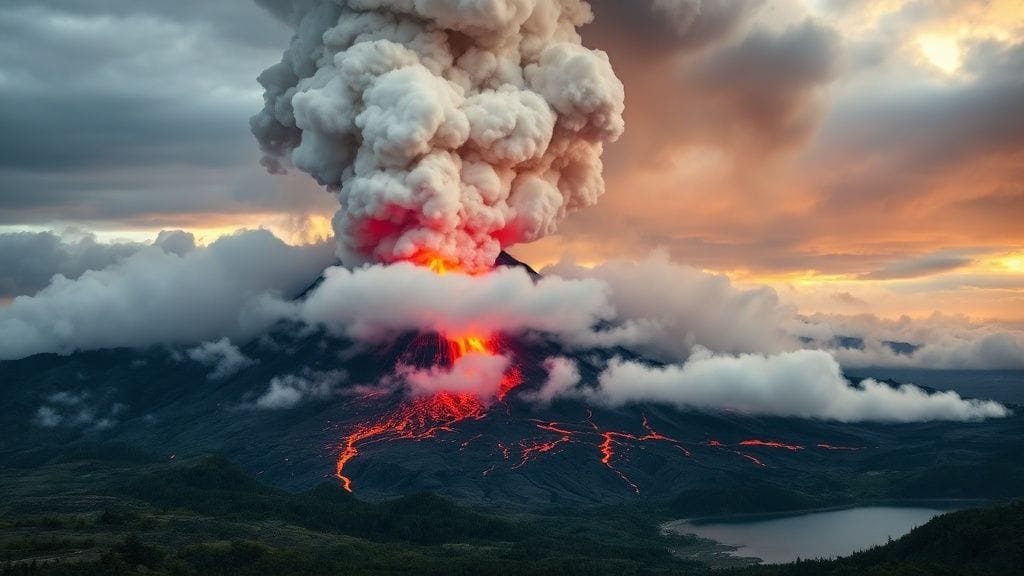
Imagine standing miles away from the volcano, watching the sky turn an unnatural amber as a towering column of ash and gas shoots tens of kilometers into the heavens. The Hatepe eruption began with such a blast, a plume too vast to be ignored.
Ash rained down relentlessly over hundreds of kilometers, coating the land in a grey blanket. Crops suffocated, rivers filled with volcanic debris, and the air became a toxic fog. Travelers and animals fled, chased and blinded by a relentless storm of dust and cinders. The sun struggled to pierce the ash cloud; days blurred into a twilight of despair.
6. Fury in Flames: Pyroclastic Flows Devastate the Landscape
But the ashfall was only the terror’s beginning. The eruption unleashed pyroclastic flows—incandescent rivers of molten rock, gas, and volcanic debris that thundered down slopes at hundreds of kilometers per hour. These flows incinerated everything in their path: forests, wildlife, and early human settlements.
The sheer speed and heat of the flows made survival impossible in their paths. The terrain was scoured clean, leaving vast wastelands of shattered rock and fallen timber. The landscape was forever altered, carved by fire and ash into a scarred but strangely fertile basin where the lake would remain.
7. The Roar Heard Across the World: Atmospheric and Global Impact
It is extraordinary to consider that the Hatepe eruption was among the largest volcanic eruptions on Earth in the last 5,000 years. Its atmospheric impact was profound and wide-reaching. The enormous injection of aerosols and ash into the stratosphere disrupted weather patterns and likely contributed to a temporary cooling in the Northern Hemisphere.
Ice core samples from Greenland reveal evidence of this volcanic activity in acid layers and particle deposits. Volcanologists have linked the eruption to climatic anomalies, including years of lower temperatures, failed crops, and social disruptions thousands of kilometers away.
8. Human Witnesses and Legends: Maori Oral Traditions and the Eruption
Though the eruption predates European colonization by nearly two millennia, Māori oral tradition contains echoes of Taupō’s fiery birth. The ancestors of modern Māori, arriving centuries after the eruption, inherited detailed stories that speak of earth trembling, skies aflame, and massive lake waters engulfing the land.
These legends are more than myth; they are cultural memory, a testament to the human capacity to encode catastrophic history into narrative forms that warn, educate, and inspire respect for the land’s power. The eruption remains a living part of Māori identity and New Zealand’s natural heritage.
9. Environmental Chaos: The Immediate Aftermath on Land and Water
What was once a lush forested volcanic terrain was devastated overnight. Ash layers up to several meters deep smothered the soil, killing local vegetation and wildlife. Lakes nearby were filled with volcanic material, altering water chemistry and ecosystems.
The new Lake Taupō itself was formed and expanded by the collapse of the magma chamber after the massive ejection of material. Flooding, erosion, and sediment redistribution shaped the landscape for decades, affecting all forms of life and human habitation.
10. The Climatic Consequences: From Local Winter to Global Cooling
Dust and sulfate aerosols spewed into the atmosphere reflect sunlight back into space and can cause significant cooling. Evidence suggests that following the Hatepe eruption, regional climates plunged into cooler and wetter conditions. Some studies posit a global volcanic winter-like effect lasting several years.
This environmental shock, combined with the destruction of local food sources, likely hampered early human populations and ecosystems, illustrating the far-reaching consequences of “super eruptive” volcanic events.
11. Geological Significance: Understanding Supervolcano Behavior
Taupō’s Hatepe eruption remains a benchmark for understanding the power and potential dangers of supervolcanoes. Its volcanic explosivity index (VEI) is estimated at 7, placing it in a category of rare and catastrophic events that happen roughly every few thousand years worldwide.
Geologists study Hatepe’s deposits to untangle eruption phases, magma chemistry, and eruption triggers. Insights gained fuel hazard assessment, risk mitigation practices, and shed light on Earth’s dynamic interior processes.
12. The Death and Renewal Cycle: Ecological Recovery after Mass Devastation
Despite the devastation, Taupō’s volcanic aftermath eventually gave rise to a fertile landscape. Volcanic ash and pumice, rich in minerals, helped rejuvenate soils. Forests gradually returned, following a classic sequence of ecological succession.
Today, Lake Taupō and its surroundings teem with biodiversity, flourishing in a land re-born from ashes. This natural comeback underscores the resilience of life and the bittersweet relationship humans share with natural disasters.
13. The Scientific Journey: Modern Studies of the Hatepe Eruption
Over the past century, scientific inquiry into Taupō’s eruption has progressed dramatically. Modern techniques such as radiocarbon dating, geochemical analysis, and seismic imaging have outlined the event’s timeline and magnitude with increasing clarity.
Recent research explores how the Hatepe eruption compares with other global supereruptions, the mechanics behind episodic blasts, and the warning signs that might help predict future eruptions. Taupō serves as a vivid classroom for volcanologists and earth scientists worldwide.
14. Volcanoes and Human Civilization: Lessons from Taupō’s Fury
The Hatepe eruption reminds us that human civilization is but a fragile thread amidst geological forces. While ancient peoples were at the mercy of such disasters, today’s societies must contend with population growth, infrastructure, and climate vulnerabilities.
Understanding Taupō’s eruption informs disaster preparedness and resilience building, crucial for people living near active volcanoes globally, including New Zealand. It is a story urging humility, respect, and vigilance in the face of nature’s might.
15. Remembering the Past, Preparing for the Future: Risk and Resilience in New Zealand
New Zealand’s modern monitoring systems keep a watchful eye on Taupō and other volcanoes. Early warning mechanisms, evacuation planning, and public education aim to reduce risks and protect lives should such a calamity occur again.
The earthquake and eruption history embedded in the rock layers is remembered not just in science textbooks but in national consciousness. Taupō symbolizes both the catastrophic past and the hopeful promise of human resilience.
16. Conclusion: The Living Legacy of Taupō’s Fury
The Hatepe eruption echoes through history as a testament to Earth’s raw power and its enduring influence on the course of natural and human histories. It altered landscapes, shaped climates, and inspired legends that survive to this day.
Yet, amid destruction lies renewal—the fertile soils, the replenished ecosystems, and the stories that remind us of our bond with the land. Taupō’s cataclysm serves as a vivid chronicle of the forces beneath our feet and the indomitable spirit to rebuild, remember, and respect the planet we call home.
FAQs about the Taupō (Hatepe) Eruption
Q1: What caused the Hatepe eruption at Taupō Volcano?
The eruption was caused by the rapid release of pressure from magma accumulated under the Taupō caldera, triggered by tectonic movements in the region. Over centuries, this pressure built up until violently released in a massive explosive event.
Q2: How large was the Hatepe eruption compared to other volcanic eruptions?
The Hatepe eruption is one of the largest known eruptions in the last 5,000 years, with a Volcanic Explosivity Index (VEI) of 7. It expelled approximately 120 cubic kilometers of volcanic material—far larger than the 1980 Mount St. Helens eruption.
Q3: Did humans live in the area during the Hatepe eruption?
The eruption occurred around 232 AD, before the arrival of the Māori people in New Zealand, estimated around the 13th century. However, nearby Pacific civilizations and later Māori inherited oral histories possibly referencing this event.
Q4: What were the climatic effects of the eruption?
The ash and aerosols released into the atmosphere caused significant regional cooling and may have triggered a period of cooler and wetter climate conditions lasting several years, with some evidence of global climatic impacts.
Q5: How do scientists study ancient eruptions like Hatepe?
Research combines radiocarbon dating, sediment and ash analysis, deep lake drilling, ice core sampling, and geophysical surveying to reconstruct the timing, scale, and consequences of past eruptions.
Q6: Is Lake Taupō still volcanically active?
Yes, Lake Taupō sits atop an active volcano with ongoing geothermal and seismic activity. While there have been smaller eruptions over the last millennia, another large eruption is possible, although unpredictable.
Q7: What lessons does the Hatepe eruption provide for modern society?
It highlights the importance of volcanic monitoring, disaster preparedness, and understanding how natural events can have far-reaching environmental and societal effects. It calls for respect for natural forces alongside technological vigilance.
Q8: How has the Hatepe eruption influenced New Zealand culture?
The eruption is embedded in Māori oral traditions, representing both destruction and respect for the land’s power. It is a symbol of natural forces shaping identity, cultural memory, and environmental awareness.

