Table of Contents
- The Quiet Dawn Before Havoc: Tarawera’s Serene Morning
- Volcanoes and Mātauranga: The Cultural Heartbeat of Tarawera
- Geological Foundations: What Made Tarawera Primed for Eruption
- The Night That Shattered the Skies: June 10, 1886, Unfolds
- The Roar and the Fire: Describing the Eruption’s Ferocity
- The Ash Cloud’s Shadow: Darkness in Broad Daylight
- The Floods of Fire and Mud: Pyroclastic Flows and Their Deadly March
- The Devastation of Te Wairoa: The ‘Buried Village’ Beneath Ash
- The Fateful Fate of the Pink and White Terraces: Lost Wonders or Misplaced?
- Survivors’ Stories: Human Courage and Tragedy Amidst Chaos
- The Response and Rescue: How Communities Reacted and Rebuilt
- Scientific Discoveries Triggered by the Eruption
- Tarawera’s Impact on Māori Communities: Cultural Loss and Memory
- The Aftermath: Ecological and Landscape Transformation
- Tarawera in Global Context: A Turning Point in Volcanology
- Remembering Tarawera: How History Keeps the Volcano’s Tale Alive
- Lessons from Tarawera: Understanding Volcanic Hazards Today
- The 20th Century and Beyond: Tarawera’s Legacy in New Zealand’s Identity
The Quiet Dawn Before Havoc: Tarawera’s Serene Morning
On the tenth of June, 1886, the world seemed perfectly still above the forests and lakes of New Zealand’s North Island. The sky stretched clear, painted in gentle blues as the early morning sun caressed the hills surrounding Mount Tarawera. Villagers in the small Māori settlements and European homesteads carried on with daily rituals—the weaving of flax, the tending of fields, the fishing from crystal lakes. Birds sang unaware. No one could have guessed that in mere hours, this peaceful morning would dissolve into a roiling nightmare of fire, ash, and smoke.
For the communities living at the foot of Tarawera, volcanism was known but distant—a force embedded in their legends and landscapes, respected rather than feared daily. Yet the mountain’s slumber was about to break with a terrifying voice, etching itself into history as one of New Zealand’s most dramatic natural disasters.
Volcanoes and Mātauranga: The Cultural Heartbeat of Tarawera
Long before European settlers arrived, the Māori people revered Mount Tarawera as both a sacred mountain and a source of awe. The region pulsed with deep ancestral significance, grounded in what is called mātauranga Māori—the body of knowledge encompassing practices, histories, and spiritual relationships with nature.
The Pink and White Terraces (“Te Otukapuarangi” and “Te Tarata”) sparkled like jewels on the mountain’s flanks. These silica terraces, formed by mineral-rich geothermal activity, fascinated not only Māori but also European geologists and tourists. The terraces were dubbed the “Eighth Wonder of the World” and represented a flourishing synergy of culture, economy, and natural beauty.
But Tarawera’s identity was dual: it was a place of life, healing water, and wonder—and a sleeping giant, known to unleash its fury unpredictably.
Geological Foundations: What Made Tarawera Primed for Eruption
Beneath Tarawera’s lush exterior lay a complex network of volcanic fractures and magma chambers. The mountain itself is part of the Taupō volcanic zone, one of the most geologically active zones on Earth. Its history of eruptions spanned centuries with increasing intensity.
Long before 1886, subtle seismic tremors agitated the landscape—faint warnings often dismissed or misunderstood. Scientists today understand that fault lines stretching beneath Lake Rotomahana connected directly to Tarawera’s magma system, allowing pressure to build until it reached a breaking point.
The mountain’s geology was not a monolithic cone but a fissure volcano capable of producing multiple explosive outlets along a stretch of about 17 kilometers. In retrospect, the evidence whispered warnings, but to the people living amid this beauty, life held precedence over distant dangers.
The Night That Shattered the Skies: June 10, 1886, Unfolds
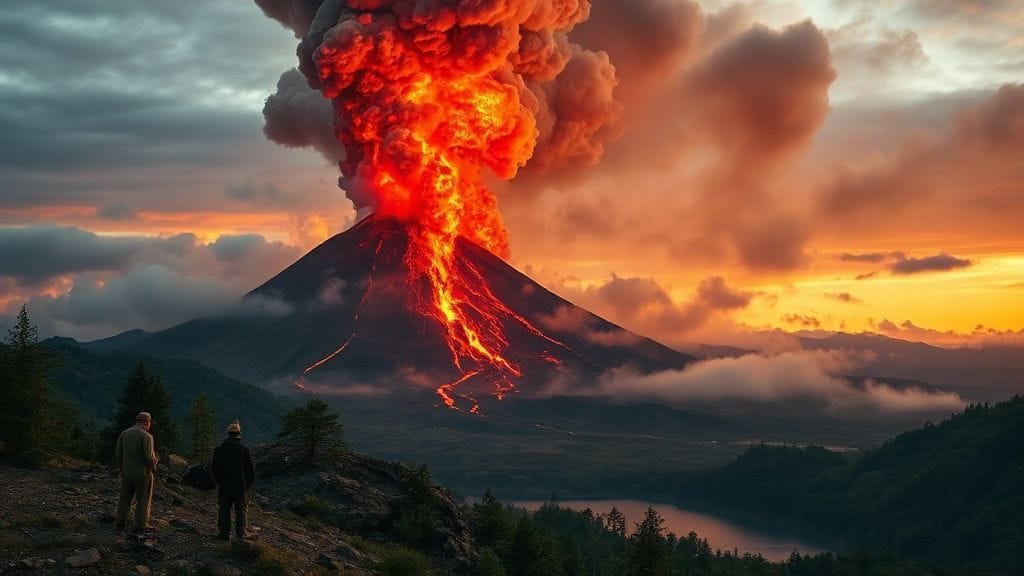
Shortly before midnight, a sudden and violent disturbance shattered the stillness. Accompanied by echoes that sounded like the roar of thunder multiplied and a strange glow on the horizon, Mount Tarawera erupted with unprecedented force. The earth trembled violently, buildings shook, and the air was pierced by a cacophony of explosions.
From fissures along the mountain’s north and south flanks, boiling mud, searing ash, and volcanic bombs blasted skyward. What began as a series of isolated vents quickly intensified into a curtain of fire, igniting nearby forests. Molten rock cascaded down the sides, scorching everything in its path.
Village alarms sounded—though for many, there was no time to flee. This eruption was unlike anything seen in decades, a cataclysm wrapping the landscape in smoke and fire.
The Roar and the Fire: Describing the Eruption’s Ferocity
Witnesses later described the skies burning with hues of vermilion and orange as pyroclastic material spewed into the air. The intensity was such that the sound was often compared to the rumbling of cannonfire, persistent and merciless.
Fire fountains, reaching heights of several hundred meters, lit the night with hellish grandeur. Volcanic bombs—huge fragments of molten rock—hurtled across the landscape, breaking the stillness with destructive power.
Ash fell like a thick, choking snow, coating fields, water, and homes, while the smell of sulphur and burnt trees carried on the relentless winds. This was an eruption not just of earth but of elemental chaos.
The Ash Cloud’s Shadow: Darkness in Broad Daylight
As ash enveloped the skies, daylight dimmed into a gloomy veil akin to dusk. The temperature dropped sharply, and a suffocating silence fell, broken only by distant roars and collapsing trees.
This “ashfall” was lethal — closing off breathing air, contaminating water supplies, and erasing visibility. For many, the sudden twilight was incomprehensible; the world had become alien and hostile.
Beyond the immediate vicinity, the ash cloud traveled hundreds of kilometers, blanketing towns far removed from Tarawera itself. Farmers reported failing crops, and transportation routes were disrupted for weeks.
The Floods of Fire and Mud: Pyroclastic Flows and Their Deadly March
One of the deadliest aspects of the eruption was the series of pyroclastic flows—a mixture of superheated gas, ash, and volcanic rock that hurtled down the slopes at terrifying speeds.
These glowing avalanches incinerated everything in their paths, obliterating forests and farmlands. The intense heat was enough to melt metal and char bones, making survival impossible in affected zones.
Eyewitnesses spoke of walls of flame racing across the land, swallowing villages whole. Pyroclastic flows reached Lake Rotomahana, triggering secondary effects like the collapse of the Pink and White Terraces, forever changing the lake’s landscape.
The Devastation of Te Wairoa: The ‘Buried Village’ Beneath Ash
Te Wairoa, a thriving Māori and Pākehā settlement near the base of Tarawera, bore the brunt of the destruction. This village, later called the “Buried Village,” was overwhelmed as the ground groaned and ash buried homes and gardens in minutes.
Fires consumed buildings, and desperation turned to despair. Many inhabitants struggled to escape the engulfing inferno, while others vanished beneath layers of volcanic debris.
Decades later, archaeological digs unearthed remnants of the village beneath meters of ash—an eerie snapshot frozen in time, matched only by those rare moments when the nightmare was revealed anew.
The Fateful Fate of the Pink and White Terraces: Lost Wonders or Misplaced?
The Pink and White Terraces, sometimes called the “eighth wonder of the world,” were natural silica formations that attracted visitors worldwide due to their iridescent beauty.
The eruption sent searing pyroclastic flows and mudslides into Lake Rotomahana, submerging the terraces beneath sediment and water. For over a century, their exact fate was debated among historians, scientists, and locals.
Were they destroyed entirely? Or simply displaced beneath the new lakebed terrain? Recent technological advances—echo sounding, sonar mapping—have suggested fragments survive offshore, preserving a glimmer of hope that these natural marvels are not lost forever.
Survivors’ Stories: Human Courage and Tragedy Amidst Chaos
Amid the devastation, stories of human endurance glimmer like fragile stars. A young Māori woman, Harata Te Aika, escaped clinging to a tree as pyroclastic flows swept past her home. European settlers banded together, risking their own lives to rescue neighbors trapped under rubble.
Yet, not all were spared. Approximately 120 lives were lost in the eruption, including men, women, and children. The tragedy ripped apart families and communities; others suffered long-term health effects from ash inhalation.
These personal tales, recorded by historians and descendants, humanize the vast forces of nature—proof that tragedy is never just statistics, but lived experience.
The Response and Rescue: How Communities Reacted and Rebuilt
In the eruption’s immediate aftermath, shock and grief spread, but so did resolve. Rescue parties combed ash-choked landscapes to find survivors. Aid poured in from nearby towns and the government, which recognized the need to provide food, shelter, and medical care.
Rebuilding efforts were slow and fraught with challenges. The burial of farmland under ash forced many to migrate. Infrastructure was ravaged, yet communities insisted on rebirth. Māori leaders negotiated alongside colonial authorities to preserve cultural sites and advocate for recovery support.
Today, memorials and museums commemorating Tarawera’s disaster stand as testaments to human resilience and remembrance.
Scientific Discoveries Triggered by the Eruption
The Tarawera eruption marked a turning point in volcanology. Scientists, both local and international, studied the event closely to understand vent fissure eruptions, pyroclastic flows, and geothermal phenomena.
Notably, the eruption helped document the hazards of fissure eruptions—long linear cracks in the earth that spew lava and ash, contrasting classic cone volcano models. It also highlighted the complex interaction between geothermal waters and volcanic materials, seen in the catastrophic collapse of the terraces.
These insights influenced global volcanic hazard mapping and disaster preparedness strategies in volcanic regions worldwide.
Tarawera’s Impact on Māori Communities: Cultural Loss and Memory
The eruption irrevocably altered sacred landscapes central to Māori identity and spirituality. Loss of the Pink and White Terraces was not just aesthetic—it was a rupture in the whakapapa (genealogy) and the physical manifestation of ancestral narratives.
Many Māori oral histories recount the eruption as a punishment or warning from the gods, underscoring the sacred responsibility to respect and live in harmony with nature.
Efforts to preserve these cultural memories continue in education, art, and ceremonies, binding past and present in a shared narrative of loss, resilience, and renewal.
The Aftermath: Ecological and Landscape Transformation
Tarawera’s eruption reshaped the environment dramatically. Forests were decimated by fire and ash; soil chemistry altered profoundly, halting agricultural productivity. Yet, nature’s resilience shines through.
Over decades, new vegetation colonized the ash fields. Lake Rotomahana expanded and deepened, creating new ecosystems. Species adapted or migrated, illustrating volcanic landscapes as catalysts for ecological succession and biodiversity shifts.
Researchers today see Tarawera’s aftermath as a living laboratory, where nature’s cycles of destruction and creation unfold visibly.
Tarawera in Global Context: A Turning Point in Volcanology
While local in magnitude, the 1886 eruption of Tarawera held international significance. It prompted volcanic monitoring advancements and inspired comparative studies with famous eruptions like Krakatoa (1883) and later Mount St. Helens (1980).
The fissure eruption style challenged previous dominant paradigms focused on central vent volcanoes, broadening scientific understanding of volcanic processes.
Tarawera’s story also influenced early disaster management policies, showing the critical role of timely warnings and community preparedness.
Remembering Tarawera: How History Keeps the Volcano’s Tale Alive
More than a century later, Tarawera remains etched in New Zealand’s collective memory. Museums such as the Buried Village Visitor Centre preserve artifacts and survivor testimonies, bridging history and living memory.
The cultural landscape is alive with commemorations, Māori narratives, and artistic expressions reflecting on loss, renewal, and respect for nature’s power.
Tourists and scholars alike visit the site, drawn by both its haunting beauty and sobering lessons. Tarawera tells a universal tale of vulnerability amid the splendor of the natural world.
Lessons from Tarawera: Understanding Volcanic Hazards Today
The eruption’s lessons resonate with today’s volcanic risk management. Early warning systems, community education, and hazard mapping draw directly from case studies like Tarawera.
It starkly reminds us that natural wonders come with inherent risks. Human settlements in volcanic zones require respect for the land’s rhythm and vigilant preparation.
Tarawera also symbolizes hope—scientific progress and community strength can mitigate disaster impacts without subduing our bond with nature.
The 20th Century and Beyond: Tarawera’s Legacy in New Zealand’s Identity
As New Zealand modernized, the legacy of 1886 intertwined with national identity and scientific achievement. Tarawera inspired geologists, volcanologists, and historians, becoming a pillar of environmental and cultural education.
The eruption’s story fosters dialogue between Māori and Pākehā heritage, highlighting the mosaic of histories shaping the nation.
Ultimately, Tarawera’s fiery past offers both a grave warning and a testament to the enduring, complex relationship between people and the earth.
Conclusion
The eruption of Mount Tarawera on that fateful night in June 1886 remains a poignant chapter in New Zealand’s story—a moment when the earth’s ancient forces roared with stunning, terrible power. Yet beyond the blackened ash and shattered villages, it is also a tale of human resilience, cultural endurance, and scientific discovery.
To stand near Tarawera today is to gaze upon both a scar and a canvas: a landscape forever transformed and a memory etched deep in hearts and histories. The eruption teaches us humility before nature’s might and inspires reverence for the delicate balance sustaining life amid the world’s most beautiful and dangerous places.
Tarawera is not merely a disaster frozen in time—but a living, breathing legacy urging vigilance, respect, and hope.
FAQs
Q1: What caused the eruption of Mount Tarawera in 1886?
The eruption was caused by magma forcing its way upward through fissures along Tarawera’s slopes, driven by tectonic activity in New Zealand’s active Taupō volcanic zone. Magma pressure overwhelmed the earth’s crust, resulting in explosive fissure eruptions.
Q2: How significant was the human toll from the eruption?
Approximately 120 people lost their lives, including Māori and European settlers. Many others suffered injuries, loss of homes, and long-term health problems from ash inhalation.
Q3: What happened to the famous Pink and White Terraces?
The terraces, natural silica formations, were buried beneath volcanic debris and the expanded Lake Rotomahana. For decades, their destruction was assumed until modern underwater mapping revealed parts may still exist submerged.
Q4: How did local Māori culture interpret the eruption?
Many Māori saw the eruption as a spiritual event tied to ancestral warnings or divine retribution. It deeply affected cultural narratives, identity, and the connection to the land.
Q5: How did the eruption influence volcanic science?
Tarawera helped scientists understand fissure eruptions and pyroclastic flows, expanding knowledge beyond classic cone volcano eruptions. It also spurred early hazard management approaches.
Q6: What ecological changes resulted from the eruption?
The eruption destroyed forests, changed soil chemistry, and reshaped Lake Rotomahana. Over time, new ecosystems emerged, illustrating volcanic renewal cycles.
Q7: How is Tarawera remembered and commemorated today?
Through museums, cultural ceremonies, educational programs, and historical research, the eruption’s memory remains vibrant in New Zealand’s cultural landscape.
Q8: What lessons does Tarawera offer for modern disaster preparedness?
It underscores the importance of geological monitoring, community education, and respecting volcanic hazards to reduce risks in vulnerable regions.

