Table of Contents
- A Mountain Awakens: The First Roar of Ruapehu
- The Geography and Spiritual Significance of Ruapehu
- Early Warnings: Signs Beneath the Surface
- The Unfolding Crisis: Timeline of the 1995–1996 Eruption
- Scientists on the Edge: Monitoring a Volcano in Real Time
- The Ash and Steam: Nature’s Fury Above the Tongariro National Park
- Communities in the Shadow of the Fire Mountain
- Aviation Nightmare: The Impact on Flights and International Travel
- The Role of the Ruapehu Eruption in Volcanology Advancements
- Emergency Responses and Government Coordination
- Personal Stories: Eyewitness Accounts and Survival
- Economic and Environmental Toll on the North Island
- Cultural Narratives: Ruapehu in Maori Tradition and Modern Myth
- Lessons Learned: Disaster Preparedness and Volcanic Risk Management
- The Quiet Aftermath: Rebuilding and Resilience
- Ruapehu’s Ongoing Vigilance: The Nature of Dormant Giants
- Legacy of Ash: How the 1995–1996 Eruption Changed New Zealand
- Comparative Perspectives: Ruapehu and Other Major Eruptions
- The Psychological Impact on Local Populations
- Ruapehu Today: Tourism, Science, and Spiritual Reverence
- Conclusion: Volcanoes as Reminders of Nature’s Power and Human Fragility
- FAQs: Understanding the Ruapehu Eruption
- External Resource
- Internal Link
1. A Mountain Awakens: The First Roar of Ruapehu
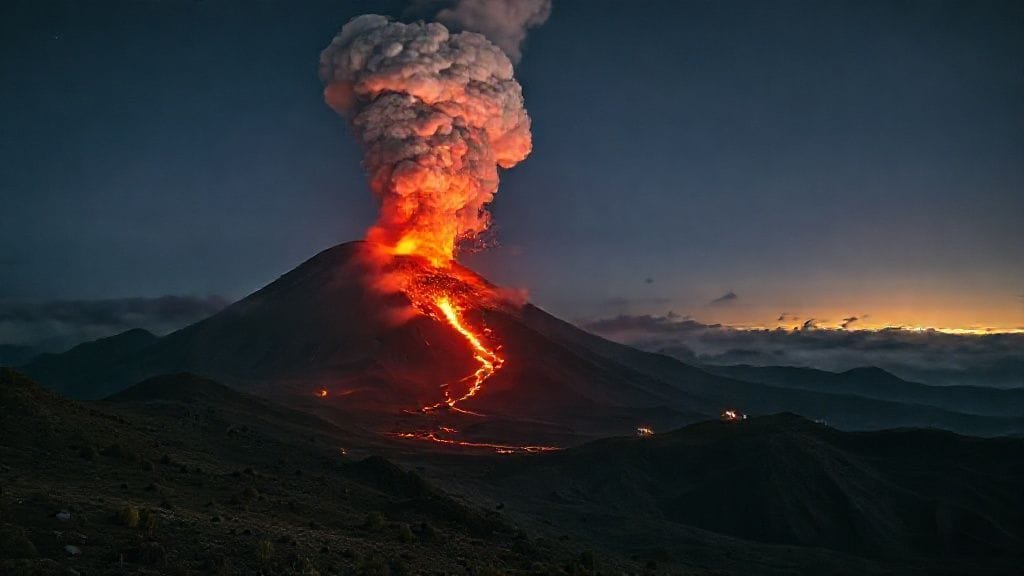
On a cold winter night in late September 1995, a deep rumble fractured the silence of New Zealand’s North Island. Mount Ruapehu, the country’s largest active volcano and a sacred titan resting within the heart of Tongariro National Park, began to stir after years of apparent dormancy. The night sky shimmered as ash, steam, and roiling clouds billowed above its crater lake, casting an eerie orange glow against the horizon. What began as subtle seismic tremors soon escalated into an eruption that would dominate the skies and stories of New Zealand for months.
For many living in the shadow of this giant, the event was more than mere natural spectacle – it was an existential reminder of forces far older and more unpredictable than civilization itself. The Ruapehu eruption of 1995–1996 would ripple beyond geology into realms of culture, economy, aviation, and science. But what led to this violent awakening? How did a volcano revered as a deity’s abode reassert its formidable presence? And how did humanity respond to a challenge woven from fire, ash, and water?
2. The Geography and Spiritual Significance of Ruapehu
At 2,797 meters, Ruapehu towers over the central North Island, crowned by a volcanic crater lake that serves as a natural thermometer of subterranean heat and pressure. The mountain is not simply a geographical landmark – it is a living spiritual icon for the Māori people, embedded within their origin stories and a domain of divine guardianship. The volcano belongs to the Volcanic Plateau, a volcanic arc formed by the subduction of the Pacific Plate beneath the Australian Plate, leading to a series of fiery mountains and geothermal wonders.
Ruapehu’s recent geological history includes repeated eruptions and lahar flows (volcanic mudflows), some of which have devastated nearby communities. But culturally, it is a place of reverence, weaving faith, respect, and caution into the relationship between people and the land. This dual identity meant the eruption would ripple through both science and spirituality.
3. Early Warnings: Signs Beneath the Surface
Before the first visible eruption in September 1995, the mountain had been showing signs of increasing restlessness. Seismic activity had begun a slow crescendo months prior. Gas emissions around the crater lake intensified; steam vents appeared more vigorous. By August, scientists detected fluctuations in the temperature and chemistry of the acidic crater lake, signaling magma movements beneath.
Unlike sudden, explosive eruptions, Ruapehu’s 1995 awakening was gradual, offering a valuable window of observation. This allowed not only scientists but also civil authorities to prepare for what was coming with unprecedented collaboration and care.
4. The Unfolding Crisis: Timeline of the 1995–1996 Eruption
September 25, 1995, marked the first major explosion, with a phreatic blast — steam-driven from the interaction of magma and water — sending ash plumes several kilometers into the atmosphere. Over the next months, intermittent eruptions maintained a dangerous simmer. By late November, tremors escalated to more forceful explosions, spewing hot rocks, ash, steam, and lahar flows that surged down river valleys.
January 1996 witnessed one of the largest explosions, triggering evacuations and air traffic disruptions. Throughout this period, the volcanic crater lake’s water level and chemistry fluctuated dramatically, making hazard predictions complex and urgent.
5. Scientists on the Edge: Monitoring a Volcano in Real Time
The New Zealand Institute of Geological and Nuclear Sciences (GNS Science) operated a network of seismographs, gas sensors, and thermal cameras round the clock to monitor Ruapehu. Their work was a race against time, interpreting data that signaled both danger and hope.
Peter Scott, one of the lead volcanologists, recalled, “It was like trying to read smoke signals from beneath the earth. Each tremor, each gas emission was a message — if only we could decode it fast enough.” Their insights guided evacuation plans and airport closures, saving thousands from potential disaster.
6. The Ash and Steam: Nature’s Fury Above the Tongariro National Park
The volcanic plume reached heights of up to 15 kilometers, darkening skies as far as Auckland and beyond. Ash covered villages, ski fields, and farmland alike. The air tasted bitter and thick with grit, rivers ran muddy with volcanic sediment, and vegetation was scorched or smothered under fresh layers of ash.
Yet, amid this destruction, the landscape evolved, creating new fertile grounds and reshaping the terrain — a testament to the cyclical dance of destruction and renewal inherent in volcanic eruptions.
7. Communities in the Shadow of the Fire Mountain
Local communities such as National Park Village and Taumarunui felt the eruption deeply. Daily life became a blend of uncertainty and resilience. Schools closed, roads were rerouted, and farmers grappled with poisoned pastures.
Elder Hamuera Tikao of the local Māori iwi shared, “The mountain speaks in ways we must listen to. We respect her, but her power commands our humility.” Communities mobilized with their own preparations alongside official emergency efforts, blending traditional knowledge with modern science.
8. Aviation Nightmare: The Impact on Flights and International Travel
One of the most dramatic global consequences of the eruption was its impact on aviation. Ash clouds are notorious hazards for aircraft engines, and Ruapehu’s plumes triggered widespread flight cancellations across New Zealand and Pacific air routes.
The eruption coincided with a period of expanding international flights making the disruption costly. Airports like Auckland and Wellington scrambled to close runways, prompting a reevaluation of volcanic ash’s threat to aviation safety worldwide.
9. The Role of the Ruapehu Eruption in Volcanology Advancements
The 1995–1996 eruption provided volcanologists with a rich case study for understanding phreatic eruptions and crater lake dynamics. Researchers developed new models for predicting eruptions involving water-magma interactions, a field crucial for similar volcanoes worldwide.
Advanced remote sensing techniques and real-time monitoring pioneered during Ruapehu’s crisis have since evolved into standard procedures in volcanic risk management.
10. Emergency Responses and Government Coordination
New Zealand’s Civil Defence and local governments coordinated evacuation orders, road closures, and public warnings. Helicopters were deployed for reconnaissance and emergency transport.
Interagency collaboration was praised internationally, noted for its integration of indigenous leadership and community networks. Still, the crisis exposed challenges in communication and risk perception that would inform future disaster planning.
11. Personal Stories: Eyewitness Accounts and Survival
Maria Thompson, a ski instructor nearby, described the experience as “a surreal nightmare — one moment ski tracks beneath blue skies, the next, ash swallowing the world and an apocalyptic gloom that settled like a shroud.” Such testimonies remind us that beneath the scientific and strategic narratives lie human lives, caught in awe and fear.
Rescue workers recounted the challenges of sudden lahar flows, while children wrestled with disruptions but gained newfound respect for their elemental surroundings.
12. Economic and Environmental Toll on the North Island
Agriculture, tourism, and infrastructure all took hits. Farmlands were blanketed in ash, affecting soil quality and livestock. Ski resorts closed during the peak winter season, losing critical revenue. Roads damaged by lahar flows needed immediate repair.
But nature’s temperament also triggered longer-term ecological benefits. New volcanic soils enriched the landscape, offering promise for regeneration decades ahead.
13. Cultural Narratives: Ruapehu in Maori Tradition and Modern Myth
For the Māori, Ruapehu is a living ancestor, its eruptions woven into oral histories as manifestations of divine messages or warnings. The 1995–1996 eruption reignited conversations about the intersection of scientific and indigenous knowledge systems.
Elders emphasized the importance of maintaining manaakitanga — hospitality and respect toward the mountain — underscoring a philosophy of coexistence rather than conquest.
14. Lessons Learned: Disaster Preparedness and Volcanic Risk Management
The eruption underscored the critical need for early warning systems, community education, and interagency coordination. New protocols for ashfall management, emergency shelters, and continuous monitoring were implemented nationwide.
Globally, Ruapehu became a benchmark for managing volcanic threats in populated regions, influencing policies in similar volcanic zones.
15. The Quiet Aftermath: Rebuilding and Resilience
As ash settled and the volcano quieted by mid-1996, affected communities faced the arduous task of recovery. Infrastructure rebuilds, agricultural remediation, and mental health support came to the forefront.
Communities, imbued with a new appreciation of their vulnerability and strength, invested in resilience — bolstered not just by emergency funds but by shared narratives of survival.
16. Ruapehu’s Ongoing Vigilance: The Nature of Dormant Giants
Though the eruption subsided, Ruapehu remains active, prone to intermittent eruptions and lahar events. Its crater lake continues to be monitored for signs of heating or chemical changes, a surprisingly dynamic microcosm of volcanic activity.
The mountain reminds New Zealanders that nature’s forces are never truly at rest — a constant hum beneath the veneer of everyday calm.
17. Legacy of Ash: How the 1995–1996 Eruption Changed New Zealand
Politically and socially, the eruption fostered a stronger culture of environmental respect and disaster preparedness. Educational initiatives integrated volcanic awareness, and indigenous voices gained prominence in natural resource management.
The eruption catalyzed scientific collaboration and national dialogues about sustainable coexistence with nature’s caprices.
18. Comparative Perspectives: Ruapehu and Other Major Eruptions
When compared to eruptions like Mt. St. Helens (1980) or Mt. Pinatubo (1991), Ruapehu’s 1995 event was smaller in explosive power but notable for its prolonged phreatic activity and lahar hazards.
Its unique crater lake dynamics provided valuable insight into a specific eruption style less understood until then.
19. The Psychological Impact on Local Populations
Beyond physical damage, the eruption left emotional scars. Anxiety about future activity, the trauma of evacuation, and disruption of daily routines affected mental well-being.
Community support networks, Māori cultural resilience, and government mental health initiatives played key roles in healing.
20. Ruapehu Today: Tourism, Science, and Spiritual Reverence
Today Ruapehu is both a major ski destination and a living laboratory. Scientists track the mountain with cutting-edge instruments, while Māori communities continue their guardianship traditions.
Visitors come not merely to conquer peaks or ski slopes but to engage with a landscape layered in stories — of fire, faith, survival, and respect.
Conclusion
The Ruapehu eruption of 1995–1996 was a vivid testament to the inextricable bond between humanity and the natural world. It underscored the precarious power of a dormant volcano that can awaken with both fury and warning. Amid ash and steam, the people of New Zealand were reminded of their fragility and resilience, blending modern science with ancient wisdom to navigate a fiery trial.
Mount Ruapehu did not merely erupt in geological terms; it erupted within the cultural, social, and scientific consciousness of a nation. Its legacy is a call to humility and preparedness — and a reminder that beneath the earth’s seemingly tranquil surface lies an untamable force, speaking in smoke, rock, and flame. In listening to that voice, we learn not only to survive but to honor the delicate dialogue between human progress and natural power.
FAQs
Q1: What caused the Ruapehu eruption of 1995–1996?
A1: The eruption was triggered by the interaction of rising magma with the volcano’s crater lake water, leading to steam-driven explosions (phreatic eruptions). Tectonic activity beneath the North Island contributed to magma movement.
Q2: How long did the Ruapehu eruption last?
A2: The eruption had intermittent activity from September 1995 until mid-1996, characterized by steam explosions, ash emissions, and lahars.
Q3: Were there any fatalities during the eruption?
A3: Fortunately, no direct fatalities were reported. Effective monitoring and evacuations helped prevent loss of life.
Q4: What were the main impacts on aviation?
A4: Ash clouds grounded flights across New Zealand and affected international routes, posing risks to aircraft engines and requiring multiple airport closures.
Q5: How did the Māori community interpret the eruption?
A5: The eruption was viewed within cultural frameworks as the mountain expressing power and warning, reinforcing traditional spiritual respect and connection.
Q6: What scientific advancements resulted from this eruption?
A6: Improved monitoring methods for crater lake volcanoes and phreatic eruption prediction emerged, influencing global volcanic risk assessment.
Q7: How has Ruapehu’s eruption influenced disaster preparedness in New Zealand?
A7: It led to enhanced early warning systems, better interagency coordination, and integration of indigenous knowledge in emergency response strategies.
Q8: Is Ruapehu still active today?
A8: Yes, Ruapehu remains one of New Zealand’s most active volcanoes, monitored continuously for signs of unrest.

