Table of Contents
- The Awakening of Mount Ruapehu: A Prelude
- Geology of a Sleeping Giant: Understanding Ruapehu
- The Calm Before the Storm: Early Signs and Warnings
- The First Tremors: March 2007’s Initial Eruptive Activity
- The Explosive Arrival: May 2007’s Powerful Eruption
- Volcano on Alert: Government and Scientific Responses
- Communities on Edge: The Human Face of Ruapehu’s Rage
- Environmental Impact: Ash, Lahars, and River Systems in Turmoil
- Infrastructure Challenged: Roads, Railways, and Aviation Disruptions
- The Science Behind the Fury: Monitoring and Predicting Volcanic Behaviour
- The Slow Unfolding: Persistent Activity Through 2008
- The 2009 Resurgence: Renewed Eruptions and Unexpected Surges
- Cultural Resonance: Ruapehu in Māori Tradition and Contemporary Identity
- The Economic Toll: Tourism, Agriculture, and Regional Development
- Lessons Learned: Disaster Preparedness and Risk Management
- The Global Context: Ruapehu in the Spectrum of Volcanic Eruptions
- Stories from the Field: Eyewitness Accounts and Survivor Testimonies
- The Role of Media: Reporting the Chaos and Calming the Public
- Scientific Milestones: Advancements Stemming from Ruapehu’s Activity
- The Volcano’s Quietude: Post-2009 Recovery and Current Status
- Ruapehu’s Legacy: Long-term Environmental and Societal Effects
- The Spirit of Resilience: Communities Rebuilt and Bonds Strengthened
The Awakening of Mount Ruapehu: A Prelude
On the cold morning of March 2007, the serene snow-capped peak of Mount Ruapehu, New Zealand’s iconic North Island volcano, began to grumble, announcing that beneath its majestic summit, nature’s restless power was stirring once again. At first, it was subtle — faint tremors and minor steam emissions that escaped the attention of many. But to volcanologists watching intently, this was the unmistakable signature of a sleeping giant awaking from a deep, restless slumber. The ominous whispers beneath the earth soon crescendoed into violent roars, reminding New Zealand and the world that even the most tranquil landscapes conceal unpredictable, sometimes catastrophic power.
This eruption, stretching from 2007 to 2009, was more than a geological event; it was a vivid drama of nature asserting itself and a test of human resilience, scientific insight, and cultural respect. Ruapehu’s fury reshaped valleys, challenged communities, disrupted economies, and deepened the understanding of volcanic processes in New Zealand’s fiery string of islands.
Geology of a Sleeping Giant: Understanding Ruapehu
Mount Ruapehu stands as the tallest active volcano in New Zealand, towering at 2,797 meters with a glacier-laced summit crater. Its volcanic activity is intrinsically tied to the tectonic dance of the Pacific and Australian plates, driving magma upwards through the earth’s crust. The crater itself houses a lake, a delicate and volatile reservoir heated from below by magmatic activity. This combination makes Ruapehu a complex, dynamic system capable of producing sudden eruptions ranging from minor steam explosions to massive lahars—a volatile mix of ash, rock, and mud.
Historically, Ruapehu has been both creator and destroyer. Notable past eruptions, such as those in 1945 and 1995-1996, demonstrated its capacity for sudden destructive power, reshaping landscapes and influencing local climate and ecosystems. Beneath its stunning beauty lies a restless heart, sometimes silent for decades, then roaring with the force of nature’s untamed fury.
The Calm Before the Storm: Early Signs and Warnings
As winter turned to spring in early 2007, subtle indicators began to manifest. Scientists detected increased seismic activity beneath the volcano, and the crater lake’s temperature rose measurably. These signs ignited concerns at the GeoNet Volcano Monitoring Centre and GNS Science, New Zealand’s leading earth science institutions, who knew well the historical precedent of Ruapehu's volatile temperament.
Authorities issued warnings, and monitoring stations around the mountain were reinforced to provide real-time data. These initial tremors foreshadowed the unfolding drama. Yet, despite growing unease among experts, many locals remained largely unaware of the imminent danger, preparing instead for the usual seasonal changes and the influx of tourists drawn to the winter slopes.
The First Tremors: March 2007’s Initial Eruptive Activity
Mid-March marked the moment when theory became reality. On March 18th, low-level eruptive activity began with steam-driven explosions ejecting ash and rock fragments into the thin alpine air. These phreatic eruptions—a result of magma heating the crater lake water—signaled the volatile interaction of fire and water that characterizes many Ruapehu events.
Though relatively minor in scale, the eruptions sent plumes hundreds of meters skyward and generated lahars that coursed down the mountain’s slopes. Sparks of alarm flashed through the local authorities and scientific community. Was this a tentative stir or the prelude to a more formidable eruption? The answer would come fast and furious.
The Explosive Arrival: May 2007’s Powerful Eruption
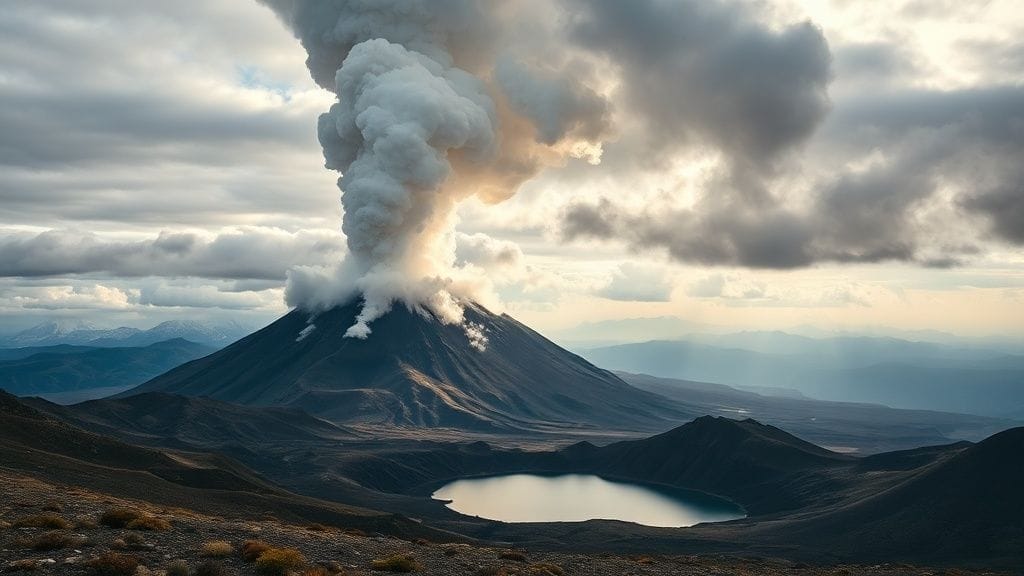
By May 2007, the dormant giant awoke fully. On May 5th, Ruapehu erupted with intensity far surpassing March’s modest tumbles. A booming explosion shattered the mountain’s silence, forcing ash clouds up to three kilometers high, casting a hazy veil over the surrounding landscape.
The eruption’s force sent rivers of hot mud and rock—lahars—downstream, threatening infrastructure, disrupting transport routes, and challenging emergency response teams. The toxic ashfall blanketed nearby townships, airspace was restricted, and the mountain’s ski resorts shuttered. The volcanic breath of Ruapehu had turned from a warning whistle into a violent roar.
Volcano on Alert: Government and Scientific Responses
New Zealand’s authorities wasted no time in ramping up preparedness. The National Warning System went on high alert, disaster management protocols kicked into gear, and evacuation routes were mapped with military precision. Scientists from GNS Science and GeoNet elevated their monitoring efforts, deploying additional seismic stations, thermal cameras, and gas analyzers to track the volcano’s mood swings in real-time.
This coordinated response was critical in minimizing casualties. Yet, the baptism by fire tested the resilience of local governments and emergency services, illuminating gaps in readiness but also strengthening future disaster planning frameworks.
Communities on Edge: The Human Face of Ruapehu’s Rage
Beyond the scientific and governmental lens lay the personal stories of those living in Ruapehu’s shadow. Small communities, such as Ohakune and National Park Village, faced the unpredictability with a mixture of fear, defiance, and pragmatic coping.
Farmers worried about ash contaminating pastures, while tourism operators braced for cancellations and economic downturns. Families grappled with evacuations, memories of past eruptions rekindled fears, yet community solidarity shone through. Local iwi, the Māori tribes whose identity is intertwined with the mountain, performed ceremonies to honor Ruapehu’s power, bridging cultural reverence with urgent safety concerns.
Environmental Impact: Ash, Lahars, and River Systems in Turmoil
The eruption's environmental footprint was vast and multifaceted. Ashfall, rich in volcanic glass and minerals, blanketed thousands of hectares, temporarily altering soil chemistry but also posing respiratory risks to humans and animals. Rivers and streams fed by the mountain swelled with sediment-charged lahars, redirecting courses and endangering aquatic habitats.
The iconic Whanganui River, initially threatened by these flows, was closely monitored. Ecologists observed shifts in water quality and biodiversity, as the mountain’s fury rippled through the interconnected ecosystems, reminding the world how volcanic activity can instantaneously reshape natural landscapes.
Infrastructure Challenged: Roads, Railways, and Aviation Disruptions
Ruapehu’s eruptions rippled beyond nature into the arteries of regional connectivity. Volcanic ash clouds grounded flights and forced temporary closure of airspace above the North Island’s central plateau. The heavy ash and mudflows clogged roadways, most notably the Desert Road and access routes to ski fields, complicating rescues and deliveries.
The strategic North Island Main Trunk Railway, vital for freight and passenger services, faced service interruptions as concerns mounted over track safety and ash accumulation. These disruptions underscored how volcanic activity, while localized, can cascade into national infrastructure concerns.
The Science Behind the Fury: Monitoring and Predicting Volcanic Behaviour
The 2007-09 eruptions propelled New Zealand’s volcano monitoring technology into a new era. Utilizing a combination of seismographs, ground deformation sensors, gas emission analyzers, thermal imaging, and airborne ash tracking, scientists pieced together a dynamic portrait of Ruapehu’s restlessness.
Incredible efforts to project eruption timing and scale relied on decades of volcanology, coupled with advanced computing models. Yet, the mountain’s temperament reminded all how inherently unpredictable such systems can be. A delicate balance of art and science was at play, highlighting the challenges of foreseeing nature’s exact timetable.
The Slow Unfolding: Persistent Activity Through 2008
Though the explosive peak passed by late 2007, Ruapehu did not settle immediately. Throughout 2008, intermittent eruptions, small ash emissions, and seismic tremors persisted. This sustained period tested vigilance, as authorities balanced caution against community fatigue.
The volcano’s simmering activity meant continued monitoring, public education on hazard zones, and adaptive response strategies. It was a prolonged vigil, proving that volcanic eruptions are often not singular events but extended episodes demanding endurance.
The 2009 Resurgence: Renewed Eruptions and Unexpected Surges
Just as many believed Ruapehu was calming, 2009 brought new surprises. Early in the year, a fresh series of ash emissions signaled that magma was once again at work beneath the surface. May saw flashes of renewed explosive activity, reminding inhabitants and scientists alike that the mountain’s story was still being written.
These surprises forced a reassessment of hazard models and underscored the Latin adage that “nature is never finished.” It was a humbling lesson in preparedness and respect for geological processes.
Cultural Resonance: Ruapehu in Māori Tradition and Contemporary Identity
Beyond its physical form, Ruapehu holds profound spiritual significance for the Māori people. Known as Te Heuheu, the mountain is revered as an ancestor and guardian, its eruptions woven into legends and warnings from centuries past.
During the 2007-09 eruptions, Māori communities engaged deeply with the volcano’s activity, performing rituals to honor and placate the mountain spirit. This intersection of ancient tradition and modern science enriched the societal response, reminding all that respect for nature’s power is both a cultural heritage and pragmatic necessity.
The Economic Toll: Tourism, Agriculture, and Regional Development
The eruption’s disruption rippled through North Island’s economy. Ski resorts closed during peak seasons, causing significant financial losses. Farmers lost pasturelands covered in ash, affecting livestock and crop yields. Road and railway closures impeded commerce.
Yet, paradoxically, the dramatic volcanic activity also sparked tourist curiosity, attracting geology enthusiasts and photographers eager to witness raw geological power. This dual-edged impact called for innovative approaches to regional economic resilience.
Lessons Learned: Disaster Preparedness and Risk Management
The Ruapehu eruptions became a case study in volcanological and emergency management worldwide. Lessons learned included the importance of continuous real-time monitoring, public education campaigns, robust communication networks, and swift governmental coordination.
These insights translated into updated hazard maps, refined evacuation plans, and community drills that continue to define New Zealand’s approach to natural disasters.
The Global Context: Ruapehu in the Spectrum of Volcanic Eruptions
Though moderate compared to giants like Mount St. Helens or Eyjafjallajökull, Ruapehu’s 2007-09 eruptions gained visibility for their complexity and duration. They contributed valuable data to global volcanic research, particularly in understanding phreatic eruptions and lahar generation.
Its case highlighted how active stratovolcanoes in populated areas pose recurring but manageable threats when combined with modern science and governance.
Stories from the Field: Eyewitness Accounts and Survivor Testimonies
Amid scientific reports, the individual voices of those living through the eruptions bring the story alive. Ski lodge operators recalled darkened skies filled with ash and the eerie silence that blanketed the mountains post-eruption. Families spoke of late-night evacuations and the anxiety of uncertainty.
One farmer’s words echoed common sentiment: “The mountain reminded us who’s boss, but it also made us stronger, more united.” These personal narratives underscore the resilience and human spirit behind the statistics.
The Role of Media: Reporting the Chaos and Calming the Public
Media coverage played a crucial role in shaping public perception. Local and national outlets disseminated real-time alerts, expert interviews, and safety guidelines, but also faced the challenge of avoiding sensationalism that could incite panic.
The balance was delicate, and the media's transparent reporting was essential in maintaining calm and ensuring community cooperation.
Scientific Milestones: Advancements Stemming from Ruapehu’s Activity
The eruptions spurred innovations in remote sensing, early warning systems, and the integration of indigenous knowledge with scientific methodology. Collaborative projects expanded international volcanic monitoring networks, recognizing Ruapehu as a benchmark in volcanic hazard science.
These advances continue to benefit regions vulnerable to similar threats worldwide.
The Volcano’s Quietude: Post-2009 Recovery and Current Status
After the final surge in 2009, Ruapehu entered a phase of relative calm. Seismic activity decreased, the crater lake stabilized, and ash emissions ceased. Today, the mountain remains under vigilant watch, a peaceful sentinel that still commands profound respect.
Scientists caution that in volcanology, quiet is never permanent, but for now, the giant slumbers once again.
Ruapehu’s Legacy: Long-term Environmental and Societal Effects
The two-year saga left enduring marks on landscapes, ecosystems, economies, and communities. Recovery efforts shaped land management policies and fostered sustainable tourism models that incorporate volcanic risks.
More broadly, Ruapehu’s eruptions reinforced the balance between human ambition and nature’s unpredictability.
The Spirit of Resilience: Communities Rebuilt and Bonds Strengthened
Perhaps the most compelling legacy is the renewed sense of community spirit fostered amid adversity. Collaboration between scientists, local authorities, Māori iwi, and residents forged stronger bonds, preparing the region for future challenges.
In the end, the Ruapehu eruption story is not only one of destruction but of hope, adaptation, and enduring respect for the mighty forces beneath the earth’s surface.
Conclusion
Mount Ruapehu’s 2007-09 eruption was a powerful testament to the latent energy sprawling beneath the earth’s crust—an elemental force that reminds humanity of its place within nature's grand design. Beyond the ash clouds and churning lahars, the event illuminated the intricate dance between geological unpredictability and human resilience.
Communities confronted disruption and danger with courage and solidarity; scientists pushed the boundaries of understanding; cultures intertwined respect and tradition with modern response strategies. The mountain’s roar echoed an ancient warning and a timeless lesson: nature’s grandeur commands awe and humility.
This eruption is more than a chapter in volcanic history; it is a vivid narrative of coexistence, a tale that teaches us how to live with the unpredictable, how to prepare without panic, and how to nurture hope amid upheaval. Ruapehu remains not just a mountain, but a living symbol of the earth’s restless heartbeat—and humanity’s enduring spirit in the face of nature’s great power.
FAQs
Q1: What geological factors contribute to Mount Ruapehu’s volcanic activity?
A1: Ruapehu’s activity stems from its position along the Pacific Ring of Fire, where the Pacific Plate subducts beneath the Australian Plate. This tectonic movement generates magma that feeds the volcano, with the crater lake acting as a volatile interface fostering explosive interactions.
Q2: How were residents and visitors alerted to the 2007-09 eruptions?
A2: The GeoNet monitoring system provided real-time alerts based on seismic activity, gas emissions, and thermal changes. Government agencies coordinated warnings through media, signage, and evacuation procedures to ensure public safety.
Q3: What environmental effects did the eruption have on local ecosystems?
A3: Ashfall altered soil chemistry temporarily, lahars disrupted waterways, and habitats faced stress from sediment loads and water contamination. However, ecosystems are resilient and began recovering in the years following the event.
Q4: In what ways did Māori cultural beliefs influence the response to the eruptions?
A4: Māori iwi performed traditional rituals acknowledging the mountain’s spiritual force, promoting a cultural framework of respect and coexistence that complemented scientific and governmental safety measures.
Q5: What were the main economic impacts of the eruption in tourism and agriculture?
A5: Ski resorts closed due to safety concerns and ashfall, causing revenue losses, while ash-contaminated pastures affected livestock health and farming productivity, prompting economic strain in affected communities.
Q6: How did the eruption enhance scientific knowledge on volcano monitoring?
A6: The prolonged activity led to improvements in multi-parameter monitoring, predictive modeling, and the integration of indigenous knowledge, advancing global understanding of phreatic eruptions and lahar hazards.
Q7: How does Ruapehu’s 2007-09 eruption compare with other volcanic events globally?
A7: While not as catastrophic as some large eruptions, Ruapehu’s persistent activity provided valuable insights into volcanic behavior in populated areas and how to manage medium-scale volcanic crises.
Q8: What is the current status of Mount Ruapehu?
A8: Post-2009, Ruapehu has returned to a state of relative quiet, though continuous monitoring remains in place as the volcano retains the potential for future eruptions.

