Table of Contents
- A Sudden Awakening: The Rangitoto Eruption in the Heart of the Auckland Volcanic Field
- The Land Before Fire: Auckland and Its Volcanic Roots
- The People of Tāmaki Makaurau: Māori Life before Rangitoto’s Birth
- Geological Whispers: The Auckland Volcanic Field’s Dormant Potential
- The Fiery Genesis: Unraveling the Timeline of the 1400s Eruption
- Rangitoto Emerges: From Ocean Floor to Volcanic Giant
- The Landscape Transformed: How Fire Reshaped a Region
- Māori Oral Traditions: Echoes of Fire and Change
- The Immediate Impact: Environment, People, and Settlements
- Rangitoto’s Legacy: How a Volcano Became a Cultural Icon
- Scientific Revelations: Modern Understanding of the Eruption
- Rangitoto in the Wider Pacific Context: Volcanoes and Human History
- The Hidden Threat: Ongoing Activity in the Auckland Volcanic Field
- Preservation and Tourism: Rangitoto Today
- Rangitoto’s Story in New Zealand’s National Identity
- Lessons from the Past: Volcanism and Human Resilience
- Rangitoto’s Symbolism in Art and Literature
- The Future of Auckland’s Volcanic Landscape
- Conclusion: Fire and Renewal in the Shadow of Rangitoto
- FAQs
- External Resource
- Internal Link
1. A Sudden Awakening: The Rangitoto Eruption in the Heart of the Auckland Volcanic Field
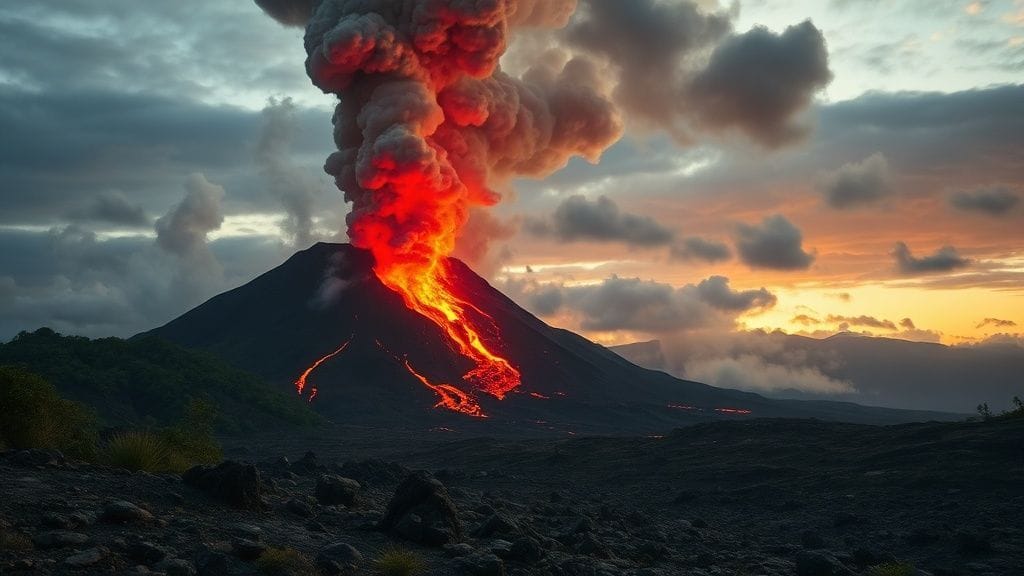
Imagine standing on a quiet patch of what is now Auckland, New Zealand, sometime in the 1400s. The air, pregnant with anticipation, is crackling with an unspoken tension as the earth grumbles beneath the feet of the early inhabitants. Then—without much warning—the land tears open, spewing incandescent fire and clouds of ash, transforming the familiar coastline into a barren, steaming wilderness. This is the moment Rangitoto volcano was born, a marvel and menace that would forever alter the landscape and imprint its fiery story on the people who called Tāmaki Makaurau home.
2. The Land Before Fire: Auckland and Its Volcanic Roots
Long before Rangitoto dominated the skyline, Auckland was a mosaic of smaller volcanoes forming what is known today as the Auckland Volcanic Field. This region, scattered with roughly 50 volcanic cones, had been shaped by fire and ash over tens of thousands of years, each eruption sculpting hills, lakes, and fertile soils. Yet, the largest and youngest of these volcanoes—Rangitoto—was about to emerge, marking the final great upheaval in this remarkable geological theater.
3. The People of Tāmaki Makaurau: Māori Life before Rangitoto’s Birth
For centuries, the indigenous Māori had thrived in the warm, resource-rich lands of Auckland, known to them as Tāmaki Makaurau. A network of settlements dotted the volcanic hills, their fortified pā (villages) blending organically with the landscape. Life was deeply connected to the environment—the forests, the waters, and the volcanic soils that nourished crops like kūmara (sweet potato). Yet, the looming question was never just how to live with the volcanoes, but how to live through the suddenness of fire and change they could unleash.
4. Geological Whispers: The Auckland Volcanic Field’s Dormant Potential
Though the volcanic field had lain quiet for centuries, signs hid in plain sight. Fumaroles, warm springs, and occasional tremors whispered warnings. Rangitoto’s eruption was preceded by subtle ground rumblings and negligible ash falls, barely perceptible to the untrained eye—but to a sensitive environment and watchful communities, such signs would have been impossible to ignore. The solid earth beneath was preparing for a spectacular transformation.
5. The Fiery Genesis: Unraveling the Timeline of the 1400s Eruption
Dating Rangitoto’s eruption to the early 15th century has been a feat of science and tenacity. Radiocarbon dating of charcoal beneath the basalt flows places the eruption between about 1425 and 1475 AD. Within weeks or months, molten rock burst forth from numerous vents, expanding rapidly as basaltic lava flowed unprecedentedly in the region. This was not a slow geological process over centuries—it was a dramatic event, swift and violent, shaping landscapes in real time witnessed perhaps by the early Māori inhabitants.
6. Rangitoto Emerges: From Ocean Floor to Volcanic Giant
Rangitoto’s volcanic edifice is unique among Auckland's cones—rising roughly 260 meters above sea level and dominating the Hauraki Gulf with its symmetrical twin peaks. The eruption began underwater at the edge of the Waitematā Harbour, a near-submarine birth born of basaltic lava fountains interspersed with explosive phreatomagmatic activity as seawater met magma. Slowly, piece by piece, the island formed, emerging from the sea as a new landmass—accompanied by thunderous explosions, acidic steam clouds, and rivers of molten rock carving paths through the landscape.
7. The Landscape Transformed: How Fire Reshaped a Region
What had been gently rolling hills and fertile river valleys was now a stark, volcanic wasteland. Lava fields blanketed the earth in black rock, smothering forests and reshaping the coastline. Fresh basaltic lava flows dammed streams, altered drainage patterns, and destroyed existing ecosystems. Yet over the decades and centuries that followed, soils enriched by volcanic minerals gave rise to unique flora and fauna, turning Rangitoto into one of New Zealand’s most ecologically valuable islands.
8. Māori Oral Traditions: Echoes of Fire and Change
Māori oral histories speak not only of creation myths but practical observations—southern legends describe the land shaking, fire bursting from the earth, and sea boiling. Rangitoto takes its name from traditions meaning “Bloody Sky” or “Heaven’s Blood,” evoking the red flames that tore through the night sky during the eruption. These narratives connect people to place, weaving natural disaster into the spiritual fabric of Māori identity and memory.
9. The Immediate Impact: Environment, People, and Settlements
The eruption’s sudden violence must have been catastrophic for local communities. Some settlements were likely destroyed or forced to relocate. The ash and lava changed fishing grounds and food availability. Yet, Māori resilience and adaptability meant they found ways to live with the changed landscape—moving pā to new sites and harnessing volcanic soils to cultivate crops that supported growing populations. The eruption was both an ending and a new beginning.
10. Rangitoto’s Legacy: How a Volcano Became a Cultural Icon
Far beyond its physical presence, Rangitoto grew into a potent symbol. For Māori, it stands as a reminder of the raw power of nature and the enduring spirit to survive. European settlers later recognized its unique beauty and mystery, cultivating it as a recreational and scientific site. Today, Rangitoto’s distinctive silhouette peppering the Auckland horizon is a living monument to deep time, resilience, and cultural continuity.
11. Scientific Revelations: Modern Understanding of the Eruption
Geologists today study Rangitoto with reverence, viewing it as insight into monogenetic volcanic fields—fields where each volcano erupts once. Its large volume and rapid eruption make it unusual, a textbook case of big basaltic shield volcano formation in a monogenetic field. Through geochemical analysis, ash stratigraphy, and GPS deformation studies, Rangitoto provides clues not only about its own past but about Auckland’s potential volcanic risks.
12. Rangitoto in the Wider Pacific Context: Volcanoes and Human History
Rangitoto’s eruption is a chapter in the greater narrative of volcanic influence that shaped human settlement in Oceania. Many Pacific island cultures have lived alongside volcanoes—embedding eruptions in stories, rituals, and survival strategies. The ripple effects of these natural cataclysms shaped migration patterns, agricultural practices, and cultural identities across vast oceanic distances.
13. The Hidden Threat: Ongoing Activity in the Auckland Volcanic Field
Though Rangitoto’s eruption signaled the end of big volcanoes appearing in the Auckland field, the volcanic system remains active beneath the surface. Seismic monitoring shows potential for new vents opening—even under urban Auckland. The city’s growth over volcanic cones poses challenges: readiness, education, and respect for a landscape still alive with fire.
14. Preservation and Tourism: Rangitoto Today
Managed as a regional park, Rangitoto Island attracts thousands yearly who hike its rugged slopes to witness the stark lava fields and native forest. Conservation efforts focus on protecting unique species like the pōhutukawa trees that recolonized the island, while restoring habitats disrupted by past human activity and invasive species. The island’s dramatic beauty offers a living classroom in volcanic ecosystem recovery.
15. Rangitoto’s Story in New Zealand’s National Identity
New Zealanders often speak of their deep connection to nature’s forces—the sea, the wind, the volcano. Rangitoto’s story is woven into this national narrative as a symbol of dynamic landscapes and enduring human influence. It reminds New Zealanders of their place on a restless planet, where life and land continuously reinvent each other.
16. Lessons from the Past: Volcanism and Human Resilience
Rangitoto’s eruption illustrates a timeless lesson: nature’s transformative power can disrupt yet also regenerate. The Māori response—adaptation, observation, myth-making—serves as a model for modern resilience. Preparing for natural hazards means learning from history, understanding place, and fostering respect for environments that shape human destiny.
17. Rangitoto’s Symbolism in Art and Literature
Artists and writers have found inspiration in Rangitoto’s stark, elemental presence. From Māori weaving stories into haka and waiata (songs), to contemporary painters capturing its fiery emergence and emerald regrowth against a cobalt sky, Rangitoto ignites creative expression. Its image is one of tension and beauty, destruction and renewal.
18. The Future of Auckland’s Volcanic Landscape
As Auckland expands, the volcanic field beneath it remains a constant variable. Scientists urge ongoing monitoring and preparedness—urban planning cannot ignore the ancient forces just below the surface. Rangitoto stands as both a reminder and an omen: the earth beneath us holds stories yet to be told.
19. Conclusion: Fire and Renewal in the Shadow of Rangitoto
Rangitoto’s birth was a violent punctuation in Auckland’s history, a fiery chapter forever etched into rocks and memories. It reshaped land and lives, testing resilience and inspiring reverence. Today, its slopes clothed in forest and fatigue conceal the scars of fire beneath. This is a story of nature’s dynamism—destruction and renewal entwined—a timeless reminder of humanity’s fragile dance with the earth’s restless heart.
Conclusion
The eruption of the Rangitoto volcano in the 1400s stands not simply as a geological event but as a profound narrative of transformation—of earth and people alike. It invites us to witness a world where fire carved new beginnings and human beings were challenged to adapt, remember, and thrive amidst upheaval. Far from a distant past, Rangitoto’s flame flickers still in the cultural and scientific consciousness of New Zealand, reminding us how intimately intertwined human history is with the restless forces beneath our feet. Its story is a luminous thread in the fabric of time—of catastrophe, survival, and the eternal promise of renewal.
FAQs
1. When did the Rangitoto eruption occur?
The eruption is dated to the early 15th century, approximately between 1425 and 1475 AD, based on radiocarbon evidence beneath the lava flows.
2. How large was the eruption compared to other volcanoes in the Auckland Volcanic Field?
Rangitoto is the largest and youngest volcano in the Auckland Volcanic Field, with a volume of about 2.3 cubic kilometers, far greater than any other cone in the area.
3. What impact did the eruption have on the Māori communities?
The eruption likely caused displacement, destruction of settlements, and changes to local ecosystems, but Māori adapted by relocating and utilizing the new fertile volcanic soils.
4. How does Rangitoto’s eruption help scientists today?
It offers critical insight into monogenetic volcanic fields, volcanic hazards in urban areas, and the dynamics of rapid basaltic eruptions.
5. Is the Auckland Volcanic Field still active?
Yes, though Rangitoto remains dormant, the field is considered active, with potential for future eruptions in new locations.
6. How is Rangitoto culturally significant to Māori?
Rangitoto embodies spiritual connections, histories of place, and resilience in Māori oral tradition, symbolizing the enduring relationship between people and volcano.
7. Can visitors access Rangitoto Island today?
Yes, the island is a popular regional park accessible by ferry from Auckland, known for hiking trails, volcanic landscapes, and native forest.
8. How is the eruption linked to the wider Pacific volcanic activity?
Rangitoto is part of the broader Pacific volcanic context, sharing geological and cultural resonances with volcanism that shaped many Pacific Island societies.

