Table of Contents
- The Roar Beneath the Clouds: Opening Scenes of the Sangay Eruption
- Ecuador’s Fiery Giant Awakes: Historical Context of Sangay Volcano
- Geological Roots and Tectonic Turmoil: Why Sangay Erupts
- The Prelude: Signs of Awakening in 2018
- First Explosions in 2019: A Nation Watches with Bated Breath
- Mounting Ash and Lightning Storms: The Spectacle of 2019–2020
- The Role of Ecuadorian Scientists: Monitoring a Fiery Sentinel
- Local Communities on Edge: Human Stories Amidst the Ashfall
- Aviation Alerts and Disrupted Skies: The Impact Beyond Borders
- Environmental Consequences: Forests, Rivers, and Wildlife
- Volcanic Eruptions and Climate: Sangay’s Atmospheric Footprint
- Political Response and Disaster Preparedness in Ecuador
- Sangay’s Cultural Significance: Myths and Modernity Collide
- The Fierce Flames of 2021: Climax and Decline of Activity
- Scientific Discoveries: New Insights from the Extended Eruption
- The Global Perspective: What the Sangay Eruption Tells Us About Volcanoes
- Aftermath and Recovery: Returning to Life Post-Eruption
- The Volcano’s Legacy: A Nation’s Endurance and Wisdom
- Technology and Volcanology: Advancements Triggered by Sangay
- Remembering the Fiery Sentinel: Cultural Memory and Future Vigilance
1. The Roar Beneath the Clouds: Opening Scenes of the Sangay Eruption
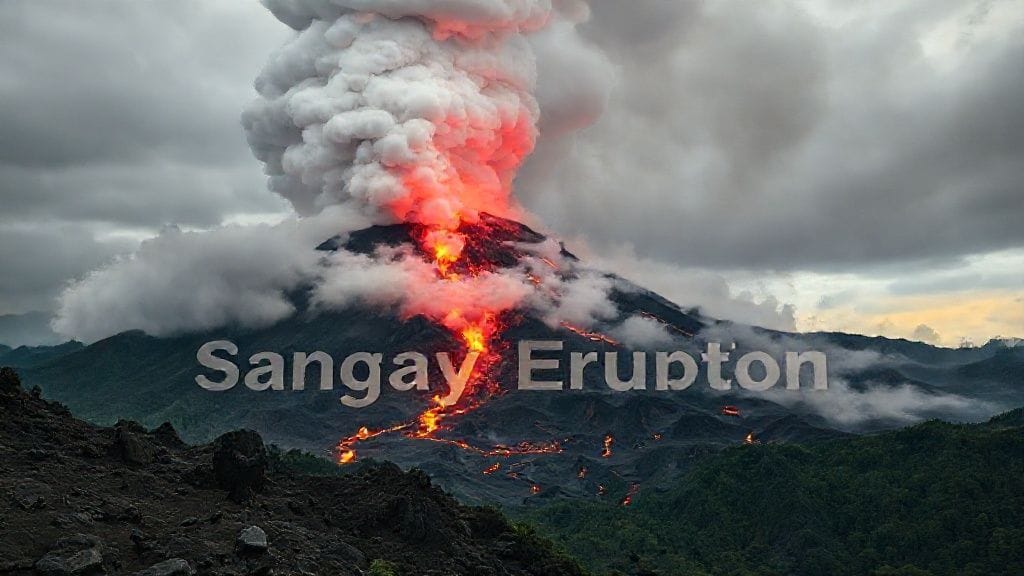
As early morning light broke across Ecuador’s eastern skies in May 2019, a thunderous rumbling shook the faint tranquility of the Amazonian foothills. Then, as if the earth itself exhaled a momentous breath, a towering column of dark ash tore into the atmosphere above Mount Sangay — Ecuador’s most active and enigmatic volcano. This was not merely another geological hiccup; it was a fierce declaration of nature’s restless power, unfolding over months, even years, stirring the skies and hearts of those who lived in its shadow.
The pyroclastic clouds churned with electric fury, casting hues of ominous gray and orange against the backdrop of green, lush wilderness. Villagers peered skyward, holding their breaths, while scientists raced to comprehend and forecast this unfolding tempest. Sangay’s eruption from 2019 to 2021 was a natural spectacle that encapsulated both the beauty and terror embedded within Earth’s churning interior. It was a story of fire, ash, resilience, and the delicate balance between human life and a raging planet.
2. Ecuador’s Fiery Giant Awakes: Historical Context of Sangay Volcano
Sangay, located on the eastern edge of Ecuador’s volcanic axis, has a storied past as an eruptive force. Since its formation approximately 500,000 years ago, it has unleashed a succession of violent lava flows, pyroclastic surges, and ash plumes. Known for its explosive nature and near-constant activity especially since the early 20th century, Sangay earned a reputation as one of the world’s most persistently active volcanoes.
Historically, its eruptions have reshaped landscapes and influenced human settlement patterns in the region. Yet, despite this history, Sangay remains relatively understudied compared to Ecuador’s western peaks like Cotopaxi or Tungurahua. The remoteness and challenging terrain of the eastern slopes have shielded many communities but also complicated scientific observation. By the time the 2019 eruption began, Ecuador already regarded Sangay as a volatile, unpredictable giant — a fiery sentinel of the Andes.
3. Geological Roots and Tectonic Turmoil: Why Sangay Erupts
Beneath Sangay’s rugged surface lies the restless convergence of tectonic plates. Ecuador straddles the meeting point of the South American Plate and the subducting Nazca Plate, a violent dance that generates the explosive energies fueling the nation’s numerous volcanoes. Sangay, in particular, owes its existence and volatile nature to this subduction process. As the oceanic Nazca Plate plunges beneath the continental South American Plate, melting occurs, feeding magma chambers beneath the volcano.
This magma, rich in silica and locked under immense pressure, periodically forces its way to the surface with astonishing force. Unlike slower effusive eruptions, Sangay tends to produce explosive events: ash clouds that rise kilometers above the summit, pyroclastic flows, and lava fountains. The region’s geology, characterized by tectonic stress, magma composition, and hydrological factors, sets the stage for both frequent activity and sudden dramatic flares.
4. The Prelude: Signs of Awakening in 2018
Before the explosive episodes of 2019, subtle signs hinted at Sangay’s simmering unrest. In late 2018, Ecuador’s Geophysical Institute (Instituto Geofísico, IG) began noting increased seismic activity beneath the volcano. This included clusters of low-frequency earthquakes and tremors, classic precursors of magma movement. Gas emissions also rose, signaling fresh magma nearing the surface.
These initial signals went largely unnoticed outside scientific circles, a reminder of how nature’s prelude can be quiet but ominous. For local communities, this period remained uneventful. Yet, scientists braced for the volcano’s next act, aware that Sangay’s history could shift rapidly from dormancy to fury. They knew that these early tremors were often the whisper before a storm.
5. First Explosions in 2019: A Nation Watches with Bated Breath
Then, on May 1, 2019, the expected happened. Sangay’s summit erupted violently, sending an ash column soaring some 4,500 meters into the sky. The eruption was accompanied by pyroclastic flows cascading down slopes and frequent lightning storms within the ash clouds — a dramatic visual and scientific marvel. The event instantly captured national attention.
For a country whose identity intertwines with its active volcanoes, this eruption was both frightening and captivating. The ash clouds drifted eastward, blanketing parts of the Amazon rainforest and prompting aviation warnings as far as 200 kilometers away. Local authorities issued alerts advising caution, yet displacement was minimal — a testament to the challenging terrain and relative isolation of surrounding populations.
6. Mounting Ash and Lightning Storms: The Spectacle of 2019–2020
What followed was an almost continuous display of volcanic activity stretching well into 2020. Sangay’s eruptions produced daily ash columns reaching several kilometers high, interspersed with pauses that lasted for days or weeks but rarely longer. The phenomenon of volcanic lightning, created by massive electrical discharges that develop in ash plumes through frictional charging, added a mesmerizing dimension to the spectacle.
Satellite images showed vast plumes spreading across the Amazonian skies, darkening them with a veil of ash that affected sunlight and air quality. While the scale of the eruption did not reach catastrophic levels, its persistence was unusual and underscored Sangay’s volatile temperament. Aviation restrictions were regularly enforced, compelling rerouting of flights and causing economic ripple effects.
7. The Role of Ecuadorian Scientists: Monitoring a Fiery Sentinel
Ecuador’s scientific community stood at the forefront of monitoring this relentless giant. The Instituto Geofísico de la Escuela Politécnica Nacional employed advanced seismic stations, gas analyzers, satellite remote sensing, and field observations to track Sangay’s behavior.
Their data collection was vital not only for real-time alerts but also for advancing volcanology. The volcano’s continuous activity provided a natural laboratory for studying eruption dynamics, plume dispersion, and volcanic lightning. “Every eruption tells a story, and Sangay was speaking volumes,” explained one leading volcanologist. Their work helped mitigate risks, informing local authorities and wider public while expanding academic understanding.
8. Local Communities on Edge: Human Stories Amidst the Ashfall
Though few people lived in direct proximity due to the steep slopes and dense rainforest, the eruption’s impact rippled through nearby indigenous and rural populations. Ashfall affected crops, contaminated water sources, and posed respiratory health challenges, especially for children and elders. These communities were forced into adaptations — cleaning roofs, protecting livestock, and coping with reduced visibility and air quality.
One story emerged from a Quichua family living some 30 kilometers from the volcano. María, a schoolteacher, described how the ash days slowed travel as roads became slick and visibility dropped, while the ever-present scent of sulfur mingled with daily life. Yet, for many, Sangay was also a source of pride and spiritual respect — a powerful force to be revered as much as feared.
9. Aviation Alerts and Disrupted Skies: The Impact Beyond Borders
Sangay’s eruption did not confine its influence to rural Ecuador. The volcanic ash posed serious risks to aviation safety, disrupting flights along major Latin American air corridors. Ash particles can damage jet engines, making airborne travel over affected zones perilous.
International aviation authorities issued warnings throughout the eruption period, rerouting flights and causing delays. This highlighted the interconnectedness between natural events and global systems. Airlines and airports engaged with Ecuadorian monitoring teams to stay updated, underscoring the challenges posed by remote volcanic hazards in an increasingly connected world.
10. Environmental Consequences: Forests, Rivers, and Wildlife
Ash and pyroclastic flows from Sangay’s eruption fell upon parts of the ecologically rich Amazonian rainforest, raising concerns about environmental damage. Ashfall can alter soil chemistry and hinder plant growth, while the acid rain caused by volcanic gases adds stress to flora and fauna alike.
Rivers sourced from glacial melt on Sangay’s summit also carried volcanic sediments downstream, threatening aquatic ecosystems and local water supplies. Conservationists monitored these effects closely, knowing that even a volcano’s natural metamorphosis can strain the delicate rainforest balance.
Yet nature’s resilience was evident, with recovery observed in ash-affected areas within months, reflecting the adaptive cycles of life in the shadow of fire.
11. Volcanic Eruptions and Climate: Sangay’s Atmospheric Footprint
While Sangay’s eruption was powerful, its global climate impact was limited compared to super-eruptions. However, the injection of volcanic aerosols and fine ash into the atmosphere had localized radiation effects, influencing sunlight penetration and briefly cooling regional temperatures.
Volcanologists evaluated the plume’s sulfur dioxide output, which contributes to sulfate aerosol formation — agents capable of reflecting sunlight and subtly moderating climate patterns. Sangay offered a case study of how medium-scale eruptions interact with atmospheric systems without triggering broad environmental crises.
12. Political Response and Disaster Preparedness in Ecuador
The Ecuadorian government responded to the eruption with a mixture of vigilance and pragmatism. Emergency plans already in place for volcanic activity were activated, prioritizing monitoring, communication, and public safety.
Although no major evacuations were necessary, authorities maintained readiness, coordinated with scientists, and issued regular advisories. The eruption spurred renewed calls for improved disaster infrastructure, particularly in remote Amazonian areas where access is difficult. Sangay’s activity thus reinforced the importance of proactive governance in hazard-prone nations.
13. Sangay’s Cultural Significance: Myths and Modernity Collide
Volcanoes in Ecuador are more than geological features; they are woven into the cultural and spiritual fabric of indigenous peoples. Sangay’s towering presence has inspired myths of gods and monsters dwelling in the earth, guardians of the Amazon and bearers of fertility and destruction.
During the 2019 eruption, traditional elders spoke of interpreting volcanic behavior as omens, blending centuries-old rituals with modern reality. This intersection of belief and science created a unique cultural dialogue, illustrating the enduring human need to understand and contextualize natural forces that surpass human control.
14. The Fierce Flames of 2021: Climax and Decline of Activity
After nearly two years of persistent eruptions, 2021 marked both an intensification and a slow tapering of activity. Several particularly violent explosions sent ash columns exceeding 5,000 meters, accompanied by pyroclastic surges and vivid lightning displays.
Yet by late 2021, signs of decline emerged. Seismic tremors lessened, gas emissions stabilized, and nighttime glow at the summit waned. Scientists cautiously interpreted this as a pause — a temporary lull possibly preceding future activity but signaling an end to this eruptive phase.
15. Scientific Discoveries: New Insights from the Extended Eruption
The longevity and intensity of the 2019–2021 eruption provided invaluable data. Researchers uncovered new details about magma plumbing systems, eruption triggers, and relationships between seismic tremors and ash output. The event underscored the complexity of predicting eruptions, highlighting subtle precursors often missed in shorter episodes.
Advanced satellite technologies, including radar and infrared imaging, allowed better tracking of ash spread and eruption energetics. Studies of volcanic lightning during this period also enriched understanding of electrical discharge mechanisms in ash plumes worldwide.
16. The Global Perspective: What the Sangay Eruption Tells Us About Volcanoes
Though relatively remote, Sangay’s eruption attracted international scientific attention. Its persistent yet moderate intensity contrasted with the sudden catastrophic eruptions seen elsewhere, offering a broader spectrum of volcanic behaviors.
It reminded the global community that volcanoes can be ongoing actors in shaping environments, economies, and societies. Moreover, Sangay highlighted the importance of integrating local knowledge, modern technology, and regional crisis management for effective volcanic hazard response.
17. Aftermath and Recovery: Returning to Life Post-Eruption
As ash settled and activity waned, affected regions began the slow process of recovery. Farmers replanted crops, wildlife rebounded, and skies cleared. Cleanup efforts addressed ash contamination in water and infrastructure where accessible.
Authorities resumed routine monitoring but emphasized the need for community education on volcanic risk. This phase reminded Ecuadorians of the cyclical nature of eruptions — episodes of devastation followed by renewal, a continuous dialogue between land and inhabitants.
18. The Volcano’s Legacy: A Nation’s Endurance and Wisdom
Sangay’s 2019–2021 eruption carved an indelible chapter in Ecuador’s volcanic history. It tested scientific capabilities, governmental preparedness, and community resilience simultaneously. Many Ecuadorians reaffirmed their respect for the mountain’s might and storytelling, blending ancestral reverence with modern understanding.
The eruption became more than a natural disaster; it was an education in coexistence with elemental forces. Sangay taught patience, vigilance, and humility amid a world persistently shaped by fire and ash.
19. Technology and Volcanology: Advancements Triggered by Sangay
The challenges posed by Sangay accelerated technological adoption in Ecuadorian volcanology. Drones surveyed inaccessible slopes, real-time gas sensors improved, and data-sharing platforms connected local observers with international volcanologists.
These innovations not only enhanced monitoring of Sangay but also established frameworks for other South American volcanoes. The eruption was a catalyst for scientific growth and preparedness, fostering a network dedicated to mitigating volcanic risk.
20. Remembering the Fiery Sentinel: Cultural Memory and Future Vigilance
Today, Sangay stands tranquil once more, cloaked in mist and forest, its summit crowned by glacial ice. Yet beneath that calm, Earth’s tension lingers. The memories of ash storms, lightning, and rumbling serve as reminders that vigilance remains essential.
Communities near Sangay continue storytelling traditions, integrating the recent eruption into their cultural narrative. For Ecuador and the world, the fiery sentinel is a monument not only to geological processes but to human resilience and the perpetual dance between nature’s fury and hope.
Conclusion
The Sangay eruption from 2019 to 2021 was more than an extraordinary geophysical event; it was an epic drama unfolding over skies and forests, disrupting lives yet enriching knowledge and culture. From the terrifying thunder of volcanic blasts to the quiet resilience of impacted communities, this episode illustrated the intimate bond between people and the restless Earth.
Sangay roared with ancient fury, renewing fears and inspiring awe, reminding Ecuadorians and global observers alike of nature’s dual power to destroy and instruct. Yet beyond destruction, the eruption fostered unity between scientists and citizens, tradition and technology, memory and future preparedness. In the pantheon of volcanic history, Sangay’s fiery story is a testament to humanity’s enduring dialogue with the wild heartbeat beneath our feet.
FAQs
Q1: What geological processes cause Sangay’s frequent eruptions?
A1: Sangay’s eruptions stem from the subduction of the Nazca Plate beneath the South American Plate. This process generates magma that accumulates beneath the volcano and periodically bursts to the surface in explosive eruptions due to high silica content and gas pressure.
Q2: How significant was the 2019–2021 Sangay eruption compared to past activity?
A2: The 2019–2021 eruption was notable for its longevity and continuous activity but did not reach catastrophic levels of past historic eruptions. It produced sustained ash columns and pyroclastic flows, allowing detailed scientific study.
Q3: What impacts did the eruption have on local communities?
A3: Communities near Sangay faced challenges such as ashfall affecting health, agriculture, and water supply. While no large-scale evacuations occurred, daily life was disrupted, requiring adaptation and resilience.
Q4: How did Ecuador manage disaster preparedness during the eruption?
A4: The government activated monitoring systems, disseminated information, and prepared emergency responses. Collaboration with scientific institutions ensured timely alerts and coordination.
Q5: What scientific advances resulted from studying Sangay’s eruption?
A5: Researchers gained insights into magma movement, eruption precursors, volcanic lightning, and ash dispersion, aided by drones, satellites, and improved sensors.
Q6: Did the eruption have any notable climatic effects?
A6: While impacting regional atmospheric conditions by injecting sulfur dioxide and ash, the eruption did not significantly alter global climate but provided valuable data on volcanic influences on weather.
Q7: How is Sangay perceived culturally in Ecuadorian society?
A7: Sangay is revered as a powerful natural and spiritual entity. Its eruptions are woven into indigenous myths and local traditions that blend longstanding beliefs with contemporary understanding.
Q8: What is the current status of Mount Sangay?
A8: As of mid-2021, Sangay’s activity has declined, with reduced seismicity and gas emissions. Nonetheless, it remains an active volcano requiring ongoing monitoring.

