Table of Contents
- The Quiet Before the Storm: Quilotoa’s Peaceful Slumber
- The World of the 1280s: An Era Unfolding in Ecuador
- Geological Tensions Beneath the Andes
- The Prelude: Signs and Omens of Imminent Catastrophe
- The Day the Earth Roared: The Quilotoa Eruption Unleashed
- Capturing the Fury: Eyewitness Imaginations from an Ancient Time
- Ashes to Darkness: The Immediate Aftermath on Land and Sky
- The Human Toll: Communities Vanished and Lives Altered
- Environmental Impact: A Changed Landscape in the Heart of Ecuador
- Rituals, Myths, and Memory: The Cultural Imprint of the Cataclysm
- Climatic Chaos: The Broader Atmospheric Consequences
- Tracing the Ash: Geological and Archaeological Discoveries
- Quilotoa’s Legacy in Indigenous Narratives and Oral Traditions
- Lessons from the Past: How the Eruption Shapes Modern Understanding
- Preserving the Memory: Quilotoa in Today’s Scientific and Cultural Consciousness
The Quiet Before the Storm: Quilotoa’s Peaceful Slumber
High in the rugged mountains of Ecuador’s Andes, long before tourists marveled at the emerald lake now cradled by Quilotoa’s volcanic caldera, the earth beneath slumbered quietly. The 1280s were a time seemingly untouched by cataclysm—a world where the towering peak stood as a sentinel over verdant valleys, ancient forests, and indigenous communities whose lives intertwined with the rhythm of the land. Yet, beneath this tranquility, forces brewed a tempest of fire and ash that would forever etch Quilotoa into the annals of history.
Imagine the dawn breaking over this silent giant, a cool mountain breeze drifting through pine trees, and the everyday routines of villagers gathering maize and weaving textiles feeling secure beneath the morning sun. The mountain’s rugged beauty disguised a restless heart—its magma chambers swelling, pushing, waiting—its eventual fury poised to rewrite the fate of an entire region.
The Quilotoa eruption of the 1280s stands today as one of the grand geological upheavals of pre-Columbian South America. But this was more than a simple volcanic event. It was a crucible of environmental alteration, social upheaval, and cultural transformation, an eruption that shook the very foundations of the Andean world.
The World of the 1280s: An Era Unfolding in Ecuador
To understand the impact of Quilotoa’s eruption, one must first journey into the 13th century Andes. The region was a complex tapestry of indigenous cultures, nascent states, and dynamic ecosystems. While the great Inca Empire had yet to cement its dominion, numerous resilient societies thrived—farmers cultivating terraced fields, artisans crafting tools and pottery, and shamans interpreting the mysterious natural world.
Ecuador’s highlands bore witness to a delicate balance: people deeply attuned to their environment, worshipping mountain spirits (apus), and living in harmony with the volcanoes that dotted the landscape. Yet, this era was no stranger to the fragility of life. Nature’s caprices—droughts, floods, and earthquakes—had instilled in these peoples a worldview where survival and respect for the earth were intimately linked.
Far beyond mere local events, the 1280s also marked a period of broader climatic fluctuations. The so-called Medieval Warm Period, characterized by relative climatic stability in many parts of the world, was transitioning—shadows of cooler temperatures and ecological stresses began creeping in. These subtle shifts made the timing of the Quilotoa eruption even more significant, as ecosystems and human societies were already navigating fragile conditions.
Geological Tensions Beneath the Andes
The Andes Mountains themselves are a testament to geological dynamism. Formed by the subduction of the Nazca Plate beneath the South American Plate, this region is riddled with volcanic activity, fault lines, and seismic threats. Quilotoa volcano did not erupt without warning; its story traces back to intense subterranean movements spanning decades if not centuries.
Beneath Quilotoa’s surface, molten rock surged upward through fractures, gradually building enormous pressure. The magma beneath was rich in silica—a volatile brew prone to explosive release. This accumulation set the stage for a cataclysm like few others in the region’s history.
Geochemical studies indicate that pre-eruption activity included fumaroles and small ash emissions—signs the ancient Andeans would have recognized, although perhaps not with the technology or knowledge available today. Still, to them, these signs were significant omens.
This geological tension culminated in a colossal release of energy—one that would dismantle the very peak of Quilotoa and transform it into the spectacular caldera that we witness today.
The Prelude: Signs and Omens of Imminent Catastrophe
While modern scientists decode gas emissions and seismic data, the ancient Andean inhabitants interpreted nature’s signals through a spiritual lens. Oral traditions, ethnohistoric records, and archaeological clues paint a picture of mounting unease preceding the eruption.
Clouds of steam rising unpredictably, tremors shaking the earth, and minor ash falls may have stirred anxiety. For Andean societies, mountains were living gods; thus, such disturbances were warnings, portents of divine anger or impending disaster.
Anthropologists suggest that ritualistic activities intensified during such times—ceremonies aimed at appeasing mountain deities and protecting communities. The ceremonial footprints unearthed near Quilotoa hint at a culture deeply invested in maintaining equilibrium with nature.
But despite these efforts, the earth’s power was inexorable.
The Day the Earth Roared: The Quilotoa Eruption Unleashed
When Quilotoa finally erupted, it did so with a fury that echoed across the region, an event etched into the very fabric of the earth.
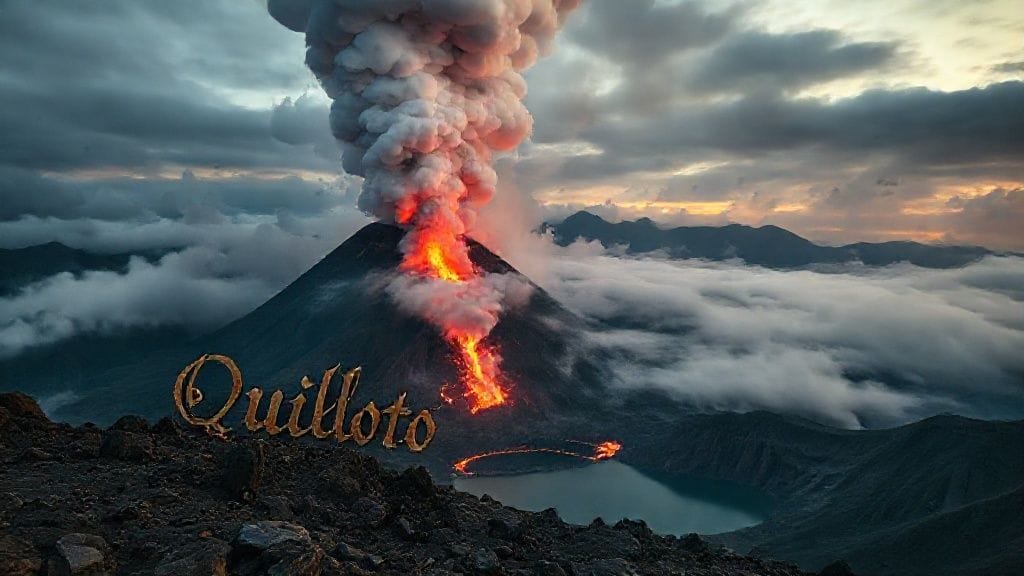
The cataclysm was marked by a massive Plinian eruption—one of the most violent volcanic phenomena known. A towering column of ash, gas, and rock blasted tens of kilometers into the sky, darkening the heavens for days. Pyroclastic flows—fast-moving currents of hot gas and volcanic matter—surged down Quilotoa’s slopes, fueled by incandescent fury and unstoppable momentum.
The mountain’s summit collapsed under the pressure, emptying the magma chamber below, and forming the caldera now filled by a deep turquoise lake. The scale of the eruption was staggering: an estimated 5-8 cubic kilometers of tephra were expelled, scattering thick ash layers across hundreds of square kilometers.
Sounds must have been deafening—a rumble like thunder on steroids, earthquakes shaking the earth’s crust, and the terrifying roar of a mountain giving way.
Capturing the Fury: Eyewitness Imaginations from an Ancient Time
While no written material survives from the 1280s Andes, the region’s oral traditions offer echoes of that terrifying day.
Local legends speak of the sky being swallowed by darkness, the earth trembling as if alive, and “fire raining” from the heavens. Elders’ stories passed down generations recount how animals fled, rivers choked on ash, and entire villages vanished in the volcanic maelstrom.
One chilling narrative tells of the “Mountain That Spoke”—a metaphorical voice given to Quilotoa during its eruption, warning the living of nature's wrath and demanding respect.
Such testimonies, though filtered through time, are vital: they provide emotional resonance to historical reconstruction, reminding us that for those who lived it, the eruption was more than a geological event—it was an existential trial.
Ashes to Darkness: The Immediate Aftermath on Land and Sky
After the eruption’s initial rage, an eerie silence prevailed. The skies, once brilliant blue, were now shrouded in thick plumes of ash and gas, dimming daylight and plunging the region into twilight.
Crops destroyed under layers of volcanic fallout meant starvation loomed. Rivers and water sources, contaminated by ash, turned toxic. The landscape was a wasteland—a blackened scar where forests once stood tall.
Ecologists estimate that vegetation took decades to recover. Yet, the altered soils eventually fostered new ecological niches, shaping the rugged mountain environment of today.
In the short term, however, survival was the dominant struggle. Displaced communities faced displacement, disease, and food shortages. In a world without modern technology, the eruption was a catastrophe whose full magnitude was only just beginning to surface.
The Human Toll: Communities Vanished and Lives Altered
Quilotoa’s eruption exacted a heavy human price. Archaeological evidence suggests that settlements near the volcano were decimated, some abandoned forever.
Mass graves discovered around the region indicate rapid burial of victims—many succumbed to asphyxiation or burns from pyroclastic flows. Others perished from starvation and exposure after losing homes and livelihoods.
Social structures were disrupted as survivors scattered in search of refuge, altering demographic patterns and sparking waves of migration.
Yet, resilience emerged. New settlements formed in safer locations, and survivors adapted by drawing on communal traditions, ritual healing, and resourcefulness. Quilotoa became a symbol of both destruction and rebirth in Andean cultural memory.
Environmental Impact: A Changed Landscape in the Heart of Ecuador
The volcanic eruption transformed not only human lives but reshaped the natural environment irrevocably.
The spectacular caldera lake that now defines Quilotoa was born from the collapse of the volcano’s summit, filling with rainwater over centuries. This lake's vivid turquoise—a product of dissolved minerals—became a permanent reminder of the eruption’s power.
Surrounding ecosystems shifted: forest succession patterns changed, animal populations were displaced, and fertile volcanic soils eventually gave rise to productive agriculture, supporting future generations.
Hydrological changes altered river paths, and even today, Quilotoa’s geological transformation affects local climate and biodiversity.
Rituals, Myths, and Memory: The Cultural Imprint of the Cataclysm
For Andean peoples, nature and spirituality were inseparable. The eruption thus entered mythology and ritual as a defining moment.
Quilotoa became an apu—a sacred mountain whose voice had spoken in fire and smoke. Ceremonies honoring the mountain sought to appease its spirit and maintain harmony. Shamans invoked Quilotoa in healing and divination, linking past disaster to ongoing balance.
Myths symbolized resilience: stories of destruction were intertwined with narratives of creation, reminding communities of cyclical renewal.
This cultural imprint persists, infecting local identity and reverence centuries later.
Climatic Chaos: The Broader Atmospheric Consequences
Volcanic eruptions of Quilotoa’s scale did not only alter local landscapes—they injected tremendous quantities of aerosols and ash into the atmosphere, triggering climatic perturbations.
Ice core data and climate proxies show a brief regional cooling following the eruption, resulting from sunlight-blocking ash clouds. Such changes may have exacerbated agricultural hardship and social stress.
Though global effects were limited compared to larger eruptions like Tambora centuries later, Quilotoa’s blast nevertheless contributed to the tightly woven climate fabric of the 13th century Andes.
Tracing the Ash: Geological and Archaeological Discoveries
Centuries later, scientists and archaeologists have pieced together the Quilotoa eruption through meticulous fieldwork.
Tephrochronology—studying ash layers—has illuminated eruption timing and scale. Radiocarbon dating of buried charcoal and organic material pinpoints its occurrence within the late 13th century, corroborated by indigenous narratives.
Excavations reveal ash-covered remains of settlements, and analysis of volcanic deposits paint a vivid picture of pyroclastic flows and ashfall.
These scientific insights entwine with human history, bringing the eruption into modern understanding as a defining geological and cultural moment.
Quilotoa’s Legacy in Indigenous Narratives and Oral Traditions
Despite the centuries that have passed, Quilotoa endures in memory.
Indigenous Quechua-speaking communities recount stories of fire mountains and great darkness, embedding eruption memory into their identity. Oral traditions preserve lessons—respect for nature’s might, the importance of harmony, and the fragility of human existence.
These narratives serve both as cultural treasures and as living testimonies, linking ancient catastrophe with contemporary meaning.
Lessons from the Past: How the Eruption Shapes Modern Understanding
Quilotoa’s 1280s eruption offers profound lessons for volcanology, anthropology, and environmental science.
It underscores the necessity of respecting geological warning signs and understanding natural hazards. This event reminds us of human vulnerability and the resilience of cultures deeply intertwined with their environments.
Modern scientists study Quilotoa to better predict future eruptions and mitigate risk in a world increasingly shaped by climate change and population pressures.
Preserving the Memory: Quilotoa in Today’s Scientific and Cultural Consciousness
Today, Quilotoa attracts scientists, adventure seekers, and pilgrims alike, all drawn by its striking beauty and storied past.
Efforts to preserve the site balance tourism with environmental protection. Cultural programs highlight indigenous heritage, ensuring that remembrance transcends mere spectacle.
Quilotoa stands as a powerful symbol—a silent witness to earth’s mighty forces and humanity’s enduring spirit.
Conclusion
The Quilotoa eruption of the 1280s was no ordinary natural disaster; it was a moment of profound transformation that reshaped landscapes, upended lives, and inscribed itself into the cultural psyche of the Andean world.
From the roaring explosion that shattered a mountain to the legends whispering through generations, Quilotoa’s story is a testament to the intimate dance between nature’s unpredictable fury and human resilience. It reminds us that beneath enduring calm often lies a restless heart, waiting to speak thunderous truths in ash and stone.
As we gaze upon the tranquil turquoise lake today, we are invited to remember the countless tales—of loss, survival, and rebirth—that flow beneath its placid surface. Quilotoa’s legacy is thus both a cautionary tale and an inspiring chronicle of how nature’s power forever intertwines with the human spirit.
FAQs
Q: What caused the Quilotoa eruption in the 1280s?
A: The eruption was triggered by the buildup of high-pressure, silica-rich magma beneath the volcano. Geological forces from tectonic subduction pushed molten rock upward until a catastrophic release of pressure caused the summit to collapse and the explosive eruption.
Q: How large was the eruption and what type was it?
A: The eruption was a major Plinian event, ejecting approximately 5-8 cubic kilometers of volcanic material and creating the present-day caldera. It was one of the most violent eruptions in pre-Columbian South America.
Q: What were the immediate effects on local communities?
A: Surrounding settlements were devastated by pyroclastic flows and ashfall, leading to loss of life, displacement, and widespread destruction of crops and infrastructure. Survivors faced prolonged hardships such as food shortages and environmental contamination.
Q: How did the eruption influence Andean culture and mythology?
A: Quilotoa became revered as a sacred apu, a mountain deity whose eruption was interpreted as a spiritual event. Oral traditions and rituals surrounding the event underscored themes of respect for nature’s power and cyclical renewal.
Q: Did the eruption affect global climate?
A: While not as impactful globally as some other eruptions, Quilotoa released significant aerosols and ash into the atmosphere, causing regional cooling that affected agriculture and living conditions temporarily.
Q: How do scientists today study the eruption?
A: Through tephrochronology, radiocarbon dating, geological fieldwork, and analysis of ash layers and trapped gases, scientists reconstruct the eruption’s timing, scale, and environmental impact, integrating these data with archaeological and anthropological findings.
Q: What is the current significance of Quilotoa?
A: Today, Quilotoa is both a vital scientific site and a cultural landmark. It attracts visitors worldwide and serves as a symbol of natural forces and human endurance, with ongoing efforts to preserve its ecological and cultural heritage.
Q: Are there any ongoing volcanic risks at Quilotoa?
A: Quilotoa remains a dormant but potentially active volcano. Monitoring continues to detect signs of unrest, however, there have been no recent eruptions. Responsible management seeks to balance safety and heritage preservation.

