Table of Contents
- The Dreadful Roar of Misti: An Eruption Heralds Chaos
- The Silent Giant of Southern Peru: Understanding Misti Volcano
- Peru in the Late 18th Century: A Land on the Brink
- Indigenous Worlds and Colonial Shadows
- The First Tremors: Early Signs and Local Reactions
- The Fury Unleashed: The 1780s Eruption in Vivid Detail
- Ash and Fire: The Physical Impact on Arequipa and Surroundings
- Human Toll and Refugees: Stories from Survivors
- Colonial Responses: Authorities, Priests, and Scientists
- Economic Shockwaves: Agriculture, Trade, and Infrastructure
- Cultural Echoes: Myth, Memory, and Oral Tradition
- The Aftermath: Environmental Transformations
- Misti’s 1780s Eruption in the Wider Pacific Ring of Fire Context
- Comparing Eruptions: Misti versus Other Great Volcanic Disasters
- How Did the 1780s Eruption Shape Modern Arequipa?
- Volcanology Emerges: Early Scientific Understanding of Misti
- Legacy and Lessons: Living with an Active Volcano
- Conclusion: The Enduring Human Spirit Amidst Nature’s Wrath
- FAQs: Answering Your Burning Questions About Misti 1780s
- External Resource
- Internal Link
The southern Peruvian highlands simmered quietly for decades, a land defined by towering peaks and the whispers of the wind threading through white-capped volcanoes. But in the 1780s, beneath the stoic gaze of Mount Misti, the earth’s restless heart began to beat with a terrible rhythm. It was as if a sleeping titan had been roused—an eruption rounded the bend of time with roaring ashes and rivers of fire that would change the land, its people, and history forever.
1. The Dreadful Roar of Misti: An Eruption Heralds Chaos
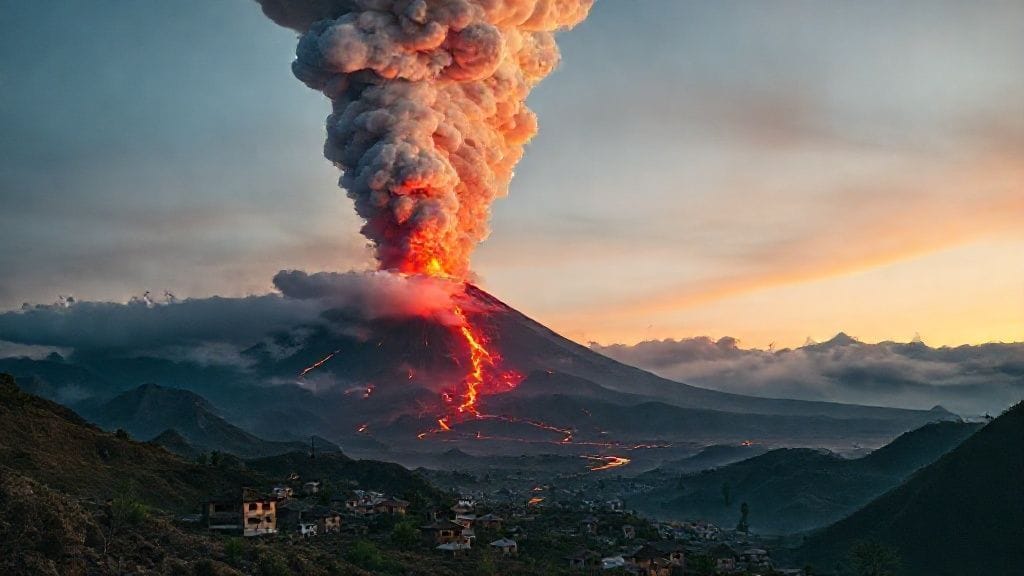
On a sharp, clear day in the 1780s, the sky over Arequipa darkened unexpectedly. Villagers and townspeople, engrossed in their daily lives, were startled by a trembling earth and a low, ominous rumble that grew louder each passing moment. Suddenly, a fiery fountain burst from the summit of Misti, scattering incandescent bombs and choking the air with a thick veil of ash. The eruption was sudden, devastating—yet it was only part of a longer saga of natural fury and human endurance.
2. The Silent Giant of Southern Peru: Understanding Misti Volcano
Misti is not merely a landmark; it is an iconic stratovolcano rising to 5,822 meters, a sentinel over Arequipa since pre-Incan times. Its nearly perfect cone shape belies a volatile nature beneath. Dormant phases punctuated by violent eruptions characterize this giant—evidence of the restless tectonic activity along the Pacific Ring of Fire. Long before 1780, Misti’s eruptions shaped the land, but none had prepared the inhabitants of late 18th-century Peru for what was to come.
3. Peru in the Late 18th Century: A Land on the Brink
The 1780s was a period loaded with tension for Peru. The Spanish colonial grip, while deeply entrenched, was being challenged quietly by indigenous peoples and mestizos. The looming shadow of discontent was getting darker as economic hardships, forced labor systems like the mita, and racial hierarchies prevailed. Misti’s eruption came not merely as a natural disaster but as a backdrop to an era of social upheaval and profound transformation.
4. Indigenous Worlds and Colonial Shadows
For centuries, the peoples of the Andes venerated the mountains as apus—powerful spirits inhabiting the peaks. Misti was no exception. To the indigenous communities, the eruption was a cosmic message, a terrifying disruption but also a catalyst for spiritual reflection. Meanwhile, colonial authorities wrestled with the chaotic reality: how to maintain control amid natural calamities and growing unrest.
5. The First Tremors: Early Signs and Local Reactions
The warning signs appeared weeks before the first explosive activity—small earthquakes whispered warnings, and fumaroles intensified. Farmers noticed cattle behaving erratically, and ash began to dust the higher valleys. Among the local population, rumors spread fast: was this a punishment from the gods or a sign of something worse? Anxiety knitted communities together, yet fear often turned to fatalism.
6. The Fury Unleashed: The 1780s Eruption in Vivid Detail
When Misti erupted in full force, it spewed glowing lava, incandescent rock fragments, and columns of ash soaring several kilometers into the sky. Eyewitnesses documented how darkness fell around mid-day, broken only by fiery debris raining down. Pyroclastic flows raced down the slopes, obliterating vegetation and reshaping river valleys. This eruption was violent but not a single event—it marked a series of eruptive episodes spanning months.
7. Ash and Fire: The Physical Impact on Arequipa and Surroundings
Arequipa, the colonial jewel nestled at Misti’s feet, was cloaked under a heavy blanket of volcanic ash. Roofs collapsed under the weight, water sources were contaminated, and fertile fields turned barren. Surrounding villages were buried or abandoned. Distances once measured in hours became impossible to traverse through the mud and ash. The city’s lifeblood—agriculture and trade—was severely disrupted.
8. Human Toll and Refugees: Stories from Survivors
Beyond physical destruction, the eruption displaced thousands. Some tried to flee towards the coast, others to the highlands. Oral histories speak of families caught in ash storms, soldiers aiding in relief efforts, and miraculous escapes. Diseases spread in crowded refugee quarters, and hunger stalked survivors. Yet, these tribulations also revealed the resilience and solidarity among diverse groups.
9. Colonial Responses: Authorities, Priests, and Scientists
The Viceroyalty of Peru was slow but methodical in response. Religious authorities interpreted the disaster as divine wrath, urging penance and prayer. Meanwhile, colonial administrators attempted to provide aid, albeit limited by logistics and political distractions. Early scientists and chroniclers began methodical observations of Misti’s behavior, sowing seeds for future volcanology.
10. Economic Shockwaves: Agriculture, Trade, and Infrastructure
The destruction of crops, loss of livestock, and disruption of trade routes delivered a tangible blow to regional economies. Arequipa’s markets shrank, tax revenues fell, and inflation rose. Mesti’s eruption compounded social tensions already strained by corvée labor demands and colonial taxation schemes.
11. Cultural Echoes: Myth, Memory, and Oral Tradition
The eruption was etched deep into the collective memory of the region. Poets and storytellers wove the event into Andean mythology and colonial chronicles. For indigenous communities, the event reaffirmed the power of the apus—a reminder of nature’s supremacy. This interweaving of belief and history sustains a unique cultural legacy to this day.
12. The Aftermath: Environmental Transformations
Volcanic soils ultimately enriched the land but only after decades of hardship. The valley’s ecosystems were altered, with succession forests gradually reclaiming ash-laden slopes. Hydrological patterns shifted, and new microclimates emerged around the deposits. These environmental changes framed the region’s agricultural patterns into the 19th century.
13. Misti’s 1780s Eruption in the Wider Pacific Ring of Fire Context
This volcanic upheaval was part of a broader constellation of tectonic violence along the Andes, where the Nazca Plate plunges beneath the South American Plate. The 1780s marked a period of heightened volcanic activity not just in Peru, but across the Pacific Rim, linking natural phenomena across continents.
14. Comparing Eruptions: Misti versus Other Great Volcanic Disasters
When we place Misti’s eruption against more famous disasters like Tambora 1815 or Krakatoa 1883, we appreciate its local significance but also the gaps in historical records that obscure its full scale. Its eruption may not have triggered a “volcanic winter,” but regionally, it was catastrophic, rivaling more modern eruptions in human cost and economic damage.
15. How Did the 1780s Eruption Shape Modern Arequipa?
Arequipa’s architecture, notably its iconic white volcanic sillar stone buildings, is itself a testament to the region’s volcanic heritage. The 1780s eruption forced urban rebuilding, migration patterns, and agricultural adjustments that sculpted the city’s modern identity. The volcano remains part of Arequipa’s collective consciousness—a constant reminder of fragility and strength.
16. Volcanology Emerges: Early Scientific Understanding of Misti
Long before modern tools, natural philosophers, missionaries, and local chroniclers gathered data. Their attempts to categorize lava types, eruption patterns, and ash deposits formed early geological knowledge. The 1780s event contributed valuable observations that underpin today’s hazard preparedness strategies.
17. Legacy and Lessons: Living with an Active Volcano
Misti’s 1780s eruption embodies the precarious balance humanity maintains with nature. Lessons learned in disaster response, urban planning, and cultural resilience inform contemporary strategies to coexist with hazards. Early warnings, evacuation routes, and ongoing monitoring all trace roots to these formative times.
18. Conclusion: The Enduring Human Spirit Amidst Nature’s Wrath
The eruption of Misti in the 1780s was more than a geological event—it was a crucible for the people of southern Peru. Amid ash and ruin, communities grieved, recovered, and reimagined their place in the world. Misti’s fire was harsh but amendable, a reminder that even amidst chaos and destruction, the human spirit endures, creating stories that echo across centuries.
FAQs
Q1: What caused the 1780s eruption of Misti?
The eruption was triggered by tectonic activity as the Nazca Plate subducted beneath the South American Plate, causing magma to rise and pressure to build beneath Misti’s crater until it exploded.
Q2: How significant was the damage caused by the eruption?
Regionally, it was devastating—Arequipa suffered extensive ashfall, destruction of crops and homes, and large-scale displacement, although detailed death tolls remain unclear due to record limitations.
Q3: Were there any early scientific efforts to understand the eruption?
Yes, colonial chroniclers, priests, and early naturalists documented the eruption, noting lava flows and ash. These observations contributed to nascent volcanology in South America.
Q4: How did indigenous beliefs influence the perception of the eruption?
Local populations interpreted the event as an apocalyptic sign or communication from the apu spirits, blending cosmology and spirituality with the tangible disaster.
Q5: Did the eruption have any impact beyond Peru?
While the eruption’s climatic effects were relatively localized, it was part of wider tectonic activity in the Pacific Rim during that period, indirectly linking it to broader volcanic patterns.
Q6: What was the long-term environmental impact of the eruption?
Despite initial destruction, volcanic ash enriched soils, altering ecosystems and agricultural productivity for decades after the eruption.
Q7: How is Misti regarded today in Arequipa?
Misti remains a cultural and geographical symbol of Arequipa—a reminder of natural power and resilience, closely monitored for signs of future activity.
Q8: Are there any commemorations or cultural traditions linked to the eruption?
Various Andean rituals and local festivals remember the apus and honor the memory of those affected, blending history and spirituality.

