Table of Contents
- The Calm Before the Storm: Early Signs of Calbuco’s Fury
- Los Lagos Region: A Land Shaped by Fire and Water
- The Geology of Calbuco: Understanding a Restless Volcano
- April 22, 2015: Calbuco Awakens with a Roar
- The First Eruption: Thunder in the Andes
- Ash Clouds and Darkness: The Immediate Impact on Los Lagos
- Emergency Response: Human Stories from the Evacuations
- The Volcanic Ash Fallout: Effects on Agriculture and Daily Life
- Secondary Explosions: The Volcano’s Relentless Pulse
- The Role of Chilean Scientists in Monitoring Calbuco
- Regional and Global Atmospheric Implications of the Eruption
- Media Coverage: Between Sensationalism and Serious Reporting
- The Psychological Toll on Local Communities
- Lessons Learned: Volcanic Preparedness in Chile
- The Aftermath: Environmental Regeneration in Los Lagos
- Calbuco’s Place in Chile’s Volcanic History
- The Cultural Memory of Calbuco: Folklore and Modern Identity
- Comparing Calbuco 2015 to Past Eruptions Worldwide
- Scientific Advances Inspired by the 2015 Calbuco Event
- Reflections on Nature’s Power and Human Resilience
- Conclusion: A Volcano’s Echo Through Time
- FAQs: Understanding Calbuco’s 2015 Eruption
- External Resource
- Internal Link
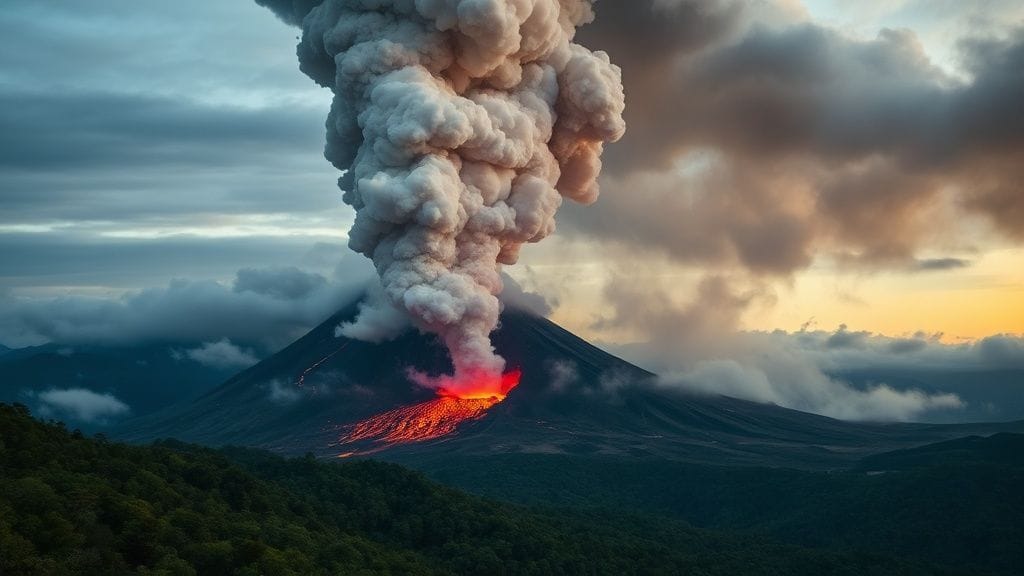
On the evening of April 22, 2015, as twilight deepened over the serene landscapes of Los Lagos—a picturesque region woven with lakes, forests, and fjords—the earth suddenly trembled beneath Calbuco volcano. For generations, the locals had watched this dormant giant, whose last eruption in 1972 was a harbinger of silent awe rather than fiery terror. Yet, that night, Calbuco shattered decades of quiet with a violent explosion, casting a towering ash plume into the sky and enveloping the region in a suffocating embrace of darkness. The crisp air, heavy with the scent of sulfur and ash, pulled a veil over the towns below, their inhabitants stunned between reverence and fear. This was not an awakening in whispers; it was an orchestral crescendo of nature’s might.
The Calm Before the Storm: Early Signs of Calbuco’s Fury
In the weeks leading up to the eruption, subtle tremors had begun to ripple through the bedrock beneath Calbuco. Seismic stations alert to the faint murmurs of magma movement registered a crescendo in volcanic activity, a language spoken in vibrations and heat rather than words. Yet, even with these warnings, the community was caught unprepared for the scale of what was to come. Farmers tending the fertile soils at the volcano’s base noticed an unusual sulfur smell on the wind. Elders recalled a similar scent prior to past eruptions, but the passage of forty-three years had dulled collective memory.
Los Lagos Region: A Land Shaped by Fire and Water
The Los Lagos region—“The Lakes”—boasts a landscape carved by ice and fire. Ancient glaciers receded, leaving a labyrinth of shimmering lakes fringed by emerald forests. Among these natural wonders, the presence of Calbuco, an imposing stratovolcano rising almost 2,000 meters above sea level, is constant yet ambivalent. It symbolizes both a blessing and a threat: fertile volcanic soils nurture vineyards and farms, but the looming cone is a reminder of latent volatility. Fishing villages, indigenous communities, and burgeoning towns live intertwined with this duality.
The Geology of Calbuco: Understanding a Restless Volcano
Calbuco’s violent potential arises from its position along the Pacific Ring of Fire, where the Nazca Plate grinds beneath the South American Plate, melting rock and feeding magma chambers deep below. The volcano’s stratified layers—deposits of hardened lava, ash, and pumice—hide a narrative of restless eruptions, each with distinctive signatures. Unlike its more infamous neighbor, Osorno, Calbuco’s eruptions tend to be more explosive yet less frequent, creating a challenge for volcanologists eager to forecast its temper.
April 22, 2015: Calbuco Awakens with a Roar
That early spring evening began with an ominous rumble at 5:00 p.m. Local sensors peaked as a powerful explosive event shattered the quiet. What followed was a pyroclastic surge into the atmosphere, a mushroom cloud ascending over 15 kilometers high and casting a shadow visible from the distant city of Puerto Montt. The eruption’s power was immediate, ejecting incandescent rock fragments and suffocating ash. The night sky transformed into a canvas painted with streaks of lightning, born from the static of ash particles colliding—a phenomenon that added a surreal, almost apocalyptic ambiance.
The First Eruption: Thunder in the Andes
Witnesses describe the eruption’s initial moments as both terrifying and breathtaking. “It sounded like thunder that lasted for minutes,” recalled Juan Morales, a local fisherman. For those caught in the eruption’s proximity, this was a visceral confrontation with nature’s uncontrollable force. Ashfall descended as a metallic rain, blanketing roofs, cars, and even blocking roads. Authorities scrambled to issue immediate evacuation orders to avoid casualties.
Ash Clouds and Darkness: The Immediate Impact on Los Lagos
The ash cloud spread quickly under the influence of prevailing winds, darkening the skies over nearby towns and even reaching Patagonia. Flights were canceled, schools closed, and emergency shelters opened. Visibility dropped to mere meters, complicating rescue efforts and daily life. City streets glistened under a thin layer of ash, transforming bustling avenues into ghostly landscapes. For many, the skies that dusk felt suffocating, a tangible reminder that the earth’s underbelly had erupted into daily reality.
Emergency Response: Human Stories from the Evacuations
The eruption compelled a rapid humanitarian response. Over 4,000 residents were evacuated from vulnerable zones within a 20-kilometer radius. Rescue teams coordinated with police, military, and medical staff to manage shelters and distribute masks to mitigate ash inhalation. Yet, amid the chaos, stories of solidarity emerged: neighbors helped one another pack belongings, shared food, or simply held hands in uncertainty. Maria Delgado, a schoolteacher, recounted sheltering forty children, their livid faces obscured behind charcoal-soot masks, their wide eyes reflecting both fear and fascination.
The Volcanic Ash Fallout: Effects on Agriculture and Daily Life
Ashfall posed multifaceted threats: crops were smothered under gritty layers, livestock suffered from contaminated water sources, and traditional fishing activities were severely disrupted. The fertility of soils could benefit in the long term, but the immediate damage was devastating. Farmers faced a bitter irony as the ground that sustained their livelihood became an enemy. Markets closed, roads became impassable, and people struggled to maintain routine amidst uncertainty.
Secondary Explosions: The Volcano’s Relentless Pulse
In the ensuing days, Calbuco showed no sign of pacification. Secondary explosions punctuated the skies, each cloud heavier than before. Lava flows were limited but present—streams of molten rock threatening forested slopes. Scientists warned of potential lahars, mudflows triggered by ash mixing with rain, a particular danger for valleys below. Each eruption incrementally altered the landscape, imprinting an indelible mark on the region’s topography.
The Role of Chilean Scientists in Monitoring Calbuco
Chilean volcanologists played a pivotal role in tracking Calbuco’s volatile behavior. Utilizing a combination of satellite imagery, seismic readings, and gas emissions analysis, they provided crucial data for civil protection agencies. Yet, the eruption’s abruptness highlighted challenges inherent in predicting stratovolcanoes which can shift modes from dormant to explosive rapidly. Dr. Carlos Rivera, a leading volcanologist, emphasized the tension between scientific precision and the unpredictability of natural phenomena: “The volcano decided when to speak. Our task was to listen as carefully as possible.”
Regional and Global Atmospheric Implications of the Eruption
Calbuco’s ash plume penetrated the stratosphere, scattering fine particles that circled the southern hemisphere for weeks. This dispersion influenced atmospheric optics, producing vivid sunsets far beyond Chilean borders. While the eruption was not large enough to affect global climate significantly, it drew attention to the broader role of mid-sized volcanic events in atmospheric chemistry. Air travel interruptions underscored the interconnected vulnerabilities of modern societies to natural phenomena.
Media Coverage: Between Sensationalism and Serious Reporting
International headlines oscillated between dramatic portrayals of imminent disaster and sober analysis of volcanic science. Social media flooded with images of ash-covered rooftops and darkened skies, spreading both awareness and anxiety. Local media grappled with balancing safety advisories and preventing panic. The eruption became a case study in crisis communication, demonstrating how information flow can either empower or overwhelm affected populations.
The Psychological Toll on Local Communities
Behind the ash and rubble lay invisible scars. Mental health professionals reported increased anxiety, stress, and trauma in communities grappling with displacement and loss. Children expressed confusion and fear, elders mourned the remembered quiet now disrupted. Yet, communal resilience shone—festivals and rituals adapted to remember and honor both the destructive and regenerative forces of Calbuco. This eruption became not only a geological event but a human one.
Lessons Learned: Volcanic Preparedness in Chile
Chile’s experience with Calbuco sharpened protocols for future eruptions. Authorities revised evacuation routes, improved early warning systems, and invested in community education programs. The eruption underscored the necessity to harmonize scientific expertise with social outreach. As Dr. Rivera noted, “Science saves lives only when it reaches hearts, not just laboratories.”
The Aftermath: Environmental Regeneration in Los Lagos
In the months and years following the eruption, nature began reclaiming the ash-scoured terrain. Pioneer species colonized new soils, and water bodies gradually cleared. The resilience of ecosystems reminded residents of a cycle as old as the earth itself. Calbuco’s eruption was a force of destruction but also a catalyst for renewal—a dynamic interplay emblematic of volcanic landscapes worldwide.
Calbuco’s Place in Chile’s Volcanic History
While overshadowed by giants like Llaima and Villarrica, Calbuco’s 2015 eruption reasserted its place in the geological narrative of Chile. It bridged memories of the past with contemporary challenges, reaffirming the country’s identity as a land shaped by fire. In the annals of Chilean volcanism, Calbuco remains a potent reminder that dormancy is never permanent.
The Cultural Memory of Calbuco: Folklore and Modern Identity
Local indigenous communities, including the Mapuche, interpret Calbuco’s wrath within cosmologies linking earth, spirit, and survival. Oral traditions spoke of volcanic eruptions as both punishment and purification. The 2015 event revitalized these narratives, blending them with scientific discourse and local pride. Calbuco entered collective memory not merely as a hazard but as a living symbol of human coexistence with nature’s forces.
Comparing Calbuco 2015 to Past Eruptions Worldwide
In scale and impact, Calbuco’s eruption resembles other moderate stratovolcanic blasts—such as Japan’s Mount Ontake eruption in 2014 or Indonesia’s Sinabung activity. Unlike cataclysmic events like Mount St. Helens in 1980, Calbuco spared large-scale destruction but highlighted common themes: suddenness, community vulnerability, and the dynamic tension between hazard and resilience.
Scientific Advances Inspired by the 2015 Calbuco Event
Calbuco’s eruption propelled advances in remote sensing and eruption modeling. Studies of ash particle composition and dispersion refined understanding of air travel risks and atmospheric chemistry. Interdisciplinary research integrated geology, meteorology, and social sciences, forging new paradigms for hazard management that many experts now look to as models.
Reflections on Nature’s Power and Human Resilience
Ultimately, the story of Calbuco is one of dialogue—between earth’s seething interior and a population compelled to listen and adapt. The eruption’s raw display of power became a mirror reflecting human capacity for courage, community, and hope. As the ash settled, so did a profound appreciation for the fragile, dynamic balance between destruction and creation.
Conclusion
Calbuco’s 2015 eruption was more than a geological episode—it was a human saga carved in ash and resilience. In the shadow of its plumes, communities faced uncertainty, loss, and fear, yet emerged with stories of solidarity and renewal. This event, etched into the landscapes and memories of Los Lagos, reminds us that nature’s fury need not be humanity’s undoing. Instead, it can be a call to deepen our respect for the environment, to refine our science, and to nurture the unyielding spirit within us all. The voice of Calbuco resonates still—a timeless echo of power, vulnerability, and rebirth.
FAQs
Q1: What caused the 2015 eruption of Calbuco volcano?
A: The eruption resulted from the movement of magma beneath the volcano, triggered by tectonic activity where the Nazca Plate subducts beneath the South American Plate. This pressure buildup led to explosive release on April 22, 2015.
Q2: How severe was the impact on the local population?
A: Over 4,000 people were evacuated, with minor injuries reported but no fatalities. The eruption disrupted daily life, agriculture, and infrastructure, causing significant psychological and economic effects.
Q3: What makes Calbuco different from other Chilean volcanoes?
A: Calbuco’s eruptions tend to be explosive and episodic, often producing large ash clouds, but with less frequent activity than more continuously eruptive neighbors like Villarrica or Llaima.
Q4: How did Chilean authorities manage the emergency?
A: Authorities implemented evacuation plans, coordinated emergency shelters, and issued frequent communication updates. Scientific monitoring guided decisions to minimize casualties and maintain public safety.
Q5: What were the environmental consequences of the eruption?
A: Immediate ashfall damaged crops and contaminated water sources, but long-term effects included soil enrichment and ecological regeneration as pioneer species recolonized the area.
Q6: How is the Calbuco eruption remembered culturally?
A: It is embedded in local folklore and modern identity, particularly among indigenous Mapuche communities, symbolizing an ongoing relationship with the land’s powerful natural forces.
Q7: Did the eruption affect global climate?
A: While Calbuco’s ash plume entered the stratosphere, its scale was insufficient to cause significant global climate changes, though it did influence atmospheric conditions in the Southern Hemisphere temporarily.
Q8: What lessons did Chile learn from this eruption?
A: The event highlighted the importance of rapid scientific monitoring, clear communication, and community preparedness in volcanic hazard management—a legacy shaping future responses.

