Table of Contents
- The Awakening of a Giant: The First Signs of the 2007 Eruption
- Réunion Island: A Volcanic Paradise on the Edge of the Indian Ocean
- Historical Legacy of Piton de la Fournaise: Volcano of Fire and Myth
- The Precursors: Seismic Activity and Tremors Before the Break
- April 2, 2007: When the Ground Trembled and Fire Broke Loose
- Lava Flows and Earth’s Fury: A Chronology of the Eruption’s First Days
- Scientific Eyes on the Volcano: Monitoring Nature’s Fury
- The People of Réunion: Courage, Precaution, and Adaptation
- Ecological Impact: The Transformation of the Landscape
- The Eruption’s Unexpected Twists: Shifts, Explosions, and Pauses
- Economic Ripples: Tourism, Agriculture, and Local Livelihoods
- Cultural Reactions: Local Folklore and the Spirit of the Volcano
- International Interest and Geological Insights Gained
- The End of the Fiery Chapter: Volcanic Calm Restored
- Lessons Learned and Preparedness for Future Outbursts
- Piton de la Fournaise Today: A Living Symbol of Réunion
- The Eruption in Global Context: Volcanic Events of the 21st Century
- Personal Stories: Eyewitnesses and Scientists Tell Their Tale
- The Volcano’s Voice: An Ongoing Dialogue Between Humanity and Earth
- Conclusion: Fire, Fear, and Fascination – The Eternal Dance of Piton de la Fournaise
- FAQs: Understanding the 2007 Piton de la Fournaise Eruption
- External Resource
- Internal Link
The morning of April 2, 2007, dawned like any other on the lush island of Réunion, nestled in the vast Indian Ocean. But beneath its green hills and serene beaches, a giant was stirring. The earth trembled subtly at first, a whisper beneath the feet of the islanders, barely perceptible. Then, as the hours unfurled, the whispers grew into a roar. Piton de la Fournaise, one of the most active volcanoes on the planet, was about to remind the world why it commands awe and respect. A fiery spectacle would soon light the tropical skies, streaming molten rivers that would reshape the land and lives below. This was not just an eruption; it was an elemental drama, a dialogue of fire and stone, fear and fascination.
Réunion Island: A Volcanic Paradise on the Edge of the Indian Ocean
In the heart of the Indian Ocean, Réunion stands as a volcanic jewel forged from deep earth fires and sea. Discovered by Portuguese navigators in the early 16th century and colonized by the French soon after, the island’s very existence is owed to the volcanic activity that built its rugged topography over millennia.
The Piton de la Fournaise itself is a shield volcano, born from the slow but relentless outpouring of thin, fluid basaltic lava. Covering more than 2,500 square kilometers, Réunion’s landscape is a patchwork of tropical rainforests, barren lava plains, and rugged peaks. Governed politically as a French overseas department, the island merges European governance with its unique Creole culture, which is itself deeply entwined with volcanic heritage.
Historical Legacy of Piton de la Fournaise: Volcano of Fire and Myth
Long before 2007, Piton de la Fournaise had forged a legend as one of the world’s most active volcanoes. Documented eruptions date back to the 17th century, and the volcano rarely remains dormant for more than a few years at a time. Local myths speak of the “fire mountain” as a living deity, a force that is simultaneously destructive and creative.
The volcano’s activity has sculpted everyday life, influencing agriculture, settlement, and cultural rituals. Stories of past eruptions reveal a community attuned to nature's cycles: vigilant, respectful, yet never complacent.
The Precursors: Seismic Activity and Tremors Before the Break
In the months preceding April 2007, Réunion’s seismic monitoring stations began to record unusual tremors. These subtle quakes, often felt as barely perceptible jolts, indicated magma was on the move beneath the surface.
Scientists observed a marked increase in seismic events starting in late 2006, signaling the magma’s slow ascent. Vertical ground deformation measurements indicated inflation of the volcanic edifice — a clear sign that pressure was building within the magma chamber.
Though the islanders awaited with a mix of curiosity and concern, experts prepared for what was to come. The volcano’s behavior, though predictable in rhythm over centuries, still held the power to surprise.
April 2, 2007: When the Ground Trembled and Fire Broke Loose
On the morning of April 2, the mountain’s rumble escalated quickly. Around mid-morning, an intense series of tremors culminated in a violent fracture opening on the southeast flank of the Piton de la Fournaise’s summit.
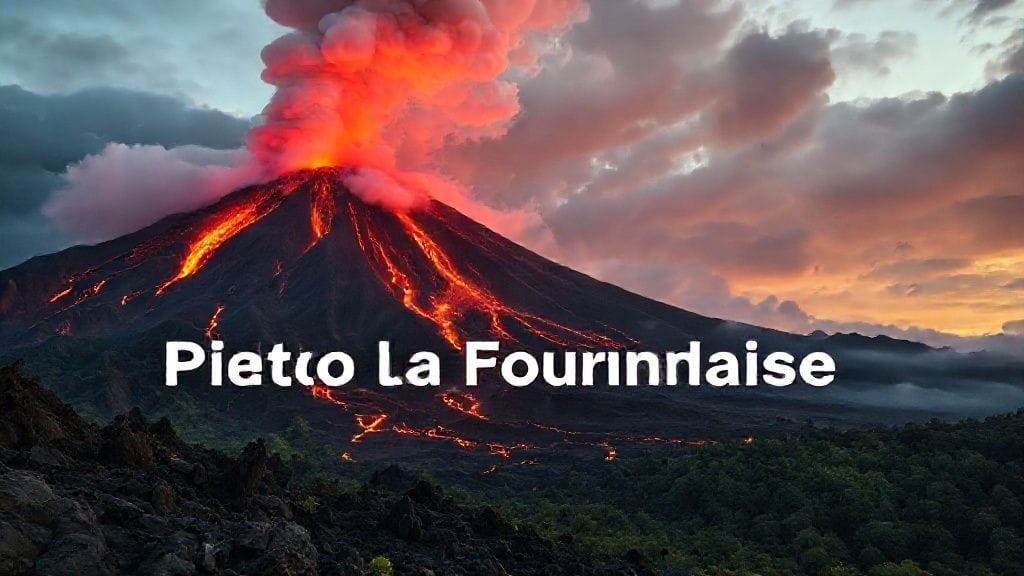
From this fissure, incandescent lava began to pour, glowing like molten gold against the deep greens and blues of the island’s landscape. The eruption had begun in earnest.
With smoke columns billowing and molten rivers coursing down steep slopes, the sight was both terrifying and hypnotic. Emergency services swiftly activated evacuation protocols, though the area affected was largely uninhabited, limiting human casualties.
Lava Flows and Earth’s Fury: A Chronology of the Eruption’s First Days
The first days brought relentless streams of lava advancing meter by meter. By April 4, the flows had reached lengths of several kilometers, creating new lava fields that engulfed forests and transformed valleys.
The eruption was characterized by Strombolian activity — intermittent explosive bursts that flung glowing bombs of molten rock into the air. Nightfall illuminated the mountain with a fiery glow visible for miles.
The local volcanic observatory documented the event with increasing detail, sending real-time data to researchers worldwide. Satellite images captured the expanding lava blankets, offering a surreal bird’s-eye view of nature's raw artistry.
Scientific Eyes on the Volcano: Monitoring Nature’s Fury
Thanks to decades of investment in seismic networks, GPS stations, and gas analyzers, the 2007 eruption was one of the best studied in Piton de la Fournaise’s modern history.
Volcanologists like Dr. Christine Lénat and her team from the Observatoire Volcanologique du Piton de la Fournaise worked around the clock to decipher data. Their monitoring helped predict shifts in activity, assess risk, and communicate effectively with local authorities.
The eruption offered new insights into basaltic fissure eruptions, magma dynamics, and the behavior of shield volcanoes, enhancing volcano hazard models worldwide.
The People of Réunion: Courage, Precaution, and Adaptation
Réunion’s inhabitants viewed the eruption with a unique blend of respect and resilience. Living with volcanoes is a way of life here, and while the spectacle was dramatic, it was not unexpected.
Evacuations were minimal but meticulously planned. Schools near the volcanic zone were temporarily closed, and residents received constant updates via radio and SMS alerts.
Local folklore and oral histories gave many a framework for coping, reminding them that renewal always follows destruction. For farmers, the lava meant lost crops but also fertile soils in the long term.
Ecological Impact: The Transformation of the Landscape
Volcanoes are paradoxes — creators as much as destroyers. The lava flows of 2007 obliterated forested areas, yet opened new horizons for ecological succession.
Scientists documented the disappearance of endemic plants over square kilometers, but also the gradual recolonization by hardy pioneer species.
Wildlife suffered displacements, but some adapted. For geologists and biologists, the eruption was a living laboratory on ecological resilience.
The Eruption’s Unexpected Twists: Shifts, Explosions, and Pauses
Volcanic eruptions in Piton de la Fournaise are rarely steady. The 2007 episode featured phases of intensification and calm. On April 10, a sudden explosion sent ash clouds soaring and renewed fears of wider impact.
Lava fountains alternated with quieter moments, and fissures sometimes closed before new ones opened. Each twist challenged scientists’ expectations and tested the preparedness of local agencies.
Economic Ripples: Tourism, Agriculture, and Local Livelihoods
Réunion’s economy, heavily reliant on tourism and agriculture, felt the eruption’s tremors beyond the volcanic zone.
Tourists flocked to witness the spectacle from safe vantage points, generating a temporary boom. Yet some farms within reach of lava flows faced losses of sugarcane and vanilla plantations.
In response, the government provided support to affected sectors, recognizing the delicate balance between reverence for nature and economic stability.
Cultural Reactions: Local Folklore and the Spirit of the Volcano
In Réunion’s rich Creole culture, Piton de la Fournaise is more than a mountain — it is a spirit that breathes life and commands respect.
During the eruption, cultural events and communal gatherings drew on traditions venerating the volcano’s force. Storytellers recounted ancestral tales, reminding listeners that the mountain’s fire has shaped not only the land but identity itself.
Songs, dances, and prayers offered ways to connect emotionally with the unfolding drama.
International Interest and Geological Insights Gained
The 2007 eruption captivated the scientific community worldwide. Teams from Japan, Italy, and the United States joined local researchers in studying eruption dynamics.
Data collected contributed to improved models of magma chamber mechanics and fissure eruptions. The event also underscored the importance of global cooperation in volcanic risk mitigation.
The End of the Fiery Chapter: Volcanic Calm Restored
By late April, magma began to retreat beneath the surface. Lava fountains slowed, fissures sealed, and quiet returned.
Though the eruption lasted just a few weeks, its imprint was indelible. The new lava fields covered over 3.5 square kilometers, a fresh testament to the mountain’s restless power.
Locals resumed their routine, shops reopened, and skies cleared, but the memory of fire remained vivid.
Lessons Learned and Preparedness for Future Outbursts
The 2007 eruption reaffirmed the vital importance of scientific vigilance and community preparedness. Authorities reviewed emergency procedures, improved communication networks, and enhanced public education.
The event was an undeniable reminder that Piton de la Fournaise’s next awakening was only a matter of time — and readiness was the key to resilience.
Piton de la Fournaise Today: A Living Symbol of Réunion
Today, Piton de la Fournaise is a beacon for geotourism and scientific research. Its slopes attract hikers, photographers, and vulcanologists eager to glimpse Earth’s primal forces.
The volcano remains active with smaller eruptions continuing over the years, keeping the island’s pulse aligned with the rhythms of fire and stone.
The Eruption in Global Context: Volcanic Events of the 21st Century
The 2007 eruption stands among a series of significant volcanic events worldwide — from Eyjafjallajökull in Iceland to Mount Merapi in Indonesia.
Each episode reminds humanity of the planet’s dynamic core and the need for constant vigilance. Unlike catastrophic eruptions of the past, Piton de la Fournaise shows how modern science and community can coexist with nature’s extremes.
Personal Stories: Eyewitnesses and Scientists Tell Their Tale
Marie-Claire, a local teacher, recalls walking near a safe observation point with her students. “It was like watching the earth breathe fire,” she said. “A mix of fear and admiration filled us.”
Dr. Lénat, reflecting years later, described the emotion of monitoring the eruption: “We are privileged witnesses but humbled by the forces we study. Nature teaches, sometimes harshly, yet always inevitably.”
The Volcano’s Voice: An Ongoing Dialogue Between Humanity and Earth
Piton de la Fournaise is more than a mountain; it is a dialogue etched in fire and stone, a reminder of Earth’s restless creativity.
Each eruption shapes landscapes and minds, challenging humans to listen, adapt, and respect the fragile balance of life and power.
Conclusion
The 2007 eruption of Piton de la Fournaise was a spectacular and humbling event — a vivid manifestation of Earth’s ceaseless dynamism. It revealed the fragile yet enduring relationship between humanity and nature, where respect and preparedness intertwine with awe and wonder.
This fiery chapter carried tales of destruction and renewal, science and culture, fear and curiosity. For Réunion’s people, and for the world, it was a reminder that beneath peaceful surfaces lie mighty forces shaping our planet’s past, present, and future. Volcanoes like Piton de la Fournaise invite us to embrace uncertainty and marvel at life’s elemental power — an eternal dance of fire, earth, and spirit.
FAQs
1. What caused the 2007 eruption of Piton de la Fournaise?
The eruption was caused by magma rising from deep within the Earth’s mantle, driven by tectonic processes beneath the oceanic crust around Réunion. Increasing magma pressure led to fracturing the volcano’s surface and lava outpour.
2. How long did the 2007 eruption last?
The main eruptive phase lasted approximately three weeks in April 2007, with lava flows and explosive activity gradually tapering off before the volcano returned to relative calm.
3. Were there any casualties or injuries during the eruption?
No human casualties were reported during the 2007 eruption thanks to efficient monitoring, evacuation protocols, and the location of the eruption in largely uninhabited areas.
4. What was the economic impact on Réunion?
While tourism benefited temporarily from increased visitors wanting to see the eruption, some agricultural sectors such as sugarcane and vanilla plantations suffered localized losses due to lava flows.
5. How does the 2007 eruption compare to previous eruptions?
The 2007 event was one of the larger recent eruptions but typical for Piton de la Fournaise, known for frequent, fluid basaltic eruptions that rarely cause major disasters but constantly reshape the island.
6. What scientific advances arose from studying this eruption?
Researchers gained insights into magma chamber mechanics, fissure eruptions, and volcanic gas emissions. The eruption helped improve eruption forecasting models and hazard management strategies.
7. How do island residents live with the constant threat of volcanic eruptions?
Réunion’s inhabitants maintain a culture of preparedness informed by centuries of volcanic history, embracing early warning systems and respecting the mountain’s power while integrating volcanic activity into their identity.
8. Is Piton de la Fournaise still active today?
Yes, Piton de la Fournaise remains one of the most active volcanoes on Earth, and it continues to erupt sporadically, keeping scientists and locals ever watchful.

