Table of Contents
- The Fiery Awakening: Introduction to the Erta Ale Eruption of 2017
- The Land of Fire: Geological and Cultural Context of Erta Ale
- A Rift in the Earth: The Afar Depression and its Volcanic Origins
- The Volcano’s Heart: History of Erta Ale’s Persistent Lava Lake
- Prelude to Disaster: Signs and Signals Before the 2017 Eruption
- January 2017: The Day Erta Ale Roared Back to Life
- A Spectacle of Nature: The Dynamics of the 2017 Eruption
- The Human Element: Local Communities Caught Between Awe and Danger
- Scientific Eyes on the Volcano: Monitoring Efforts and Challenges
- The Environmental Impact: Ash, Gases, and Landscape Changes
- Echoes of Fear and Myth: Cultural Reactions and Folklore Revived
- Erta Ale in the Global Geological Imagination
- Political Shadows: The Eruption Amidst Regional Instability
- The Aftermath: Destruction, Displacement, and Resilience
- Lessons from Erta Ale: Volcanology, Preparedness, and Climate Connections
- The Future of Erta Ale: What Scientists Anticipate Next
- Voices from Afar: Eyewitness Accounts and Personal Stories
- The Volcano in Art and Media: From Documentary to Digital Fame
- The Global Significance: Understanding Rift Volcanoes and Earth’s Inner Workings
- Preservation and Tourism: Balancing Spectacle with Safety
- Conclusion: The Living Earth and Our Fragile Relationship with Fire
- FAQs: Common Questions About the Erta Ale Eruption
- External Resource
- Internal Link
The Fiery Awakening: Introduction to the Erta Ale Eruption of 2017
On a calm January night in 2017, deep in the scorched and arid heart of Ethiopia’s Afar region, the earth murmured and groaned. Above the horizon, a distant glow pulsed—a sinister, almost hypnotic beacon of red-orange flames clawing skyward, piercing the starlit desert. Then came the tremors, subtle at first, growing into a relentless shudder beneath the feet of the local Afar tribespeople and the few adventurous scientists who dared approach the enigmatic volcano known as Erta Ale.
This was no ordinary fireworks display. The raging inferno emerging from fissures and transforming the landscape was the violent rebirth of one of the planet’s most fascinating geological phenomena. The 2017 eruption of Erta Ale was a dramatic reminder of Earth’s molten core breaking the surface and reshaping the world in fire and smoke—a raw spectacle that combines awe, danger, and profound scientific intrigue.
The Land of Fire: Geological and Cultural Context of Erta Ale
Erta Ale, aptly named the “Smoking Mountain” in the local Afar language, dominates a bleak, windswept expanse. This remote region is part of the Danakil Depression, one of the hottest and most inhospitable places on Earth. Yet, it is here that a glowing cauldron of fire has been simmering for centuries.
The Afar people, pastoralists known both for their resilience and adaptability, have long lived in the shadow of Erta Ale’s persistent lava lake. To them, the volcano is not just a geological marvel but a sacred and sometimes fearsome entity. Their oral histories recount tales of the mountain’s moods—periods of calm punctuated by sudden fury. Geologists came much later, armed with their instruments and hypotheses, fascinated by the volcano’s rare feature: a near-permanent lava lake, which has been continuously active in various degrees for over a century.
A Rift in the Earth: The Afar Depression and its Volcanic Origins
To understand the eruption’s significance, one must look beneath the surface—literally. Erta Ale is located where three tectonic plates diverge in what is known as a triple junction. The African continental crust pulls apart here at the boundary of the Nubian, Somali, and Arabian plates, creating one of the youngest and most active rift zones on Earth.
This rifting pulls the earth thin, allowing magma to reach the surface with remarkable frequency. The Afar Depression itself, lying about 125 meters below sea level in places, is one of the lowest and hottest spots on the planet, making it a geological crucible. It’s here that the Earth’s mantle bubbles up, feeding volcanoes like Erta Ale, shaping the land through fire and molten rock.
The Volcano’s Heart: History of Erta Ale’s Persistent Lava Lake
What makes Erta Ale uniquely captivating—both to volcanologists and to wanderers—is its hot, glowing heart: a lava lake that has persisted intermittently since records began, possibly for over a century. It stands as one of the very few continuously active lava lakes in the world, providing an almost living window into the fiery mantle beneath Earth’s crust.
Historical records and photographs since the early 20th century document this lake’s undulating surface, sometimes calm and shimmering, sometimes violently boiling and spilling molten rivers. Erta Ale’s behavior is unpredictable. Its lava lake level changes rapidly, influenced by pressures deep underground. This volatility has made it both a natural wonder and a hazard, attracting scientific study—and those with a hunger for extreme adventure.
Prelude to Disaster: Signs and Signals Before the 2017 Eruption
By late 2016, Erta Ale started showing signs of increased activity. Minor tremors shook the region, and satellite images revealed swelling within the volcano’s lava lake, suggestive of rising magma. Local observers felt something was stirring beneath the earth’s surface.
Volcanologists monitoring the volcano noted changes in gas emissions and thermal anomalies detected via satellites, pointing to a heightened state of unrest not seen in recent years. For the Afar people, these physical signs were steeped in spiritual significance—a warning that the mountain was preparing to unleash. But what exactly would unfold was still a mystery.
January 2017: The Day Erta Ale Roared Back to Life
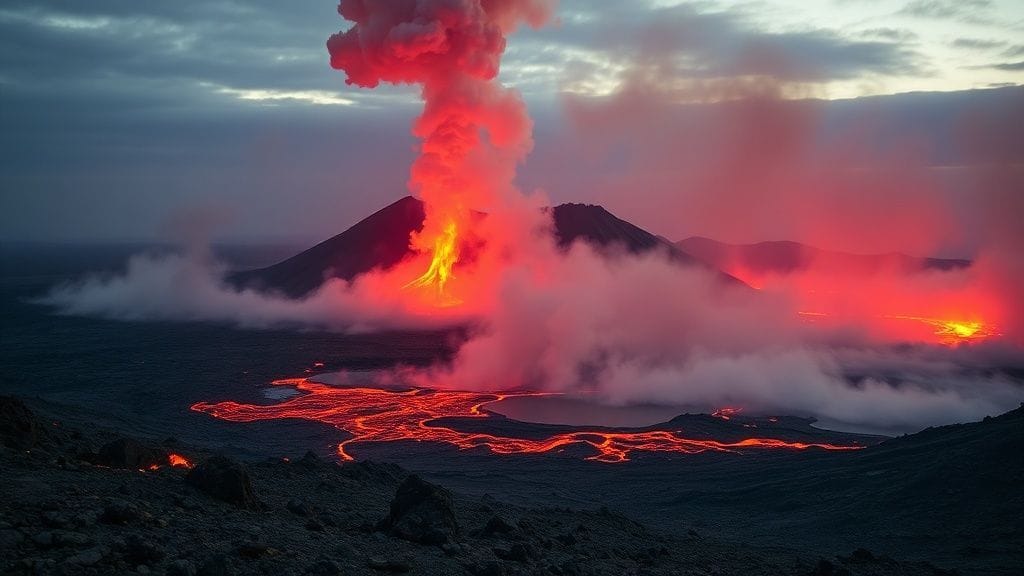
On January 4th, the first major fissures burst open along the rift valley flanks of Erta Ale, spewing lava fountains that illuminated the night with terrifying brilliance. The ancient lava lake overflowed, feeding new rivers of molten rock as fissures widened and transformed the volcanic edifice.
The eruption shook the landscape, sending plumes of ash and gas high into the dry desert air. This reawakening was not a gentle simmer, but a cathartic release of pent-up tectonic energy. It lasted for several weeks, capturing the attention of scientists, adventurers, and media worldwide.
A Spectacle of Nature: The Dynamics of the 2017 Eruption
The 2017 eruption was characterized by fissure-fed lava flows racing down the slopes, accompanied by roaring explosions as pockets of gas escaped violently. The relentless flow forced local herders to abandon grazing areas, while the glowing rivers incandescently carved new features on the scorched plain.
Thermal webcams showed fluctuating lava lake levels, with new eruptive vents appearing and disappearing unpredictably—an elemental dance of destruction and creation played out in real-time. The volcano transformed from a simmering wonder into a roaring dragon belching fire and ash, reminding humanity of both nature’s beauty and power.
The Human Element: Local Communities Caught Between Awe and Danger
Although remote, the eruption had a profound impact on the Afar people who live within reach of Erta Ale. Their lives, tied intimately to the harsh landscape, were disrupted by the advancing flows and toxic gases. Cattle grazing routes were compromised, water sources threatened, and traditional routes rendered impassable.
Yet, the eruption also reignited cultural narratives. Elders recounted ancestral tales of the Smoking Mountain’s temperament, reinforcing community bonds and spiritual resilience. The eruption, while dangerous, was also a moment for reflection on human vulnerability and the deep forces shaping their homeland.
Scientific Eyes on the Volcano: Monitoring Efforts and Challenges
Studying Erta Ale comes with unique challenges—extreme heat, remote location, and volatile political conditions complicate continuous scientific monitoring. Nonetheless, volcanologists from various countries coordinated satellite surveillance, seismic readings, and periodic field visits.
In 2017, these efforts provided critical insights into magmatic processes beneath rift volcanoes. Understanding Erta Ale’s eruptions helps shed light on the broader mechanisms driving continental break-up and new ocean basin formation—a fundamental chapter in Earth’s geological story.
The Environmental Impact: Ash, Gases, and Landscape Changes
The eruption released vast quantities of volcanic gases including sulfur dioxide, which briefly altered the chemistry of the local atmosphere. Ash deposits blanketed the surrounding desert, impacting air quality and disrupting local ecosystems.
Long-term, the lava flows reshaped the terrain, creating new rock formations and altering drainage patterns. This volcanic renewal exemplifies earth’s capacity to erase and recreate landscapes in geologic timeframes that fascinate scientists and ecologists alike.
Echoes of Fear and Myth: Cultural Reactions and Folklore Revived
For the Afar, the eruption was more than natural science—it was a reawakening of ancestral fears and myths. Stories about the volcano’s wrath were passed around campfires, blending memory and metaphor to explain the terrifying spectacle unfolding before their eyes.
The eruption reinforced the perception of Erta Ale as a living deity, demanding respect and caution. These cultural interpretations remind us how deeply natural events penetrate human consciousness, shaping identity and history beyond the boundary of facts and figures.
Erta Ale in the Global Geological Imagination
Geologists around the world watch Erta Ale not just for its immediate impact, but as a rare live window into mantle dynamics and rift processes. It provides a natural laboratory to study how continents split and new ocean basins form, a process that took millions of years to shape the Earth as we know it.
The 2017 eruption underscored Erta Ale’s importance in global geology, inspiring new research, capturing imaginations, and drawing public attention to Earth’s restless interior.
Political Shadows: The Eruption Amidst Regional Instability
The Afar region, while geologically vibrant, is politically sensitive. Proximity to borders and ongoing conflicts hamper emergency response and scientific access. During and after the eruption, political tensions complicated aid efforts and evacuation plans, highlighting the intersection between natural disasters and human conflict.
This volatility also influenced media coverage and international assistance, underscoring how the earth’s geological events seldom unfold in isolation from human affairs.
The Aftermath: Destruction, Displacement, and Resilience
Once the eruption subsided, the scars it left on landscape and community were undeniable. Some herders lost livestock; grazing lands were reduced; water quality was affected. Yet, the Afar people’s resilience shone through as they adapted, rebuilding their livelihoods and honoring their deep connection to the land.
Scientists cataloged new geological formations, while local guides promoted the volcano—carefully balancing preservation with the growing allure of adventure tourism.
Lessons from Erta Ale: Volcanology, Preparedness, and Climate Connections
The 2017 eruption contributed valuable data toward understanding low-viscosity basaltic eruptions, lava lake dynamics, and rift volcanism. It also highlighted the need for improved preparedness in remote and politically unstable regions.
Moreover, sustained volcanic activity like Erta Ale’s interacts with atmospheric processes, contributing to regional climate variability—a topic of ongoing study linking volcanic geology with global environmental change.
The Future of Erta Ale: What Scientists Anticipate Next
Volcanologists agree Erta Ale remains a volcano on the edge—always ready to awaken anew. Predictions suggest future eruptions are inevitable, with monitoring technologies aiming to provide early warning for both local communities and researchers.
Continued eruptions can shape the Danakil Depression and the very fabric of the African continent. Erta Ale is not merely a volcano; it is an active chapter in planet Earth’s evolving narrative.
Voices from Afar: Eyewitness Accounts and Personal Stories
Amid the scientific data and lava flows, the eruption’s human stories speak volumes. Elders remember the roaring night when the sky shimmered red; shepherds describe the fear of running from hot lava and the smell of sulfur; children recall watching glowing rivers snake across their world.
These voices add texture and soul to the raw geological phenomena, reminding us that history is lived experience, etched into hearts as much as rocks.
The Volcano in Art and Media: From Documentary to Digital Fame
The 2017 eruption propelled Erta Ale into global awareness through stunning photographs, documentaries, and viral videos. These visual testaments capture the paradox of destruction and beauty, inspiring filmmakers, writers, and digital explorers alike.
Through media, Erta Ale became a symbol of Earth’s power and fragility, igniting curiosity and concern across distant audiences.
The Global Significance: Understanding Rift Volcanoes and Earth’s Inner Workings
Erta Ale’s activity in 2017 offered a tangible glimpse into the processes shaping continents, deep Earth cycles, and planetary evolution. Rift volcanoes like Erta Ale help explain how the Earth’s surface is perpetually renewed, how land is born and reshaped, and how hidden forces sculpt the environment we inhabit.
Studying such phenomena transcends regional interest, touching on universal themes of creation, destruction, and transformation.
Preservation and Tourism: Balancing Spectacle with Safety
Today, Erta Ale is a magnet for the intrepid traveler seeking the “fire mountain” experience. However, fragile ecosystems, unpredictable volcanic activity, and the safety of locals and visitors demand responsible tourism policies.
Balancing access with conservation efforts remains a pressing challenge, ensuring the mountain’s fiery spirit endures for generations to come.
Conclusion
Erta Ale’s 2017 eruption was not just a geological event but a story of Earth’s volatile passion and humanity’s fragile standing upon its surface. It whispered of ancient forces tearing continents apart even as it illuminated the desert night with molten fire. In this moment, we glimpse the profound dialogue between planet and people—a dance of destruction and renewal where science meets spirit, dread meets wonder.
As we trace lava flows and listen to the echoes of rift valleys, Erta Ale reminds us how intimately connected we are to the planet beneath our feet: shaped by fire, defined by resilience, and forever at the mercy of the living Earth.
FAQs
Q1: What triggered the 2017 eruption of Erta Ale?
The eruption was triggered by magma movement beneath the volcano related to the ongoing rifting and tectonic activity in the Afar Depression, causing fissures to open and lava to overflow from the persistent lava lake.
Q2: How long did the 2017 eruption last?
The main eruptive phase lasted several weeks, with fluctuating activity including lava fountains, fissure eruptions, and lava flows, before gradually waning later in the year.
Q3: How did the eruption impact local Afar communities?
Local pastoralists faced the loss of grazing lands, threats to water sources, and hazardous conditions from ash and gases. Despite disruption, communities demonstrated resilience and reverence for the volcano’s power.
Q4: Why is Erta Ale considered scientifically important?
Erta Ale hosts one of the few long-lived lava lakes worldwide and sits at a rare triple junction rift zone, offering unique insights into mantle processes, rift volcanism, and continental break-up.
Q5: What challenges do scientists face studying Erta Ale?
Harsh desert conditions, political instability, remoteness, and volatile volcanic behavior make continuous monitoring difficult, relying heavily on satellite data and periodic field expeditions.
Q6: Has the 2017 eruption changed the geology of Erta Ale?
Yes, new lava flows altered the landscape, new fissures opened, and the lava lake’s configuration shifted, contributing incremental but significant changes to the volcanic edifice.
Q7: Are eruptions expected in the future?
Certainly. Erta Ale is an active volcano with ongoing magmatic activity. Eruptions, of varying intensity, are expected over coming years and decades as the rifting process continues.
Q8: How has the eruption influenced tourism and media attention?
The dramatic footage and photographs of the 2017 eruption boosted international interest, attracting adventurous tourists while also raising awareness about the need for safety and environmental preservation.

