Table of Contents
- A Fiery Awakening in the Horn of Africa
- The Nabro Volcano: A Sleeping Giant’s Profile
- Eritrea’s Geopolitical and Environmental Landscape in 2011
- Early Signs: Smoke and Rumblings in the Desert Sky
- June 12, 2011: The Day the Earth Roared
- The Plume of Ash: A Spectacle Seen from Space
- The Immediate Human Toll: Villages Shaken and Displaced
- Responses and Challenges: Eritrea’s Struggle with an Unexpected Disaster
- Regional and International Attention: From Ethiopia to NASA
- The Scientific Community’s Race to Understand the Eruption
- Climatic Consequences: How Nabro’s Ash Cloud Altered the Skies
- Volcanic Activity and Air Traffic: Disruptions Beyond Borders
- Resilience Amidst Ruins: Voices from the Nabro Footprint
- The Link Between Tectonics and Human Vulnerability
- After the Flames: Ecological Recovery in the Danakil Depression
- Lessons from Nabro: Disaster Preparedness in Volcanic Regions
- Eritrea on the Map: How the Eruption Changed Perceptions
- The Role of Satellite Technology in Modern Volcanology
- The Nabro Eruption in Global Volcanic History
- Memory, Myth, and Science: Narratives That Emerged Afterward
- Conclusion: A Landscape Reborn, A People Resilient
- FAQs About the Nabro Eruption
- External Resource
- Internal Link
1. A Fiery Awakening in the Horn of Africa
In the scorching expanse of the Danakil Depression, where the earth’s crust thins and the very air shimmers with heat, a sudden and profound event shocked a region relatively unaccustomed to volcanic fury. On a dry June day in 2011, the Nabro volcano, long dormant and veiled by silence, erupted in a dramatic display of nature’s volatile power. For the people living on the fringes of this largely uninhabited volcanic massif in northern Eritrea, the awakening of Nabro was not just a geological event — it was a profound disruption of landscape, livelihood, and the fragile balance between human existence and the earth’s volatile heart.
Imagine a sky suddenly perforated with a towering plume of ash and smoke, drifting ominously across the border plains and highlands. Visibility vanished behind a veil of darkness during midday; fine volcanic ash coated every surface, and a distant hush was pierced only by the low rumblings of earth and fire. This was the unexpected arrival of violence from within the planet — raw, relentless, and breathtaking.
2. The Nabro Volcano: A Sleeping Giant’s Profile
Nestled within the Afar Triangle, a geological depression riddled with crustal rifts and volcanic fissures, Nabro volcano is part of the East African Rift System—a region where the African plate is slowly splitting apart. With an elevation of about 2,218 meters, Nabro had not erupted in modern recorded history, rendering its hazards an uncertain mystery to scientists and local populations alike.
The geological landscape around Nabro is defined by vast lava fields, fumaroles, and sulfur springs. Its last known activities, believed to be thousands of years old, left scientists with fragments of lava and ash but little else. This made the 2011 eruption one of the most significant natural events in the Horn of Africa in decades.
3. Eritrea’s Geopolitical and Environmental Landscape in 2011
Eritrea, a young nation born from a hard-fought independence in the 1990s, faced multiple challenges—economic sanctions, political isolation, and regional tensions. Its northern province, bordering Ethiopia and Sudan, is notoriously arid and sparsely populated, home to nomadic pastoralists whose lives are intimately linked with the environment.
In this context, the eruption of Nabro introduced a new kind of threat—one from the earth itself. Government resources were limited, and disaster preparedness infrastructures were virtually non-existent. Moreover, the political sensitivity of the border area complicated international responses.
4. Early Signs: Smoke and Rumblings in the Desert Sky
In late May and early June of 2011, locals reported unusual volcanic sounds—distant booms and intermittent tremors beneath their feet. Small puffs of smoke rose intermittently from the mountain’s summit, but the outbreak remained obscured by geopolitical obscurity and scientific uncertainty.
It wasn’t until June 12 that the volcano violently awakened, releasing a massive plume of ash thousands of meters into the atmosphere. The initial eruption shook the ground with a force that echoed across the barren landscape, waking both human and animal communities.
5. June 12, 2011: The Day the Earth Roared
The exact moment when Nabro unleashed its fury is etched in the memories of herders and remote villagers. Without the advanced early-warning systems common in volcanic hotspots elsewhere, those nearest the eruption had scant warning.
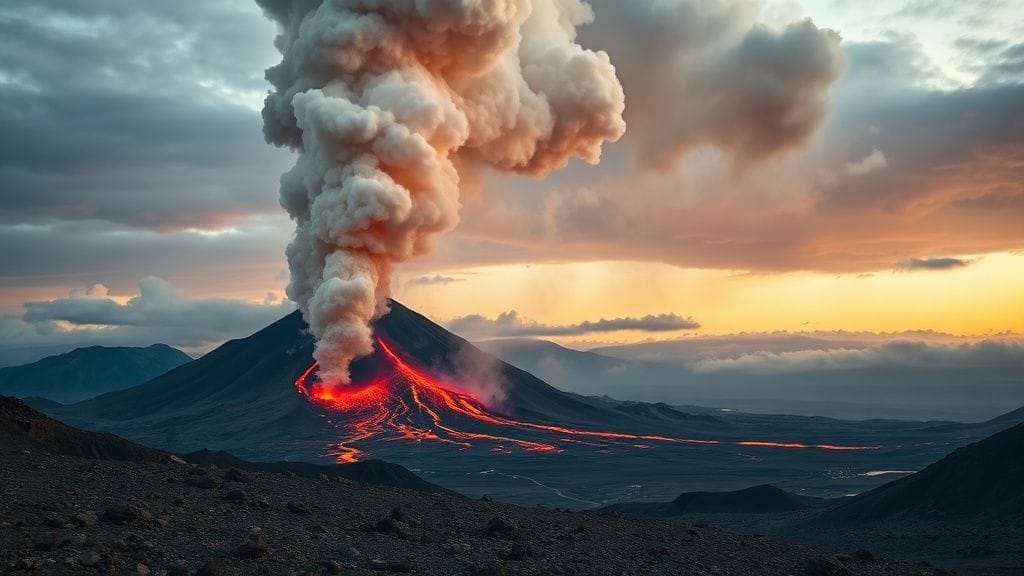
As the ash plume ascended rapidly, pyroclastic flows tore down the slopes, melting snow on higher elevations and triggering flash floods. The sky turned an eerie gray in the middle of the day; ominous sulfurous odors invaded the air. The eruption’s roar was heard for miles—a low, rolling thunder underscored by sharp explosions as vents blew violently.
6. The Plume of Ash: A Spectacle Seen from Space
Perhaps most striking was how the Nabro eruption was captured in vivid detail from orbital satellites. NASA's Earth Observing System satellites chronicled the enormous expansion of the ash cloud, which rapidly spread over 1,000 kilometers, crossing into neighboring countries and heading toward the Red Sea.
The imagery revealed ash columns soaring 15 kilometers high, an unprecedented sight for such a remote and little-known volcano. This satellite evidence allowed scientists worldwide to rapidly assess the eruption’s scale and potential impacts.
7. The Immediate Human Toll: Villages Shaken and Displaced
Though population density near Nabro was low, the eruption dealt a heavy blow to local communities. Pastoralists reported their villages buried under layers of ash; wells and water sources were contaminated, livestock suffered respiratory and digestive afflictions, and the fear of prolonged displacement gripped many families.
Emergency evacuations, though limited by the harsh terrain and political sensitivities, began within days. However, information flow was obstructed by Eritrea’s stringent communication controls, limiting outside awareness of the disaster’s human dimension.
8. Responses and Challenges: Eritrea’s Struggle with an Unexpected Disaster
At a time when Eritrea’s government was already strained by international isolation and scarce economic resources, the eruption presented a monumental challenge. Relief efforts faced logistical hurdles due to the remoteness of the affected area and difficulties in coordinating with international humanitarian organizations.
Scientific teams, largely foreign and dependent on satellite data, had limited on-the-ground involvement initially. The eruption highlighted gaps in disaster preparedness in the region, prompting calls for enhanced monitoring and cooperative frameworks in the Horn of Africa.
9. Regional and International Attention: From Ethiopia to NASA
The Nabro eruption did not remain a local event. Neighboring Ethiopia—a country with its own complex relationship with Eritrea—watched with concern as ash clogged air routes and threatened agricultural zones. The Red Sea’s shipping lanes were monitored closely for volcanic ash hazards, affecting one of the world’s busiest maritime corridors.
International space agencies and volcanologists used the event as a real-time case study to advance their understanding of rift volcanism and ash dispersion patterns. NASA and the European Space Agency shared data and collaborated closely in tracking the event’s progression.
10. The Scientific Community’s Race to Understand the Eruption
Nabro’s eruption was a wake-up call for volcanologists studying the Afar Triangle and East African Rift. For decades, the region had been recognized as geologically active, but the lack of recent eruptions and limited field data made risk assessment difficult.
Post-eruption studies included aerial reconnaissance, gas sampling from new fumaroles, and tectonic analyses revealing how the stresses along the rift influenced magma ascent. The eruption spurred research into the subsurface structure of the volcano and its magma chamber mechanics, providing fresh insights into continental rifting and volcanic hazards.
11. Climatic Consequences: How Nabro’s Ash Cloud Altered the Skies
Volcanic eruptions are known to impact climate through the injection of sulfur dioxide (SO2) and ash into the stratosphere. Nabro emitted an estimated 1.3 teragrams of SO2, creating a sulfate aerosol layer that scattered sunlight and temporarily cooled global temperatures.
For weeks, atmospheric readings detected altered radiation balances across the northern hemisphere. Researchers observed changes in weather patterns linked to the ash plume’s dispersal, reinforcing the interconnectedness of volcanic activity and global climate systems.
12. Volcanic Activity and Air Traffic: Disruptions Beyond Borders
The ash plume from Nabro posed immediate hazards to aviation safety. Volcanic ash can damage aircraft engines and reduce visibility drastically, leading to several flight cancellations and routing changes, particularly for flights over the Red Sea and Middle East.
Authorities scrambled to issue timely warnings, but the remoteness of the eruption presented unique challenges in monitoring and predicting ash cloud behavior. The incident underlined the need for integrated volcanic ash advisory centers covering all global airspaces.
13. Resilience Amidst Ruins: Voices from the Nabro Footprint
Despite the devastation, local peoples’ stories of survival and adaptation emerged. Pastoralists spoke of the fear and uncertainty they faced, but also their deep understanding of the landscape’s volatility honed over generations.
Aid workers documented how communities adapted—by shifting grazing routes, rationing water supplies, and maintaining social cohesion in the face of hardship. These human stories painted a powerful picture of resilience framed by nature’s unpredictable forces.
14. The Link Between Tectonics and Human Vulnerability
Nabro’s eruption underscored how the Earth’s internal dynamics intersect deeply with human vulnerability. The East African Rift is a place where the planet’s lithosphere pulls apart, generating spectacular geological phenomena — but also creating zones of heightened risk for the people who live there.
Many local populations live in fragile environmental contexts, dependent on scarce water and grazing lands. The eruption highlighted the pressing need to integrate geological hazards into development planning and humanitarian aid strategies in continentally active regions.
15. After the Flames: Ecological Recovery in the Danakil Depression
While initial volcanic activity devastated vegetation and contaminated soils, the longer-term ecological impacts were complex. Volcanic ash and lava flows eventually contributed minerals enriching the barren soils, potentially enhancing biological regeneration.
Scientists observed pioneer species colonizing new terrain in the years following the eruption. This natural process of renewal reflected earth’s extraordinary capacity to heal itself — albeit on timescales that test human patience and survival.
16. Lessons from Nabro: Disaster Preparedness in Volcanic Regions
The 2011 eruption laid bare the critical shortcomings in monitoring and preparedness for volcanic disasters in the Horn of Africa. It spurred regional and international bodies to advocate for increased investments in seismic and satellite monitoring technologies.
Training local populations in hazard recognition and emergency response became a priority to mitigate future chaos. Nabro became an emblematic case for improving early warning systems, transboundary cooperation, and scientific outreach.
17. Eritrea on the Map: How the Eruption Changed Perceptions
For many outside Eritrea, the Nabro eruption was an eye-opener — a reminder of this small nation’s dynamic geological setting and the human stories beneath headlines of political isolation.
International media coverage brought rare attention to Eritrea’s environmental challenges and scientific potential. The eruption positioned the country within a global conversation about natural hazards and sustainable development in underrepresented regions.
18. The Role of Satellite Technology in Modern Volcanology
Nabro’s unexpected eruption underscored the revolutionary role of satellite imagery in modern earth science. Remote sensing allowed near-real-time monitoring of ash plumes, thermal anomalies, and landform changes.
This technological edge proved indispensable in areas where ground access is limited or politically sensitive. The event accelerated efforts to enhance satellite networks, data sharing, and analytical tools to better forecast volcanic hazards worldwide.
19. The Nabro Eruption in Global Volcanic History
Though overshadowed by colossal eruptions like Eyjafjallajökull or Mount St. Helens, Nabro stands as a significant event in the 21st century, marking one of the largest eruptions in Africa during this period.
Its geological characteristics illustrated the diversity of volcanic processes on continental rifts and contributed to global databases that inform hazard models and climate science. Nabro reminds us that even remote volcanoes can command global attention.
20. Memory, Myth, and Science: Narratives That Emerged Afterward
In the aftermath, traditional stories and scientific findings intertwined. Local oral histories began incorporating new dimensions around the eruption, interpreting it as both a natural sign and a portent.
Scientists and anthropologists collaborated to bridge these worldviews, recognizing that understanding nature’s power requires both empirical data and respect for cultural narratives. This synergy enriched approaches to disaster risk knowledge and community engagement.
Conclusion
The eruption of Nabro in June 2011 was more than a geological event; it was a profound reminder of the planet’s dynamic spirit and humanity’s fragile place within it. In the barren landscapes of Eritrea’s Danakil Depression, fire and ash reshaped the earth, outlawed certainties, and tested resilience. Yet, in the stories of those who endured, the rigorous work of scientists, and the corrective steps towards preparedness, there emerges a testament to hope and renewal.
Nabro’s roar echoed across continents, touching skies, shaping climates, and exposing hidden fractures beneath distant deserts. Its legacy endures, etched in the ash-covered soils, the rebuilt lives, and in the vigilant eyes of those who watch for the earth’s next breath. This volcanic awakening challenges us to listen, to learn, and to live with respect for the restless forces beneath our feet.
FAQs
1. What caused the Nabro eruption in 2011?
The eruption was triggered by tectonic activity within the East African Rift System, where the continent’s crust is slowly pulling apart, allowing magma to force its way to the surface through cracks beneath the Nabro volcano.
2. How many people were affected by the eruption?
Although the affected region was sparsely populated, several thousand people experienced displacement due to ash fallout, destruction of water sources, and damage to livestock.
3. Was the Nabro eruption predicted?
No significant prediction was made before the eruption due to the volcano’s long dormancy and limited monitoring infrastructure; early warnings were essentially non-existent.
4. What were the global climate effects of the eruption?
Nabro injected a large amount of sulfur dioxide into the atmosphere, contributing to aerosol formation that temporarily cooled the atmosphere by reflecting sunlight away, affecting weather patterns for several months.
5. How did neighboring countries respond to the Nabro eruption?
Neighboring Ethiopia and others monitored ash clouds that affected air traffic and environmental conditions, while international agencies coordinated satellite tracking and scientific analysis.
6. What has been done to improve volcanic monitoring in the region since 2011?
The eruption prompted calls for enhanced seismic and satellite monitoring, better regional communication, and community education on natural hazards to improve early warning and response systems.
7. How did the eruption impact the local ecosystems?
Initially destructive, the volcanic ash and lava also enriched soils, paving the way for gradual ecological recovery and the establishment of pioneer plant species over subsequent years.
8. Why is the Nabro eruption historically significant?
It was the largest eruption in the region in recent decades and provided valuable scientific insights into rift volcanism, underscoring the need for awareness of geological hazards in the Horn of Africa.

