Table of Contents
- The Night the Mountain Roared: Prelude to the Eruption
- Ol Doinyo Lengai: The Sacred Mountain of the Maasai
- A Volcano Unlike Any Other: The World’s Only Active Carbonatite Lava
- The Geology Behind the Spectacle: Understanding Ol Doinyo Lengai
- Tensions Beneath the Crust: The Volcano’s Quiet Rumblings Before 2019
- Early Signs: Seismic Activity and Fumarolic Changes
- The Eruption Begins: January 2019’s Sudden Awakening
- Night into Day: The Visual Drama of Black Lava Streams
- Impact on the Maasai Communities: Tradition Meets Catastrophe
- Nearby Towns and Environmental Effects: Ash, Smoke, and Fear
- Scientific Mobilization: Researchers Racing to Study a Rare Event
- A Dance of Fire and Gas: Evolution of the Eruption Over Weeks
- The Role of Local Knowledge and Oral Histories in Crisis
- Emergency Response and Government Interventions
- The Cultural Mythology Reborn: How the Eruption Revived Ancient Tales
- Economic Aftermath: Tourism, Agriculture, and Displacement
- The Volcano in Media and Art: Images that Captured the World
- Reflections on Climate and Volcanic Activity in East Africa
- Long-Term Geological Consequences and Lava Field Creation
- The Eruption's Place in Global Volcanology: Lessons Learned
- Ol Doinyo Lengai Today: Quiet Again, Yet Forever Changed
- Conclusion
1. The Night the Mountain Roared: Prelude to the Eruption
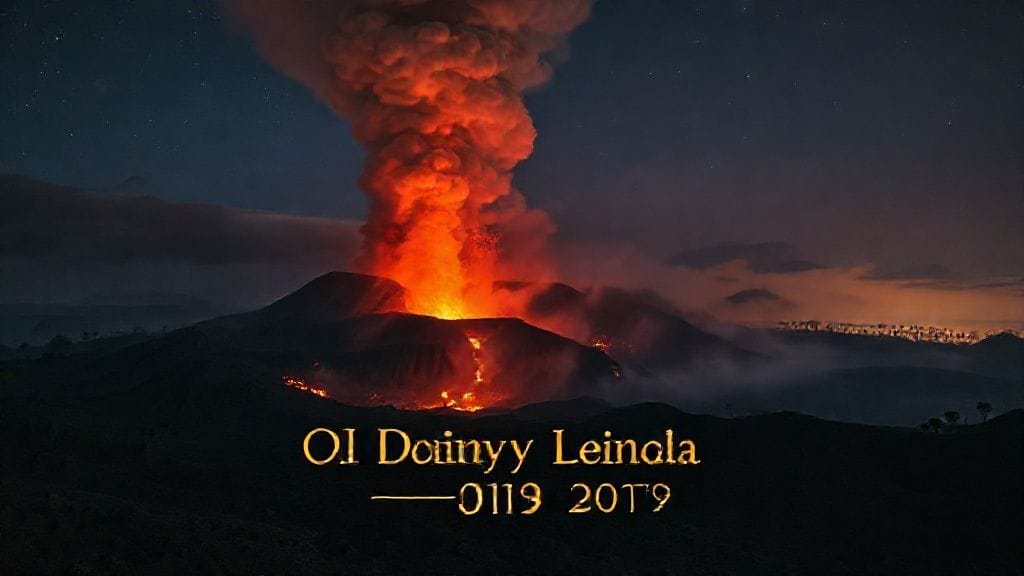
In January of 2019, beneath the star-scattered expanse of the East African sky, an ancient giant stirred. Ol Doinyo Lengai, often veiled in myth and serene silence, erupted with a suddenness that shattered the stillness. Villagers told stories of a low rumble, an ominous glow at the edge of the horizon, and skies darkening with ash. This was no ordinary geological event; it was the awakening of a mountain that embodied centuries of Maasai spirituality and science’s fascination alike.
As night turned into a fiery dawn, rivers of black lava coursed down its slopes, marking a violent change in a landscape that had long been synonymous with calm and reverence. From the quiet valleys to the bustling towns of northern Tanzania, the eruption sent ripples far beyond the foot of the volcano, touching lives, traditions, and the Earth's geological heart.
2. Ol Doinyo Lengai: The Sacred Mountain of the Maasai
Ol Doinyo Lengai, which translates from the Maasai language as “The Mountain of God,” is more than just a volcano; it is a cultural epicenter. For the Maasai people, this looming peak is not merely a natural formation but a divine entity, a bridge between heaven and earth. Stories passed down through oral tradition paint the volcano as the dwelling-place of gods, the keeper of fate and fortune.
The reverence for Ol Doinyo Lengai has shaped Maasai culture, influencing their rituals, storytelling, and connection to the land. In the centuries before its 2019 eruption, the volcano’s occasional activity was woven into their mythology—seen as signs or warnings from the divine. When the mountain rumbled in 2019, it echoed not just geological power but also a spiritual upheaval.
3. A Volcano Unlike Any Other: The World’s Only Active Carbonatite Lava
What sets Ol Doinyo Lengai apart from almost all other volcanoes in the world is its rare type of lava: carbonatite. Unlike the more common silicate lavas which produce thick, slow-moving flows, the carbonatite lava of Lengai is extraordinary—fluid, cool (by volcanic standards), and strikingly black upon eruption, but turning white as it weathers.
This uncommon lava composition has fascinated geologists for decades. The cold, fast-moving streams of carbonatite create an otherworldly glow in night settings, a phenomenon witnessed during the 2019 eruption and one that draws volcanologists like moths to an extraordinary flame.
4. The Geology Behind the Spectacle: Understanding Ol Doinyo Lengai
Formed in the East African Rift Valley, Ol Doinyo Lengai is an exceptional geological formation. Its relatively small size compared to other stratovolcanoes belies the uniqueness of its internal workings. The volcano is a natural laboratory for studying the interaction of tectonic rifts and deep-seated mantle processes.
The East African Rift, a slow tearing apart of the continent, fuels the ascent of rare magmas from unusual mantle sources. These processes filter through deep fractures, fostering carbonatite magma formation which then erupts through Lengai’s central vents.
5. Tensions Beneath the Crust: The Volcano’s Quiet Rumblings Before 2019
Before the spectacular 2019 eruption, Ol Doinyo Lengai exhibited subtle signs of unrest. Minor seismic tremors, increased fumarolic activity, and the elevated release of volcanic gases hinted at accumulating pressure beneath the surface. For months, geologists from the Tanzanian Geological Survey and international collaborators monitored these changes, seeking to understand whether the volcano was gearing up for a major event.
Local inhabitants, long tuned to environmental shifts, also noted the signs—stronger sulfur odors, warmer nights near the mountain, and an uneasy silence replacing the usual wildlife calls. These were harbingers of transformation, yet no one could predict the scale or timing of the looming eruption.
6. Early Signs: Seismic Activity and Fumarolic Changes
In late 2018, seismographs registered an uptick in volcanic tremors under Ol Doinyo Lengai. At the vents, fumaroles—openings releasing volcanic gases—intensified their output, spewing plumes of carbon dioxide and sulfur compounds. Thermal imaging revealed hotspots that had not been seen for years, suggesting magma movement in shallow chambers.
This combination marked the official awakening of the volcano after years of dormancy. Scientists issued warnings but faced the challenge of forecasting the volcano’s behavior with limited historical precedent.
7. The Eruption Begins: January 2019’s Sudden Awakening
On January 24, 2019, the eruption commenced without the dramatic precursors often seen elsewhere. At night, a fiery glow appeared along the upper slopes, followed by cascades of black, tar-like lava flowing swiftly down the mountain’s flanks.
The eruption freed torrents of carbonatite lava, emitting pungent sulfur smoke into the atmosphere. Satellite images captured wide ash plumes spreading across the Rift Valley, inviting both awe and concern globally.
8. Night into Day: The Visual Drama of Black Lava Streams
The 2019 eruption was not just a geologic event; it was a sensory experience. The stark contrast between the glowing lava streams and the blackened countryside was surreal. Observers spoke of the “firefalls” under the starlight, of rivers “flowing with cold flame.”
Drone and helicopter footage revealed snakes of lava meandering through the rugged terrain, consuming vegetation and reshaping the land. The lava’s unique chemical composition meant it cooled quickly, but its rapid advance surprised locals and scientists alike.
9. Impact on the Maasai Communities: Tradition Meets Catastrophe
For the Maasai communities living in the volcano’s shadow, the eruption was a visceral ordeal. Livestock grazing grounds were lost beneath layers of scorching lava and ash. Smoke suffocated grazing herds and tainted the water sources vital to both cattle and humans.
Elders interpreted the eruption as a supernatural message—some viewed it as a cleansing fire, others as a wrathful god’s punishment. The disruption to daily life was profound; many families were forced to flee, disrupting age-old rhythms tied to the land.
10. Nearby Towns and Environmental Effects: Ash, Smoke, and Fear
Beyond the immediate vicinity, ash fallout affected towns such as Karatu and Monduli. Schools temporarily closed, and respiratory ailments rose due to airborne particles. Farmers watched anxiously as their harvests risked being covered by volcanic debris.
The environmental consequences prompted swift local government action, including evacuations, distribution of masks, and public health advisories—measures as urgent as they were unprecedented for the region.
11. Scientific Mobilization: Researchers Racing to Study a Rare Event
Globally, volcanologists flooded into Tanzania keen to document and analyze the rare carbonatite eruption. Teams deployed instruments recording seismic data, gas emissions, and lava chemistry, while drones captured high-resolution images.
This was an urgent, real-time opportunity to advance understanding of one of the planet’s least-understood volcanoes, necessitating collaborations across agencies. Their findings promised to illuminate not only Ol Doinyo Lengai but also volcanic processes worldwide.
12. A Dance of Fire and Gas: Evolution of the Eruption Over Weeks
As weeks passed, the eruption’s dynamics shifted. Initial lava flows gave way to intermittent explosive activity, with plumes of ash rising kilometers into the sky. Gas emissions waxed and waned, as did seismic activity, painting a complicated picture of subterranean magma movement.
The fluctuating rhythm challenged conventional models, underscoring the volcano’s unique behavior. Meanwhile, local communities oscillated between hope and anxiety, caught in the volcanic dance of destruction and renewal.
13. The Role of Local Knowledge and Oral Histories in Crisis
In the shadow of modern science, Maasai oral traditions proved invaluable. Storytellers recounted past eruptions and their effects, informing emergency responses and offering cultural context to the unfolding crisis.
This blending of indigenous knowledge and scientific observation created a richer, more nuanced understanding of the eruption, revealing how human connection to the land can be a pivotal resource in disaster management.
14. Emergency Response and Government Interventions
The Tanzanian government, in coordination with international aid agencies, mounted a coordinated response. Evacuations, medical aid, and hazard mapping were prioritised to protect vulnerable populations.
Despite logistical challenges—remote geography, limited infrastructure—the response was swift. Public education campaigns in Kiswahili and Maa ensured awareness, helping communities prepare and minimize casualties.
15. The Cultural Mythology Reborn: How the Eruption Revived Ancient Tales
In the months following the eruption, Maasai poets and elders found renewed energy in revitalizing old legends. The spectacle breathed life into ancient narratives of gods and fire spirits, reinforcing cultural identity even as landscapes changed.
Festivals celebrating the mountain’s spirit were reimagined, merging contemporary events with millennia-old traditions, illustrating resilience through cultural continuity.
16. Economic Aftermath: Tourism, Agriculture, and Displacement
The eruption’s economic effects rippled through multiple sectors. Tourism initially declined due to access restrictions but eventually rebounded as visitors sought the spectacle.
Agricultural losses were substantial, with fields smothered under volcanic ash and pastures lost. Displacement strained social services, though many displaced persons aimed to return once safety was assured.
17. The Volcano in Media and Art: Images that Captured the World
Photographers and filmmakers captured the eruption’s otherworldly beauty—black lava streams glowing against twilight skies, villagers’ resilience amid ash-covered lands, scientific teams working in hazardous conditions.
These images circulated globally, elevating awareness of Ol Doinyo Lengai and sparking dialogue about the interplay of nature’s fury and human tenacity.
18. Reflections on Climate and Volcanic Activity in East Africa
Scholars examined whether climate patterns, including shifts in rainfall and temperature, affected volcanic activity. While definitive links remain elusive, the eruption added urgency to interdisciplinary studies exploring regional volcanism in the context of environmental change.
19. Long-Term Geological Consequences and Lava Field Creation
Geologically, the 2019 eruption significantly reshaped the volcano’s landscape. New lava fields plateaued parts of the mountain’s southern flank, altering drainage patterns and ecosystems.
Future eruptions may build upon these changes, meaning the 2019 event marked both an end and a beginning in the volcano’s slow evolution.
20. The Eruption's Place in Global Volcanology: Lessons Learned
Ol Doinyo Lengai’s 2019 eruption provided rare data on carbonatite volcanism, challenging existing models and inspiring new hypotheses.
Its eruption underscored the importance of monitoring "unusual" volcanoes and integrating scientific and indigenous knowledge, enriching global volcanic risk understanding.
21. Ol Doinyo Lengai Today: Quiet Again, Yet Forever Changed
As silence returned, the mountain resumed its stoic presence. Villagers returned, ecosystems began to heal, but traces of the eruption remain—a scar on the earth and in collective memory.
Ol Doinyo Lengai persists as a symbol of nature’s unpredictable power, spiritual depth, and scientific mystery.
Conclusion
The 2019 eruption of Ol Doinyo Lengai was more than a geological event; it was a profound moment where earth, culture, and humanity converged. The sacred mountain's fiery awakening stirred not just landscapes but souls and scientific frontiers. From the Maasai’s ancient myths to the sharp-eyed instruments of volcanologists, the eruption revealed the intertwined nature of human experience and the Earth’s dynamic pulse.
This spectacle of black lava flowing under African skies will be remembered as a testament to resilience, the enduring bond between people and place, and the relentless quest for knowledge. Ol Doinyo Lengai’s voice had risen once more—telling stories as old as time yet urging us to listen anew.
FAQs
1. What makes Ol Doinyo Lengai’s lava unique compared to other volcanoes?
Ol Doinyo Lengai is the world's only active volcano that erupts natrocarbonatite lava, which is far cooler and more fluid than the typical silicate lavas, appearing black at eruption but quickly turning white as it weathers.
2. How did the Maasai people interpret the 2019 eruption?
The Maasai saw the eruption as a significant spiritual event, often interpreting it as a message from their gods—either a warning or a purifying force. Their oral traditions deeply connect them to the mountain’s activity.
3. What were the immediate environmental impacts of the eruption?
Volcanic ash and gases affected air quality and agriculture, while lava flows destroyed grazing land and altered local ecosystems. Water sources were temporarily contaminated, affecting people and livestock.
4. How did scientists monitor the eruption and its precursors?
Using seismographs, gas analyzers, thermal imaging, and satellite data, scientists tracked seismic activity, gas emissions, and surface temperature changes to understand magma movement and eruption progression.
5. What role did local knowledge play during the eruption?
Masai oral histories and observations guided emergency responses and provided insights into past volcanic behavior, complementing scientific data and aiding in community preparedness.
6. What long-term changes did the eruption cause in the region?
The eruption created new lava fields, altered topography, disrupted ecosystems, and affected economic activities such as farming and tourism, shaping the landscape and society for years to come.
7. Why is Ol Doinyo Lengai important for global volcanology?
Its unique carbonatite lava and eruption patterns provide rare opportunities to study mantle chemistry, magma dynamics, and volcanic hazards not seen elsewhere, deepening volcanic science.
8. Has Ol Doinyo Lengai erupted since 2019?
As of now, the volcano remains relatively quiet but continues to be closely monitored due to its unpredictable nature.

