Table of Contents
- The Roar from the Abyss: Dawn of the Alayta Eruption
- Ethiopia in the Early 20th Century: A Land on the Edge
- Geological Origins: The Rift Valley’s Fiery Heart
- The Alayta Volcano: A Sleeping Giant Awakens
- April 1915: The Sky Turns Red Over Tigray
- Communities in Peril: The Human Face of the Eruption
- The Unseen Fury: Lava Flows and Ash Clouds
- Voices from the Time: Eyewitness Accounts and Oral Histories
- The Ethiopian Empire’s Response: Leadership Amid Chaos
- Colonial Shadows: International Perspectives on the Disaster
- Impact on Agriculture and Economy: The Scorched Earth
- Ecological Aftermath: Renewal from Desolation
- Scientific Enlightenment: What the 1915 Eruption Taught Geologists
- The Eruption in Ethiopian Culture and Memory
- Modern Alayta: A Landscape Marked by Fire and Time
- Conclusion: Echoes of Fire Across Generations
- FAQs: Unraveling the Mystery of the Alayta Eruption
- External Resource
- Internal Link
The Roar from the Abyss: Dawn of the Alayta Eruption
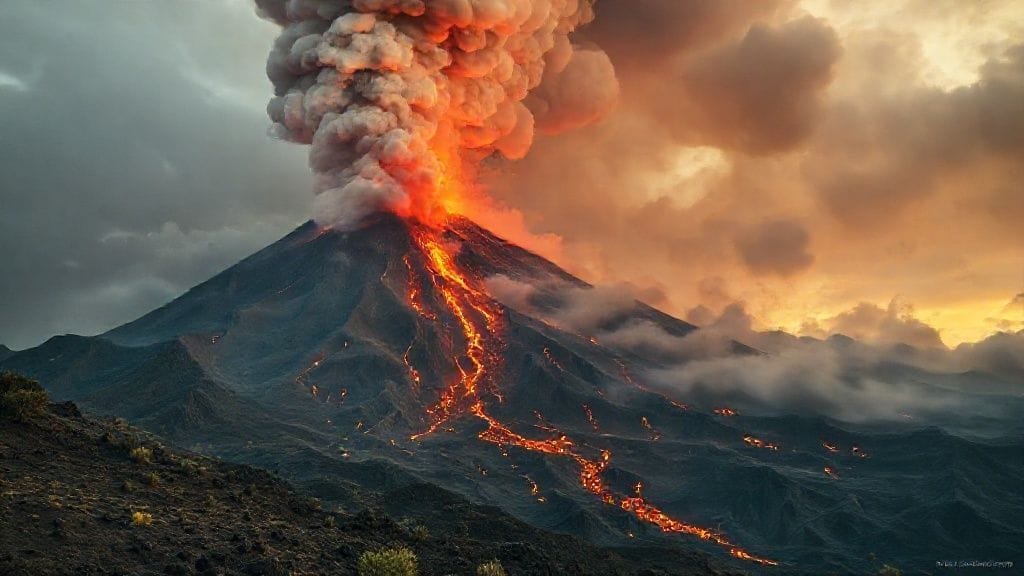
The sun had barely risen over the austere highlands of Ethiopia on that April morning in 1915, when the ground beneath the small villages of Tigray began to tremble like a beast stirred from slumber. A distant rumble quickly grew into a deafening roar—as if the earth itself was tearing open. Dark smoke billowed into the sky, blotting out the clear blue with ominous plumes of ash and dust. Rivers of glowing magma hissed as they carved their fiery path down ancient slopes, reshaping the landscape and the lives anchored to it.
The Alayta volcano, long dormant but known to locals as a place of spiritual power and dread, was awakening anew. This eruption would ripple through the Ethiopian highlands, shaking not only the ground underfoot but the very fabric of the society that had lived alongside the Rift Valley’s restless heartbeat for centuries.
Ethiopia in the Early 20th Century: A Land on the Edge
To fully grasp the eruption’s significance, we must first transport ourselves to Ethiopia of 1915—a nation rich in history and resilience, yet navigating uncertain modern tides. Under the reign of Emperor Lij Iyasu I until 1916, the empire was grappling with internal political tensions and external pressures from burgeoning European colonial ambitions in East Africa.
Amidst this fragile political landscape, the highland peoples—predominantly Tigrayans near Alayta—tilled the rocky fields and moved through patterns inherited from generations. Ethiopia was unique as a symbol of African sovereignty, resisting colonization when so many neighbors succumbed, yet it was no stranger to sudden upheavals, whether political or natural.
In this precarious balance of tradition and emerging modernity, the violent awakening of a volcano was anything but a simple natural disaster—it struck at the core of a society that was deeply intertwined with its land.
Geological Origins: The Rift Valley’s Fiery Heart
Stretching over 6,000 kilometers, the Great Rift Valley is one of the most geologically dynamic regions on Earth. Ethiopia sits astride this deep fracture, where tectonic plates pull apart, creating fissures, volcanoes, and earthquakes. This geological setting makes the land both bountiful and perilous.
Alayta volcano, part of the Afar Triangle, formed as a product of these monumental forces. Beneath the rugged terrain bubbled molten rock from Earth’s mantle, patiently building pressure over decades, even centuries. The volcano’s history was masked by sparse records, as written documentation in the area was near nonexistent; knowledge passed orally, interwoven with myth and mysticism.
The Alayta Volcano: A Sleeping Giant Awakens
Before 1915, Alayta was known to locals as a dormant but unpredictable presence. The land surrounding it bore scars of older lava flows—blackened rocks and jagged landscapes startling against the otherwise fertile highlands. Farmers tread cautiously around certain valleys, whispering stories of ancestral warnings.
In the months before the eruption, subtle tremors, often dismissed by villagers as the whims of the earth, haunted the region. Yet, no one could foresee the scale or duration of what was to come.
April 1915: The Sky Turns Red Over Tigray
The eruption began unassumingly with small earthquakes, and then, on that fateful April day, a fissure cracked open on the northeast flank of Alayta, spewing a terrifying cascade of lava and ash skyward. Darkness fell over the afternoon, ash blanketing villages, skies thickening with sulfurous smoke.
The ground convulsed, and clouds of volcanic gases forced people to flee. Livestock panicked; crops wilted under suffocating ash. The rivers nearby, usually lifelines for communities, were choked with sediment and acidic runoff.
Historians believe the eruption lasted for months, with intermittent explosions and lava flows spanning tens of kilometers. The landscape was irrevocably altered, with new basaltic plateaus sealing old pathways and fertile valleys.
Communities in Peril: The Human Face of the Eruption
While the geological narrative is gripping, it is the human stories that lend the event its soul. Villages comprised mostly of subsistence farmers faced devastation. Food stores were buried, homes razed, and entire families displaced.
Oral traditions speak of heroic rescues and tragic losses. One tale recounts a shepherd who, sensing the earth’s fury, led his flock to higher ground, saving both sheep and village from the worst of the lava flow. Another voice from the time described the eruption as “the anger of the gods,” a punishment and a call to respect the earth’s power.
Yet exact casualty numbers remain uncertain, shrouded in time and the silence of scattered communities.
The Unseen Fury: Lava Flows and Ash Clouds
Scientific studies now reveal that Alayta’s 1915 eruption was primarily effusive, with extensive basaltic lava flows that ponded and spread laterally rather than explosive pyroclastic blasts. This slow-moving river of molten rock, sometimes tens of meters thick, overwhelmed the natural landscape and human infrastructure alike.
The ash clouds were persistent, drifting hundreds of kilometers away, causing temporary climate effects such as reduced sunlight and altered rainfall patterns. These can have far-reaching consequences on agrarian communities even far from the eruption itself.
Voices from the Time: Eyewitness Accounts and Oral Histories
Unlike eruptions documented with meticulous detail in Europe or Asia, Alayta’s 1915 awakening was witnessed primarily by rural Ethiopians who preserved memories not on paper but in stories, songs, and rituals.
Anthropologists collecting oral histories in the mid-20th century found recurring themes of fear, reverence, and resilience. One elder recounted how villagers gathered under moonlight to pray for the volcano’s mercy, interpreting natural signs as messages from ancestors.
This emotional landscape illustrates how geological events transcend science—they become woven into the identity of the people.
The Ethiopian Empire’s Response: Leadership Amid Chaos
Emperor Lij Iyasu’s reign was marked by internal unrest and a looming succession crisis. News of the Alayta eruption reached the imperial court slowly, but its consequences on the northern provinces added pressure.
The government dispatched envoys to assess damages and offer aid, a significant logistical challenge given Ethiopia’s rugged terrain and limited infrastructure. Assistance was constrained but symbolically important—it framed the emperor’s legitimacy as the protector of his people and stewards of the land.
Interestingly, the eruption coincided with Lij Iyasu’s declining influence, culminating in his deposition the following year. The natural disaster arguably compounded perceptions of instability.
Colonial Shadows: International Perspectives on the Disaster
While Ethiopia remained fiercely independent, its neighbors—Italian Eritrea and British Somaliland—watched with mixed interest. European colonial administrations had scientific missions studying volcanic activity in East Africa, but political motives often colored their reports.
To some, the eruption was a natural spectacle; to others, a reminder of Ethiopia’s unpredictable land and “wildness,” which colonial powers claimed justified territorial ambitions. Maps and reports from European geologists filtered back to Europe, shaping narratives of the “Dark Continent” as simultaneously majestic and hazardous.
Impact on Agriculture and Economy: The Scorched Earth
The eruption dealt a blow to Tigray’s agriculture, the backbone of local sustenance. Ash fall buried crops, rendering fields unusable for seasons. Livestock losses further strained communities.
Trade routes between highland villages and regional markets suffered delays and disruptions. Food scarcity led to migration pressures, while some farmers abandoned their lands for safer zones temporarily.
Economic recovery was slow, but Ethiopian farmers’ resilience and traditional knowledge enabled gradual adaptation to the changed terrain—a testament to human ingenuity amid hardship.
Ecological Aftermath: Renewal from Desolation
Paradoxically, volcanic eruptions fertilize soils with minerals, setting the stage for ecological renewal. Years after 1915, Alayta’s barren fields sprouted fresh vegetation—resilient grasses, shrubs, and eventually crops adapted to the mineral-rich soil.
Fauna returned stepwise as habitats regenerated, rebuilding a fragile ecosystem. This cyclical dance of destruction and life encapsulates nature’s resilience, an eternal reminder of creation from catastrophe.
Scientific Enlightenment: What the 1915 Eruption Taught Geologists
Although little scientific equipment was in situ during the eruption, retrospective studies have illuminated features of Alayta’s behavior. The eruption’s duration and extensive lava fields contributed to a better understanding of fissure eruptions in the East African Rift system.
Modern volcanologists see Alayta as a crucial case study in basaltic fissure volcanoes, influencing hazard assessment and informing disaster preparedness for similar regions.
The Eruption in Ethiopian Culture and Memory
Beyond maps and science, the Alayta eruption lives on in Ethiopian cultural memory as a symbol of earth’s power and human vulnerability. Stories of the event are told among Tigray communities as cautionary tales and reminders of respect for nature.
Festivals incorporate rituals honoring the land’s tumultuous spirit, and songs echo the lament and hope born from fire and ash. From history to folklore, Alayta endures as a living story etched in the Ethiopian soul.
Modern Alayta: A Landscape Marked by Fire and Time
Today, Alayta remains an active volcano with intermittent emissions, its black lava flows stark against striking desert plains. It attracts geologists and adventurous travelers alike, drawn by the raw beauty and intense energy of a land still humming with ancient forces.
Communities nearby carry forward agricultural traditions adapted to volcanic soils, blending past lessons with modern techniques. The volcano is no longer just a threat—it is part of daily life, a reminder that nature’s rhythm continues unabated.
Conclusion: Echoes of Fire Across Generations
The 1915 Alayta eruption was more than a geological event; it was a profound chapter in Ethiopia’s story of endurance and transformation. It challenged people physically and spiritually, eliciting fear, resilience, and reverence that would echo through generations.
Reflecting on Alayta’s fiery awakening reveals how natural disasters intertwine with human history, shaping landscapes, societies, and cultures. As the Rift Valley continues its slow tectonic dance, the land reminds us that change—sometimes violent—is the heartbeat of life itself.
FAQs: Unraveling the Mystery of the Alayta Eruption
Q1: What caused the Alayta eruption in 1915?
A1: The eruption was caused by tectonic activity along the East African Rift Valley, where the Earth's crust is pulling apart, allowing magma to surface through fissures in the Alayta volcano.
Q2: How long did the eruption last?
A2: The eruption occurred primarily during April 1915 and is believed to have lasted several months with intermittent lava flows and ash emission episodes.
Q3: Were there many casualties during the eruption?
A3: Precise casualty figures are unknown due to limited documentation, but oral histories indicate significant displacement and losses among local communities.
Q4: How did the Ethiopian government respond to the disaster?
A4: The imperial government dispatched envoys to aid affected regions, though logistic challenges limited the scale of assistance amid broader political turmoil.
Q5: What impact did the eruption have on agriculture?
A5: Ash fall and lava flows destroyed crops and pastures, creating food shortages and economic hardship for local farmers that lasted for several years until the land recovered.
Q6: Did the eruption influence Ethiopian culture or folklore?
A6: Yes, the eruption entered local mythology and oral traditions as a powerful symbol of nature's force and divine warning, still commemorated in folk songs and rituals.
Q7: How does the eruption help scientists today?
A7: It provides a valuable case study in fissure eruptions in rift zones, aiding volcanic hazard assessments and understanding of geological processes in East Africa.
Q8: Is Alayta still active?
A8: Yes, Alayta remains an active volcano with ongoing geothermal activity, although at a much lower intensity than during the 1915 eruption.

