Table of Contents
- The Calm Before the Storm: Nisyros Island in the Late 19th Century
- Geological Marvels and Hidden Dangers
- A Sleeping Giant: Understanding Volcanic Activity on Nisyros
- Early Signs and Local Whispers: The Prelude to Eruption
- August 1887: When Fire Met the Aegean Breeze
- The First Explosions: Awakening from Dormancy
- The Tremors That Shook More Than Earth
- Lava, Ash, and Smoke: A Landscape Transformed
- The Human Response: Panic, Faith, and Survival
- Eyewitness Accounts: Voices from the Ash
- Scientific Observations: Advancing Volcanology Amid Crisis
- Rescue and Relief: Regional and International Efforts
- The Economic Toll on a Fragile Island Economy
- Cultural Reverberations: Folklore, Myths, and Memory
- Environmental Changes: From Devastation to Renewal
- The Aftermath: Rebuilding Lives and Communities
- Volcanic Legacy: Nisyros in the History of Natural Disasters
- Modern Perspectives: Nisyros Volcano Today
- Lessons Learned: Preparedness and Awareness
- The Eruption’s Place in Greek and Mediterranean History
- Conclusion: The Eternal Dialogue Between Man and Nature
- FAQs: Unveiling the Mysteries of the 1887 Nisyros Eruption
- External Resources
- Internal Link
The Calm Before the Storm: Nisyros Island in the Late 19th Century
In the summer of 1887, the small island of Nisyros, nestled quietly in the southern Aegean Sea, basked under the warm glow of a Mediterranean sun. Its whitewashed houses scattered over rugged slopes, olive groves swaying gently in the breeze, and fishermen’s boats bobbing on the crystalline waters painted a picture of serene island life. Travelers might have thought this corner of Greece a tranquil haven, untouched by the tremors of history and nature.
Yet beneath this idyllic facade, the earth harbored a latent fury, a restless heart hidden deep within its volcanic core. Nisyros was not just another serene island; it was a living, breathing geological marvel, one of the youngest volcanic complexes in the Hellenic arc—a place where the molten forces of the earth whispered secrets of creation and destruction.
The summer of 1887 would forever alter the island’s destiny. A sudden, violent eruption would shatter the calm, sending shockwaves not only through its small population but across the scientific communities of Europe, marking a dramatic chapter in the interplay between mankind and the volatile earth beneath their feet.
Geological Marvels and Hidden Dangers
Nisyros, part of the Dodecanese archipelago, had long fascinated geologists and travelers alike. Formed about 150,000 years ago through intense volcanic activity, its terrain is marked by craters, fumaroles, and thermal springs—a testament to the molten reservoirs simmering below. Like a sleeping dragon nestled in the sea, the volcano appeared dormant yet alive, with occasional tremors hinting at its underlying power.
This volcanic zone results from the subduction of the African tectonic plate beneath the Eurasian plate, a dynamic process fueling the infamous Hellenic volcanic arc. On Nisyros, this tectonic tension was palpable. The island’s volcanic system included a massive caldera, one of the largest in the Mediterranean, surrounded by numerous vents and fissures.
Despite the apparent tranquility, such volcanic islands had been known for sudden and sometimes catastrophic eruptions throughout human history. The local population had grown accustomed to certain natural signs but never before the violent awakening that was to come.
A Sleeping Giant: Understanding Volcanic Activity on Nisyros
For centuries, the inhabitants of Nisyros lived in a delicate balance with their environment, their livelihoods shaped by the island’s rugged geography and fertile volcanic soils. Oral traditions preserved memories of past earthquakes and smaller eruptions, but scientific understanding was just reaching the threshold of modern volcanology.
European volcanologists of the 19th century observed Mediterranean volcanic activity with great interest but had limited capacity for predictive science. Instruments to monitor seismic activity were rudimentary, and most knowledge came from geological surveys and eyewitness narratives.
In Nisyros, the volcano had been quiet for decades. Yet, small fumarolic emissions around the Stefanos crater were a continuous reminder of the simmering potential. Was the volcano truly dormant or merely resting? The summer of 1887 was to answer this pressing question decisively.
Early Signs and Local Whispers: The Prelude to Eruption
July and early August 1887 saw subtle but unsettling changes beneath the island’s surface. Fishermen reported unusual bubbling in coastal springs and a thickening of sulfuric fumes wafting through the air near the caldera rim. Minor earthquakes rattled homes but were largely dismissed as ordinary tremors.
Local shepherds and villagers spoke in hushed tones about strange lights flickering in the night sky near the crater and ominous rumbles deep below. Superstition mingled with concern; elders warned of the earth’s wrath, invoking ancient myths of volcano gods angered by human hubris.
Despite these warnings, daily life continued. The markets bustled, children played in narrow alleys, and fishermen prepared their nets. Yet, a tension hung in the air—as invisible as the gases curling from cracks—signaling that something momentous was on the horizon.
August 1887: When Fire Met the Aegean Breeze
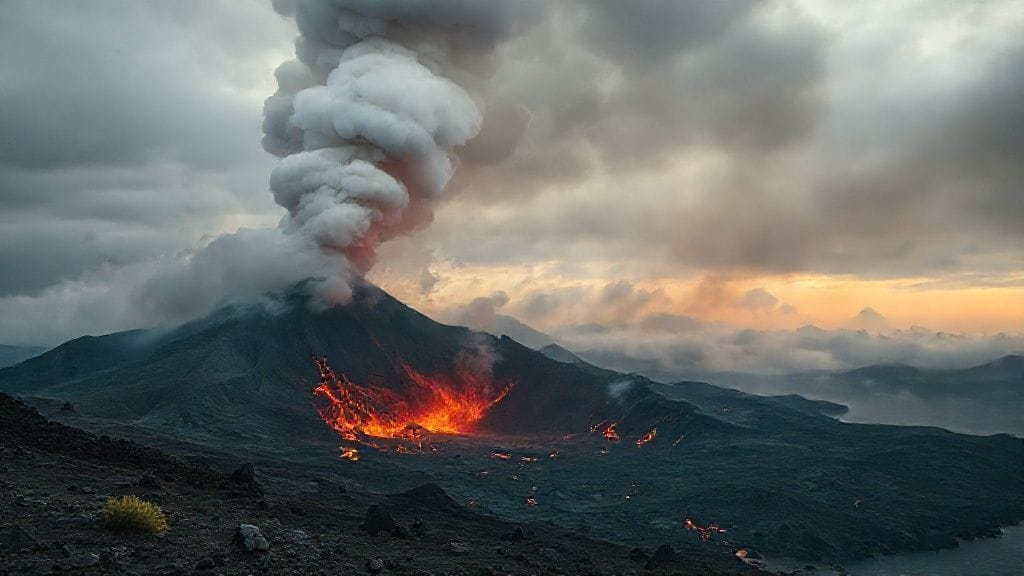
On the evening of August 24th, 1887, the earth beneath Nisyros convulsed with an intensity never before recorded in local memory. A series of violent explosions tore through the caldera, sending columns of ash and smoke high into the air, blotting out the stars.
The initial blasts were followed by a cascading series of eruptions lasting several days. Fiery lava fountains sprayed incandescent rock and molten magma across the crater rim, creating new geological formations and altering the island’s silhouette against the twilight.
The howling of the wind seemed to merge with the roar of the volcano, as if nature itself composed a symphony of destruction. Villagers fled their homes, clutching what possessions they could carry, as volcanic ash blanketed the landscape like a shroud.
The First Explosions: Awakening from Dormancy
The eruption began with phreatic explosions—violent blasts caused by steam pressure as magma encountered groundwater. These were followed by magmatic activity as molten rock breached the surface.
Seismic activity surged. Earthquakes of increasing magnitude shook walls, causing fissures to split ancient stone or tumble brittle plaster. Vents opened along the caldera, issuing gas clouds tinged with acrid sulfur, a deadly reminder of the subterranean inferno.
The Stefanos crater, long a geothermal hotspot but quiet, now became the epicenter of chaotic eruptions. Red-hot rocks splattered the surroundings, forest patches caught fire, and the sulfurous scent overwhelmed the senses.
The Tremors That Shook More Than Earth
The earthquakes, some measuring notable intensities, did more than cause superficial damage. They threatened the very foundation of life on the island. Wells filled with muddy water, crops were trampled or buried, and paths became impassable.
For an island whose economy relied heavily on agriculture and fishing, the timing was catastrophic. Communications with nearby islands faltered as boats stayed ashore, and relief was uncertain.
One remarkable tremor on August 26th was so strong it toppled several buildings in the island's modest capital, Mandraki, scattering terrified residents. The psychological impact was immense; people felt as though the earth itself was turning against them.
Lava, Ash, and Smoke: A Landscape Transformed
Volcanic ash fell in thick layers, coating vineyards and olive groves; the once green island turned ghostly gray and white overnight. The sky, filled with ash clouds, turned dim even during midday, disrupting daily rhythms.
Molten lava flows carved new paths through valleys, consuming everything in their path. The heat was palpable; animals fled or perished.
Scientists observing from a distance documented the eruption’s phases, noting the transition from explosive to effusive activity. Photographers and painters, captivated by the theatrical destruction, started capturing the event, intertwining art and science in a vivid historical record.
The Human Response: Panic, Faith, and Survival
In the face of nature’s fury, the people of Nisyros displayed resilience mingled with despair. Many sought refuge in churches, praying fervently to saints for protection—a medieval instinct gripping a modernizing society.
Local leaders organized evacuation efforts, coordinating with fishermen for transport to neighboring Kos and Rhodes. Stories of heroism emerged: families sheltering neighbors, merchants sharing food, children clutching handmade rosaries.
Aid from the Greek mainland and Ottoman administrations trickled in, but the island’s remote location constrained immediate assistance. Communication lines were fragile, and news spread slowly, compounding anxiety.
Eyewitness Accounts: Voices from the Ash
Letters and diaries from 1887 preserve haunting chronicles of the eruption. A schoolteacher described the "silent, creeping darkness" that swallowed the village during an ashfall. A fisherman wrote of the "sea whispered warnings" before tremors struck, recalling how waves violently surged in unexpected patterns.
One particularly vivid account came from a visiting geologist, who marveled at the raw power yet likened the event to "Earth’s breath, sudden and violent but somehow sacred."
These personal testimonies breathe life into the stones and ash—transforming facts into human experience, a tapestry of fear, awe, and hope.
Scientific Observations: Advancing Volcanology Amid Crisis
Though tragic, the eruption offered invaluable data to emerging disciplines. European and Greek scientists studying the event refined their understanding of volcanic behavior, particularly of the phreatomagmatic processes driving explosive activity.
The 1887 Nisyros eruption became a case study in hazard assessment, contributing to early seismic monitoring efforts. Instruments like seismographs and barometers, though primitive, recorded fluctuations that today’s volcanologists interpret as precursors to eruption.
This event helped lay the groundwork for modern volcanic risk management—a painful but vital legacy.
Rescue and Relief: Regional and International Efforts
In the wake of disaster, aid efforts unfolded amidst logistical challenges. The Ottoman Empire, overseeing the region, mobilized resources, while the Greek government dispatched supplies and personnel.
Neighboring islanders opened their doors, providing shelter and basic necessities. International observers, from scientists to humanitarian groups, traveled to Nisyros, sometimes risking aftershocks and health hazards from sulfurous gases.
These cooperative responses underscored the emerging spirit of solidarity in the face of nature’s caprices—a lesson resonant to this day.
The Economic Toll on a Fragile Island Economy
The eruption dealt a crippling blow to Nisyros’ agriculture, fisheries, and trade. Vineyards, a primary source of income, were decimated under layers of ash. Olive trees, centuries old in some cases, withered or burned.
Fishing fleets suffered damage; fishermen who once navigated calm waters now faced wary seas and damaged boats. Markets dwindled as resources became scarce.
The island’s recovery would take years, relying on subsistence farming, outside assistance, and the indomitable spirit of its people.
Cultural Reverberations: Folklore, Myths, and Memory
Nisyros’ eruption of 1887 did not fade into geological dusty pages—it seeped into the cultural fabric. New legends arose, intertwining with ancient myths of Hephaestus, god of fire and forge, who was believed to dwell beneath volcanic mountains.
Songs, poems, and folk tales narrated the day “earth roared and spit fire,” teaching future generations about respect for nature’s power. Religious festivities evolved to include prayers for safety from volcanic wrath.
This cultural embedding ensured the event’s remembrance far beyond textbooks.
Environmental Changes: From Devastation to Renewal
Nature’s cyclical power revealed itself in the years following the eruption. While initially devastated, the volcanic soil enriched by ash proved fertile for new growth. Ecosystems slowly rebounded; endemic plant species adapted to the changed environment.
Thermal springs and fumaroles returned, reestablishing Nisyros as a unique geothermal site attracting scientific interest and eventually tourism.
This balance between destruction and regeneration emphasized the transformative nature of volcanic activity.
The Aftermath: Rebuilding Lives and Communities
Reconstruction was a painstaking process. Houses had to be rebuilt, infrastructure restored, fields cleared of debris. Some families chose to relocate, while others remained, anchored by ancestral ties.
Community bonds strengthened through shared adversity. Buildings were adapted with better foundations; awareness of volcanic hazards increased.
Local governance incorporated disaster considerations into planning—a nascent approach in disaster resilience.
Volcanic Legacy: Nisyros in the History of Natural Disasters
The 1887 eruption entered compendiums of Mediterranean volcanic events, standing alongside the likes of Santorini’s ancient cataclysm and Mount Vesuvius’ more famous devastations.
It highlighted the persistent natural hazards faced by island populations and underscored the need for scientific vigilance.
Today, Nisyros serves as a living laboratory, reminding us that our planet remains dynamic, unpredictable, and awe-inspiring.
Modern Perspectives: Nisyros Volcano Today
In the 21st century, Nisyros remains an active volcanic site studied continuously by volcanologists. Seismic networks monitor subtle changes, warning systems are in place, and the island has embraced its volcanic heritage as both a scientific treasure and a tourist attraction.
Visitors can walk the caldera’s rim, explore steaming vents safely, and reflect upon the island’s heroic past.
Lessons Learned: Preparedness and Awareness
The eruption of 1887 taught harsh lessons—how quickly the earth can turn from provider to destroyer, how communities must prepare for rare but high-impact events.
Emergency protocols, education about volcanic hazards, and technological advances in monitoring have roots in lessons from events like Nisyros.
In a world facing increasing environmental uncertainties, these lessons resonate profoundly.
The Eruption’s Place in Greek and Mediterranean History
While overshadowed by more massive eruptions in history, Nisyros’ 1887 event remains vital in understanding the geodynamic forces shaping the Mediterranean.
It exemplifies the ongoing dialogue between nature and civilization in the region, framing geological phenomena within broader historical narratives of survival, adaptation, and resilience.
Conclusion
The eruption of Nisyros in 1887 is more than a chapter in a volcanic event log. It is a vivid story of human courage, scientific awakening, and the timeless struggle between stability and upheaval. As flames and ash reshaped the island’s landscape, they also transformed the lives and spirits of its inhabitants.
This event teaches us humility before nature’s raw power, reverence for Earth’s mysteries, and hope through resilience. In the rhythm of eruptions and quakes lives a profound truth: humanity may never tame the earth’s fury, but it can learn to live with it, adapt, and emerge stronger.
Nisyros stands today as a testament to this enduring dialogue—its caldera silent now, yet echoing with stories of fire, survival, and renewal.
FAQs
Q1: What caused the Nisyros eruption in 1887?
A1: The eruption was caused by the movement of magma beneath the island, driven by tectonic activity related to the subduction of the African plate beneath the Eurasian plate. This led to a violent phreatomagmatic explosion when magma encountered groundwater.
Q2: How did the eruption affect the local population?
A2: The eruption led to substantial destruction of homes, farmlands, and fishing infrastructure, causing displacement, economic hardship, and social upheaval. However, the islanders’ resilience and communal efforts minimized long-term casualties.
Q3: Were there any notable scientific advances resulting from this eruption?
A3: Yes. The 1887 eruption provided valuable data on phreatomagmatic processes and seismic precursors. It helped advance early seismology and volcanology, particularly in the Mediterranean region.
Q4: How did the eruption influence local culture and folklore?
A4: It enriched the island’s mythology, blending ancient beliefs about volcanic deities with new stories of survival. Religious practices incorporated prayers for protection, and the eruption became a key element of local cultural identity.
Q5: Is Nisyros still an active volcano?
A5: Yes, Nisyros remains an active volcanic system, with ongoing geothermal activity monitored by scientists. While no major eruptions have occurred since 1887, minor seismic and fumarolic activity continues.
Q6: What lessons does the eruption of Nisyros offer today?
A6: It highlights the importance of volcanic monitoring, emergency preparedness, community resilience, and international cooperation in disaster response.
Q7: How has the environment of Nisyros changed since the eruption?
A7: After initial devastation, the environment gradually recovered. Volcanic ash enriched soils, fostering lush vegetation and unique ecosystems. The island’s geothermal features remain prominent and attract scientific and tourist interest.
Q8: How was aid coordinated following the eruption?
A8: Aid was provided by the Ottoman authorities, Greek government, neighboring islands, and international observers, though logistical challenges limited the speed and extent of support.

