Table of Contents
- The Quiet Before the Storm: Montserrat’s Early Days
- The Soufrière Hills Volcano: A Sleeping Giant Awakens
- February 1995: The Beginning of the Fiery Reckoning
- First Explosions: A Community Caught Unaware
- Destruction of Plymouth: A Caribbean City Lost
- Evacuations and Exile: The Human Toll Revealed
- The Volcano’s Relentless Fury: 1995–1997
- Changes in Landscape: New Landforms and Environmental Impact
- Life Amidst the Ash: Resilience on a Volcanic Island
- The Role of Science: Monitoring and Predicting the Volcano
- British Government and International Response
- Socio-economic Upheaval: The Island’s Economy Shattered
- Cultural Identity and Migration: Montserrat’s Diaspora
- Recovery Efforts: Rebuilding or Relocating?
- The 2010 Eruption: Resurgence of Soufrière Hills
- The 2010 Crisis in Context: What Triggered the New Activity?
- Impact on Local Communities: Fear Reignited
- Lessons Learned: How Past Experience Shaped the Response
- The Global View: Soufrière Hills in Volcanology History
- Soufrière Hills Today: Living in the Shadow of Fire
- Memorialization and Collective Memory of the Disaster
- Conclusion: The Enduring Spirit of Montserrat’s People
- FAQs: Understanding the Soufrière Hills Eruption
- External Resource
- Internal Link
1. The Quiet Before the Storm: Montserrat’s Early Days
Nestled in the Leeward Islands of the Caribbean, Montserrat was known as the "Emerald Isle of the Caribbean" — a lush tropical paradise, shimmering with verdant hills, white sandy beaches, and a close-knit population deeply attached to the rhythms of island life. Before the fires, before the ashes, this volcanic gem was a leisurely haven where the ocean breeze carried the scent of hibiscus and salt, and the sound of calypso filled the air during vibrant street festivals. Life, though humble, followed patterns forged over centuries, as generations farmed the fertile volcanic soil, fished its warm waters, and built communities that thrived in harmony with nature’s whims.
But beneath this idyllic surface lay a hidden menace, a giant waiting for centuries, dormant yet dangerously alive.
2. The Soufrière Hills Volcano: A Sleeping Giant Awakens
Soufrière Hills, Montserrat’s central volcano, had been quiescent for hundreds of years. In the geological tapestry of the Caribbean, this volcano was part of the Lesser Antilles volcanic arc, a chain known for violent eruptions spanning back millennia. Yet, to the local population, the mountain was a benign presence, its last known eruption dating to the 17th century. For decades, the mountain sat, shrouded in lush forest, its fiery nature almost forgotten.
Scientists, however, always regarded Soufrière Hills with cautious respect. Its proximity to populated areas meant an eventual awakening could result in disaster. When the first subtle tremors shook the island in mid-1995, the quiet giant stirred once more.
3. February 1995: The Beginning of the Fiery Reckoning
On a balmy evening in February 1995, small earthquakes rattled Montserrat’s foundations. Residents initially shrugged them off, accustomed to minor seismic events in the Caribbean. But the tremors persisted and intensified, signaling something unprecedented. Scientists from the Montserrat Volcano Observatory (MVO) and international volcanologists quickly recognized the signs: magma was rising.
By late July of the same year, small ash clouds began venting from the volcano’s summit. Soufrière Hills was waking up, preparing to rewrite Montserrat’s destiny.
4. First Explosions: A Community Caught Unaware
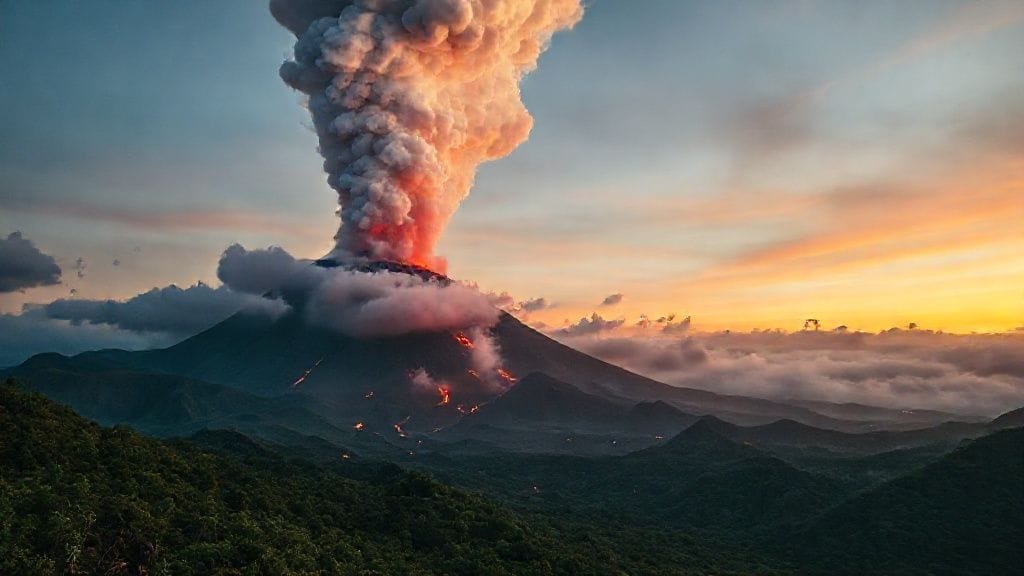
The initial eruptions were relatively minor but ominous. Explosive events sent plumes of ash and steam soaring hundreds of meters into the sky. Though the scale seemed manageable, the rapid escalation of activity alarmed authorities and residents alike.
Ash fall disrupted daily life, contaminating crops and water supplies. Schools closed, and the island braced itself. The eruption’s unpredictability planted a seed of fear, undermining the consistent rhythm of island living.
5. Destruction of Plymouth: A Caribbean City Lost
Plymouth, the island’s capital and cultural heart, bore the brunt of the volcanic fury. Over days and weeks in 1997, pyroclastic flows—fast-moving avalanches of hot gas, ash, and volcanic debris—rushed down the volcano’s flanks, engulfing Plymouth in a terrifying shroud. Streets disappeared beneath meters of ash and solidified rock; the once vibrant capital became a ghost town, frozen in volcanic time.
The loss was both physical and symbolic: Plymouth’s destruction severed a core of Montserratian identity.
6. Evacuations and Exile: The Human Toll Revealed
The eruption forced mass evacuations unprecedented in Caribbean history. Approximately two-thirds of the island’s population fled, many seeking refuge in the United Kingdom and other Caribbean islands. Families were separated, livelihoods lost, and a profound sense of displacement settled over the community.
The exodus was not just a logistical necessity; it was a wrench to hearts and minds, an uprooting of culture and tradition from ancestral lands.
7. The Volcano’s Relentless Fury: 1995–1997
Between its initial awakening and the climax of activity in 1997, Soufrière Hills exhibited a volatile temperament. Periods of heightened explosive activity cycled with quieter phases, each eruption reshaping the island’s geography and threatening the remaining inhabitants.
Seismic activity dwarfed previous records. Lava domes emerged and collapsed, sending deadly pyroclastic flows that reshaped river valleys and sterilized vast tracts of fertile land.
8. Changes in Landscape: New Landforms and Environmental Impact
The volcanic upheaval was as much geological as human. The eruption’s ash and lava deposits buried more than half of the island’s previous land area, transforming coastlines and creating new terrain features. The southern part of the island became largely uninhabitable, riddled with fumaroles and unpredictable volcanic hazards.
The environmental impact was staggering: from the death of forests to the contamination of freshwater supplies, the island’s ecosystem was dramatically altered.
9. Life Amidst the Ash: Resilience on a Volcanic Island
Yet, life persevered. Those who remained in the north—the “safe zone”—adapted to a transformed reality. Agriculture shifted, infrastructure was rebuilt with volcanic threats in mind, and a new economy emerged, often centered on government services, tourism linked to volcanic phenomena, and resilience.
Montserrat’s people developed a dual identity: survivors and witnesses of one of the Caribbean’s most dramatic natural disasters.
10. The Role of Science: Monitoring and Predicting the Volcano
The Soufrière Hills eruption became a focal point for volcanological research. The establishment and expansion of the Montserrat Volcano Observatory enabled real-time monitoring of seismic events, gas emissions, and ground deformation.
Scientists developed predictive models that, despite the mountain’s capricious nature, saved thousands of lives by informing evacuation orders. The collaboration between local authorities and international experts set new standards for volcanic risk management worldwide.
11. British Government and International Response
As a British Overseas Territory, Montserrat received substantial assistance from the UK government. Emergency aid, evacuation logistics, and reconstruction funds were mobilized, though critics argued that responses were sometimes slow or inadequate considering the scale of the disaster.
International organizations and neighboring islands offered support. Public attention on Montserrat highlighted challenges faced by small island nations vulnerable to natural catastrophes.
12. Socio-economic Upheaval: The Island’s Economy Shattered
Before the eruption, Montserrat’s economy was modest but stable — based on agriculture, tourism, and light manufacturing. The eruption devastated these sectors overnight. Agricultural land was lost beneath ash; tourism plummeted due to safety concerns.
Government services became the predominant employer, aided by UK funds, but sustainable economic recovery remained elusive.
13. Cultural Identity and Migration: Montserrat’s Diaspora
The mass migration reshaped Montserrat’s demographic and cultural fabric. Diaspora communities formed in the United Kingdom, the United States, and neighboring Caribbean islands, maintaining strong ties to the island through festivals, music, and storytelling.
This scattering of a people created a complex cultural identity—one that bridges loss with hope, displacement with belonging.
14. Recovery Efforts: Rebuilding or Relocating?
Efforts to rebuild the island have been a complicated dance between hope and caution. New settlements were established in the northern safe zone, including Brades, intended to replace Plymouth as the new capital. Infrastructure was gradually restored, schools reopened, and public services returned.
Yet, the shadow of Soufrière Hills looms large, reminding Montserratians daily of nature’s unpredictable power.
15. The 2010 Eruption: Resurgence of Soufrière Hills
Fifteen years after the initial devastation, in 2010, Soufrière Hills stirred again. Though smaller in scale compared to the catastrophic phase of the mid-1990s, the eruptions forced renewed vigilance and concern among the island’s reduced population.
On that fateful day, plumes of ash ascended once more, echoing the island’s fiery birthright and reminding its people that nature’s covenant is both beautiful and dangerous.
16. The 2010 Crisis in Context: What Triggered the New Activity?
The 2010 eruption was not an isolated event but a continuation of the volcano’s restless pulse. Geological analysis links the renewed activity to magma pressure build-up and structural changes within the volcanic system.
Scientists had tracked increasing seismic tremors and gas emissions, signaling that Soufrière Hills had not returned to dormancy but remained permanently active.
17. Impact on Local Communities: Fear Reignited
The 2010 eruption brought anxiety back to a population still scarred by past trauma. Evacuation protocols were activated; flights were canceled, and people prepared for possible displacement.
Though the eruption was less destructive, the psychological weight was immense. For Montserratians, the mountain’s grumble awakened memories of loss and resilience alike.
18. Lessons Learned: How Past Experience Shaped the Response
Thanks to the hard-earned lessons from the 1995–97 eruptions, authorities managed the 2010 activity with increased efficiency and transparency. The Montserrat Volcano Observatory played a crucial communication role, issuing timely warnings that minimized panic.
Local and international cooperation improved, showcasing how adaptive governance can face perennial natural hazards.
19. The Global View: Soufrière Hills in Volcanology History
Soufrière Hills stands as one of the most extensively studied volcanic eruptions of modern times. Its eruption provided crucial insights into dome-building, pyroclastic flows, and eruption forecasting.
The disaster elevated Montserrat on the world stage, advancing volcanic science and shaping international disaster response policies.
20. Soufrière Hills Today: Living in the Shadow of Fire
Today, Soufrière Hills remains a living, breathing force. Scientists continue to monitor the volcano closely, and residents balance their lives on an island reclaimed by nature but never fully free from risk.
Tourists arrive, drawn by the stark beauty and compelling story of survival, while locals carry on the legacy of adaptation and endurance.
21. Memorialization and Collective Memory of the Disaster
Montserrat commemorates the eruption through monuments, museums, and annual ceremonies. The tragedy engraved itself into collective memory not merely as an event of destruction but as a testament to strength and community.
Storytelling, oral histories, and cultural expressions keep alive the experiences of those who endured and those who were lost.
22. Conclusion: The Enduring Spirit of Montserrat’s People
The Soufrière Hills eruption, particularly its 2010 resurgence, is more than a geological event; it is a human saga of loss, resilience, and hope. Montserrat’s people faced adversity on an epic scale, yet they have continued to forge their identity amid ashes and uncertainty.
Their story reminds us that nature’s power is immense, but so too is human courage—the story of a small island community standing tall in the shadow of a sleeping giant that refuses to rest.
FAQs: Understanding the Soufrière Hills Eruption
Q1: What caused the Soufrière Hills eruption to begin in 1995?
A1: The eruption was triggered by magma rising from beneath the Earth’s crust, pressurizing the volcanic system after centuries of dormancy. Tectonic activity in the Caribbean plate subduction zone contributed to this geological upheaval.
Q2: How much of Montserrat was destroyed by the 1995–97 eruptions?
A2: Approximately two-thirds of the island was rendered uninhabitable, including the complete destruction of Plymouth, the island’s capital.
Q3: What was the human impact of the eruptions?
A3: Around 7,000 people—two-thirds of the population—were displaced. There were 19 confirmed fatalities, and countless livelihoods shattered by evacuation and destruction.
Q4: How did scientists monitor and predict the volcanic activity?
A4: The Montserrat Volcano Observatory used seismic monitoring, gas measurements, and ground deformation data to track the volcano’s behavior and anticipate eruptions.
Q5: What triggered the 2010 eruption after years of relative calm?
A5: Ongoing magma movement and pressure buildup within the volcano led to renewed eruptions. The 2010 events were smaller but signaled that the volcano remained active.
Q6: How did the eruption affect Montserrat’s economy?
A6: The economy was severely impacted, with agriculture and tourism devastated. Recovery relied heavily on British aid and shifted toward government services and volcanic tourism.
Q7: What role did the British government play post-eruption?
A7: The UK provided emergency aid, facilitated evacuations, and funded reconstruction. However, some criticized the response as insufficient for the disaster’s scale.
Q8: How is the Soufrière Hills eruption remembered today?
A8: Through museums, memorials, cultural events, and community storytelling, the eruption is remembered as a potent symbol of resilience and survival.

