Table of Contents
- The Restless Giant Beneath the Sea: An Introduction to Kick ’em Jenny
- The Calm Before the Storm: Grenada in the Late 1930s
- Geological Origins: Birth of an Underwater Volcano
- Early Signs: The Whispering Tremors
- April 1939: The Day the Sea Roared
- The Immediate Impact: Panic and Uncertainty on Grenada’s Coast
- Scientific Understanding in 1939: How Volcanoes Were Viewed
- The Challenge of Underwater Eruptions: Nature’s Hidden Fury
- The Aftermath: Shifting Shorelines and Troubled Waters
- Colonial Administration: British Responses to the Disaster
- Local Stories: Eyewitness Accounts and Oral Histories
- The Tsunami Threat: Fear Beneath the Waves
- Kick ’em Jenny in the Global Geological Context
- Lessons Learned: Advancements in Volcanology and Seismic Monitoring
- The Volcano’s Later Activity and Modern Monitoring Efforts
- Kick ’em Jenny in Grenadian Culture and Memory
- The Environmental Consequences on Marine Life
- How Kick ’em Jenny Changed Disaster Preparedness in the Caribbean
- Comparing 1939 to Other Caribbean Volcanic Eruptions
- The Ongoing Mystery of Submarine Volcanoes
- The Legacy of a Silent Giant: What Kick ’em Jenny Teaches Us Today
- Conclusion: Enduring Lessons from a Deep-Sea Fury
- FAQs
- External Resource
- Internal Link
The Restless Giant Beneath the Sea: An Introduction to Kick ’em Jenny
Imagine standing on the lush, sun-dappled shores of Grenada in April 1939, when, without any grand warning, the very sea beneath your feet decided to roar and rage in a sudden outburst of invisible fury. This was the day Kick ’em Jenny, the infamous underwater volcano just off the north coast of this Caribbean island, announced its presence to the world. A silent giant had awakened beneath the waves—its eruption shaking the tranquil waters and unsettling the hearts of those who lived nearby.
The story of Kick ’em Jenny’s 1939 eruption is more than just the tale of a volcanic event. It is a saga of nature’s hidden power, a chapter in humanity’s struggle to understand the mysteries beneath the ocean’s surface, and a legacy that continues to influence both geological sciences and the lives of Caribbean communities decades later.
The Calm Before the Storm: Grenada in the Late 1930s
In 1939, Grenada was a British colonial territory, its population largely engaged in agriculture, fishing, and local trade. The island’s inhabitants lived with the rhythms of the tropical sun, the ocean’s ebbs, and the gentle breezes that whispered through the rainforests. For many, the sea was a source of livelihood and identity.
Yet beneath this serene veneer lay an island cradled by the restless forces of the Earth. The Caribbean is a region known for its geological volatility—hurricanes, earthquakes, and volcanic activity punctuating its history. But even among this turbulent neighborhood, Kick ’em Jenny was something exceptional: a submarine volcano lurking silently beneath the sea, its dark silhouette hidden below the waves.
In the years leading to the eruption, subtle, almost imperceptible tremors had begun to signal the volcano’s growing unrest. To most locals, life pressed on oblivious to these distant rumbles, but to geologists and colonial officials, a latent anxiety was beginning to settle.
Geological Origins: Birth of an Underwater Volcano
Kick ’em Jenny is part of the Lesser Antilles volcanic arc—a chain of volcanoes running like an undersea spine, shaped by the subduction of the Atlantic plate beneath the Caribbean plate. Over millions of years, rising magma created islands, hills, and underwater peaks, and Kick ’em Jenny itself is the youngest volcano in this chain.
Rising approximately 1,300 meters from the seabed to within 200 meters of the ocean surface, this submarine volcano is a formidable, though hidden, geological structure. Unlike its land-raised cousins such as Grenada’s Mount St. Catherine, Kick ’em Jenny's eruptions happen underwater, giving rise to unique challenges in observation and prediction.
For centuries, the volcano slumbered quietly. Its name—“Kick ’em Jenny”—reflects a folk tale expressing its terrifying power: sailors warned each other to keep far from the “devil’s cauldron” lest the volcano “kick” their ships into the sea.
Early Signs: The Whispering Tremors
Leading up to the eruption, subtle signals emerged in the form of seismic activity and changes in the water. Locals described strange stirring in the sea with unusual bubbling and a sulfurous smell—a hallmark of volcanic activity. Small tremors shaken the island and nearby waters.
Scientists stationed in the region noted these precursor signs, but submarine volcanoes remained poorly understood, with limited instruments capable of monitoring such underwater upheavals. The warning signs, though present, lacked clarity and immediacy.
April 1939: The Day the Sea Roared
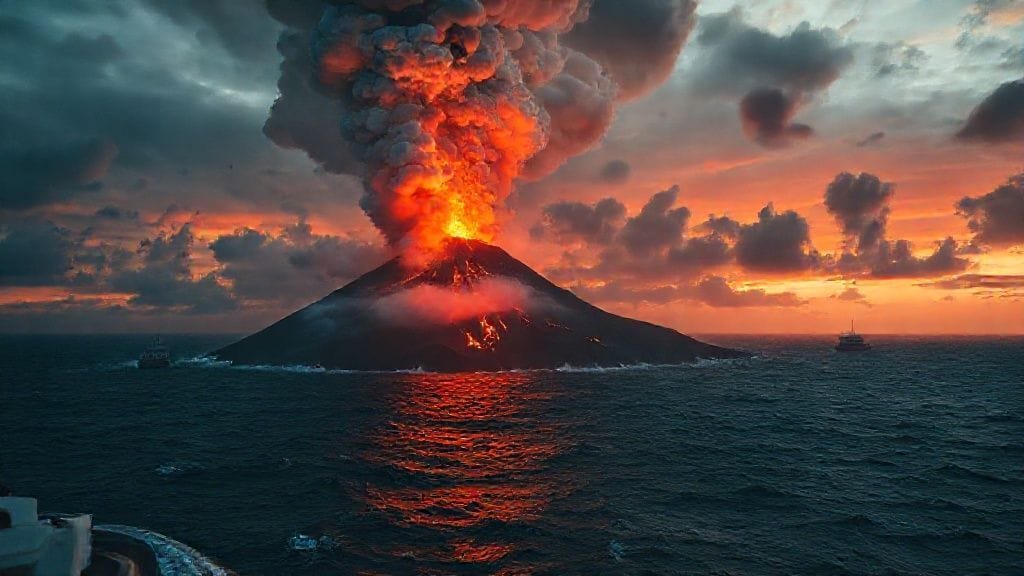
On April 4, 1939, the long-dormant Kick ’em Jenny exploded beneath the waves. The eruption sent plumes of gas and ash spewing to the water’s surface, violently displacing vast volumes of seawater. Witnesses described how the sea foamed and churned far from the island’s shore, while distant tremors shook the land.
The eruption’s explosive force was unlike that of terrestrial volcanoes. It was muffled by the deep blue but no less dangerous. The blast generated an underwater shockwave and sent ominous discolored waters swirling ominously.
The Immediate Impact: Panic and Uncertainty on Grenada’s Coast
For the people of Grenada, the sudden upheaval created panic and confusion. Fishing boats hurried back to port as a sense of foreboding gripped coastal communities. With memories of tsunamis in the Caribbean region still fresh in collective memory, fears of a catastrophic wave were palpable.
Interestingly, no immediate tsunami followed the eruption, sparing the island from devastating flooding. Nonetheless, the event awakened a deeper awareness of the delicate equilibrium between the island’s inhabitants and the turmoiling Earth beneath the ocean.
Scientific Understanding in 1939: How Volcanoes Were Viewed
In 1939, volcanology was an emerging science. The ability to monitor and interpret undersea eruptions was in its infancy. Scientists relied largely on surface observations, reports from ships, and the sporadic data from primitive seismographs stationed on land.
Underwater volcanoes like Kick ’em Jenny were especially challenging because direct observation was impossible with the technology of the day. This eruption became an important case study for geologists but also threw into sharp relief how much remained unknown—about the risks, warning signs, and behaviors of submarine volcanoes.
The Challenge of Underwater Eruptions: Nature’s Hidden Fury
Submarine eruptions, unlike those on land, unfold largely out of sight. The immense pressure underwater tends to suppress some explosive activity, but it also creates deadly hazards: sudden gas releases, discolored toxic plumes, rapid shifts in ocean chemistry, and tsunamis.
Kick ’em Jenny’s 1939 eruption revealed the difficulty in providing timely information and protection for coastal communities. The dynamic interaction between magma, seawater, and tectonic forces creates a volatile system where every eruption is unique and unpredictable.
The Aftermath: Shifting Shorelines and Troubled Waters
In the days and weeks after the eruption, the waters around northern Grenada were unsettled. Navigation became hazardous as discolored waters, floating pumice, and sulfurous residues spread.
Fishermen faced disrupted catches, and local ecosystems experienced stress from the sudden injection of volcanic material. Yet, the landscape of the island itself remained physically unchanged—its greatest marks etched in memory and scientific data.
Colonial Administration: British Responses to the Disaster
As Grenada was then a British colony, colonial administrators quickly moved to assess damage and maintain order. Reports emphasized the need to monitor the volcano and protect shipping lanes.
British scientists and naval officers began to pay closer attention to Kick ’em Jenny, initiating rudimentary monitoring programs. These efforts represented some of the earliest attempts at managing the risks posed by submarine volcanoes in the Caribbean.
Local Stories: Eyewitness Accounts and Oral Histories
Beyond official reports, oral histories preserved by Grenadian communities capture the human reaction to that April eruption. From fishermen who fled their boats in panic, to elders who spoke of the sea “boiling like a cauldron,” these narratives add texture and emotion to the cold scientific data.
Such stories highlight the psychological impact of living under the shadow of a hidden but potent natural force.
The Tsunami Threat: Fear Beneath the Waves
One of the gravest fears during any submarine eruption is the risk of a tsunami—a massive, destructive wave generated by the sudden displacement of water. Although Kick ’em Jenny’s 1939 eruption did not trigger a tsunami, the event served as a stark reminder of the lurking dangers.
Subsequent monitoring has identified Kick ’em Jenny as an ongoing tsunami risk, intensifying the need for vigilance among regional governments and international agencies.
Kick ’em Jenny in the Global Geological Context
Kick ’em Jenny is not an isolated anomaly but part of a global network of submarine volcanoes. Around the world, such underwater mountains shape ocean floors, influence marine ecosystems, and occasionally remind humanity of their volatile nature.
In the larger context, Kick ’em Jenny serves as a valuable natural laboratory helping scientists understand subduction zones, magma chamber dynamics, and eruption mechanisms under extreme pressure.
Lessons Learned: Advancements in Volcanology and Seismic Monitoring
The 1939 eruption marked a turning point in volcanic study in the Caribbean. It spurred advancements in seismic equipment deployment, underwater sensing technologies, and collaborative monitoring programs involving multiple nations.
Today, sophisticated seismic arrays, hydroacoustic sensors, and satellite imagery work together to provide early warnings—technologies unimaginable in 1939.
The Volcano’s Later Activity and Modern Monitoring Efforts
Kick ’em Jenny has erupted several times since 1939, with notable activity in the later 20th and early 21st centuries. Each event has contributed valuable data and reinforced the need for continued vigilance.
Modern monitoring coordinated by groups such as the Seismic Research Centre at the University of the West Indies ensures that early warnings can be issued to protect lives and livelihoods.
Kick ’em Jenny in Grenadian Culture and Memory
Although physically hidden, Kick ’em Jenny is firmly embedded in Grenadian culture. Folklore, warnings, and even tourism narratives invoke its presence—an invisible titan beneath the waves commanding respect.
Annual cultural events and educational programs engage locals and visitors alike, ensuring that lessons from 1939 remain alive and relevant.
The Environmental Consequences on Marine Life
Volcanic eruptions underwater inject chemicals and heat into marine ecosystems, sometimes causing localized devastation but also promoting biodiversity through new habitats.
Studies around Kick ’em Jenny’s site reveal impacts on fish populations, coral health, and seabed topology—an ongoing story of destruction and renewal beneath the sea.
How Kick ’em Jenny Changed Disaster Preparedness in the Caribbean
The island-wide alarm and responses to the 1939 eruption catalyzed regional governments into developing more coordinated disaster response frameworks, focusing not only on hurricanes but also geological hazards.
Kick ’em Jenny helped define the multifaceted nature of Caribbean vulnerability and resilience.
Comparing 1939 to Other Caribbean Volcanic Eruptions
While less dramatic than eruptions like Montserrat’s Soufrière Hills decades later, Kick ’em Jenny’s submarine event offers unique insights. Comparing these eruptions provides a richer understanding of Caribbean volcanism and the varied risks posed by different volcanic types.
The Ongoing Mystery of Submarine Volcanoes
Our knowledge remains incomplete. The challenges of studying an environment difficult to access, compounded by the volcano’s remoteness, make Kick ’em Jenny a captivating enigma.
It reminds us of the vastness of Earth’s unexplored frontiers and the surprises still awaiting discovery beneath the waves.
The Legacy of a Silent Giant: What Kick ’em Jenny Teaches Us Today
Kick ’em Jenny’s story is one of humility and respect before nature's hidden powers. It teaches persistence in scientific inquiry, courage in the face of uncertainty, and the vital importance of preparedness.
In an age where climate change and geohazards intersect, this underwater volcano continues to whisper its lessons to those willing to listen.
Conclusion
The 1939 eruption of Kick ’em Jenny was much more than a geophysical event. It was a moment when the hidden forces beneath the Caribbean Sea cracked open reality for the people of Grenada—a potent reminder that even the most serene landscapes rest upon a restless Earth.
From the panic and mystery of that spring day to decades of scientific progress and cultural memory, Kick ’em Jenny endures as both a geological phenomenon and a symbol of the intimate, often fragile relationship between humanity and the natural world. As technology and understanding advance, the volcano remains under watchful eyes, its history a beacon illuminating the path toward resilience in the face of nature’s hidden fury.
FAQs
1. Why is Kick ’em Jenny considered dangerous despite its underwater location?
Because it can produce explosive eruptions and potentially generate tsunamis close to populated coasts, posing threats to shipping, fishing communities, and coastal settlements.
2. How was the 1939 eruption of Kick ’em Jenny detected?
Through reports of seismic tremors, unusual sea behavior, discolored waters, and eyewitness accounts from nearby vessels and islanders.
3. Did the 1939 eruption cause any fatalities or major destruction?
Fortunately, no direct fatalities or widespread destruction were reported. However, it caused panic and disrupted local marine activities.
4. How did the eruption influence volcanic monitoring in the Caribbean?
It underlined the necessity for seismic and hydroacoustic monitoring of submarine volcanoes, leading to improved early warning systems in the region.
5. What makes submarine volcanoes like Kick ’em Jenny harder to study than terrestrial ones?
Their eruptions occur underwater, limiting direct observation and complicating data collection due to pressures, inaccessibility, and rapidly changing marine conditions.
6. Has Kick ’em Jenny erupted since 1939?
Yes, several times, with increased scientific monitoring following each event to mitigate risk and deepen understanding.
7. What myths or cultural beliefs surround Kick ’em Jenny?
Local lore often portrays it as a dangerous "devil’s cauldron" or malevolent force to be respected and feared, reflecting the community’s lived relationship with the volcano.
8. How does Kick ’em Jenny affect marine ecosystems?
Eruptions alter water chemistry and seabed structures, sometimes harming habitats but also creating new niches that promote marine biodiversity over time.

