Table of Contents
- The Birth of a Volcano: Parícutin’s Sudden Emergence in 1943
- A Village Transformed: Parícutin and the People of Parícutin Village
- Pre-Eruption Michoacán: Geological and Social Backdrop
- The First Day: February 20, 1943 — When Earth Became Fire
- Early Observations: Scientists Rush to Study the New Volcano
- The Growth and Fury: Parícutin’s Explosive First Year
- Life Amidst Lava: The Struggle of Local Communities
- The Tale of Dionisio Pulido: The Farmer Who Witnessed the Volcano’s Birth
- Scientific Breakthroughs: Parícutin as the First Volcano Witnessed from Inception
- The Impact on Local Ecosystems and Geography
- Government Response and Evacuations
- The Slow Destruction: Parícutin’s Lava Flows and Vanished Villages
- Cultural Reverberations: Myths, Legends, and Local Memory
- The Socioeconomic Aftermath: Displacement and Resilience
- The End of the Eruption: 1952 — When Parícutin Fell Silent
- Parícutin in Global Scientific History: A Paradigm Shift
- Tourism and Preservation: Parícutin Today
- The Volcano’s Legacy in Mexican National Identity
- The Role of Media: Documenting a Living Volcano
- Lessons from Parícutin: Nature’s Sudden Reminder of Fragility
- Conclusion: Fire, Ash, and Memory — What Parícutin Teaches Us
- FAQs about the Parícutin Eruption
- External Resource
- Internal Link
1. The Birth of a Volcano: Parícutin’s Sudden Emergence in 1943
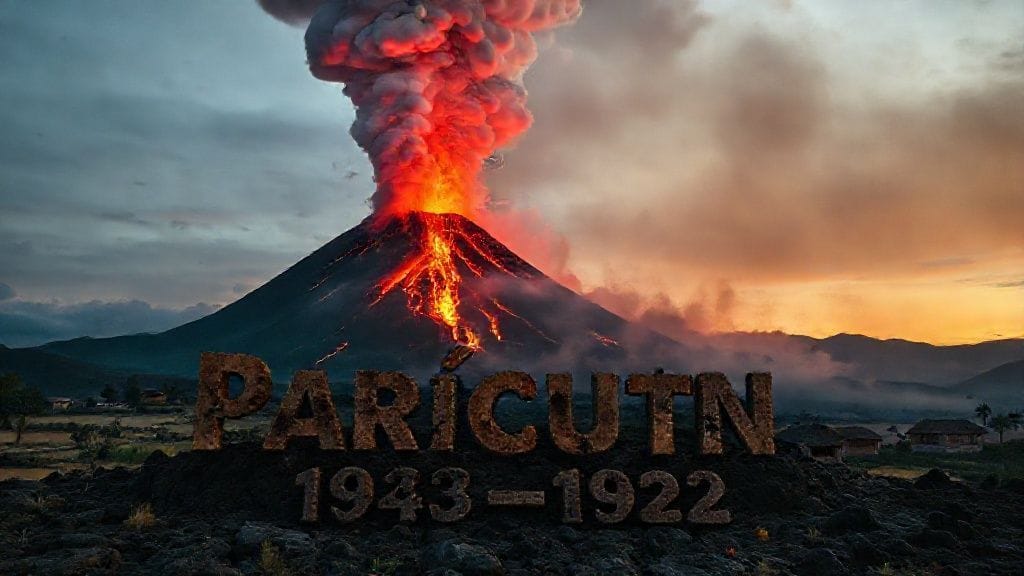
On a crisp day in late February 1943, the earth beneath a humble wheat field in Michoacán, Mexico, fractured with a trembling that would forever etch its name into geological lore. From a fissure, dark wisps of smoke curled skyward, and within hours, a cone of volcanic ash and cinders began carving into the blue Mexican sky — a volcano, born from the earth without warning, amidst everyday rural life. This was Parícutin, the “new volcano,” a remarkable natural spectacle witnessed not by remote observatories but by ordinary farmers and villagers who saw their world transformed overnight.
2. A Village Transformed: Parícutin and the People of Parícutin Village
At the heart of this drama was a small rural community whose name the volcano would later assume. The village of Parícutin and its surrounding farms embodied a quiet agricultural life deeply tied to the rhythms of the land. But the eruption was no distant cosmic event for them; it was visceral and immediate. As the ground ruptured and spewed ash, entire families faced the terrifying reality that their homes and livelihoods could be buried beneath fiery torrents of molten rock. The human dimension of the eruption is inseparable from the geological; it was a reshaping not only of earth but of lives.
3. Pre-Eruption Michoacán: Geological and Social Backdrop
Michoacán sits on the Trans-Mexican Volcanic Belt, a region known for its seismic restlessness and rich volcanic history. But the specific site of Parícutin had been a quiet field, used primarily for farming. Geologically, it lay within a complex of volcanic cones, but no signs foretold an imminent eruption in the immediate months prior. Socially, the region was characterized by small-scale agriculture, indigenous communities, and a Mexican countryside still feeling the aftershocks of revolutionary and political changes. This juxtaposition of an active geological fault beneath a region of traditional rural life created the unique tableau for what would unfold.
4. The First Day: February 20, 1943 — When Earth Became Fire
On February 20, 1943, Dionisio Pulido, a local farmer, noticed the earth beneath one of his cornfields cracking and rumbling. At first, the fissures released smoke, then ash. Pulido and his family watched in awe and terror as the ground heaved and a small volcanic cone began to grow. Within hours, the site erupted with increasingly violent bursts of ash and rock, throwing cinders high into the sky. This was the dawn of Parícutin, an eruption unlike any witnessed before: a volcano literally growing before human eyes.
5. Early Observations: Scientists Rush to Study the New Volcano
News of the volcanic birth spread rapidly, and Mexican scientists arrived promptly, determined to document this extraordinary event. It was the first time modern volcanology could observe an eruption from its very inception. Geologists, volcanologists, and even international scientific observers flocked to the site, equipped with cameras, instruments, and notes, impelled by the promise of understanding volcanic growth as it happened. Their meticulous records would become foundational for volcanology, blending field science with firsthand accounts from villagers and hues of human drama.
6. The Growth and Fury: Parícutin’s Explosive First Year
The eruption was not a brief flare but an extended event. Over the next months, Parícutin’s cone soared hundreds of meters, spewing lava flows that etched rivers of fire across the landscape. The eruption transitioned through phases — initial ash columns, lava fountain activity, and slow-moving basaltic flows that engulfed orchards, roads, and eventually entire villages. The sky alternated between ominous, ash-filled gray and fiery orange streaks as nights were illuminated by the volcanic glow. The air was thick with dust and sulfur, leaving a smoky permanence even far from the volcano.
7. Life Amidst Lava: The Struggle of Local Communities
For the rural communities near Parícutin, the eruption was a brutal challenge. Families lived under clouds of ash that darkened the day, water sources were contaminated, and harvests became impossible. Villagers faced not only the destruction of homes but the trauma of forced evacuation. Yet amidst adversity, stories emerged of resilience: neighbors helping each other, makeshift shelters, and an enduring sense of connection to the land — now fiercely changed, but still home. The eruption was as much a human saga as a natural phenomenon.
8. The Tale of Dionisio Pulido: The Farmer Who Witnessed the Volcano’s Birth
Dionisio Pulido’s story remains emblematic of Parícutin’s eruption. His field was ground zero, his family the first witnesses to the birth pangs of the volcano. Pulido continued to live through the eruption, moving with his family as lava flows advanced. His account helped scientists and journalists understand daily life amid disaster. His personal resilience became a symbol of human endurance in the face of overwhelming natural forces.
9. Scientific Breakthroughs: Parícutin as the First Volcano Witnessed from Inception
From the earliest days, the eruption provided an unprecedented laboratory. Scientists cataloged every stage: vent opening, ash plume development, cone building, lava flows. This live observation shed light on volcanic formation processes and hazards. Parícutin disproved some beliefs about volcano birth and growth, expanding understanding of magma movement, eruption patterns, and the interaction between earth’s inner dynamics and its surface expression.
10. The Impact on Local Ecosystems and Geography
Parícutin radically altered the local landscape. Fertile farmland and dense forest areas were buried beneath layers of ash and lava, creating new geological features but destroying old ecosystems. Yet this destruction was also a seed for renewal; scientists have since observed how pioneer species recolonized the barren volcanic soil, highlighting nature’s capacity for regeneration. The eruption left a scar but also a new terrain upon which flora and fauna would adapt and evolve.
11. Government Response and Evacuations
Mexican authorities faced the daunting task of responding to an unpredictable disaster. Evacuation efforts sought to relocate families to safer grounds, organize aid, and provide information. The eruption highlighted limitations in early disaster response but also demonstrated communal solidarity. The government also engaged in scientific partnerships, recognizing the value of studying the volcano even amidst tragedy.
12. The Slow Destruction: Parícutin’s Lava Flows and Vanished Villages
By late 1943, lava flows had reached and buried entire villages, including Parícutin itself and neighboring San Juan Parangaricutiro. Homes, churches, and fields were swallowed beneath black rock. The haunting ruins of a half-buried church bell tower now stand as an iconic image of this slow, relentless destruction. The physical landscape had changed irrevocably, and so had the human geography — communities displaced forever.
13. Cultural Reverberations: Myths, Legends, and Local Memory
The eruption entered local folklore, embedding itself into the collective memory. Stories mingled indigenous beliefs about earth spirits with Christian symbolism, framing the volcano both as divine punishment and a marker of natural power. Over decades, Parícutin became part of cultural identity, evoked in songs, art, and festivals, a testament to both fear and awe in the face of nature’s might.
14. The Socioeconomic Aftermath: Displacement and Resilience
Beyond immediate destruction, the eruption wrought long-term socioeconomic shifts. Families uprooted found new lives in nearby towns and cities, forging new livelihoods. The trauma of displacement mixed with cultural preservation efforts, as communities sought to retain their heritage while adapting. Economic activity had to shift from agriculture to other sectors, while the memory of Parícutin remained a poignant, binding element.
15. The End of the Eruption: 1952 — When Parícutin Fell Silent
After nearly nine years of activity, Parícutin quieted in 1952, leaving behind a majestic cone over 400 meters tall. The silence was profound, signaling both relief and a new beginning. Scientists mourned the loss of a living laboratory but celebrated the wealth of knowledge gained. For local peoples, it marked the end of a harrowing chapter, though the presence of the volcano kept memories alive and a permanent reminder of nature’s unpredictability.
16. Parícutin in Global Scientific History: A Paradigm Shift
Parícutin's eruption marked a landmark in volcanology. It became a case study in earth sciences worldwide, influencing volcanic hazard preparedness and geological theories. The detailed chronicle of its birth and growth remains an invaluable resource, demonstrating how live observation can fundamentally reshape understanding of earth’s processes.
17. Tourism and Preservation: Parícutin Today
Today, Parícutin attracts thousands annually, from volcanologists to hikers and tourists. Trails wind around the cone, and the ruins of San Juan Parangaricutiro church draw visitors moved by the encounter between human history and geological power. Efforts to preserve the site balance environmental protection with educational outreach, making Parícutin a living museum of nature’s force.
18. The Volcano’s Legacy in Mexican National Identity
Parícutin holds a special place in Mexican identity. It embodies a narrative of natural wonder intertwined with resilience — a symbol of a land marked both by turmoil and strength. The eruption deepened national pride in the country’s geological richness and in the spirit of its people facing natural challenges with courage.
19. The Role of Media: Documenting a Living Volcano
From early newspaper reports to black-and-white photographs and documentary films, Parícutin’s story was transmitted worldwide. Media shaped public perception by conveying the drama and scientific interest, turning a remote event into a global phenomenon. This early example of disaster coverage set formats for future natural catastrophes in mass media.
20. Lessons from Parícutin: Nature’s Sudden Reminder of Fragility
Parícutin teaches profound lessons about impermanence and the thin line between the familiar and the extraordinary. It underscores the ever-present power beneath our feet, urging humility in the face of nature. The eruption reminds us of the need for preparedness, scientific inquiry, and respect for the earth’s dynamic life.
Conclusion
The story of Parícutin is more than the tale of a volcano’s birth; it is the human story of wonder, fear, and adaptation. As cinders rose and lava flowed, ordinary people became witnesses to one of nature’s most dramatic miracles. Their lives, landscapes, and histories were transformed for generations to come. Parícutin’s fiery emergence from the soil was a vivid reminder that the earth beneath us is alive — breathing, reshaping, and commanding awe. Its legacy, etched in rock and memory, continues to inspire, teaching us how closely intertwined human existence is with the restless heart of our planet.
FAQs about the Parícutin Eruption
Q1: Why did the Parícutin volcano suddenly appear without warning?
A1: Parícutin was born from a fissure in the earth’s crust, typical of rift-zone volcanism within the Trans-Mexican Volcanic Belt. Though the region was geologically active, the actual eruption site had no precursory signs felt by locals, demonstrating how volcanoes can emerge abruptly.
Q2: Who was Dionisio Pulido, and why is he important?
A2: Pulido was the farmer whose field erupted, making him the first human eyewitness of Parícutin’s birth. His accounts provide priceless personal testimony and connect the scientific narrative to lived experience.
Q3: How did Parícutin impact local communities and the economy?
A3: The eruption destroyed villages, farmland, and homes, forcing evacuations and displacing populations. The loss of agricultural land affected livelihoods, pushing many to relocate and adapt to new economic realities.
Q4: What made Parícutin’s eruption unique in the history of volcanology?
A4: It was the first time a volcano was observed from its very birth, allowing detailed scientific observation over its entire eruptive lifespan, revolutionizing volcanic studies and hazard understanding.
Q5: How has Parícutin influenced disaster preparedness in Mexico?
A5: The eruption highlighted the importance of monitoring geological activity and emergency response. It spurred improvements in disaster management strategies, particularly regarding evacuation and public communication.
Q6: What remains of Parícutin today?
A6: The volcano stands as a striking cinder cone and a geological monument. Ruins of buried villages, especially the partially exposed church, form poignant historical landmarks visited by tourists and scientists alike.
Q7: How do locals remember Parícutin today?
A7: The eruption is woven into local cultural memory through stories, festivals, and art, reflecting both loss and resilience, linking generations to a shared heritage shaped by fire and ash.
Q8: Has volcanic activity in the Michoacán region continued after Parícutin?
A8: While Parícutin ceased erupting in 1952, the region remains volcanically active, with other volcanoes such as Pico de Tancítaro continuing to display activity, underscoring ongoing geological dynamism.

