Table of Contents
- The Roar of the Volcano: April 3, 1982, El Chichón Awakens
- The Hidden Giant: Geographical and Geological Background
- An Unseen Threat: Early Signs and Local Awareness
- The Quiet Before the Storm: Days Leading to the Eruption
- April 3, 1982: The Day El Chichón Exploded
- The Fury Unleashed: Nature’s Wrath in Chiapas
- Immediate Human Toll: Thousands Displaced and Lives Lost
- The Government’s Response: Crisis Management and Challenges
- Global Geological Significance: Rewriting Volcanic Hazard Paradigms
- Atmospheric Impacts: A Volcano that Cooled the Planet
- Stories from the Ashes: Survivor Accounts and Community Resilience
- Scientific Exploration: How El Chichón Advanced Volcanology
- Rebuilding Lives and Landscapes: The Decades After the Eruption
- Memory and Culture: How El Chichón is Remembered Today
- Lessons Learned: Disaster Preparedness in Volcanic Regions
- El Chichón in the Context of Mexican History
- The Eruption’s Influence on Global Climate Patterns in the 1980s
- Comparative Analysis: El Chichón and Other Major 20th-century Eruptions
- The Role of International Aid and Collaboration
- The Volcano’s Current Status: Dormant But Vigilant
- Conclusion: Resilience Born from Destruction
- FAQs: Understanding El Chichón’s Legacy
- External Resource
- Internal Link
The Roar of the Volcano: April 3, 1982, El Chichón Awakens
The stillness of a quiet spring morning in Chiapas shattered abruptly on April 3, 1982. A terrifying roar echoed through the lush, dense jungles surrounding the small volcanic mountain known as El Chichón. Without warning, the volcano erupted in an inferno of ash, gas, and pyroclastic fury unlike anything locals in the region had ever witnessed. Villages were swallowed by thick blankets of ash; the sky turned an ominous gray as the air turned poisonous. This was no ordinary eruption; it was a cataclysmic outburst from an unsuspected giant, a violent interruption of the calm life in southern Mexico.
The chaos that unfolded was not only a story of destruction but also one of resilience and survival. For many, it was the nightmare that became reality—homes lost, loved ones gone, the land scarred forever. Yet, the eruption of El Chichón also intensified scientific inquiry and international cooperation, leading to vital advances in volcanology. It remains a poignant chapter in Mexico’s geological and human history, forever etched in both memory and scientific literature.
The Hidden Giant: Geographical and Geological Background
Nestled in the state of Chiapas, near the border with Guatemala, El Chichón stands modestly at 1,122 meters. To the casual observer, it was a forgotten volcano, overshadowed by more famous Mexican peaks like Popocatépetl or Colima. Yet beneath its unremarkable exterior simmered a potentially lethal power. El Chichón is a stratovolcano, formed by layered deposits of hardened lava, tephra, and volcanic ash. Like many volcanoes in the Trans-Mexican Volcanic Belt, it had been dormant for centuries, leaving the nearby indigenous communities unaware of the threat lying beneath.
Geologically, El Chichón sits along the Pacific Ring of Fire—a volatile arc where the Cocos tectonic plate subducts beneath the North American plate. The complex movements beneath the earth’s crust generate significant volcanic and seismic activity in the region. Prior to 1982, El Chichón's last known eruption was approximately 300 years earlier, around 1645. Over time, the lack of recent activity led authorities and locals alike to underestimate the danger.
An Unseen Threat: Early Signs and Local Awareness
Despite its dormancy, the months and weeks before April 1982 saw subtle but alarming signs. Minor earthquakes were felt, and small fumaroles—vents emitting steam and sulfur gases—became increasingly active. Local residents reported unusual smells, sulfuric odors permeating the forests; yet, these warnings went largely unnoticed by the scientific community. The volcano was off most maps of active threats, causing a dangerous blind spot in Mexico’s disaster preparedness apparatus.
Indigenous communities dwelling nearby had an ancestral reverence for the mountain but no living memory of its violent past. The absence of documented volcanic hazard planning meant that civilians were vulnerable as the signs intensified. The Mexican government’s geological services monitored the volcano only sporadically, a fatal gap in vigilance that would prove catastrophic.
The Quiet Before the Storm: Days Leading to the Eruption
In late March 1982, seismic activity increased. Small tremors began rattling the earth beneath Chiapas, unsettling both nature and people. On March 29, a notable swarm of earthquakes suggested magma movement beneath the surface. Despite this, the scale of the impending eruption remained unforeseeable. Scientists deployed limited monitoring instruments, but they lacked the resources or data to predict the scale and timing of the eruption accurately.
Locals watched the unfolding events with unease; animals behaved strangely, and rivers fed by mountain streams suddenly changed color—signs that did not escape indigenous wisdom. Yet, consistent and coordinated emergency warnings were absent. The volcano, dormant for centuries, was gearing up silently, ready to release centuries of pent-up energy.
April 3, 1982: The Day El Chichón Exploded
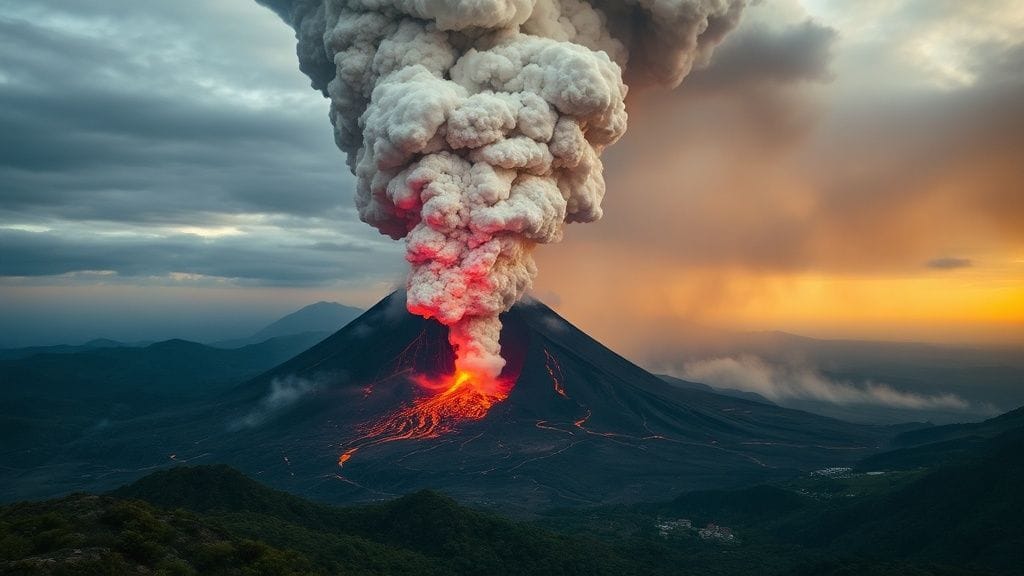
On the early morning of April 3, the first major eruption shattered the silence. Around 5:00 AM, a series of powerful explosions expelled massive columns of ash and gas kilometers into the sky. The volcano’s summit partially collapsed, triggering pyroclastic flows—fast-moving avalanches of hot ash and rock that descended the slopes, obliterating everything in their path.
Witnesses described a sky turned pitch black, the sun swallowed by thick volcanic plumes. A deafening roar, louder than thunder or jet engines, filled the air alongside the smell of sulfur and burning rock. The eruption was explosive and intermittent over several days, sending ash clouds across the region and disrupting life regionally and globally.
The Fury Unleashed: Nature’s Wrath in Chiapas
The eruption’s intensity was devastating. The pyroclastic flows buried villages like El Chichón and San Juan Bautista in superheated clouds, leaving behind apocalyptic landscapes. Rivers were choked by ash and mudflows, destroying crops and contaminating water sources. Entire forests were flattened beneath layers of volcanic debris. Within days, over 2,000 people were dead or missing, and tens of thousands more were displaced.
The local economy—deeply reliant on agriculture and forestry—was crippled. The ashfall covered an area of nearly 2,000 square kilometers, disrupting ecosystems and human livelihoods alike. For a region already impoverished and challenged by geography, the eruption’s fury was catastrophic.
Immediate Human Toll: Thousands Displaced and Lives Lost
The eruption caused between 1,900 and 2,000 confirmed deaths, with many more injured or missing. Entire communities vanished under ash and debris. Survivors escaped with harrowing tales of fleeing through darkness, overcoming suffocating clouds, and losing family members. Hospitals were overwhelmed; supplies were scarce; and communication with remote areas was severed.
The Mexican government mobilized military and civil authorities to assist survivors, though delays and logistical challenges hindered rapid response. Makeshift shelters housed displaced families. Meanwhile, diseases such as respiratory infections surged due to ash inhalation and lack of sanitation.
The Government’s Response: Crisis Management and Challenges
Mexico’s response to the disaster combined swift emergency action with severe limitations. The eruption exposed critical gaps in disaster preparedness, particularly in monitoring smaller, poorly studied volcanoes like El Chichón. Aid was channeled through national and local agencies, supported by the military.
International agencies, including the Red Cross, also contributed, but access to affected rural areas remained problematic. The government faced criticism for the lack of prior hazard mapping and weak communication strategies. Efforts to rebuild infrastructure and resettle survivors were slow and fraught with difficulty, given the scale of destruction and ongoing volcanic uncertainty.
Global Geological Significance: Rewriting Volcanic Hazard Paradigms
El Chichón shattered prevailing assumptions about volcanic risk in Mexico. It was the first major eruption in the country since the advent of modern volcanology and introduced new scientific questions regarding volcano monitoring. Previously considered low-risk, El Chichón’s violent eruption demanded a reevaluation of hazard assessment.
Moreover, the eruption’s intensity challenged emergency management models worldwide. Geologists marveled at the volume of sulfur dioxide expelled, which would soon influence global atmospheric conditions. Scientists worldwide turned their eyes to Chiapas, eager to study this rare and powerful geological event.
Atmospheric Impacts: A Volcano that Cooled the Planet
Beyond Chiapas, El Chichón’s eruption had profound global implications. The volcano released an estimated 7 million tonnes of sulfur dioxide into the stratosphere, forming sulfate aerosols that reflected sunlight back into space. This phenomenon caused notable global cooling over the subsequent years—the average surface temperature dipped by about 0.3 °C worldwide.
The eruption’s atmospheric effects rivals those of the famous 1991 Mount Pinatubo eruption in the Philippines, though less remembered. This “volcanic winter” contributed to altered weather patterns and exemplified how a remote event in Mexico could ripple across the climate system, connecting local destruction to planetary changes.
Stories from the Ashes: Survivor Accounts and Community Resilience
Amid destruction, human stories of courage and resilience emerged. Survivors recounted frantic escapes amid shifting ash flows, the heart-wrenching loss of homes, and the collective struggle to rebuild lives. Indigenous communities relied on ancestral knowledge and mutual aid to endure the upheaval.
Oral histories emphasize not only suffering but also solidarity—how villages came together to share resources, how traditional practices helped adapt crops and water use after the eruption. These narratives enrich the historical record with personal, emotional depth, humanizing the stark scientific chronicle.
Scientific Exploration: How El Chichón Advanced Volcanology
El Chichón became a unique natural laboratory for volcanology. Researchers deployed new techniques—satellite imagery, gas sampling, and seismic monitoring—to understand eruption dynamics, magma composition, and volcanic precursors. The eruption underscored the importance of comprehensive volcano monitoring, especially at less conspicuous sites.
Studies revealed the complex interaction between magma pressure, rock fracturing, and explosive eruption phases. El Chichón also highlighted the impact of volcanic sulfur gases on global climate, inspiring interdisciplinary research bridging geology and meteorology.
Rebuilding Lives and Landscapes: The Decades After the Eruption
Recovery from El Chichón has been slow but determined. Reforestation efforts, soil rehabilitation, and infrastructure rebuilding gradually restored some vitality to affected areas. Government programs focused on developing safer housing, improving education on volcanic risks, and economic support for farmers.
Though scars remain on the landscape, new vegetation has taken hold, and some communities have resettled nearby. The eruption shaped local identity and governance, prompting a more cautious coexistence with nature’s power.
Memory and Culture: How El Chichón is Remembered Today
Over the decades, El Chichón has entered Mexican cultural memory both through scientific discourse and local remembrance. Annual commemorations and documentaries honor those lost and highlight the resilience of survivors. The eruption is taught in schools as a critical event in national history.
Artistic expressions—from literature to song—capture the emotional impact, while museums and historical sites preserve physical artifacts. It serves as a somber reminder of nature’s unpredictability and the need for vigilance.
Lessons Learned: Disaster Preparedness in Volcanic Regions
The eruption revealed glaring weaknesses in volcanic risk management at the time. Since then, Mexico has developed more robust volcano monitoring networks and emergency protocols, incorporating community education and evacuation planning.
El Chichón stands as a cautionary tale about neglecting dormant volcanoes and the vital role of science in disaster prevention. It urged governments worldwide to invest in early warning systems and regional preparedness, saving countless lives in future eruptions.
El Chichón in the Context of Mexican History
The eruption punctuated a turbulent era in Mexico, marked by economic change and social challenges. Its occurrence highlighted disparities in rural development and government outreach, especially toward indigenous populations. It exposed the vulnerability of marginalized communities and influenced national debates about environmental policy and regional planning.
El Chichón’s eruption also shifted public consciousness about Mexico’s geological risks, joining the historical tapestry alongside earthquakes and other natural disasters that shape the country’s destiny.
The Eruption’s Influence on Global Climate Patterns in the 1980s
In the early 1980s, global climate anomalies coincided with El Chichón’s atmospheric effects. Cooler summers in the Northern Hemisphere and disruptions in monsoon cycles were linked partly to the volcanic aerosols dispersing worldwide. This event helped validate climate models considering volcanic forcing as a significant natural factor in short-term climate variability.
El Chichón’s legacy deepened the understanding of how isolated geological events influence the planetary environment, an insight critical today amid climate change concerns.
Comparative Analysis: El Chichón and Other Major 20th-century Eruptions
Though less publicized than Mount St. Helens (1980) or Pinatubo (1991), El Chichón’s eruption ranks among the century’s most impactful. It combined explosive power, sulfur output, and human toll in a distinctive way. Unlike volcanic giants with decades of monitoring, El Chichón erupted with little warning, compelling a rethink of risk management worldwide.
Its relatively remote location and timing meant it received less attention, but the scientific and humanitarian lessons align with those of its volcanic peers.
The Role of International Aid and Collaboration
The eruption triggered international solidarity, with aid flowing from governments, NGOs, and scientific institutions. Mexico’s disaster response was bolstered by technical expertise, medical aid, and material support from abroad.
This cooperation exemplified the growing global recognition that natural disasters transcend borders and that sharing knowledge and resources is essential in managing crises. It contributed to the development of networks and protocols still active today.
The Volcano’s Current Status: Dormant But Vigilant
Today, El Chichón remains closely monitored. Though dormant since 1982, the volcano is considered “active,” with occasional seismic activity signaling subterranean restlessness. Mexican volcanologists maintain robust surveillance, ready to alert populations if necessary.
The legacy of 1982 ensures that this once overlooked volcano is now among the most studied and prepared-for sites in the region. Its peaceful slopes conceal the memory of an explosive past, a mountain both feared and respected.
Conclusion
El Chichón’s eruption in 1982 was a cataclysm born from centuries of silence, a reminder of nature’s latent power lurking beneath quiet landscapes. The devastation it wrought—on lives, land, and climate—changed a region and resonated globally. Yet, beyond tragedy, the event sparked scientific breakthroughs, strengthened disaster preparedness, and enshrined stories of human endurance.
In the narrative of Mexico’s past and geophysical identity, El Chichón stands as both a wound and a lesson: a force to respect, a history to remember, and a future to prepare for. The volcano’s roar may have been a momentary sound, but its echoes continue to shape how humanity understands and lives with the volatile earth beneath its feet.
FAQs
Q1: What caused the sudden eruption of El Chichón after centuries of dormancy?
A1: Subduction-related magma movement beneath the volcano built pressure over centuries. A lack of surface activity and predictive data meant the magma ascent went largely unnoticed until the sudden explosive release in 1982.
Q2: How many people were affected by the eruption?
A2: Approximately 2,000 people died, and tens of thousands were displaced. The eruption devastated several villages, destroying homes, farmland, and vital infrastructure.
Q3: Why was El Chichón’s eruption so significant scientifically?
A3: It challenged assumptions about volcanic dormancy, highlighted the importance of sulfur dioxide emissions in climate impact, and advanced monitoring technologies and eruption prediction methods.
Q4: What were the global climatic effects of the eruption?
A4: The release of sulfur aerosols caused a cooling effect on global temperatures for several years, disrupted weather patterns, and provided valuable data for climate science and atmospheric chemistry.
Q5: How did Mexico improve volcanic hazard management after El Chichón?
A5: The country invested heavily in monitoring networks, established emergency evacuation protocols, enhanced public education, and developed stronger collaborations between scientists and civil authorities.
Q6: Is El Chichón still a threat today?
A6: Yes, it is considered active and closely monitored. While dormant since 1982, ongoing seismic activity means scientists maintain vigilance to provide early warnings.
Q7: How is El Chichón remembered by local communities?
A7: Through oral histories, annual commemorations, and cultural expression, locals honor those lost and emphasize resilience, community solidarity, and respect for the natural environment.
Q8: What role did international aid play in the aftermath?
A8: International organizations and foreign governments provided emergency relief, technical support, and scientific collaboration that were crucial for effective response and recovery.

