Table of Contents
- The Ground Shakes: February 27, 2010, a Day to Remember
- Setting the Stage: Chile’s Geographic and Tectonic Puzzle
- The Calm Before the Storm: Socioeconomic and Political Context in 2010
- At 3:34 AM: The Maule Earthquake Unfolds
- The Power of the Tremor: Understanding a Magnitude 8.8
- Immediate Chaos: The Human Toll and Initial Response
- The Sea’s Revenge: Tsunami Waves Hit Chilean Shores
- The Nation on Edge: Emergency Services and Rescue Operations
- The Aftershocks: Nature’s Continuing Harsh Reminder
- Infrastructure in Ruins: Impact on Cities, Roads, and Power Lines
- The Human Stories: Survival, Loss, and Resilience
- Government Actions: Leadership and Crisis Management
- International Aid and Global Reactions
- Reconstruction Begins: A Nation’s Long Road to Recovery
- Scientific Lessons: How the Maule Quake Advanced Seismology
- Cultural Reflections: Chilean Memory and Commemoration
- Economic Ripples: From Immediate Costs to Long-Term Growth
- The Role of Technology: Early Warning and Communication Improvements
- Comparing the Maule Earthquake with Other Great Quakes
- Environmental Changes: The Earth Reshaped
- Political Aftershocks: Impact on Chilean Society and Governance
- The Human Spirit: Stories of Solidarity and Hope
- Preparing for the Future: Chile’s Earthquake Readiness Since 2010
- Conclusion: Lessons Learned beneath the Ruins
- FAQs: Unveiling the Maule Earthquake
- External Resource
- Internal Link
The Ground Shakes: February 27, 2010, a Day to Remember
The clock struck 3:34 AM on a warm summer morning in Chile’s central region when the ground beneath millions suddenly convulsed with unimaginable violence. Walls trembled, ceilings cracked, and people were catapulted awake by a seismic roar echoing miles underground. It was no ordinary night: the Maule Earthquake, with a magnitude of 8.8, had struck—one of the most powerful ever recorded in human history, reshaping not only landscapes but the very fabric of Chilean society. This was a moment where chaos met courage, where earth’s fury collided with human endurance.
Setting the Stage: Chile’s Geographic and Tectonic Puzzle
Chile's identity is etched by the Pacific Ring of Fire, a volatile necklace of subduction zones famous for spawning relentless volcanic eruptions and major earthquakes. The Andean country stretches over 4,300 kilometers along the South American west coast, lying directly above the converging Nazca and South American tectonic plates. The Maipo trench, the tectonic boundary just offshore, stores titanic stress between these converging plates—accumulating energy over decades, awaiting release.
Chile’s seismic history is among the most dramatic in recorded science. The 1960 Valdivia earthquake—magnitude 9.5—still holds the record for the largest earthquake ever documented. This brittle geological past meant that tension was always simmering, a slow ballet of plates that could snap at any time. Geologists, seismologists, and governments understood this well, but even the most rigorous forecasts could not predict the precise timing of future ruptures.
The Calm Before the Storm: Socioeconomic and Political Context in 2010
At the dawn of 2010, Chile was basking in its hard-earned economic growth, often hailed as Latin America’s poster child for stability and prosperity. President Michelle Bachelet, with two years left in her first term, was steering the country through modernization and social reforms. The populace was optimistic, confident in the advances in infrastructure, education, and public health.
Yet, beneath these shining achievements lurked vulnerabilities. Many coastal communities existed in fragile economic conditions, reliant on fishing and small-scale farming, clustered in homes built before modern seismic standards. The government had promoted public policies emphasizing disaster readiness, but the sheer scale of a major quake was a daunting unknown. The metaphorical calm before the storm was deceptive.
At 3:34 AM: The Maule Earthquake Unfolds
Suddenly, the silence was shattered. The Maule Earthquake erupted 34 kilometers below the ocean floor near the Maule region, centered roughly 115 kilometers southwest of Concepción. The rupture stretched an awe-inspiring 500 kilometers along the subduction zone—a rupture zone so vast it defied immediate comprehension. Scientists estimate the energy released was equivalent to hundreds of nuclear bombs detonated simultaneously.
Inside homes, people were thrown from beds. A mother grabbed her child in the shaking dark. In the streets, car alarms blared, dogs whimpered, and in hospitals, alarms rang ceaselessly. The quake lasted about three minutes—a seemingly eternal moment in the heartbeats of survivors.
The land itself buckled and shifted. Coastal towns sunk or tilted; cliffs fragmented; roadways snapped open in terrifying chasms. The Maule quake was not just a tremor but a wholesale transformation of Chile’s landscape.
The Power of the Tremor: Understanding a Magnitude 8.8
Magnitude 8.8 earthquakes are rare cataclysms, released through megathrust faults where one tectonic plate dives beneath another. To contextualize, the Maule quake unleashed energy equivalent to over 1,000 times that of the 1989 Loma Prieta earthquake in California.
Ground acceleration recorded was strong enough to collapse many poorly constructed buildings while modern edifices swayed like reeds in a storm. The quake ruptured a vast area of the fault interface, causing the seafloor to lift in places—an inevitable trigger for the devastating tsunami to come.
Immediate Chaos: The Human Toll and Initial Response
The human consequences were staggering. Official figures report over 500 deaths, but the toll of injuries, psychological trauma, and displacement was incalculably higher. More than two million people felt the quake’s violence intensely. Emergency rooms overflowed with fractures, cuts, and the exhausted cries of frightened children and adults alike.
Yet, despite initial chaos, stories of heroism emerged swiftly—firefighters racing through rubble, doctors working through the night under darkened power grids, neighbors forming human chains to rescue trapped victims.
The Sea’s Revenge: Tsunami Waves Hit Chilean Shores
As if the vast shaking wasn’t enough, the earth beneath the ocean floor had shifted drastically. This displaced massive columns of seawater, generating tsunami waves that raced across the Pacific. Warnings were issued, but the tsunami still slammed into Chile’s coastline within minutes in certain areas.
The hardest hit were coastal localities such as Dichato, Pelluhue, and Constitución, where waves ranging from 2 to 8 meters obliterated homes and caught many by surprise in the early morning darkness. The sea consumed everything in its path—boats, fishing infrastructure, and livelihoods. The devastating synergy between earthquake and tsunami compounded the disaster.
The Nation on Edge: Emergency Services and Rescue Operations
Chile’s emergency response system was put to the test as never before. The ONEMI (Chile’s National Emergency Office) coordinated with armed forces, police, and health agencies to attempt organized relief. However, communication disruptions complicated the effort. Many coastal towns lost power and cellphone coverage, leaving survivors isolated.
Nevertheless, internal solidarity grew rapidly. Communities mobilized with an urgency born of survival—the elderly were cared for, improvised shelters erected in schools, and food distribution systems activated.
The Aftershocks: Nature’s Continuing Harsh Reminder
The Maule quake was not a singular event. Thousands of aftershocks reverberated for weeks, some strong enough to cause further damage and reignite trauma. Residents faced nights punctuated by shaking floors and trembling walls, and many lived outdoors in fear. These aftershocks complicated rescue and reconstruction, turning recovery into a marathon rather than a short sprint.
Infrastructure in Ruins: Impact on Cities, Roads, and Power Lines
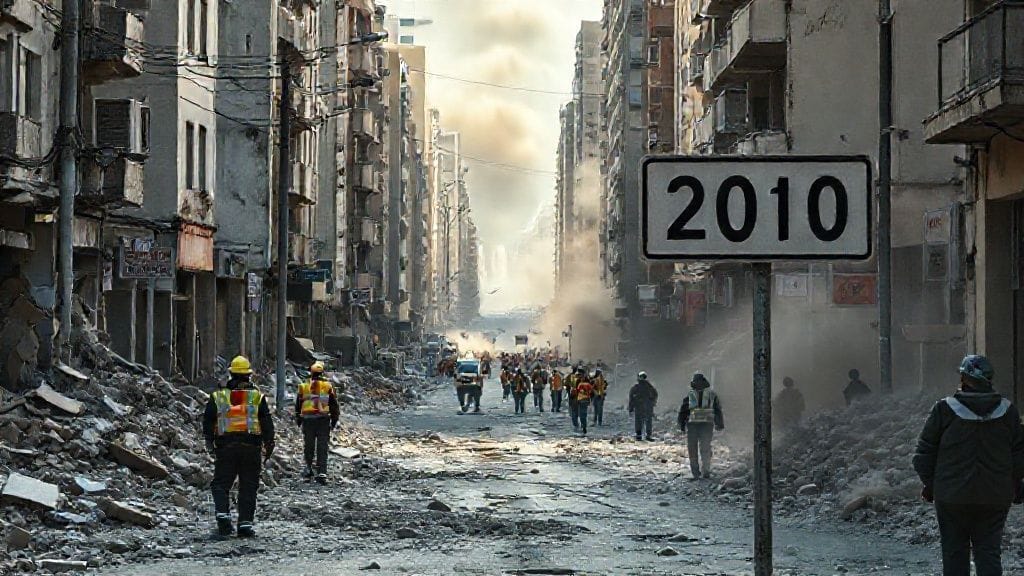
Urban centers felt the quake’s raw power. Concepción, Chile’s second-largest city, experienced amplified devastation. Bridges collapsed, highways fractured, and entire neighborhoods lost water and electricity. The Biobío region’s buildings natural tests of construction standards revealed vulnerabilities—the older one, the more likely to crumble.
Ports essential to Chile’s economy were damaged, factory production was interrupted, and the transportation grid was disrupted. Structural engineers and urban planners faced the massive task of assessing safety and redesigning better, more resilient infrastructure in the months ahead.
The Human Stories: Survival, Loss, and Resilience
Behind every statistic lay human dramas—of families separated, survivors pulled from rubble against impossible odds, communities sharing their sparse resources. Witnesses recounted moments frozen in memory: a father carrying two children through dark streets, neighbors pulling bodies from ruins, and young volunteers rushing supplies to shelters.
Resilience shone amid trauma—songs were sung in makeshift tents, and spontaneous markets appeared where commerce and community mingled. Despite loss and hardship, the Chilean spirit held firm.
Government Actions: Leadership and Crisis Management
Michelle Bachelet’s government quickly declared a state of catastrophe. Military and civil protection agencies enforced curfews and marshaled resources. Though some criticism emerged about delays and communication errors, the administration’s overall effort was praised internationally.
Leaders vowed to rebuild swiftly, announcing stimulus packages for housing, infrastructure, and economic relief. They confronted the daunting challenge of managing not only physical reconstruction but psychological healing.
International Aid and Global Reactions
The world responded with offers of aid from numerous countries and international organizations. Emergency supplies, rescue teams, and technical expertise arrived as Chile coordinated with international partners. Yet, Chile’s own robust disaster preparedness system allowed it to lead much of the recovery.
The Maule earthquake also rekindled global conversations about earthquake risk management and international collaboration during disasters.
Reconstruction Begins: A Nation’s Long Road to Recovery
Rebuilding Chile was no simple task. The cost was estimated at more than $30 billion USD, taking years to repair housing, infrastructure, and economic systems. The government promoted new building codes emphasizing seismic resistance, investing in early warning systems and education.
Reconstruction included psychological recovery efforts, with initiatives for trauma counseling and community support.
Scientific Lessons: How the Maule Quake Advanced Seismology
The Maule Earthquake provided unprecedented data on megathrust events. Scientists confirmed models of large fault ruptures, seismic wave propagation, and tsunami genesis. Offshore seismic sensors and GPS stations captured invaluable details, boosting global understanding and improving predictive technology.
Chile’s seismological community became a hub for earthquake research, influencing hazard planning worldwide.
Cultural Reflections: Chilean Memory and Commemoration
In memory of those lost and the trials endured, communities established memorials and annual remembrance ceremonies. Literature, music, and visual arts emerged expressing grief, strength, and renewal. The Maule Earthquake left an indelible imprint on Chilean identity—an emblem of both vulnerability and resilience.
Economic Ripples: From Immediate Costs to Long-Term Growth
The immediate economic shock was severe, disrupting industries like forestry, agriculture, and fisheries. But Chile’s diversified economy and sound monetary policy helped buffer long-term damage. Reconstruction efforts stimulated construction and employment, contributing to a sustained rebound.
Still, the event served as a stark reminder of the economic toll that natural disasters exert on emerging economies.
The Role of Technology: Early Warning and Communication Improvements
Post-quake investigations revealed limitations in Chile’s early warning systems. This catalyzed investment in advanced tsunami detection, seismograph networks, and communication infrastructure resistant to disasters—making Chile a global leader in seismic risk reduction technology.
Public education campaigns also vastly improved awareness of earthquake and tsunami safety.
Comparing the Maule Earthquake with Other Great Quakes
While less powerful than the 1960 Valdivia quake, the Maule event ranks as one of the largest earthquakes ever tallied. Earthquakes in Japan, Indonesia, and Alaska offer points of comparison, each with unique tectonic settings and consequences. The Maule quake served as a reminder that human vulnerability transcends national borders.
Environmental Changes: The Earth Reshaped
The Maule quake altered Chile’s coastline—some coastal land subsided by up to 3 meters, rivers changed courses, and groundwater levels fluctuated. Such profound changes affected ecosystems and local agriculture, forcing communities to adapt to new landscapes.
Political Aftershocks: Impact on Chilean Society and Governance
The disaster intensified debates about social inequality, infrastructure investment, and governance transparency. It prompted political movements pushing for greater disaster preparedness and community involvement, reshaping the civic landscape.
The Human Spirit: Stories of Solidarity and Hope
Amid destruction, the Maule earthquake revealed humanity’s best qualities. Volunteers worked tirelessly, strangers sheltered survivors, and communities banded together in mutual aid. The narrative of hope and solidarity became as defining as the quake’s devastation.
Preparing for the Future: Chile’s Earthquake Readiness Since 2010
Chile has since invested heavily in seismic resilience—strengthening building codes, enhancing public education, and improving emergency protocols. Regular drills and updated technology mean the country is better prepared to face earth’s next roar.
Conclusion
The Maule Earthquake of 2010 was a seismic event that shook much more than the land beneath Chile. It struck at the heart of a nation’s identity, exposing vulnerabilities and revealing strengths in equal measure. From the ruins rose stories of grief and courage, science and innovation, loss and hope. As Chile continues to rebuild, the lessons engraved in those trembled nights serve as a testament to human resilience and the relentless quest for security amidst nature’s magnificent unpredictability.
FAQs
Q1: What caused the Maule Earthquake in Chile on February 27, 2010?
A1: The earthquake was caused by the rupture of the megathrust fault along the subduction zone where the Nazca tectonic plate slips beneath the South American plate, releasing accumulated stresses.
Q2: How strong was the Maule Earthquake?
A2: It registered a magnitude of 8.8, making it one of the most powerful earthquakes ever recorded globally.
Q3: What were the main consequences of the earthquake?
A3: The disaster resulted in over 500 deaths, widespread destruction of infrastructure, a devastating tsunami, displacement of millions, and billions in economic losses.
Q4: How did Chile respond to the disaster?
A4: The government declared a state of emergency, mobilized the military and emergency services, coordinated rescue and relief, and initiated long-term reconstruction and seismic preparedness programs.
Q5: How did the Maule Earthquake advance scientific understanding?
A5: It offered valuable data on megathrust fault rupture dynamics, seismic wave behavior, and tsunami generation, supporting improvements in warning systems and hazard modeling.
Q6: What role did international aid play after the quake?
A6: Various countries and organizations provided humanitarian aid, equipment, and expert support, although Chile managed much of the response through its own robust systems.
Q7: How is the Maule Earthquake remembered in Chile?
A7: Through memorials, cultural expressions, annual commemorations, and ongoing public education initiatives emphasizing resilience and community solidarity.
Q8: What measures has Chile taken to prepare for future earthquakes?
A8: Chile strengthened building codes, invested in seismic monitoring networks, improved tsunami early warning systems, and enhanced public education on disaster preparedness.