Table of Contents
- The Day the Earth Roared: November 4, 1952
- Kamchatka: A Land of Fire and Ice
- Geological Forces Beneath the Surface
- Precursors and Ignored Warnings
- The Moment of Catastrophe: The Earthquake Unfolds
- Tremors Felt Across the Pacific
- The Tsunami: A Deadly Aftershock
- Destruction on a Remote Peninsula
- Human Loss and Hidden Stories
- Soviet Response Amidst Cold War Shadows
- Scientific Breakthroughs and Seismic Discoveries
- Global Awareness: The Earthquake’s International Echo
- The Kamchatka Fault Reinforced in Seismology
- Local Reconstruction and Long-Term Recovery
- The Psychological Impact on Survivors
- Kamchatka’s Landscape Transformed
- Comparing Kamchatka 1952 with Other Megaquakes
- The Role of Kamchatka in Modern Seismology
- Lessons Learned and Changes in Disaster Preparedness
- Remembering the 1952 Earthquake Today
- Tsunami Warning Systems: A Legacy from Tragedy
- Natural Disasters and Human Resilience: A Philosophical Reflection
- Conclusion: The Quiet Strength of Kamchatka
- FAQs about the 1952 Kamchatka Earthquake
- External Resource
- Internal Link
1. The Day the Earth Roared: November 4, 1952
The cold morning of November 4, 1952, began as any other day on the remote Kamchatka Peninsula—an expanse of rugged wilderness, volcanoes piercing the icy sky, and small fishing villages nestled along jagged shores. But beneath the serene surface of this part of Russia, restless forces were gathering strength. At 16:58 local time, the Earth convulsed. In a violent upheaval lasting nearly five minutes, the ground shattered, a massive seismic event that would be recorded as one of the most powerful earthquakes of the 20th century. The Kamchatka earthquake, measuring an astonishing 9.0 magnitude, sent shockwaves not only through the peninsula but across the entire Pacific Basin. Yet, the story is never just about magnitude—it is about transformation, loss, and the indomitable spirit of those caught in nature’s unyielding grasp.
2. Kamchatka: A Land of Fire and Ice
Kamchatka, a land both isolated and formidable, lies at the northeastern edge of Russia, jutting into the Pacific. Its dramatic landscape is carved by mighty volcanoes, many still active, and vast expanses of untouched wilderness. Home to indigenous peoples, Russian settlers, and thriving ecosystems, Kamchatka lives with the ever-present awareness of natural volatility. The peninsula sits atop the "Ring of Fire," the fiery belt of tectonic activity circling the Pacific Ocean. This legacy of fire and seismic unrest is part of Kamchatka’s identity, shaping the lives, the culture, and the destiny of its people.
3. Geological Forces Beneath the Surface
Beneath Kamchatka, deep geological dynamics brew. The region sits where the Pacific Plate thrusts beneath the North American Plate along the Kuril-Kamchatka Trench—a powerful convergent boundary. This subduction zone is a place where immense forces accumulate over decades, only to release suddenly in cataclysmic ruptures. Tension builds silently under the crust, like a coiled spring snapping free. The 1952 quake was such a rupture—a megathrust earthquake, where the oceanic plate suddenly gave way to the overriding continental plate, unleashing vast energy.
4. Precursors and Ignored Warnings
In the months leading to November 1952, local scientists and residents noticed subtle hints—minor tremors, slight changes in animal behavior, and alterations in water levels. Yet, with limited technology and scarce communication, these precursors were largely dismissed or misunderstood. In a remote and tightly controlled Soviet Union, under the early post-war regime, scientific focus seldom prioritized civil preparedness over other state goals. The impending catastrophe remained invisible until the earth itself declared otherwise.
5. The Moment of Catastrophe: The Earthquake Unfolds
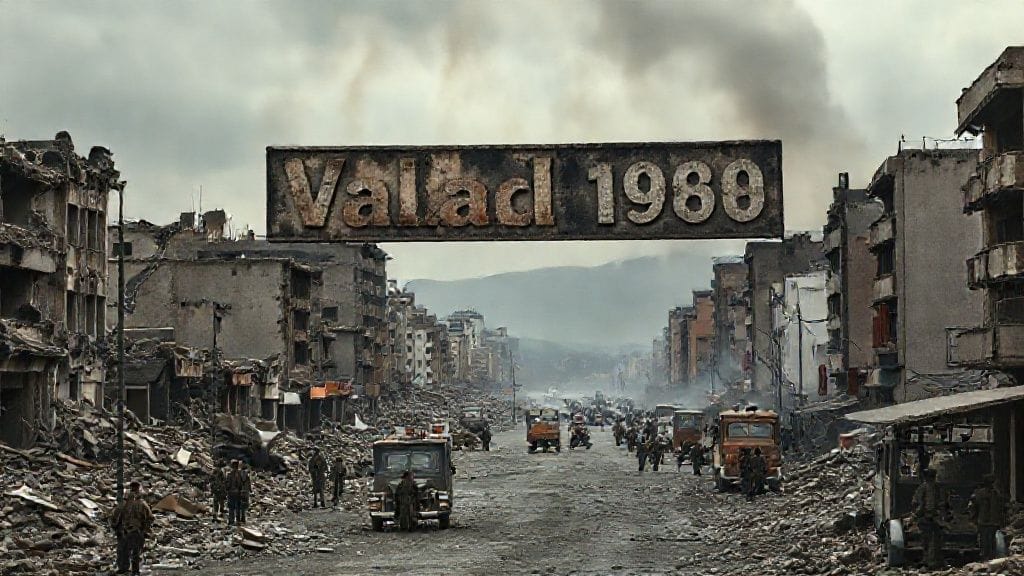
At precisely 16:58, the ground beneath Kamchatka began to tremble, initially with a low rumble that swiftly escalated into violent shaking. The main shock lasted approximately five minutes—a length unimaginably long to those experiencing the quake. Buildings swayed, fissures tore across the earth, and the land itself seemed to buckle in agony. The seismic waves radiated with staggering intensity; the peninsula felt as if it had been wrenched apart from its foundations.
Villages closest to the epicenter registered near total destruction. Wooden homes splintered, infrastructure crumbled, and roads were rendered impassable. Yet in this remote expanse, the sparse population and hardiness of residents mitigated the human cost somewhat—but the price was still dreadful.
6. Tremors Felt Across the Pacific
The Kamchatka earthquake was no local event. Seismic waves traversed the earth’s interior, noticeable as far as Alaska and northern Japan. Ships hundreds of miles offshore recorded unusual oceanic disturbances. For a moment, the entire Pacific basin held its breath as an invisible force passed beneath, reminding humanity of its vulnerable position on the restless planet.
7. The Tsunami: A Deadly Aftershock
As if the shaking were not enough, the earthquake’s abrupt displacement of the ocean floor triggered a massive tsunami. Giant waves surged onto Kamchatka’s shores, reaching heights of tens of meters in places. Coastal settlements were overwhelmed; fishing boats were destroyed, and the sea claimed many lives. The tsunami raced across the Pacific, reaching as far away as Hawaii and the west coast of the United States, generating alerts and, luckily, limited damage by virtue of distance and warning.
The interplay of earthquake and tsunami showcased nature’s layered fury—a dual catastrophe that compounded the tragedy.
8. Destruction on a Remote Peninsula
Kamchatka’s remoteness complicated the immediate aftermath. Roads were damaged; communication infrastructure was minimal at best in 1952’s Soviet expanse. Relief efforts were slow to mobilize, and survivors faced harsh cold November weather, hunger, and exposure. The widespread destruction extended beyond material damage; forests were scarred, and entire ecosystems disrupted. The land itself bore the visible scars of the Earth’s convulsion.
9. Human Loss and Hidden Stories
Official Soviet reports were often reticent about the full human toll, but researchers estimate hundreds of casualties, with many injured or displaced. Stories survive in local oral histories: fishermen caught at sea, families pulled from debris, villages rebuilt from ash and frozen ground.
Throughout these accounts, a common thread is resilience. Villagers quickly banded together amid devastation, sharing scant resources and rebuilding with determination that echoed the ancient endurance of Kamchatka’s peoples.
10. Soviet Response Amidst Cold War Shadows
In the shadow of the Cold War, the Soviet government’s handling of the disaster was constrained by secrecy and political priorities. Aid and reconstruction proceeded quietly, with minimal public information dissemination. The disaster provided impetus to improve seismic monitoring and disaster preparedness within Soviet scientific institutions, albeit couched in broader geopolitical imperatives.
Yet behind the iron curtains, scientists made important strides in understanding megathrust quakes, informed by the 1952 event.
11. Scientific Breakthroughs and Seismic Discoveries
The Kamchatka earthquake became a subject of international scientific interest as researchers pieced together its mechanisms. It offered critical data on subduction zone dynamics—a lesson that would feed into global knowledge about tectonics and the causes of megaquakes.
Advance in seismographs and tsunami modeling credited this event with pushing the envelope on earthquake science: a step toward understanding complex earth system processes on a planetary scale.
12. Global Awareness: The Earthquake’s International Echo
Though Soviet secrecy limited immediate sharing of details, the global scientific community detected Kamchatka’s impact. International seismic networks observed the event's magnitude and propagated waves. Countries across the Pacific began to recognize the interconnected dangers of such island arc megathrust earthquakes and tsunamis, sowing seeds for multinational cooperation in seismic monitoring.
13. The Kamchatka Fault Reinforced in Seismology
The 1952 quake reinforced Kamchatka’s reputation as a strike zone for megathrust earthquakes. It became a case study in hazard assessment and fault behavior, guiding future earthquake preparedness in Russia and neighboring countries. The Kamchatka-Kuril subduction zone remains among the most closely studied for potential seismic threats.
14. Local Reconstruction and Long-Term Recovery
Rebuilding in Kamchatka was slow but persistent. The Soviet government funneled resources to restore housing, rebuild infrastructure, and re-establish fishing industries vital to local economies. New building codes gradually reflected seismic resilience principles, though economic and geographic constraints lingered.
Communities adapted, rebuilt, and resumed life amid a harsh but beautiful land, their relationship with nature forever changed.
15. The Psychological Impact on Survivors
Beyond physical loss, survivors carried deep psychological scars. The trauma of enduring an earthquake and tsunami left lasting impressions—fear of aftershocks, grief for lost loved ones, and the haunting memory of catastrophe. For many, the event reshaped their worldview, imbuing a somber respect for the earth’s power.
16. Kamchatka’s Landscape Transformed
The earthquake altered Kamchatka’s geography—in some places the land was uplifted, in others subsided. Rivers changed courses, and new fissures rended the earth. Volcanic activity shifted in subtle ways, reminding observers that the peninsula’s landscape is in ceaseless flux.
This transformation taught geologists valuable lessons about the earth’s surface dynamics in active tectonic zones.
17. Comparing Kamchatka 1952 with Other Megaquakes
The 9.0 magnitude placed the Kamchatka event among the world’s largest recorded earthquakes, comparable to the 1960 Chile and 2004 Indian Ocean quakes in energy released. Yet each megathrust earthquake carries unique characteristics—slip length, rupture duration, and tsunami generation—that make Kamchatka’s 1952 quake distinct, a unique chapter in global seismic history.
18. The Role of Kamchatka in Modern Seismology
Today, Kamchatka is a keystone in seismic monitoring, housing arrays of sensors and observatories. The 1952 event is often referenced in research on earthquake prediction, plate tectonics, and tsunami risk management. This harsh wilderness remains a vital laboratory for understanding the planet’s restless heart.
19. Lessons Learned and Changes in Disaster Preparedness
The tragedy accelerated awareness about early warning systems, particularly for tsunamis. Around the Pacific Rim, governments renewed commitments to improve communication, evacuation procedures, and scientific collaboration. Kamchatka’s disaster became a cautionary tale urging vigilance and proactive preparedness.
20. Remembering the 1952 Earthquake Today
Though remote and overshadowed by other disasters, the 1952 Kamchatka earthquake holds a special place in regional memory and the annals of natural catastrophes. Memorials in local communities honor those lost, while regional museums and scientific centers preserve the legacy of this day when the earth violently reshaped itself.
21. Tsunami Warning Systems: A Legacy from Tragedy
In the decades since, international tsunami warning systems have been established and improved, rooted in events like Kamchatka 1952. Today, rapid detection, real-time alerts, and community education save countless lives worldwide—an enduring legacy born from tragedy.
22. Natural Disasters and Human Resilience: A Philosophical Reflection
The Kamchatka earthquake not only tells a story of natural destruction but also of human resilience—our capacity to endure, learn, and rebuild amid forces far beyond control. It reminds us how intimately connected and vulnerable we are to the planet’s shifting rhythms, and how respect for nature must underpin our coexistence.
23. Conclusion: The Quiet Strength of Kamchatka
The 1952 Kamchatka earthquake was a violent reminder of Earth’s awesome power—an event that reshaped landscapes and lives beneath an icy sky. Yet from devastation rose renewal; from silence, scientific illumination; from tragedy, preparation and cooperation. Kamchatka’s story is one of quiet strength, a testament to the enduring interplay between humanity and the restless planet.
Conclusion
The Kamchatka earthquake of November 4, 1952, stands as a monumental event in the chronicles of natural disaster and human endurance. Far from the populous centers that often dominate history, this remote peninsula became the stage for a fierce encounter between tectonic might and human will. In nearly five minutes of shaking and the subsequent tsunami’s fury, the land and its people were forever changed. Yet, they endured, rebuilt, and contributed to a broader understanding of our planet’s inner workings.
The story of the 1952 earthquake is more than a tale of destruction: it is a narrative of humility before nature, of the unfolding scientific quest to decode Earth’s secrets, and of the indomitable spirit that defines humanity’s relationship with the elemental world. Kamchatka reminds us that, although we cannot always predict or prevent such events, we can prepare, respond, and remember—with respect and resilience.
FAQs
Q1: What caused the Kamchatka earthquake in 1952?
A1: The earthquake was caused by a megathrust rupture along the subduction zone where the Pacific Plate slides beneath the North American Plate at the Kuril-Kamchatka Trench. The sudden slip released accumulated tectonic energy.
Q2: How strong was the 1952 Kamchatka earthquake?
A2: It had a magnitude of approximately 9.0, making it one of the most powerful earthquakes recorded in the 20th century.
Q3: What was the impact of the resulting tsunami?
A3: The tsunami generated waves tens of meters high locally, devastating coastal settlements on Kamchatka, and was detected across the Pacific, including distant shores like Hawaii.
Q4: How did the Soviet government respond to the disaster?
A4: Response was constrained by secrecy and Cold War politics. Reconstruction took time, with limited public information, but improvements in seismic monitoring and rebuilding efforts followed.
Q5: Why is the Kamchatka earthquake important for scientists?
A5: It provided crucial data on megathrust earthquake mechanics, helping advance the understanding of subduction zones and tsunami generation, influencing modern seismology.
Q6: How did the earthquake change Kamchatka’s landscape?
A6: The quake caused land uplift and subsidence, altered river courses, and possibly influenced volcanic activity, reshaping the physical geography of the peninsula.
Q7: What lessons were learned to improve disaster preparedness?
A7: The event highlighted the need for better seismic monitoring, tsunami early warning systems, community education, and international cooperation.
Q8: How is the 1952 Kamchatka earthquake remembered today?
A8: It is commemorated locally through memorials and scientific study, serving as a somber reminder of the region’s geological volatility and human resilience.