Table of Contents
- Shaking the Earth: The Morning of May 12, 2008
- A Land on Edge: The Geographical and Geological Prelude
- The Human Face of Disaster: Sichuan Province Before the Quake
- Tectonic Tensions: How the Earth Betrayed Sichuan
- The Moment of Catastrophe: A 7.9 Magnitude Awakening
- The Collapse: Schools, Hospitals, and Homes Brought Down
- Silent No More: The First Calls for Help
- Mobilization Amid Chaos: Rescue Efforts Kick Into Gear
- The People’s Response: From Survivors to Volunteers
- Government Actions: Between Control and Compassion
- International Solidarity: Aid and Support from Around the Globe
- Stories from the Rubble: Personal Tragedies and Triumphs
- Media Under Siege: Reporting in a Disaster Zone
- The Aftershocks: Fear and Recovery in the Following Months
- Economic Impact: Counting the Cost of Destruction
- Rebuilding Lives: Reconstruction and Resilience
- The Education Crisis: Lost Generations and New Beginnings
- Environmental Consequences: The Changing Sichuan Landscape
- Lessons Learned: Advances in Seismology and Preparedness
- Memory and Memorialization: How Sichuan Remembers
- The Global Perspective: Natural Disasters in the 21st Century
- Conclusion: The Endurance of the Human Spirit in Sichuan
- FAQs: Understanding the Wenchuan Earthquake
- External Resource
- Internal Link
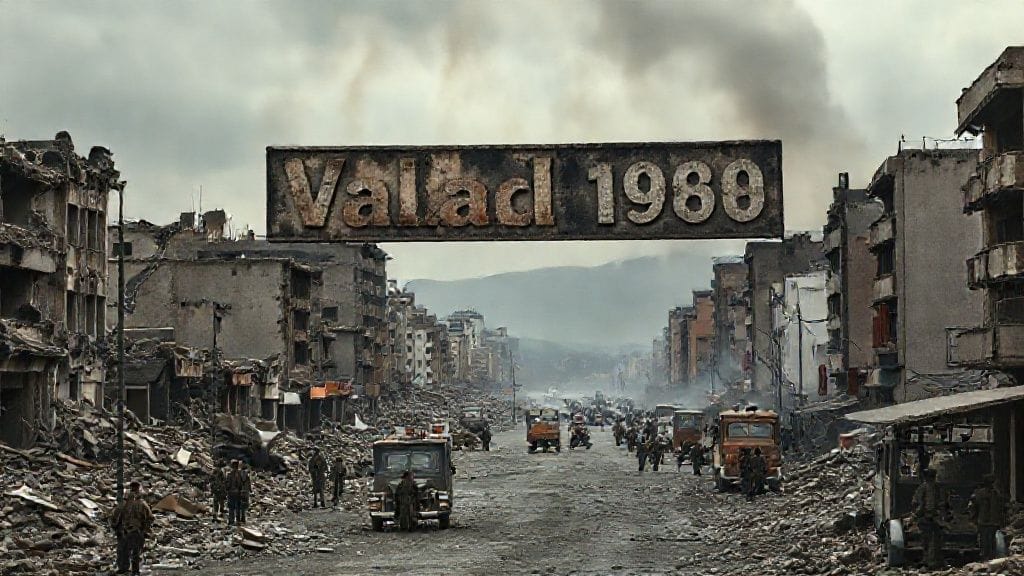
The sun had barely risen on May 12, 2008, when the tranquil valleys of Sichuan Province were violently shaken. Mountains groaned, rivers trembled, and homes that had stood for decades crumbled in moments. The Wenchuan earthquake did not just rupture the earth—it shattered the daily lives of millions, redefined the scope of disaster response in modern China, and echoed through the hearts of a global community. This seismic event was not merely a geological tragedy but a profound human catastrophe that tested the resilience, will, and unity of an entire nation.
1. Shaking the Earth: The Morning of May 12, 2008
At precisely 14:28 local time, the ground beneath Wenchuan County began convulsing with a force rarely witnessed in modern history. The 7.9-magnitude quake unleashed a cataclysmic energy that radiated across southwestern China. In the chaos that followed, more than 69,000 lives were lost, over 374,000 injured, and nearly 18,000 missing. The sheer randomness with which destruction spread—from bustling cities to isolated mountain villages—embraced both tragedy and heroism.
Survivors recall the terrifying sound wave of the earth ripping apart: a low rumble that crescendoed into deafening crashes. Buildings swayed, bridges buckled, and the sky darkened with dust and debris. For many, the moment when the earth gave way was the darkest, most uncertain instant of their lives.
2. A Land on Edge: The Geographical and Geological Prelude
Sichuan, a province cradled by high mountains and deep river valleys, is no stranger to the dynamic forces of the earth. Sitting at the boundary between the Tibetan Plateau and the Yangtze Craton, this region is a natural fault line, a pressure point where tectonic plates jostle with relentless energy. The Longmenshan Fault—a steep fault system running north-south along the edge of the Qinghai-Tibet Plateau—was the hidden fault that would awaken with devastating consequences.
Geologists had long warned of Sichuan’s seismic vulnerability. This was a land built on fault lines that had ruptured repeatedly over millennia. Yet, the earthquake’s timing and magnitude caught many by surprise. The patterns of stress accumulation and release, while studied, are notoriously difficult to predict with precision—a sobering reminder of nature’s unpredictability.
3. The Human Face of Disaster: Sichuan Province Before the Quake
Before that fateful day, Sichuan was a bustling mix of urban centers, rural farmlands, and remote mountain communities. The province was one of China's most populous regions, home to over 80 million people. Its rich cultural tapestry blended Han Chinese traditions with ethnic minorities such as the Qiang and Tibetan peoples, whose villages dotted the rugged landscape.
Economically, Sichuan was in transition. Cities like Chengdu thrived as commercial hubs, while rural areas struggled with poverty and limited infrastructure. Educational institutions flourished, but beneath this promise lurked systemic challenges—ranging from building safety standards to disaster preparedness.
4. Tectonic Tensions: How the Earth Betrayed Sichuan
The Wenchuan earthquake was triggered by sudden motion on the Longmenshan Fault, which lies along the boundary where the rigid Indian Plate is colliding with the Eurasian Plate. The immense pressure from this collision deforms the earth's crust, storing elastic strain energy over centuries until a rupture frees it in a single violent release.
In this case, the fault slipped approximately 7 meters in some locations over an approximate rupture length of 240 kilometers—enough energy to register a magnitude 7.9 event. This immense displacement unleashed shock waves that radiated at thousands of kilometers per hour, uncompromising and unstoppable.
Though frequent seismic activity in the region was well-known, the scale and depth (about 19 km underground) made this event extraordinarily destructive. The shallowness allowed the tremors to propagate with shocking intensity.
5. The Moment of Catastrophe: A 7.9 Magnitude Awakening
The earthquake struck suddenly, during the early afternoon when schools were still in session and families engaged in daily routines. The timing exacerbated the human toll, as many structures, particularly schools, were not built to withstand such powerful seismic forces.
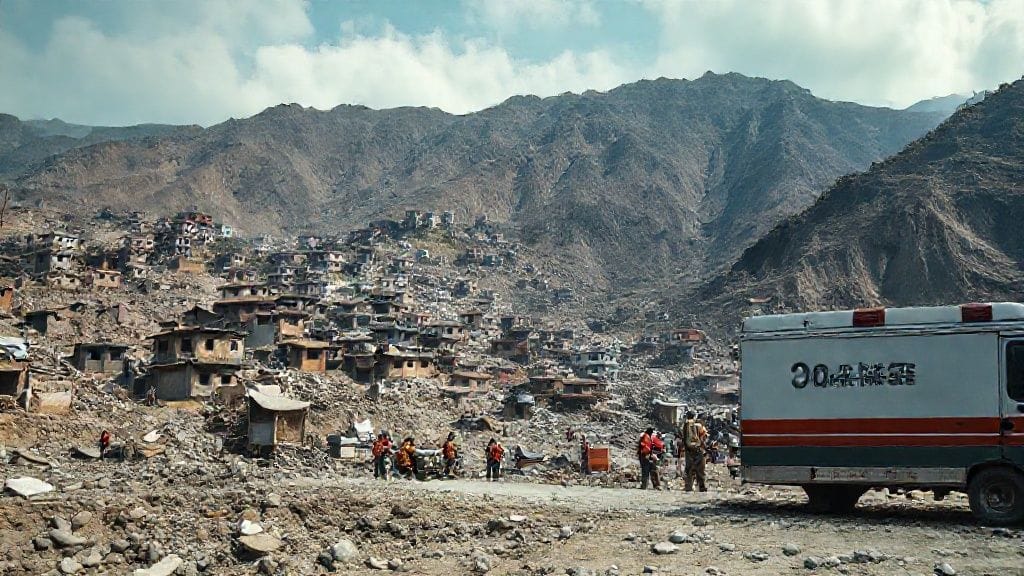
Infrastructure systems—power, water, transportation—were abruptly severed. Hundreds of buildings collapsed instantly, trapping children, parents, and elders beneath the rubble. Landslides tore through mountain slopes, burying entire villages and cutting off access routes crucial for aid.
Yet, the narrative of that afternoon is not only one of destruction but also disorientation and swift devastation—moments punctuated by screams, alarms, and desperate attempts to find safety.
6. The Collapse: Schools, Hospitals, and Homes Brought Down
Among the most haunting images were those of school buildings reduced to lifeless skeletons of concrete and steel. More than 7,000 schoolchildren perished, a statistic that galvanized public outrage and sorrow nationwide. Seemingly new constructions collapsed, revealing widespread issues of building safety and corruption.
Hospitals, too, suffered damages hindered emergency medical response capabilities. Homes, often built with less stringent standards in rural areas, turned into death traps. The fabric of everyday life disintegrated instantly.
7. Silent No More: The First Calls for Help
Amid the chaos, phone lines and communications faltered, but survivors’ instincts pushed them to seek aid. Mobile phones—though overloaded—played a crucial role in early warnings and distress signals. Text messages, often more reliable than voice calls under strain, became lifelines.
Emergency systems were tested to their absolute limits, with local authorities scrambling to assess the devastation and coordinate initial rescue by the hour.
8. Mobilization Amid Chaos: Rescue Efforts Kick Into Gear
The response was swift and colossal. The Chinese government dispatched tens of thousands of soldiers, police, and medical personnel within hours. Helicopters crisscrossed the skies; heavy machinery began clearing debris; temporary hospitals were established.
International agencies and NGOs coordinated with local teams, forming a complex web of cooperation. Yet, the terrain's difficulty, aftershocks, and logistical hurdles complicated each step.
9. The People’s Response: From Survivors to Volunteers
Extraordinary stories emerged of bravery and solidarity. Survivors became rescuers, digging frantically with bare hands, sharing scant food and water, and offering comfort amid despair.
Communities united, transcending ethnic and social divisions. Volunteers streamed in from across China, erecting shelters, distributing supplies, and offering psychological support.
10. Government Actions: Between Control and Compassion
The Chinese government faced a dual imperative: manage the disaster response while maintaining social order. Initial skepticism about transparency gradually gave way to openness as the scale of tragedy became undeniable.
High-profile visits by President Hu Jintao and Premier Wen Jiabao demonstrated commitment at the highest levels, while massive reconstruction projects were announced.
11. International Solidarity: Aid and Support from Around the Globe
The Wenchuan earthquake transcended national boundaries as donations poured in. From vital medical equipment to expert rescue teams, countries including the United States, Japan, and European nations offered assistance.
China's engagement with international partners during the crisis symbolized a growing willingness to operate within a global humanitarian framework.
12. Stories from the Rubble: Personal Tragedies and Triumphs
Individual narratives are the heartbeat of such grand histories. Mothers who lost children yet found strength to help others; teachers who stayed with students to the end; children rescued after days under the rubble.
These stories humanize statistics, reminding us that behind every number lies a profound human experience.
13. Media Under Siege: Reporting in a Disaster Zone
Media outlets faced the delicate task of balancing truthful reporting with sensitivity. Initial censorship gave way to more transparent coverage, aided by the rise of social media platforms.
Citizen journalism flourished, with survivors posting updates and calls for help. The earthquake became one of China’s first major crises to be documented in real time by digital citizens.
14. The Aftershocks: Fear and Recovery in the Following Months
Aftershocks numbered over 700, fracturing nerves and infrastructure further. Psychological scars deepened as communities struggled with uncertainty—schools delayed reopening, families remained displaced.
Reconstruction was slow but deliberate, emphasizing both physical rebuilding and mental health support.
15. Economic Impact: Counting the Cost of Destruction
Estimated losses surpassed $150 billion, a staggering figure that rivaled major global catastrophes. Industries were disrupted; agriculture turned to ruin; transport networks crippled.
Yet, state investment in recovery fuelled new construction booms and infrastructural modernization.
16. Rebuilding Lives: Reconstruction and Resilience
In the years following the quake, Sichuan underwent an ambitious rebuilding phase. New “earthquake-proof” buildings rose, rural communities gained improved infrastructure, and schools were reevaluated for safety.
The government’s “Build Back Better” approach sought not only to restore but to transform vulnerable regions, blending tradition with modernity.
17. The Education Crisis: Lost Generations and New Beginnings
The tragic loss of thousands of children ignited national debate about school safety regulations and building codes. Reconstruction of educational facilities became a priority, with new standards instituted.
Scholarship programs and psychological counseling were implemented to assist affected students.
18. Environmental Consequences: The Changing Sichuan Landscape
The earthquake dramatically reshaped the physical environment. Landslides created dams that threatened floods; forests were decimated; wildlife habitats altered.
Ecological restoration projects paralleled human reconstruction, seeking balance between development and environmental conservation.
19. Lessons Learned: Advances in Seismology and Preparedness
The disaster spurred advances in earthquake monitoring, early warning systems, and emergency preparedness protocols. Research deepened on fault behavior and resilience engineering, influencing policies across China and beyond.
Community education programs also expanded, emphasizing the importance of readiness.
20. Memory and Memorialization: How Sichuan Remembers
Monuments, museums, and annual commemorations ensure that the Wenchuan earthquake—and its victims—are not forgotten. Memorial parks in Beichuan and Wenchuan preserve stories and artifacts, offering places of reflection and hope.
Survivors’ testimonies have been collected in literature and documentaries, immortalizing experiences for future generations.
21. The Global Perspective: Natural Disasters in the 21st Century
Wenchuan remains a stark example of the growing human cost of natural disasters amid expanding populations and urbanization. It highlights issues ranging from governance and transparency to international cooperation.
The earthquake sparked conversations about climate, urban planning, and vulnerability worldwide.
22. Conclusion: The Endurance of the Human Spirit in Sichuan
The 2008 Sichuan earthquake was a cataclysm that threatened not just buildings but the very fabric of community life. Yet, in the shadows of devastation emerged stories of courage, resilience, and solidarity that resonate far beyond China’s borders.
It is a poignant reminder that even when the earth trembles with ruthless force, the human spirit’s capacity to rebuild and hope remains unshaken.
Conclusion
The Wenchuan earthquake did more than reshape the Sichuan landscape—it fundamentally altered the trajectory of millions of lives and the modern Chinese nation-state. The unprecedented scale of the disaster revealed vulnerabilities in infrastructure and governance, but also unearthed extraordinary depths of human compassion and cooperation. The epicenter of destruction became the heart of resilience, innovation, and renewal. Beyond the facts and figures, it reminds us how intertwined are the fates of people and the restless planet beneath their feet. The legacy of May 12, 2008, endures not just in steel and stone, but in the enduring hope kindled in every survivor's heart.
FAQs
Q1: What caused the 2008 Sichuan earthquake?
The earthquake was caused by sudden rupture along the Longmenshan Fault, a boundary between the Indian and Eurasian tectonic plates. The accumulated tectonic stress was released in a massive 7.9-magnitude quake.
Q2: How many people were affected by the earthquake?
Approximately 69,000 people lost their lives, over 374,000 were injured, and nearly 18,000 went missing. Millions of others were displaced.
Q3: Why were so many school children casualties?
Many school buildings were poorly constructed and unable to withstand the earthquake’s force. Classes were in session, leading to tragic losses.
Q4: How did the Chinese government respond?
The government rapidly mobilized rescue and relief efforts, dispatched troops, established temporary hospitals, and launched a massive reconstruction program.
Q5: What role did international aid play?
Many countries and international organizations offered critical support in the form of rescue teams, medical supplies, technical expertise, and funding.
Q6: What long-term impacts did the earthquake have?
It led to reforms in building codes, emergency preparedness, and disaster response protocols. It also fostered social solidarity and spurred economic recovery initiatives.
Q7: How is the earthquake remembered today?
Through memorials, museums, documentaries, and annual commemorations that honor victims and celebrate resilience.
Q8: Are earthquakes common in Sichuan?
Yes, Sichuan lies along complex fault lines and has experienced several significant earthquakes historically, reflecting its tectonically active nature.