Table of Contents
- The Fateful Morning: April 25, 2015
- A Nation Shaken: The Immediate Impact
- Geology at Play: Understanding the Earthquake’s Roots
- Kathmandu’s Collapse: Heritage in Ruins
- The Human Toll: Lives Lost and Changed Forever
- Rescue and Relief: First Responses to Disaster
- The Role of International Aid: Global Solidarity in Action
- Stories of Survival and Loss
- Infrastructure in Crisis: Roads, Hospitals, and the Fragile State
- The Aftershocks: Fear Lingering in the Ground and Minds
- The Political Response: From Emergency to Policy
- Rebuilding the Nation: The Long Road Ahead
- The Cultural Memory: Remembering Gorkha’s Legacy
- Scientific Lessons Learned: Monitoring a Restless Earth
- Nepal’s Resilience: Hope Amidst Ruins
- Global Awareness: How the World Changed Its View on Nepal
- The Economic Fallout: Beyond the Rubble
- Psychological Scars: Coping with Trauma and Loss
- Heritage Restoration: Reconstructing the Past for the Future
- Community Spirit: Grassroots Recovery Efforts
- Innovations in Disaster Management Emerging from Gorkha
- The Role of Media: Narratives of Destruction and Humanity
- Comparing Gorkha to Other Global Earthquakes
- The Future of Nepal’s Seismic Preparedness
- Conclusion: A Nation’s Endurance Through Catastrophe
- FAQs: Common Questions About the 2015 Gorkha Earthquake
- External Resources
- Internal Link
The Fateful Morning: April 25, 2015
At 11:56 a.m. local time, the earth beneath Nepal convulsed violently, arresting breaths and shattering lives in an instant. It was a clear Saturday, the sun casting a warm glow over the ancient city of Kathmandu, the capital bustling with midday activity. Then came the tremors—a fierce, sudden shaking that lasted nearly a minute but destroyed what decades, even centuries, had painstakingly built. The Gorkha Earthquake, measuring a formidable 7.8 magnitude, struck without warning, tearing through the densely populated Kathmandu Valley and villages to the northwest. The ground heaved, buildings crumbled, and the sound of panic—screams, collapsing debris, cries for help—quickly became a haunting soundtrack echoing through Nepal’s fertile, mountainous landscape.
It was a moment of collective trauma etched deeply into the consciousness of millions. Streets once filled with the aromas of spices and incense turned to dust and rubble. People were left clinging to hope amid despair, as they hurried to find loved ones or scramble to safety. This was not merely a natural disaster; it was a profound rupture—a brutal reminder of human vulnerability in the face of Earth’s unpredictable forces.
A Nation Shaken: The Immediate Impact
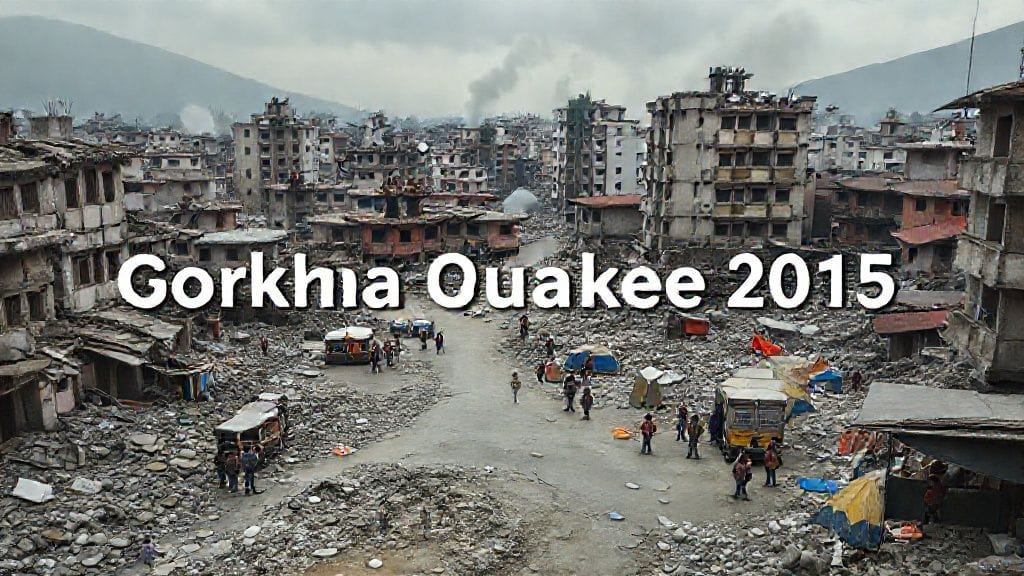
The toll was staggering. Over 8,000 souls perished, tens of thousands more injured, and nearly half a million homes cracked, collapsed, or turned to dust. Entire villages near the epicenter—the district of Gorkha, after which the earthquake was named—were decimated. The scale of devastation was unprecedented in this Himalayan kingdom in living memory. For many Nepalese, this was not simply a test of survival, but a collective reckoning with their history and geography.
Roads cracked open, bridges became graves, and communication lines failed as the country plunged into an emergency worse than any before. Hospitals overflowed, emergency shelters sprawled across parks and open fields, and the government faced immense challenges coordinating rescue. For a fragile economy and a country still emerging from political instability, the earthquake brought a harsh clarity to the limits of preparedness.
Geology at Play: Understanding the Earthquake’s Roots
To comprehend the sheer power of the Gorkha earthquake, one must delve into the restless geology beneath the Himalayas. This mountain range—the youngest and highest on the planet—results from the relentless collision of the Indian and Eurasian tectonic plates. The Indian plate is pushing northwards beneath Eurasia at around 45 millimeters per year, a slow but inexorable force that thrusts the terrain skyward, forming the towering peaks.
This tectonic pressure is never static. Stress builds beneath the Earth’s crust until it ruptures along faults. The Gorkha earthquake occurred on a shallow thrust fault, approximately 80 kilometers northwest of Kathmandu. The sudden release of tension caused the ground to lurch violently, propagating seismic waves that were felt from Tibet to Bangladesh. What made this disaster especially tragic was the population density above the fault and the region’s vulnerability—antique buildings and inadequate infrastructure ill-prepared for such shocks.
Kathmandu’s Collapse: Heritage in Ruins
If Nepal’s geography is a story of grand natural beauty, Kathmandu Valley is its cultural crown jewel. Home to UNESCO World Heritage Sites, centuries-old temples, palaces, and stupas, the valley was a magnet for pilgrims, tourists, and scholars alike. But the earthquake tore through the city’s soul.
The ancient city of Bhaktapur saw temples dating back to the 14th century precariously toppled. The iconic Dharahara Tower, a 19th-century nine-story structure that stood as a symbol of Kathmandu’s heritage, was reduced to rubble with scores trapped beneath. Durbar Squares—historic plazas surrounded by royal palaces and shrines—were scarred by destruction, their intricate carvings and centuries-old timber decimated.
This destruction was not just physical—it was a collective wound to Nepal’s identity. The loss resonated deeply with a nation proud of its cultural patrimony.
The Human Toll: Lives Lost and Changed Forever
Statistics rarely capture the depth of human suffering. Among the over 8,000 dead, there were mothers clutching babies, children studying for exams, elders tending their gardens—each life a universe of memories, dreams interrupted violently.
Communities fractured as families lost members, and countless survivors bore injuries both visible and invisible. The human story behind the numbers is harrowing: people trapped under rubble for hours, sometimes days; rescuers braving aftershocks and unsafe structures to pull strangers from death’s grip; neighbors opening their doors and hearts to the displaced.
Among the foreign nationals in Nepal, over 100 died—highlighting the global reach of a local tragedy. Yet, for every life lost, thousands were forever altered, catapulted into displacement, poverty, or trauma.
Rescue and Relief: First Responses to Disaster
In the aftermath, hope and chaos collided. The Nepalese government declared a state of emergency and mobilized its limited resources. However, the scale of devastation overwhelmed local capacity.
International rescue teams poured in—from India, China, the US, Japan, and countless other nations—bringing helicopters, search dogs, and medical expertise. The Red Cross and United Nations agencies coordinated aid distribution, while local volunteers rushed to clear debris and establish makeshift clinics.
Yet difficult terrain and damaged infrastructure slowed relief. Roadblocks and landslides made some villages inaccessible for days. The monsoon season looming on the horizon added urgency to shelter and sanitation efforts, with fears that a secondary disaster could compound the tragedy.
The Role of International Aid: Global Solidarity in Action
The global response was swift and profound. Over $4 billion in aid pledges came forward—from governments, NGOs, and private donors. Emergency funds poured into water purification, food supplies, and medical care.
Countries neighboring Nepal, notably India and China, took on leadership roles in logistics and coordination. Meanwhile, diaspora communities worldwide organized fundraisers and relief shipments, showing how global interconnectedness fueled compassion.
Yet, international aid faced challenges—bottlenecks in distribution, competing agendas, and occasional mismanagement—highlighting complexities in humanitarian operations amid massive crises.
Stories of Survival and Loss
Amid devastation arose astounding tales of human endurance. In the village of Langtang, entirely buried under an avalanche triggered by the quake, only a handful survived by seeking sanctuary in caves or clinging to tree branches. In Kathmandu, some trapped in buildings were rescued after days, their survival owed to luck and unwavering rescue crews.
These narratives offer poignant reminders that disasters are not just about statistics but about resilience, courage, and the fragility of life.
Infrastructure in Crisis: Roads, Hospitals, and the Fragile State
Nepal’s infrastructure, still developing before the earthquake, crumbled under the impact. Major highways that linked affected regions fractured, delaying aid and isolating remote communities.
Hospitals—already under-resourced—filled beyond capacity. Makeshift tents became operating rooms; health workers faced shortages amid surging casualties. Power grids failed, and water lines cracked, raising fears of disease outbreaks.
The quake exposed systemic vulnerabilities and underscored the urgent need for modernization and disaster-proofing critical systems.
The Aftershocks: Fear Lingering in the Ground and Minds
The initial earthquake was only the beginning. Hundreds of aftershocks, some exceeding magnitude 6.0, continued to shake Nepal for weeks. Each tremor reawakened trauma and forced evacuees to sleep outdoors, terrified to return indoors.
This period of uncertainty deepened psychological wounds and made rebuilding psychologically and physically an uphill battle. Fear mingled with hope, as communities struggled to regain a sense of normalcy.
The Political Response: From Emergency to Policy
Nepal’s government faced enormous pressure to act decisively. Politicians toured devastated areas, declaring recovery plans and seeking international aid.
But challenges lay beneath the surface—bureaucratic inertia, political infighting, and lingering instability made policy implementation slow and uneven. Still, the disaster catalyzed conversations on governance and urban planning, pushing Nepal toward creating more rigorous disaster management frameworks.
Rebuilding the Nation: The Long Road Ahead
Years beyond the initial shock, efforts to rebuild continue. Housing reconstruction, involving millions of people, has been a monumental task. International donors and NGOs worked alongside local communities to restore schools, clinics, and heritage sites.
Yet challenges persist: bureaucracy, funding gaps, corruption allegations, and logistical barriers strain recovery.
More than just bricks and mortar, rebuilding is also about healing social fabric and nurturing hope for a future free from such trauma.
The Cultural Memory: Remembering Gorkha’s Legacy
The earthquake entered Nepal’s collective memory as a defining event—both a cautionary tale and a testament to human spirit. Memorials and ceremonies commemorate those lost, while education campaigns incorporate earthquake preparedness.
Literature, photography, and film emerging from Nepal capture the quake’s imprint on society, preserving stories for generations ahead.
Scientific Lessons Learned: Monitoring a Restless Earth
Post-Gorkha, seismologists intensified efforts to study Nepal’s seismic hazard. New monitoring stations were installed, and research into fault behavior and tectonic processes accelerated.
Findings from this tragedy informed better mapping of high-risk zones and inspired regional cooperation in earthquake preparedness.
Nepal’s Resilience: Hope Amidst Ruins
What stands out amidst the ruins is Nepal’s defiant resilience. Communities generously shared resources and rebuilt collaboratively. Volunteerism thrived, and spiritual rituals reinforced psychological strength.
Despite unimaginable loss, survivors demonstrated an unwavering will to not only survive but to flourish anew—affirming human perseverance in face of nature’s fury.
Global Awareness: How the World Changed Its View on Nepal
Before 2015, Nepal was often seen through a narrow lens—an isolated Himalayan kingdom known mostly for trekking and Buddhist pilgrimage. The Gorkha earthquake revealed its vulnerabilities but also the strength of its society, drawing global attention to its need for development aid, disaster preparedness, and sustainable tourism.
International conversations widened, situating Nepal within broader discussions of climate change, seismic risk, and global humanitarianism.
The Economic Fallout: Beyond the Rubble
Economically, the quake drained Nepal’s fragile resources. The World Bank estimated losses and damages around $10 billion, nearly half the country’s GDP. Tourism slumped dramatically, a major blow to the nation’s lifeline.
Agricultural disruption and infrastructure damage weakened markets. Recovery funding focused both on immediate reconstruction and long-term economic stabilization, but challenges remained daunting.
Psychological Scars: Coping with Trauma and Loss
Beyond the visible destruction, mental health emerged as a silent crisis. Many survivors grappled with PTSD, anxiety, and sorrow. Access to psychological care was limited, especially in rural areas.
International NGOs introduced counseling programs, and slowly, community-based healing initiatives grew. This dimension of recovery is ongoing, highlighting the quake’s deep human cost.
Heritage Restoration: Reconstructing the Past for the Future
The painstaking effort to restore Kathmandu Valley’s heritage sites became symbolic of Nepal’s broader reconstruction. UNESCO and local craftspeople collaborated to blend traditional techniques and modern engineering, aiming to preserve authenticity while enhancing safety.
These projects not only revive physical structures but reconnect Nepalese with their identity—a delicate balancing act between history and modernity.
Community Spirit: Grassroots Recovery Efforts
Perhaps the most inspiring aspect of the Gorkha earthquake story is the rise of grassroots efforts. Nepali villagers, city dwellers, and the diaspora mobilized volunteer groups, arranged self-help reconstruction, and advocated for better policies.
This bottom-up mobilization complemented official responses and became a blueprint for future disaster response in Nepal and beyond.
Innovations in Disaster Management Emerging from Gorkha
The catastrophe spurred innovations—from early warning systems to improved building codes and community training. Nepalese engineers developed earthquake-resistant housing prototypes suited to local materials and culture.
Digital platforms facilitated coordination between aid agencies and affected populations, a model increasingly adopted in disaster zones worldwide.
The Role of Media: Narratives of Destruction and Humanity
Media coverage brought global focus but also ethical dilemmas—how to balance tragedy portrayal with dignity and hope? Nepali journalists documented heartbreak and heroism, often at personal risk.
Social media became a tool for communication, fundraising, and awareness-raising, reshaping how disasters are reported in the modern world.
Comparing Gorkha to Other Global Earthquakes
In both scale and context, the Gorkha earthquake shares similarities with other disasters—the 2010 Haiti quake, the 2008 Sichuan earthquake in China—but differs in cultural impacts and response capacities. Studying these events comparatively fosters lessons in preparedness, recovery, and international aid effectiveness.
The Future of Nepal’s Seismic Preparedness
Looking ahead, Nepal faces the imperative to institutionalize lessons learned. Building regulations, public education, and emergency drills are gradually becoming integral. Yet financial constraints and governance challenges linger.
The 2015 disaster remains a poignant reminder of nature’s might—and humanity’s need to respect and prepare.
Conclusion
The Gorkha Earthquake of April 25, 2015, was far more than a seismic event; it was a profound fracture in the heartbeat of Nepal. A tremor that tore not only through rock and soil but through communities, histories, and futures. Yet amidst the rubble and sorrow, the narrative that emerges is one of resilience, compassion, and an unyielding spirit.
Nepal’s journey from despair to hope exemplifies how humanity confronts catastrophe—not merely by rebuilding structures but by rebuilding lives and identities. The quake forced the world to recognize the delicate balance between nature’s fury and human fragility, inspiring global solidarity and new commitments to disaster preparedness.
The story of Gorkha continues to unfold in lessons learned, heritage restored, and hearts mended. It beckons us to remember that every tremor beneath the earth resonates in the world above—and that every challenge endured is an opportunity for renewal.
FAQs
1. What caused the 2015 Gorkha earthquake in Nepal?
The earthquake resulted from the collision of the Indian and Eurasian tectonic plates. Stress accumulated along a thrust fault beneath the Himalayan region was suddenly released, causing a 7.8 magnitude quake.
2. How many people died in the Gorkha earthquake?
Over 8,000 people lost their lives, and tens of thousands were injured. It remains one of the deadliest natural disasters in Nepal's recent history.
3. Why was Kathmandu so severely affected?
Kathmandu is situated near the earthquake’s epicenter, with dense population and many ancient buildings not built to withstand strong seismic shaking, resulting in widespread damage and loss of heritage sites.
4. How did international aid contribute to relief efforts?
International aid provided search and rescue teams, medical assistance, food, water, shelter, and funds. While invaluable, aid distribution faced logistical challenges due to Nepal’s difficult terrain and damaged infrastructure.
5. What long-term impacts did the earthquake have on Nepal’s economy?
The earthquake caused estimated damages over $10 billion, impacting tourism, agriculture, infrastructure, and overall development. The road to economic recovery remains ongoing.
6. How has Nepal improved disaster preparedness since the quake?
Nepal has advanced seismic monitoring, updated building codes, increased public awareness, and developed emergency response strategies, though challenges remain in full implementation.
7. How were Nepal’s cultural heritage sites affected?
Many UNESCO World Heritage Sites were damaged or destroyed, including temples, towers, and palaces. Restoration efforts have been a major focus in preserving Nepal’s cultural identity.
8. What role did community involvement play in recovery?
Community-led initiatives were crucial in providing aid, rebuilding homes, and supporting trauma healing, showcasing local resilience and cooperation in the face of disaster.