Table of Contents
- The Silent Tremor Before Dawn: January 13, 2001
- El Salvador’s Veins: A Land of Fire and Fragile Earth
- Historical Fault Lines: The Geology and Past of Salvadoran Seismicity
- More Than Nature: Socioeconomic Faults Beneath the Surface
- The Unfolding Disaster: The Earthquake’s Violent Awakening
- Voices from the Rubble: Eyewitness Testimonies of Survival and Loss
- The Immediate Aftermath: Chaos, Rescue, and Fragile Hope
- National and International Response: Aid, Solidarity, and Challenges
- The Human Toll: Lives Lost, Families Broken, Futures Shattered
- Infrastructure on the Brink: Buildings, Roads, and the Urban Fabric in Ruins
- Economic Shockwaves: A Fragile Economy Confronts Natural Calamity
- The Environmental Impact: Landslides, Landsickness, and Ecological Wounds
- Political Repercussions: Leadership Tested Amid Crisis
- Rebuilding Dreams: Recovery Efforts and the Long Road Ahead
- Memory Etched in Stone: How El Salvador Remembers the 2001 Quake
- Lessons Learned: Seismic Preparedness and Community Resilience
- The Quake and Identity: Narratives of Strength and Renewal
- The Global Context: Earthquake Science and Disaster Management in the Early 21st Century
- Conclusion: From Tremors to Transformation
- FAQs: Understanding the 2001 El Salvador Earthquake
- External Resource
- Internal Link
The Silent Tremor Before Dawn: January 13, 2001
In the early morning darkness of January 13, 2001, as many Salvadorans lay cocooned from the night’s chill, the earth beneath them began to stir with a restless, ominous energy. Without warning, a violent jolt raced through cities and villages alike, rupturing the fragile peace with a deafening roar that echoed through mountainous valleys and bustling urban streets. Homes trembled, windows shattered, and the ground cracked open as El Salvador awoke to a nightmare written in sharp seismic code. This moment—brief yet catastrophic—would not only shatter buildings but forever alter the course of hundreds of thousands of lives across this Central American nation.
The earthquake was a sudden, brutal reminder of the powerful forces that shape the land and its people. It was felt not simply as a geological event but as a shaking of the very heart of El Salvador—a country perched precariously on the Ring of Fire, where history, geography, and human tenacity collide. Yet, beneath the immediate terror and destruction rippled deeper stories of resilience, political upheaval, and social struggle.
El Salvador’s Veins: A Land of Fire and Fragile Earth
El Salvador, the smallest country in continental America, is a land of stark contrasts and natural beauty—volcanoes pierce the skies, fertile valleys cradle bustling towns, and dense forests whisper ancient tales. But the soil beneath is a powder keg; tectonic plates converge here with impatient force. The country's precarious geographic position on the Pacific Ring of Fire makes it especially vulnerable to seismic outbursts.
For centuries, earthquakes have shaped Salvadoran life, carving the landscape and embedding themselves into the collective memory. Still, the country’s rapid urbanization and economic vulnerability have often rendered it ill-prepared for the fury of nature. The 2001 earthquake was yet another brutal chapter in this ongoing saga.
Historical Fault Lines: The Geology and Past of Salvadoran Seismicity
El Salvador’s seismic activity is largely driven by the subduction of the Cocos Plate beneath the Caribbean Plate, a process rife with tension and release. This tectonic squeeze produces not only earthquakes but also frequent volcanic eruptions that punctuate the country’s history.
Previous earthquakes—like the devastating 1986 earthquake that left thousands dead and homeless—had etched warnings on the public's consciousness. But despite repeated jolts from the earth, structural and institutional preparedness had lagged, caught in cycles of political instability and economic hardship.
These geological conditions were not mere backdrops but active players on the stage of national vulnerability and resilience.
More Than Nature: Socioeconomic Faults Beneath the Surface
Beyond the shifting soil lay equally dangerous human fissures. El Salvador was still healing from a brutal civil war that ended only six years prior in 1992. The wounds of violent conflict, social inequality, and political fragility shaped the capacity of the state and its citizens to respond.
Poverty afflicted nearly half of the population. Many families lived in informal, precarious housing on unstable slopes—a dangerous inheritance when the earth itself is treacherous. These socioeconomic factors magnified the disaster’s impact.
Thus, the earthquake exposed not just geological weaknesses but social fractures: the fault lines of marginalization, fragile governance, and urban vulnerability.
The Unfolding Disaster: The Earthquake’s Violent Awakening
At precisely 3:33 AM local time, the earth ruptured with a magnitude estimated at 7.6. The shaking lasted nearly a minute—an eternity of fear for those caught in bed, sleep shattered by thudding walls and collapsing roofs.
The epicenter lay off the Pacific coast, eerily close to densely populated areas—San Salvador, the capital, bore the brunt. Buildings swayed, some crumbling instantly. Phone lines and electrical grids faltered, plunging entire regions into darkness and disarray.
The night sky was punctuated by flashes as power transformers exploded. At that hour, the streets emptied, yet within homes, horror unfolded in silence and terror.
Voices from the Rubble: Eyewitness Testimonies of Survival and Loss
Clara Rivera was a seamstress living in a modest neighborhood on the city’s outskirts. “I woke up to the house shaking like a leaf,” she recalled years later. “The walls cracked open, and I thought I was going to die.” She scrambled with her children, dodging falling debris, until the shaking subsided, leaving a trail of dust and heartbreak.
In the heart of San Salvador, a bus driver named José Martínez described chaos on the streets: “Cars crashed, people shouted, but everyone was frozen by fear. We all prayed for the quake to stop.”
These personal stories illuminate the human texture behind headlines—each voice a testament to endurance amid devastation.
The Immediate Aftermath: Chaos, Rescue, and Fragile Hope
When silence returned, it was heavy with loss. Municipal rescue teams scrambled to respond, but they were quickly overwhelmed. Collapsed buildings trapped families; roads blocked by landslides complicated access. Emergency rooms overflowed with the injured.
Amid the confusion, community solidarity thrived. Neighbors became rescuers; strangers became lifelines. Makeshift shelters sprang up in plazas and schools. But fear lingered—aftershocks roared like ghosts, keeping the nation rattled both physically and emotionally.
Aid from international organizations began pouring in, yet the scale of devastation tested every resource.
National and International Response: Aid, Solidarity, and Challenges
Governments from across the Americas, the United Nations, and international NGOs mobilized rapidly. Medical teams, food supplies, and engineers joined Salvadoran officials in relief efforts.
Yet, aid faced obstacles—damaged infrastructure hampered logistics, bureaucratic inefficiencies slowed distribution, and deeply entrenched poverty complicated recovery.
Despite these challenges, the crisis also sparked acts of profound humanity and cooperation, forging alliances that transcended borders.
The Human Toll: Lives Lost, Families Broken, Futures Shattered
Official estimates tallied over 800 dead, thousands injured, and nearly 50,000 rendered homeless. Entire neighborhoods had vanished or been rendered uninhabitable.
Behind the statistics were families uprooted, dreams extinguished, and futures thrown into uncertainty. Psychological trauma—often overlooked in disaster narratives—cast long shadows, affecting the nation’s collective psyche.
The earthquake was not just a natural tragedy; it was a human tragedy writ large, testing emotional and societal resilience.
Infrastructure on the Brink: Buildings, Roads, and the Urban Fabric in Ruins
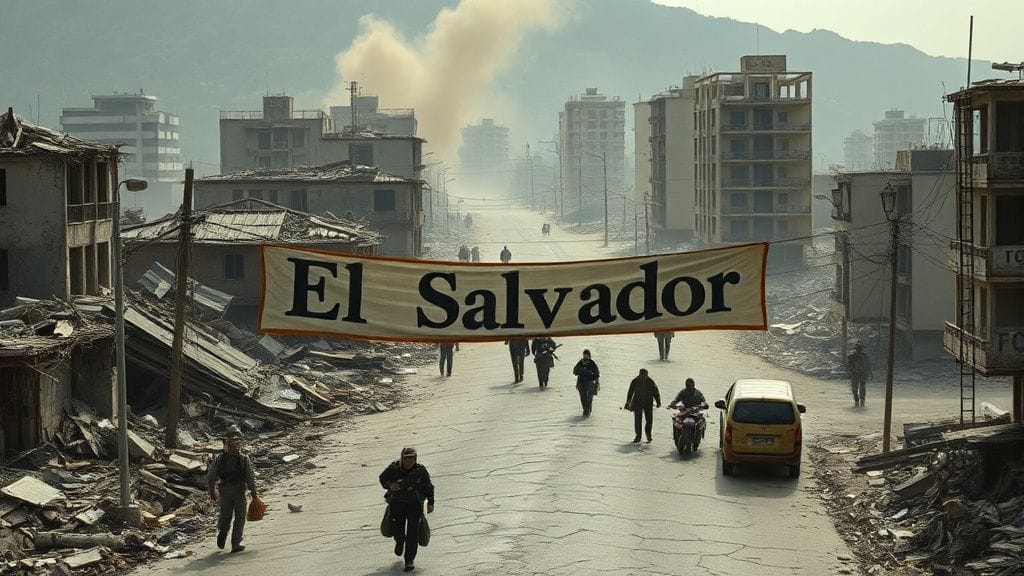
Urban centers, particularly San Salvador, confronted widespread structural damage. Residential buildings, many constructed without adequate seismic standards, crumbled like fragile cards.
Critical infrastructure—hospitals, schools, communication networks—were disrupted, revealing decades of neglect and underinvestment.
This devastation laid bare the urgent need for better building codes, urban planning, and investment in disaster preparedness.
Economic Shockwaves: A Fragile Economy Confronts Natural Calamity
El Salvador’s economy, then reliant on agriculture, remittances, and limited industrial output, took a severe hit. The earthquake destroyed crops, disrupted markets, and drained public finances.
Insurance coverage was minimal; many victims faced reconstruction costs alone. The disaster threatened to exacerbate poverty and slow development progress.
International financial aid and loans were critical but came with strings that generated political debates on sovereignty and priorities.
The Environmental Impact: Landslides, Landsickness, and Ecological Wounds
Beyond human and economic damage, the earthquake provoked environmental havoc. Mountainous terrain gave way to landslides, burying roads and farmland.
Water sources were contaminated; ecosystems in fragile balance suffered disruption. These environmental scars posed long-term challenges for agriculture, health, and livelihoods.
The earthquake was a multidimensional upheaval, reminding all that nature is interconnected.
Political Repercussions: Leadership Tested Amid Crisis
President Francisco Flores’s administration faced intense scrutiny. The management of relief funds, transparency issues, and accusations of inefficiency fueled political debate.
Yet, the disaster also became a rallying point, pushing the government to strengthen civil protection mechanisms and international diplomacy.
Politics in the shadow of catastrophe is always complex—a mix of accountability, solidarity, and power struggles.
Rebuilding Dreams: Recovery Efforts and the Long Road Ahead
In the months and years following, El Salvador committed to reconstruction. Housing projects, infrastructure renewals, and community engagement programs were launched.
But recovery was slow and uneven. Many families remained in temporary shelters for years. The challenge of rebuilding was not just physical but social—repairing trauma, restoring trust, and fostering hope.
International actors remained involved, but the emphasis increasingly shifted toward local empowerment and sustainable resilience.
Memory Etched in Stone: How El Salvador Remembers the 2001 Quake
Commemorations of the earthquake unfold annually, with public ceremonies and memorials honoring victims and heroes.
Cultural expressions—poetry, music, and art—keep memories alive, channeling grief into meaning. For many, the earthquake has become a symbol of collective endurance and a warning for future generations.
Memory here is a living thing, woven into national identity.
Lessons Learned: Seismic Preparedness and Community Resilience
The 2001 earthquake catalyzed important reforms in seismic monitoring, emergency response planning, and public education.
Community-based initiatives grew, emphasizing local knowledge and participation. Schools incorporated drills; new laws enforced construction codes.
But challenges remain: El Salvador still confronts natural threats amid socio-political complexities. The quake was both a lesson and a catalyst.
The Quake and Identity: Narratives of Strength and Renewal
The earthquake shaped how Salvadorans see themselves—not as passive victims but as agents of their own survival and renewal.
Stories of courage, generosity, and innovation emerged, underscoring resilience not just in moments of disaster but as an enduring cultural trait.
In many ways, the quake redefined national identity, highlighting the interplay between vulnerability and strength.
The Global Context: Earthquake Science and Disaster Management in the Early 21st Century
The Salvadoran earthquake occurred at a moment when global awareness of disaster risk was rising. The 1990s had already witnessed devastating quakes in Kobe, Turkey, and Taiwan.
International cooperation on seismic research, early warning systems, and humanitarian aid was evolving.
El Salvador’s experience added vital data and lessons, contributing to a growing global discourse on managing natural hazards amid human vulnerabilities.
Conclusion
The earthquake that tore through El Salvador on January 13, 2001, was more than a rupture in the earth’s crust—it was a breaking point where the forces of nature collided with human frailties and hopes. It exposed the raw edges of poverty, governance, and geography, but also ignited a profound resilience in a nation accustomed to adversity. From the terror of those first moments in the dark, to the difficult journey of recovery, El Salvador’s story is a testament to survival and renewal against overwhelming odds.
It reminds us that disasters are never solely natural but are shaped by social and political landscapes as much as by tectonic plates. The 2001 earthquake compels us to listen, to prepare, and to honor those who endured, reflecting a universal narrative of human courage and the fragile beauty of our shared planet.
FAQs
Q1: What caused the 2001 El Salvador earthquake?
A1: The earthquake was caused by the subduction of the Cocos tectonic plate beneath the Caribbean plate along the Pacific coast, generating a powerful seismic event with a magnitude around 7.6.
Q2: How many people were affected by the earthquake?
A2: Over 800 people died, thousands were injured, and approximately 50,000 were displaced, with many losing their homes and livelihoods.
Q3: What were the main challenges in the emergency response?
A3: Damaged infrastructure, limited resources, bureaucratic delays, and widespread poverty complicated rescue efforts and aid distribution in the immediate aftermath.
Q4: How did the earthquake influence El Salvador’s political landscape?
A4: The disaster tested governmental leadership and spurred calls for greater transparency and better disaster preparedness policies, affecting public confidence and political debates.
Q5: What lessons did El Salvador learn about disaster preparedness?
A5: The earthquake highlighted the need for stricter building codes, improved seismic monitoring, public education, and stronger community-based emergency response systems.
Q6: How is the earthquake remembered in El Salvador today?
A6: Through annual memorials, cultural expressions, and public education efforts, the earthquake remains a significant moment in national memory symbolizing both loss and resilience.
Q7: Did the 2001 earthquake have a lasting economic impact?
A7: Yes, the disaster undermined key sectors like agriculture and infrastructure, straining the fragile economy and requiring substantial international financial assistance for reconstruction.
Q8: How does the 2001 earthquake fit into global seismic events?
A8: It is part of a broader pattern of devastating early-21st-century earthquakes that have advanced understanding of seismic risks and underscored the importance of international disaster cooperation.