Table of Contents
- Dawn Shattered: The Early Hours of May 24, 1940
- Peru on the Edge: A Nation Poised Between Tradition and Modernity
- Geological Puppeteers: The Tectonic Forces Beneath Lima
- The Tremor Awakens Lima: From Silence to Chaos
- The Immediate Aftermath: Destruction and Despair at Daybreak
- Voices Amid the Rubble: Personal Stories of Loss and Survival
- Government Response: Crisis Management in a Precarious Era
- The Role of the Military and Civil Authorities
- Infrastructure in Ruins: Roads, Bridges, and Lifelines Severed
- The Humanitarian Challenge: Shelters, Food Shortages, and Disease Threats
- International Assistance: Solidarity Beyond Borders
- Reconstruction Efforts and Urban Planning Transformations
- Economic Shockwaves: Impact on Lima’s and Peru’s Economy
- Social Fabric Stretched: How Communities Adapted and Changed
- The Earthquake in Peruvian Collective Memory and Culture
- Scientific Advances Triggered by the Catastrophe
- The Legacy of 1940: Earthquake Preparedness in Mid-20th Century Peru
- Lima Transformed: The City 20 Years After the Quake
- The 1940 Earthquake in Comparative Perspective: Lessons Learned
- Conclusion: A Turning Point Beneath the Surface
- FAQs: Understanding the Lima Earthquake of 1940
- External Resource
- Internal Link
Dawn Shattered: The Early Hours of May 24, 1940
The first tremor rolled beneath the Peruvian capital in the cool, pre-dawn hours of May 24, 1940. It was a quiet city waking between shadows and whispers — streets still sparsely animated, merchants just beginning their routines, mothers tending to restless children. Suddenly, the ground began to pulse like a giant angry beast. Pots rattled sharply, glass trembled and shattered, and homes built with adobe and fragile brick trembled violently. A deafening roar seemed to chase the innocent morning air as the earth convulsed beneath Lima.
It was a moment suspended in time, a rupture so profound that every heart along the narrow cobblestone streets suddenly clenched in fright. From the humble barrios of Rimac to the grand avenues of Miraflores, the city was gripped by an invisible force, unpredictable and deafening. Yet, this earthquake was not just a geological event — it was a turning point in Lima’s destiny, a crucible of suffering, resilience, and transformation.
Peru on the Edge: A Nation Poised Between Tradition and Modernity
To grasp the magnitude of the 1940 Lima earthquake, one must first understand the social, political, and historical tapestry into which it struck. Peru, in the early 20th century, was a nation balancing precariously between its rich indigenous heritage and the rapid encroachments of modernization. Lima, the capital and largest city, was the epicenter of cultural interplay—colonial architecture jostling with new commercial buildings, elite social clubs contrasting with impoverished shantytowns.
The Peruvian government, led at the time by President Manuel Prado Ugarteche, was governing a country challenged by economic disparity, political instability, and emerging social movements. The Andes shaped not only the geography but also the identity of its people — a proud mix of mestizo, indigenous, and immigrant communities. In 1940, Peru was still grappling with the legacies of colonialism and war, especially the 1930s conflict with Ecuador. Infrastructure was improving but remained fragile, especially to natural disasters.
Indeed, the city’s rapid urbanization had stretched resources thin, with many of Lima's neighborhoods constructed without regulation or modern engineering principles. These factors would prove critical in the unfolding tragedy.
Geological Puppeteers: The Tectonic Forces Beneath Lima
The very earth beneath Lima bespeaks power and unpredictability. Peru sits atop the volatile boundary where the oceanic Nazca Plate slowly subducts beneath the continental South American Plate. This tectonic dance has created the towering Andes and wrought centuries of seismic activity.
The 1940 earthquake’s epicenter was located offshore, near the Peru-Chile Trench — a notorious seismic hotbed. This subduction zone is responsible for some of the most powerful earthquakes ever recorded, including the catastrophic 1970 Ancash earthquake just 30 years later.
Seismologists today estimate that the 1940 event had a magnitude of approximately 8.2 on the Richter scale — a massive release of tectonic stress that unleashed 20 to 30 seconds of intense shaking. For residents, it felt like the earth itself was breaking apart.
The Tremor Awakens Lima: From Silence to Chaos
At precisely 5:30 AM, the earth’s sudden shaking shattered the serenity of the early morning. Windows exploded as frames twisted; adobe homes in poorer neighborhoods crumbled instantly, their fragile walls reduced to dust and splinters. Main thoroughfares buckled unevenly, throwing markets into uproar.
Because it struck near dawn, the timing was tragic. Many families were indoors, children still asleep, and many unaware of the looming threat. The initial tremor was soon followed by intense aftershocks, igniting fear and confusion. Street animals bolted, dogs howled, and the cries of neighbors calling for family echoed through the smoky air.
It was a city thrown into sudden chaos, with no official warning system and emergency services overwhelmed within minutes.
The Immediate Aftermath: Destruction and Despair at Daybreak
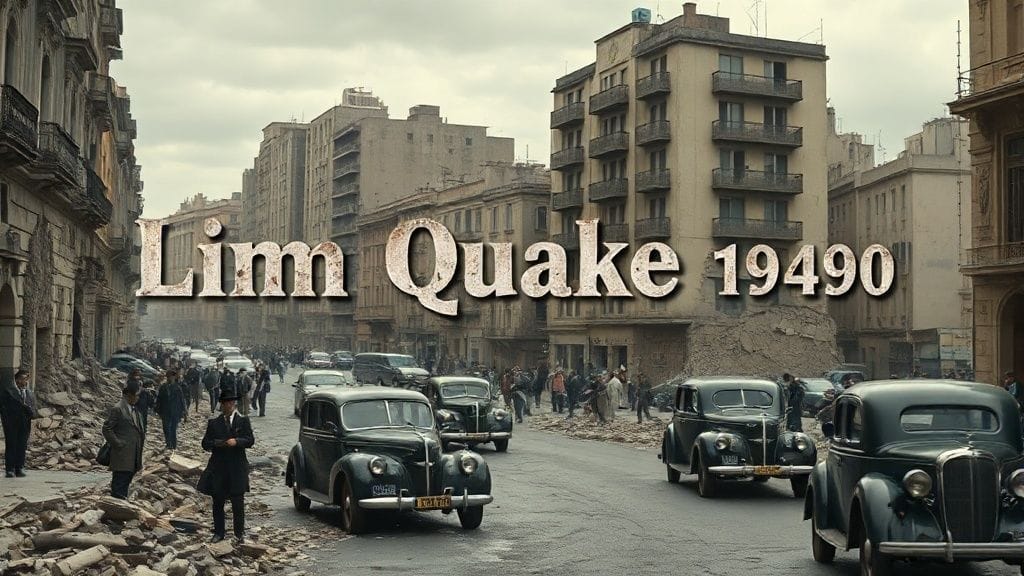
As dawn broke fully, Lima’s extent of damage became tragically clear. The colonial districts of Cercado, La Victoria, and San Martín bore the brunt of the destruction. Many buildings, particularly older and poorly constructed ones, had collapsed entirely.
The toll was devastating: official estimates later reported that over 200,000 people were affected directly, with more than 10,000 buildings damaged or destroyed across the metropolitan area. Hundreds perished trying to flee collapsing homes, including many children trapped in rubble.
Churches, symbols of both spiritual and colonial heritage, were not spared. The centuries-old Lima Cathedral suffered serious structural damage, a haunting metaphor for Peru’s shaken identity.
Voices Amid the Rubble: Personal Stories of Loss and Survival
Amid the rubble, human stories shimmer with raw emotion. Doña Maria Castañeda, a mother from the Rímac barrio, recalled how "the ground trembled, and my children awoke screaming. Our house shattered as if paper… We escaped into the streets, clutching whatever we could."
Luis Ortega, a fisherman near the coast, survived the quake but lost his home and livelihood. "The sea, usually calm, roared like beast awakened," he said. "We feared a tsunami, but the waters pulled back, then returned gently. Still, my nets were lost forever."
Such anecdotes reveal the earthquake's human dimension beyond statistics: the trauma of sudden loss, the fear for loved ones, the despair of homelessness — yet also moments of heroism and communal solidarity.
Government Response: Crisis Management in a Precarious Era
The Peruvian government, though unprepared for such scale, mobilized quickly under President Prado’s administration. Military units were dispatched for rescue and to prevent looting in devastated zones. Makeshift field hospitals were set up, though medical supplies were insufficient.
However, communication breakdowns slowed coordination; telegraph lines and telephone cables were severed. President Prado famously declared a state of emergency, calling for national unity.
State radio broadcasts endeavored to provide calm reassurance — albeit within the limits of 1940s technology and limited reach. Nevertheless, the disaster exposed glaring weaknesses in Peru’s disaster preparedness infrastructure.
The Role of the Military and Civil Authorities
The Peruvian Army played a pivotal role in the immediate aftermath. Soldiers cleared debris to rescue trapped citizens, patrolled to maintain order, and distributed food and water. The military’s involvement was crucial in stabilizing the chaotic city, despite challenges posed by damaged roads and infrastructure.
Civil authorities, including the National Civil Protection Service—then in early stages—struggled to coordinate non-military aid efforts. Local fire brigades and volunteers formed spontaneous rescue teams, highlighting how grassroots organization became a lifeline when institutions faltered.
Infrastructure in Ruins: Roads, Bridges, and Lifelines Severed
Beyond homes and lives, Lima’s infrastructure was heavily compromised. Key bridges across the Rímac River, vital for connecting western districts to the commercial heart of the city, partially collapsed. Telephone and power lines snapped, plunging neighborhoods into darkness and silence.
Water supply systems were also damaged, raising urgent concerns about sanitation and public health. With many streets blocked by debris, ambulances and aid convoys faced severe logistical hurdles.
This paralysis underscored Peru’s infrastructural vulnerabilities and prompted discussions about modernization.
The Humanitarian Challenge: Shelters, Food Shortages, and Disease Threats
Thousands were left homeless, their lives reduced to tents and makeshift shelters. Lima’s public squares filled with displaced families, often lacking adequate food, clean water, and sanitation.
Relief organizations faced an uphill battle to provide necessities. Fear of disease outbreaks loomed large, with cases of dysentery and respiratory infections reported in overcrowded camps.
Communities banded together, sharing limited resources. Religious groups and charities undertook feeding programs and makeshift clinics, exemplifying human solidarity amid grief.
International Assistance: Solidarity Beyond Borders
News of Lima’s catastrophe spread quickly through the Americas and beyond. Nations including the United States, Argentina, and Chile offered aid; shipments of medical supplies, blankets, and food arrived in the weeks following the quake.
Notably, the Red Cross mobilized volunteers to assist local efforts. This international solidarity, although limited in scale compared to later decades, planted seeds for future cross-border disaster cooperation in South America.
Reconstruction Efforts and Urban Planning Transformations
As dust settled, a massive reconstruction effort began. Under the leadership of urban planners and engineers, Lima embarked on a hard-won process to rebuild stronger, safer.
New building codes were drafted, emphasizing the use of reinforced concrete over vulnerable adobe. The tragedy accelerated modernization of critical infrastructure, including water systems and electrical grids.
Neighborhoods rebounded slowly, but the earthquake left an indelible mark on urban planning philosophy, injecting a new understanding of seismic risk.
Economic Shockwaves: Impact on Lima’s and Peru’s Economy
The earthquake dealt a harsh blow to Peru’s fragile economy. Damage to commercial districts and port facilities disrupted trade — especially export of valuable commodities like cotton, sugar, and minerals.
Insurance systems were virtually non-existent, so most losses were direct and unmitigated. Reconstruction costs strained national budgets and slowed economic growth through the early 1940s.
For ordinary citizens, job losses proliferated as local businesses shuttered, deepening hardships.
Social Fabric Stretched: How Communities Adapted and Changed
Yet, amid devastation, other social dynamics emerged. The solidarity born from shared trauma inspired community networks and strengthened social ties.
Migration patterns shifted as rural inhabitants sought work in reconstruction or moved to other cities. Women played more visible roles in relief work and family recovery, subtly changing traditional gender roles.
Moreover, class disparities were exposed bluntly—wealthy districts recovered faster while poorer areas lagged behind, sowing seeds of future social tensions.
The Earthquake in Peruvian Collective Memory and Culture
The 1940 quake found its way into Peruvian literature, music, and public consciousness. Poets and writers evoked the earth’s fury as both curse and awakening.
Memorial ceremonies and oral histories preserved stories of heroism and loss, ensuring the trauma was never forgotten. The event became a somber symbol of Lima’s vulnerability but also a testament to enduring resilience.
Scientific Advances Triggered by the Catastrophe
The destruction spurred advances in Peru’s emerging geosciences. Seismologists began more systematic study of the Nazca subduction, seeking to understand and predict future quakes.
Institutions such as the Geophysical Institute of Peru gained prominence, developing monitoring equipment and public education programs in ensuing decades.
Thus, the disaster, grim as it was, became a catalyst for scientific inquiry and risk mitigation.
The Legacy of 1940: Earthquake Preparedness in Mid-20th Century Peru
In the years following, governmental and civic institutions increasingly prioritized earthquake preparedness. Building codes were refined, urban planning incorporated hazard zones, and public awareness campaigns emerged.
While imperfect, these measures marked a crucial evolution in disaster risk reduction in Peru, laying groundwork that would prove vital in later seismic events.
Lima Transformed: The City 20 Years After the Quake
By the 1960s, Lima had metamorphosed—physically and socially. Its architecture was more modern, streets widened, and infrastructure strengthened.
Population growth surged, fueled in part by memories of vulnerability and hopes for safer shelter. The city’s scars remained, but they coexisted with new ambitions for growth and development.
The 1940 Earthquake in Comparative Perspective: Lessons Learned
Viewed alongside other 20th-century seismic disasters in South America, the 1940 Lima earthquake offers sobering lessons: the dangers of unchecked urban sprawl, the necessity of strong institutional response, and the power of community resilience.
Compared to the even deadlier 1970 Ancash earthquake, it was a warning sign—one that Peru worked hard to heed, with varying success.
Conclusion: A Turning Point Beneath the Surface
The Lima earthquake of May 24, 1940, was far more than a geological rupture. It tore through the heart of a city and nation caught at the crossroads of tradition and progress, exposing vulnerabilities and igniting transformation.
The shaking earth revealed cracks not only in walls but in social structures, governance, and scientific understanding. Yet from the rubble arose stories of courage, unity, and renewal. Peru’s capital was forever altered, scarred physically and imprinted deeply in collective memory.
History reminds us that natural disasters, while brutally indifferent, also open pathways to reflection and change. Lima’s 1940 ordeal is a testament to the human spirit’s capacity to endure, rebuild, and reinvent—even when the earth itself seems to conspire to bring it down.
FAQs: Understanding the Lima Earthquake of 1940
Q1: What caused the Lima earthquake of May 24, 1940?
A1: The earthquake was caused by tectonic activity along the subduction zone where the Nazca Plate dives beneath the South American Plate. This boundary is highly active and responsible for many large earthquakes in the region.
Q2: How powerful was the earthquake?
A2: Modern estimates place the earthquake’s magnitude at approximately 8.2 on the Richter scale, making it a very strong and destructive event.
Q3: What were the major consequences of the earthquake?
A3: The quake caused widespread destruction to buildings and infrastructure in Lima, resulted in thousands of deaths and injuries, displaced tens of thousands of people, and led to significant economic setbacks and urban planning reforms.
Q4: How did the Peruvian government respond to the disaster?
A4: The government declared a state of emergency, deployed the military to assist in rescue and order maintenance, organized relief efforts, and later initiated reconstruction programs with new building codes.
Q5: How did the earthquake shape Peru’s approach to disaster preparedness?
A5: It highlighted the urgent need for improved infrastructure, scientific monitoring, and emergency planning, influencing mid-20th-century reforms in building regulations and public awareness.
Q6: Are there any famous personal stories or accounts from survivors?
A6: Yes, many survivors recounted harrowing escapes and losses; these testimonies have been preserved in oral histories and literature, offering invaluable human perspectives on the tragedy.
Q7: Did the disaster prompt any scientific or technological advances?
A7: The catastrophe catalyzed the growth of Peru’s seismological studies and the establishment of institutions focused on earthquake monitoring and research.
Q8: How is the 1940 earthquake remembered in Peru today?
A8: It remains a pivotal event in Peru’s history, commemorated in cultural works and serving as a lesson in resilience and preparation within the society.