Table of Contents
- The Fateful Dawn of March 31, 1983
- Colombia’s Fragile Landscape: A Meeting Point of Nature and Society
- Popayán: The Historical Jewel on the Eve of Disaster
- The Tremor Awakens: The Initial Seconds of the Earthquake
- Infrastructure in Ruins: The Immediate Physical Impact
- The Human Tragedy Unfolds: Lives Shaken and Shattered
- Emergency Response Amidst Chaos: Local Efforts and Challenges
- Government’s Role and International Aid: An Uncertain Alliance
- Socioeconomic Repercussions: The Aftershock Beyond the Ground
- Rebuilding Popayán: Between Preservation and Modernization
- Lessons in Seismic Preparedness: Colombia’s Changing Approach
- The Cultural Wound: Heritage Sites Lost and National Memory
- Voices from the Rubble: Survivor Stories and Collective Trauma
- Scientific Insights: How the 1983 Earthquake Shaped Seismology in Colombia
- Political Ripple Effects: Disaster, Governance, and Public Trust
- The Earthquake in Literature and Art: Remembering Through Creativity
- Popayán Today: A City That Rose From Its Ashes
- Lessons for the Future: Disaster Resilience in a Changing World
- Conclusion: Enduring Spirit Amidst Natural Fury
- FAQs: Understanding the 1983 Popayán Earthquake
- External Resource: Wikipedia Link
- Internal Link: Visit History Sphere
The Fateful Dawn of March 31, 1983
It was early morning on March 31, 1983, when the earth beneath Popayán, a colonial city often called Colombia’s “White City,” began trembling with an ominous ferocity. Before sunrise, the silence of the Andean highlands shattered in a violent assertion of nature’s raw power. In those nerve-wracking seconds—the seconds of trembling walls and falling dust—the lives of thousands changed irrevocably. Parents clutched their children. Buildings groaned and cracked. Roads split open, and a city known for its graceful churches and baroque plazas suddenly found itself fighting for survival amid the chaos of an earthquake measuring 5.5 on the Richter scale. This was not merely a tremor. It was a profound rupture in history, community, and memory.
The 1983 Popayán earthquake remains one of the most devastating natural disasters in Colombian history. To understand this calamity is to trace the entangled threads of geology, human settlement, and the socio-political narratives that would shape recovery long after the ground stilled.
Colombia’s Fragile Landscape: A Meeting Point of Nature and Society
Nestled between tectonic plates that incessantly rub, slide, and collide, Colombia is a land of seismic tension. The nation sits atop the complex convergence of the Nazca, South American, and Caribbean plates, rendering it inherently vulnerable to earthquakes. Within this volatile stage, the Andes Mountains carve dramatic landscapes, harboring cities and towns that have thrived for centuries under the constant, unseen threat below.
By the early 1980s, Colombia was a nation grappling with rapid urbanization, burgeoning populations, and political turbulence. Amid this, geological surveys had established clear seismic risk zones, yet many historic cities like Popayán were peppered with colonial architecture, fragile and ill-prepared for seismic activity. The ideological tug between conservation of heritage and the urgent need for modernization created a complex backdrop to the pending disaster.
Popayán: The Historical Jewel on the Eve of Disaster
Popayán, located in the southwestern department of Cauca, was more than just a city; it was a storied symbol of Colombia’s colonial grandeur. Known for its pristine white facades and monumental religious edifices—some dating back to the 17th and 18th centuries—the city bore the cultural imprint of Spanish conquest and the Catholic Church.
On the eve of March 31, morning light filtered softly through the mist, the cobblestone streets were slowly waking up, and church bells began their morning tolls. It was a typical day, almost complacent in its calm. Beneath this calm, however, the earth's restless forces gathered strength, waiting for their moment to roar.
The Tremor Awakens: The Initial Seconds of the Earthquake
At 4:45 a.m., the subsoil awoke violently. Witnesses would later describe an initial subtle vibration, almost unnoticed, followed by a crescendo of shaking that lasted about 15 seconds—each moment a lifetime to those living it.
The earthquake’s epicenter was located near Popayán itself, amplifying the suddenness and destructiveness of the event. The ground split, and old buildings, many made of adobe and unreinforced masonry, swiftly crumbled under the merciless shaking. The precision of nature’s blow was cruel: vital civic buildings, hospitals, and homes collapsed, trapping people inside and cutting off emergency routes.
One striking account recalls a mother holding her infant as their home swayed wildly, the walls cracking and the floor buckling beneath them. Outside, barely a tree remained still; the sky, momentarily, seemed to ripple like water.
Infrastructure in Ruins: The Immediate Physical Impact
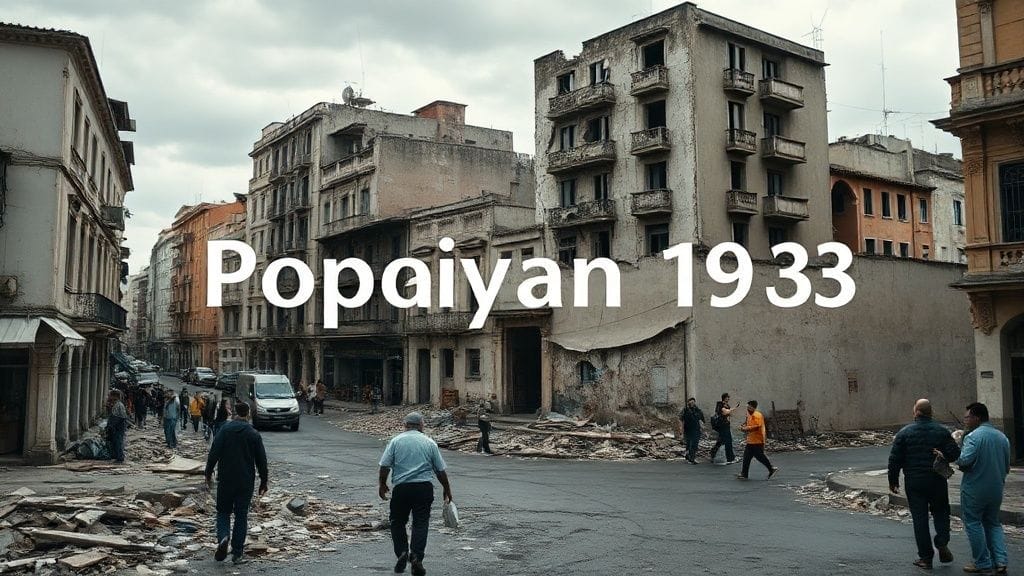
The scale of destruction was staggering. Approximately 1,200 buildings were either completely destroyed or severely damaged, including Popayán’s iconic cathedral, which suffered a partial collapse. Vital infrastructure—roads, bridges, water supply systems—were impaired, complicating rescue efforts.
Electricity and communications were disrupted. The collapse of the city’s hospital further endangered the injured and delayed treatment. Popayán’s old city center, a testament to centuries of history, looked like a war zone soaked in dust and debris.
The Human Tragedy Unfolds: Lives Shaken and Shattered
Death toll estimates fluctuated, but official numbers placed the number of fatalities between 250 and 300. Thousands were injured, and tens of thousands lost their homes. Families were displaced into makeshift shelters, forced to grapple with shock, grief, and uncertainty.
The psychological trauma ran deep. Survivors recounted the helplessness as they watched homes dissolve to dust, neighbors trapped beneath rubble, and the impending threat of aftershocks that could strike at any moment. The quake did not just shake the earth—it cracked the very foundations of community and trust.
Emergency Response Amidst Chaos: Local Efforts and Challenges
In the immediate aftermath, Popayán’s local authorities mobilized with limited resources. The urgency of searching for survivors and tending to the wounded was paramount, yet the scale of destruction overwhelmed the city’s capacities.
Volunteer groups and ordinary citizens sprang into action. The human spirit — resplendent even in disaster — revealed itself through acts of bravery: neighbors digging with bare hands, clergy providing comfort, and doctors working in improvised field hospitals.
Yet, logistical challenges remained. Roads blocked by rubble hampered aid deliveries, and communication blackouts slowed coordination. Supplies like food, water, and medical equipment were scarce, exposing vulnerabilities in Colombia’s disaster preparedness.
Government’s Role and International Aid: An Uncertain Alliance
Recognizing the enormity of the crisis, the Colombian national government declared a state of emergency. It dispatched military units and rescue teams equipped to manage disaster zones. However, reports of bureaucratic delays and resource mismanagement clouded the response efficiency.
The world watched as Colombia solicited and received international aid. Nations, non-governmental organizations, and United Nations agencies sent assistance—medical teams, construction experts, and financial aid. This influx of help was vital but also underscored Colombia’s reliance on external support during crises.
The interplay between national pride and dependence on foreign aid sparked debates within Colombia about sovereignty, preparedness, and future investment in disaster risk management.
Socioeconomic Repercussions: The Aftershock Beyond the Ground
The earthquake's impact rippled far beyond shaking earth and crumpled buildings. Popayán’s economy, heavily dependent on agriculture, trade, and tourism, took a severe hit.
Farmers faced not only damaged homes but also disrupted planting and harvesting seasons. Markets were inaccessible, and businesses shuttered, with some never reopening. Unemployment surged, deepening poverty levels already exacerbated by Colombia’s broader economic struggles during the early 1980s.
Social stratification became starkly visible: while wealthier citizens could reconstruct or relocate, the poor faced lengthy displacement and insecurity. The disaster thus magnified existing inequalities, igniting demands for more inclusive urban planning and social support systems.
Rebuilding Popayán: Between Preservation and Modernization
Recovery was a complex dance between honoring the past and embracing resilience for the future. Popayán’s historical character made outright modernization risky, as the community fiercely protected its colonial heritage.
Reconstruction efforts introduced stricter building codes aimed at improving seismic resistance, ushering in a new architectural sensibility. This blend of restoration and innovation slowly rebuilt public trust and urban functionality.
Yet, debates persisted: how much to preserve, how much to innovate? The cathedral’s partial restoration became an emblematic case, stirring passionate arguments about identity and memory.
Lessons in Seismic Preparedness: Colombia’s Changing Approach
The Popayán earthquake ignited a national discourse on disaster readiness and urban vulnerability. Colombia began investing in seismic monitoring systems, public education, and emergency protocols, aiming to avoid replaying the 1983 missteps.
Institutions like the Colombian Geological Service expanded research and early warning capabilities. Community drills became more common, and building regulations grew increasingly rigorous.
Though vulnerabilities remain, the earthquake served as a painful but pivotal lesson—one that reshaped Colombia’s approach to managing the unpredictable forces beneath its feet.
The Cultural Wound: Heritage Sites Lost and National Memory
Beyond physical destruction, the earthquake inflicted a cultural wound. Popayán’s churches, museums, and historic homes were not mere buildings—they embodied collective memory, faith, and identity.
Their damage stirred national mourning and sparked dialogues on protecting cultural patrimony. Restoration projects were not simple technical tasks but deeply emotional endeavors, intertwining heritage conservation with community healing.
This tragedy added a somber chapter to Colombia’s historical narrative, reminding future generations of nature’s power over human legacies.
Voices from the Rubble: Survivor Stories and Collective Trauma
Stories from survivors capture not only the terror but also resilience. One elderly woman recounted how she nudged her husband from danger mere seconds before their home collapsed. A young student described how classmates and teachers banded together to aid the injured.
These testimonies illuminate the earthquake’s human face, painting a portrait of courage and fragility. Psychologists would later note the profound post-traumatic stress within communities, underscoring the need for mental health services in disaster zones.
These voices transformed statistics into living memory, binding generations through shared pain and hope.
Scientific Insights: How the 1983 Earthquake Shaped Seismology in Colombia
Seismologists studied the event intensively. The earthquake revealed particular fault lines and soil behaviors previously underestimated in seismic risk assessments.
Geophysicists used data from Popayán to refine models on earthquake prediction and urban vulnerability, contributing to the global understanding of subduction zone earthquakes. Colombian academia and government agencies subsequently strengthened their commitment to geological research.
Thus, from destruction emerged a scientific legacy—knowledge that increases humanity’s ability to face future quakes.
Political Ripple Effects: Disaster, Governance, and Public Trust
Disasters often test political institutions, and the 1983 earthquake was no exception. Criticisms of delayed response and resource misallocation shook public confidence.
This crisis intersected with Colombia’s broader issues of governance and civil unrest during the 1980s, casting shadows but also galvanizing calls for accountability and reform.
In many ways, the earthquake exposed weaknesses in state capacity while affirming the critical role of transparent, efficient emergency management.
The Earthquake in Literature and Art: Remembering Through Creativity
Popayán’s earthquake entered Colombia’s cultural expression deeply. Poets, painters, and filmmakers grappled with the event’s themes—loss, survival, and rebirth.
Artworks depicting cracked walls, shattered religious icons, and human resilience became poignant reminders of nature’s dual capacity for destruction and inspiration.
Through creativity, the earthquake inhabits Colombian collective memory, ensuring its lessons echo beyond history books.
Popayán Today: A City That Rose From Its Ashes
Today, Popayán stands as a testimony to human tenacity and respect for heritage. Carefully restored colonial facades cohabit with modern infrastructure designed to withstand earthquakes.
Tourists return to marvel at its charm; residents rebuild their lives and traditions with renewed vigor. The scars of 1983 remain visible yet softened—a city that honors its past yet refuses to be defined by tragedy alone.
Lessons for the Future: Disaster Resilience in a Changing World
As climate change and urban expansion intensify vulnerabilities worldwide, Popayán’s 1983 earthquake offers enduring lessons.
Investing in scientific understanding, strengthening infrastructure, fostering community preparedness, and valuing cultural heritage are intertwined paths toward resilience.
The disaster urges all societies to confront their own fragile balances with nature, highlighting the importance of proactive stewardship.
Conclusion
The Popayán earthquake of March 31, 1983, was more than a geological event; it was a human drama etched into the soul of Colombia. It unveiled the raw power of the earth beneath a city that straddled colonial beauty and modern yearning. It tested families, governments, and communities with sudden loss and slow recovery. Yet, amid despair, it also revealed the enduring spirit of a people—those who cleared the rubble with their hands, who comforted the grieving, who rebuilt not only walls but faith and hope.
In remembering Popayán’s quake, we confront the fragile dialogue between humanity and nature. We glean insights about preparedness, governance, and compassion. Above all, we acknowledge the resilience that defines us in the face of uncertainty.
The earth may tremble, but the human spirit endures.
FAQs
1. What caused the 1983 Popayán earthquake?
The earthquake was caused by tectonic activity at the convergence of the Nazca, South American, and Caribbean plates, resulting in a moderate but destructive seismic event centered near Popayán.
2. How severe was the damage caused by the earthquake?
Approximately 1,200 buildings were destroyed or damaged, including critical infrastructure like the city’s cathedral and hospital. Estimated deaths ranged from 250 to 300, with thousands injured and displaced.
3. How did the Colombian government respond to the disaster?
The government declared a state of emergency, deployed military and rescue personnel, and solicited international aid, though the response faced criticism for delays and coordination problems.
4. What were the long-term effects on Popayán’s economy?
The earthquake disrupted agriculture, trade, and tourism, increasing unemployment and poverty, and amplifying social inequalities in the city and surrounding region.
5. How did the earthquake influence Colombia’s approach to disaster preparedness?
It spurred improvements in seismic monitoring, stricter building codes, public education on disaster response, and reinforced the need for scientific research and community drills.
6. What cultural sites were affected by the earthquake?
Popayán’s colonial churches, including its iconic cathedral, museums, and homes were heavily damaged, representing a significant cultural loss and rallying point for heritage preservation efforts.
7. How did survivors cope with the trauma?
Many survivors experienced psychological distress and post-traumatic stress. Community solidarity, religious faith, and later mental health services played important roles in recovery.
8. Does Popayán still face earthquake risks today?
Yes, Popayán remains in a seismically active region, but improved infrastructure and preparedness have enhanced the city’s resilience against future quakes.