Table of Contents
- The Shattering Silence: Dawn of the L’Aquila Earthquake
- Italy’s Heart Torn Asunder: Setting the Stage for Disaster
- Geological Shadows: The Fault Lines Beneath Abruzzo
- Prelude to Catastrophe: Seismic Warnings Ignored?
- April 6, 2009: When the Earth Roared at 3:32 AM
- Rupture and Ruin: The Immediate Aftermath
- The City in Rubble: L’Aquila’s Historical Treasures at Risk
- Human Stories Amid the Debris: Courage, Loss, and Resilience
- Rescue and Relief: The Herculean Efforts Under Trembling Skies
- Government Response: Between Criticism and Crisis Management
- Scientific Controversies: The Debate on Earthquake Prediction
- Justice and Accountability: Trials Following the Tragedy
- The Impact on Urban Planning and Building Codes in Italy
- Psychological Scars: Trauma Beyond the Earthquake
- Reconstruction: Rebuilding a City and Restoring Hope
- L’Aquila’s Cultural Renaissance: Art, Memory, and Commemoration
- Lessons Learned: How L’Aquila Changed Seismology and Civil Defense
- Italy’s Broader Faultline: Earthquake Preparedness Nationally
- International Aid and Solidarity: A Global Response
- The Earth’s Whisper: Advances in Seismic Monitoring Since 2009
- Reflections from Survivors: Endurance and the Human Spirit
- The World Watches: Media Coverage and Global Awareness
- Conclusion: From Ruin to Renewal
- FAQs: Understanding the L’Aquila Earthquake
- External Resource
- Internal Link
The Shattering Silence: Dawn of the L’Aquila Earthquake
The night air was thick with a calm unevenness, as if nature itself was holding its breath. In the early hours of April 6, 2009, just past 3:30 AM, a sudden violent upheaval fractured the stillness of L’Aquila, a medieval city nestled amid the rugged peaks of Italy’s Abruzzo region. For a fleeting moment, silence was shattered by deep rumblings—a primal roar from the earth’s depths—followed by a tremor so intense that it crumbled centuries-old stone buildings and shattered lives in an instant. It was not merely a natural event, but a seismic rupture that ripped through the heart of the Italian peninsula, sending shockwaves of terror, despair, and, eventually, resilience.
Italy’s Heart Torn Asunder: Setting the Stage for Disaster
L’Aquila, with its labyrinthine streets and ancient baroque architecture, had long been a jewel of central Italy, a city where medieval history and modern life blended seamlessly. Yet, this picturesque town was perched atop a restless geological setting. The Apennine mountain range, which stretches like a backbone through Italy, cradles complex fault lines beneath the earth’s surface—silent forces that, when stirred violently, could unleash catastrophic earthquakes.
Despite its profound cultural wealth, L’Aquila's region was no stranger to seismic activity. Italy’s historical memory is marked by frequent and often devastating tremors. The country’s position on the convergence of the Eurasian and African tectonic plates renders it vulnerable to liquefying fault lines and unpredictable quakes. Nonetheless, many residents and officials remained unaware or even complacent about the tumult that brewed beneath their feet.
Geological Shadows: The Fault Lines Beneath Abruzzo
The seismic events that culminated in the 2009 earthquake involved a complex interplay of tectonic stresses along multiple faults associated with the Apennines. The North-Western sector of the Abruzzo region harbors a system of thrust and normal faults, which had been under strain for centuries. The specific fault responsible for the L’Aquila quake was part of a known—but largely underestimated—complex fault network that had accumulated strain energy over decades.
Geologists later revealed that a significant foreshock sequence had been detected in the weeks before April 6, suggesting the earth was restless. Still, uncertainty about the quake’s timing, magnitude, or even its inevitability clouded scientific forecasts. In this geological tension between certainty and speculation, residents unknowingly awaited the catastrophe.
Prelude to Catastrophe: Seismic Warnings Ignored?
As early as March 2009, minor tremors—so-called foreshocks—rattled the surrounding countryside. Some geologists issued cautious warnings, while others urged caution in communicating the risks to avoid panic. Local authorities grappled with conflicting advice, even commissioning meetings to discuss potential seismic events. Among them was Dr. Bernardo De Bernardinis, the deputy head of Italy’s Department of Civil Protection, whose controversial statement minimized the dangers and reassured the public that the risk of a big earthquake was low.
This posture of downplaying the foreshocks later became a source of fierce debate. Were these early signs genuine warnings or harmless tremors? More crucially, did institutional hesitation contribute to a false sense of security that cost lives? In the delicate balance between panic and preparedness, Italy faced one of its most profound tests.
April 6, 2009: When the Earth Roared at 3:32 AM
Then came the instant of rupture. At precisely 3:32 AM, the earth convulsed violently beneath L’Aquila. The main shock registered a magnitude of 6.3 on the Richter scale, though the force it unleashed was felt far beyond the city limits, sending trembling waves through the Abruzzo region and parts of neighboring Lazio and Marche. The mainshock lasted barely a few seconds but was powerful enough to shatter walls, topple rooftops, and send panicked residents fleeing into the streets, many in their pajamas, blanketed only by fear.
The quake struck in the heart of the night, when sleep had rendered inhabitants vulnerable. Historic churches, palazzi, and residential buildings—many centuries old and unable to withstand such forces—crumbled as if built on sand. The ground fissured, roads cracked, and the cacophony of breaking masonry filled the air. This was not just an earthquake—it was an upheaval of history and memory.
Rupture and Ruin: The Immediate Aftermath
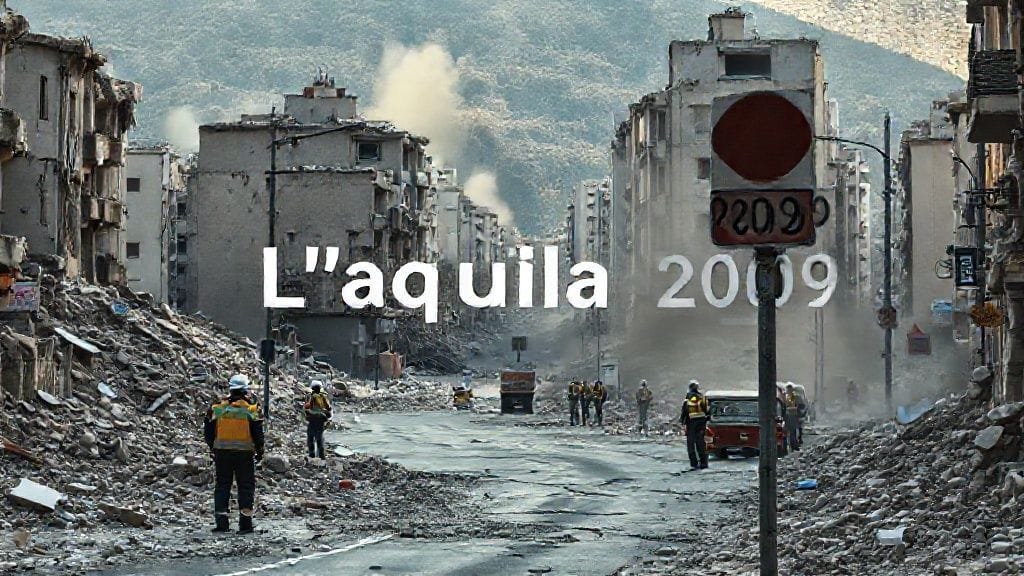
In the eerie predawn light, the magnitude of destruction became visible. Over 300 buildings in L’Aquila collapsed, including key landmarks such as the Basilica of Santa Maria di Collemaggio, a masterpiece of medieval architecture. Emergency phone lines flooded with calls; families counted the missing; the wounded sought aid in darkened hospitals overwhelmed by injuries.
The death toll soon surpassed 300, with thousands injured and tens of thousands left homeless overnight. Entire neighborhoods were turned into piles of rubble. The city’s infrastructure—electricity, water, communications—was severely compromised, compounding the horrors of the disaster. For many, safety was a fleeting illusion amid aftershocks that continued to rattle fragile structures for days.
The City in Rubble: L’Aquila’s Historical Treasures at Risk
Beyond the immediate human tragedy lay another heart-breaking loss: cultural heritage threatened with extinction. L’Aquila's charm had been its rich mosaic of medieval and Renaissance relics—ornate churches, frescoed chapels, elegant piazzas. Many treasured monuments, some untouched for centuries, were now ruins or severely damaged. Museums closed, archives were threatened, and the city’s historical identity seemed to crumble alongside its architecture.
UNESCO and Italian cultural ministries quickly moved to evaluate damage and salvage what was possible. Preservation efforts began not just for buildings but for the collective memory they represented. Yet millions of cultural dollars and years of painstaking work would be required to restore the city’s soul.
Human Stories Amid the Debris: Courage, Loss, and Resilience
Among the wreckage were the personal stories that give history its heartbeat. Families torn apart, survivors trapped under rubble who clung to life by sheer will, neighbors pulling strangers from the wreckage with bare hands. One survivor’s desperate call on a cracked mobile phone, another’s tear-streaked reunion with loved ones—these images seared into the global consciousness.
One poignant story emerged from near the city center, where a family of five escaped the collapse of their home by mere minutes, alerted by the tremors. Contrastingly, others lost everything in silence. The tragedy revealed not only the fragility of life but also the extraordinary solidarity that blossoms in disaster’s wake.
Rescue and Relief: The Herculean Efforts Under Trembling Skies
Italy mobilized swiftly but faced enormous logistical challenges in a region marked by mountainous terrain and damaged infrastructure. Firefighters, Red Cross volunteers, military engineers, and ordinary citizens converged on L’Aquila, launching round-the-clock search and rescue operations. Canines were trained to sniff survivors, cranes moved enormous slabs of stone, and field hospitals stood up amid the chaos.
International teams also joined relief efforts, bringing emergency supplies, medical aid, and expertise in disaster response. Yet the scale of the rescue was daunting, with aftershocks delaying operations and winter’s chill compounding the suffering of displaced residents.
Government Response: Between Criticism and Crisis Management
The Italian government, led by Prime Minister Silvio Berlusconi at the time, declared a state of emergency and pledged billions of euros for aid and reconstruction. Soldiers patrolled streets to maintain order, and temporary shelters sprung up in parks and sports complexes. However, the response faced harsh criticism over delays, mismanagement, and a lack of coordination.
Public frustration grew as reports surfaced of inadequate housing, bureaucratic obstacles, and confusion over aid distribution. Critics charged that governmental neglect prior to the disaster—regarding building code enforcement and urban planning negligence—exacerbated the human toll.
Scientific Controversies: The Debate on Earthquake Prediction
The tragedy ignited an intense scientific and ethical debate on earthquake prediction. Before the quake, several seismologists monitored tremors and seismic activity, but forecasts remained inconclusive. Post-quake, a small group of experts was put on trial for allegedly providing “inaccurate risk assessments” to the public.
In a landmark and controversial judgment, the scientists were initially convicted for failing to adequately communicate the earthquake risk and thus influence public behavior. International scientific bodies condemned the verdict as a dangerous precedent that could deter honest scientific communication in the future. Eventually, the convictions were overturned on appeal, but the episode underscored the difficulty in balancing scientific uncertainty with public safety.
Justice and Accountability: Trials Following the Tragedy
Beyond the scientific community, legal inquiries probed disaster management, construction practices, and official negligence. Investigations revealed that many buildings destroyed were non-compliant with seismic regulations, often due to lax oversight or cost-cutting measures.
Families of victims sought accountability, demanding transparency and measures to prevent future tragedies. Trials of engineers, architects, and officials were high-profile and emotionally charged. These judicial proceedings highlighted a sobering truth: the disaster was not caused by the earthquake alone, but by human frailty in the face of natural forces.
The Impact on Urban Planning and Building Codes in Italy
The L’Aquila earthquake became a catalyst for seismic reform in Italy. Reinforced building standards were introduced nationwide, emphasizing both new construction and retrofitting vulnerable historic structures. Urban planners reassessed zoning regulations, pushing for better risk assessments in construction permitting.
The disaster exposed systemic weaknesses but also galvanized advances in civil engineering and prevention. Today, Italy’s approach to earthquake resilience—as contentious and evolving as it is—owes much to the lessons forged in L’Aquila’s ruins.
Psychological Scars: Trauma Beyond the Earthquake
Physical recovery was only part of the story. Psychologists documented widespread post-traumatic stress disorder (PTSD) among survivors, especially children. The shock of losing homes, loved ones, and the very sense of safety led to depression, anxiety, and social dislocation.
Mental health programs gradually emerged as essential components of disaster response. Yet, the invisible wounds persisted for years, underscoring the need for holistic approaches that address both body and spirit after catastrophe.
Reconstruction: Rebuilding a City and Restoring Hope
The monumental task of rebuilding L’Aquila took shape over months and years. Debris removal, archaeological preservation, and rebuilding from scratch coexisted with controversial debates on authenticity versus modernization. Funding flowed from government coffers, European Union solidarity programs, and international donors.
Reconstruction became a symbol of resilience. New neighborhoods rose from the ruins, blending seismic safety with respect for history. Yet, the slow pace and bureaucratic hurdles frustrated many, reminding all that healing is a long and winding road.
L’Aquila’s Cultural Renaissance: Art, Memory, and Commemoration
Artistic and cultural initiatives emerged from the calamity as acts of collective remembrance and renewal. L’Aquila hosted exhibitions, memorial ceremonies, and public artworks dedicated to the earthquake’s victims. Writers and filmmakers captured the human dimension of the tragedy, enriching Italy’s canon of disaster narratives.
Annually, the city commemorates April 6 with moments of silence, community gatherings, and vows to never forget. This cultural renaissance fosters a shared identity forged through loss and hope.
Lessons Learned: How L’Aquila Changed Seismology and Civil Defense
In the decade following 2009, L’Aquila has become a case study in disaster science and policy. The event propelled advances in seismic hazard assessment, real-time monitoring, and risk communication. Civil defense protocols were revamped to prioritize swift evacuations and community preparedness.
Importantly, the balance between public information and scientific uncertainty remains a crucial topic. L’Aquila’s legacy reminds us that knowledge alone cannot prevent disaster without trust, transparency, and proactive governance.
Italy’s Broader Faultline: Earthquake Preparedness Nationally
Italy’s vulnerabilities to earthquakes extend beyond Abruzzo—from the Amalfi coast to Sicily and Naples’ restless Vesuvius. The L’Aquila earthquake spotlighted the urgency of nationwide preparedness. Emergency drills, public education campaigns, and infrastructure resilience have since become focal points.
The quake was a harsh teacher, revealing gaps not only in policy but societal attitudes toward seismic risk.
International Aid and Solidarity: A Global Response
The response to L’Aquila drew international attention. Nations including Germany, France, and the United States dispatched expertise, resources, and humanitarian aid. Global NGOs collaborated with Italian authorities, setting precedents for cross-border cooperation in earthquake response.
The solidarity witnessed in those dark days reaffirmed humanity's shared vulnerability and collective strength when faced with nature’s fury.
The Earth’s Whisper: Advances in Seismic Monitoring Since 2009
Technological innovations accelerated after L’Aquila. Advances in seismographs, satellite monitoring, and predictive modeling enriched understanding of earthquake precursors. Italy expanded its seismic networks, integrating IoT devices and machine learning for real-time data analysis.
While precise earthquake prediction remains elusive, these tools enhance early warning systems and risk mitigation strategies.
Reflections from Survivors: Endurance and the Human Spirit
Years later, survivors recount moments of terror, loss, and unexpected grace. Many speak of the solidarity that emerged—neighbors sharing food in the dark, strangers comforting each other, communities knitting new social fabric out of brokenness.
These personal narratives offer a testament to resilience: a city that, shaken at its core, continues to stand not just physically, but spiritually.
The World Watches: Media Coverage and Global Awareness
L’Aquila broke through international media barriers, spotlighting the realities of earthquake disasters in modern Europe. Rolling news, documentaries, and social media amplified stories from survivors and responders alike.
Yet the coverage also raised questions about disaster journalism ethics, sensationalism, and long-term engagement beyond headline moments.
Conclusion: From Ruin to Renewal
The L’Aquila earthquake was more than a moment of destruction—it was an inflection point in how societies confront the earth’s unpredictability. In its aftermath, a city once silenced by disaster found its voice anew. Through grief, justice, and reconstruction, L’Aquila reminded the world that while nature can shatter stone and spirit, human resolve endures.
This tragic yet inspiring chapter in Italy’s history continues to teach us about vulnerability, humility, and the timeless pursuit of safety amid the planet’s restless crust.
FAQs
1. What caused the L’Aquila earthquake in 2009?
The earthquake was caused by tectonic movements along fault lines in the Apennine mountain range, where strain accumulated over decades until a sudden rupture occurred.
2. How many people died and were affected by the earthquake?
Approximately 309 people died, thousands were injured, and tens of thousands were left homeless due to the collapse of buildings.
3. Was it possible to predict the earthquake?
No reliable prediction was possible. Although foreshocks were detected, scientific methods for precise earthquake prediction do not currently exist; this led to controversy over authorities' risk communication.
4. What was the Italian government’s response to the disaster?
The government declared a state of emergency and allocated billions for rescue and reconstruction, though it faced criticism regarding delays and inefficiencies.
5. What legal actions were taken after the earthquake?
Several scientists and officials faced trial over alleged misinformation and negligence but convictions were overturned; other legal inquiries focused on construction and disaster management accountability.
6. How did the disaster impact urban planning in Italy?
It led to reforms in building codes, stricter enforcement of seismic standards, and new policies for retrofitting vulnerable structures.
7. What psychological effects did survivors experience?
Many suffered PTSD, anxiety, and trauma, emphasizing the importance of mental health services in disaster recovery.
8. How has the L’Aquila earthquake influenced global earthquake research?
It spurred advances in seismic monitoring technology and highlighted challenges in risk communication and disaster preparedness worldwide.